How Long After Shocking Your Pool Can You Swim
You can swim after shocking your pool once chlorine levels drop below 3 ppm, which usually takes about 8 hours for chlorine-based shocks. Non-chlorine shocks require a shorter wait, often just 15 minutes to an hour. Always test your water with a reliable kit to guarantee chlorine and pH levels are safe.
Staying within recommended ranges prevents irritation and health risks. Keep following proper guidelines, and you’ll understand how to maintain safe, clean pool water every time.
Understanding Pool Shock and Its Purpose
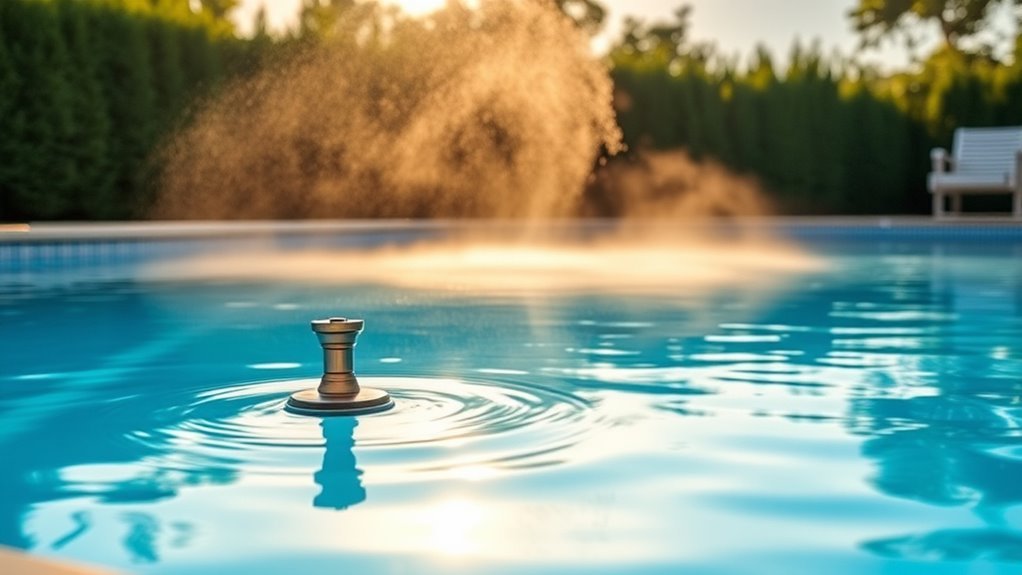
Although you mightn’t see it, shocking your pool plays an essential role in keeping the water clean and safe. When you shock your pool, you’re adding a high dose of chlorine or non-chlorine chemicals to eliminate bacteria, algae, and other contaminants.
This process helps restore the water’s clarity and balances its chemical levels. By doing this, you prevent unpleasant odors, cloudy water, and potential health risks.
Shocking is especially important after heavy pool use, rainstorms, or when you notice algae growth.
You’ll want to keep in mind that shocking isn’t a one-time fix. It’s part of regular pool maintenance to ensure your water stays inviting and safe.
Understanding this will help you maintain a healthy swimming environment.
Factors Influencing Safe Swim Time After Shocking
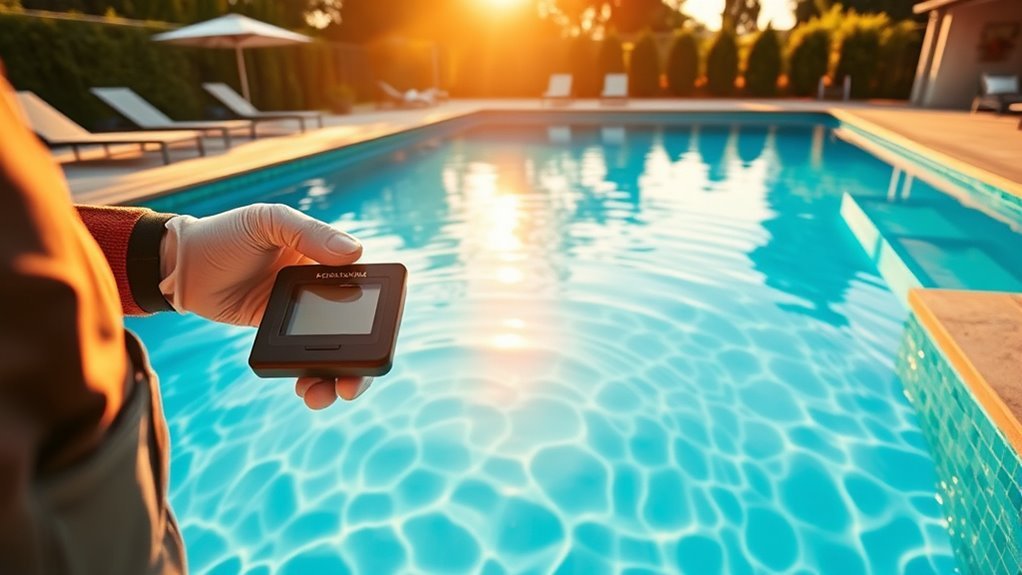
After shocking your pool to clear contaminants and balance chemicals, you’ll want to know when it’s safe to jump back in. Several factors influence this timing, and being aware of them helps you avoid skin irritation or respiratory issues.
Key elements to think about include:
- Chlorine Levels: Higher chlorine requires longer wait times for safe swimming.
- Water Temperature: Warm water accelerates chemical reactions, potentially reducing the wait.
- Pool Size and Volume: Larger pools dilute shock treatments faster, often shortening downtime.
- Sunlight Exposure: Sunlight breaks down chlorine, affecting how quickly levels drop to safe limits.
Recommended Wait Times Based on Shock Type
Since different types of pool shock vary in chemical composition and strength, you’ll need to adjust your wait time accordingly before swimming.
For chlorine-based shocks like calcium hypochlorite, wait at least 8 hours after application, ensuring chlorine levels drop below 3 ppm.
If you use non-chlorine shock, such as potassium monopersulfate, you can usually swim within 15 minutes to an hour because it breaks down faster and doesn’t raise chlorine levels considerably.
Liquid chlorine shocks often require a similar 8-hour wait, depending on dosage and water temperature.
Always check your product’s label for specific guidance.
How to Test Pool Water Before Swimming
Knowing how long to wait after shocking your pool is just one part of staying safe. Before you plunge in, you need to test your pool water to confirm it’s safe. Here’s how you can do it quickly and effectively:
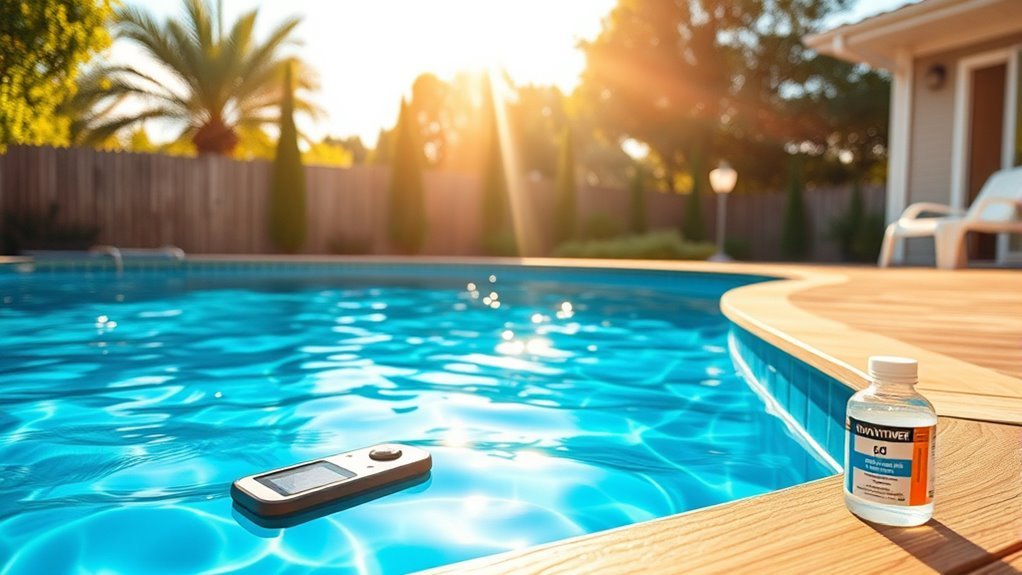
Use a reliable pool water test kit or test strips. Check the chlorine level; it should be between 1-3 ppm (parts per million). Test the pH level; aim for a range of 7.2 to 7.8.
Confirm alkalinity is balanced, ideally between 80-120 ppm.
If any levels are off, wait longer before swimming and retest. Proper testing guarantees you avoid irritation and health risks, so never skip this essential step after shocking your pool.
Tips for Maintaining Safe Chlorine Levels Post-Shock
While your pool recovers from a shock treatment, you’ll need to keep a close eye on chlorine levels to guarantee they stay within a safe range. Regular testing helps you avoid irritation or damage caused by too much or too little chlorine.
Adjust your maintenance routine based on test results and weather conditions.
| Tip | Action |
|---|---|
| Test Daily | Use a reliable test kit each morning |
| Wait Time | Don’t swim until chlorine drops below 5 ppm |
| Use a Pool Cover | Minimize chlorine loss from sunlight |
| Balance pH | Keep pH between 7.2 and 7.6 |
| Add Stabilizer | Use cyanuric acid to protect chlorine |
Following these tips ensures your pool stays safe and comfortable after shocking.
Frequently Asked Questions
Can Pets Swim in the Pool Right After Shocking?
You shouldn’t let pets swim right after shocking your pool. The chemicals can irritate their skin and eyes.
Wait until chlorine levels drop to safe limits, usually 24-48 hours, before letting them in.
Does Pool Shocking Affect Pool Equipment Lifespan?
Think of your pool equipment as a sturdy ship. Shocking occasionally won’t sink it, but frequent, harsh chemical storms can wear it down faster.
You should balance shocking to protect your pool gear’s lifespan effectively.
How Does Weather Impact Pool Shock Effectiveness?
Weather affects pool shock effectiveness because sunlight breaks down chlorine quickly, reducing its power. You’ll want to shock in the evening or on cloudy days to maximize effect.
Rain can also dilute chemicals, lessening impact.
Are There Natural Alternatives to Chemical Pool Shock?
Like a knight wielding a sword, you can use natural alternatives such as hydrogen peroxide, baking soda, or vinegar to shock your pool. They’re gentler on the environment but may need more frequent application to stay effective.
Can Pool Shock Cause Skin Irritation or Allergies?
Yes, pool shock can cause skin irritation or allergies if you’re sensitive to chemicals. You should rinse off after swimming and avoid swimming immediately after shocking to minimize irritation and allergic reactions.
Conclusion
So, you just shocked your pool and can’t wait to plunge in—understandable, but not so fast! Ironically, that very “clean” water needs a little chill time before it’s safe.
Waiting might feel like forever, but jumping in too soon turns your invigorating swim into a chemical bath. Test those chlorine levels, be patient, and you’ll enjoy your sparkling pool without the unexpected sting.
Sometimes, waiting is the best splash you’ll make! Remember, knowing how long after shocking your pool can you swim is key to a safe and refreshing experience.