How Long After Shocking a Pool Can You Swim
You can swim after shocking your pool once chlorine levels drop to a safe range, usually between 1–3 ppm, and the pH is balanced around 7.2–7.8. Knowing how long after shocking a pool you can swim is essential for safety and comfort.
How long you wait depends on the shock type: calcium hypochlorite and lithium hypochlorite require about 8 hours, sodium dichlor needs 4 to 6 hours, while potassium monopersulfate lets you swim in as little as 15 minutes.
Stick around to learn why timing and testing matter so much. Properly monitoring your pool ensures a safe swimming environment after shocking.
Understanding Pool Shocking and Its Purpose
Although pool shocking might sound intense, it’s simply a process you use to quickly raise chlorine levels and eliminate contaminants. When you shock your pool, you’re targeting bacteria, algae, and organic matter that regular chlorination might miss.
This helps keep your water clean, clear, and safe to swim in. You’ll notice that shocking is especially useful after heavy pool use, rainstorms, or when the water looks cloudy or smells off.
The process breaks down chloramines, those combined chlorine compounds that cause irritation and unpleasant odors. By doing this, you reset your pool’s chemical balance, making it more effective at sanitizing.
Understanding why and when to shock helps you maintain a healthy swimming environment and avoid potential health risks.
Types of Pool Shock Treatments
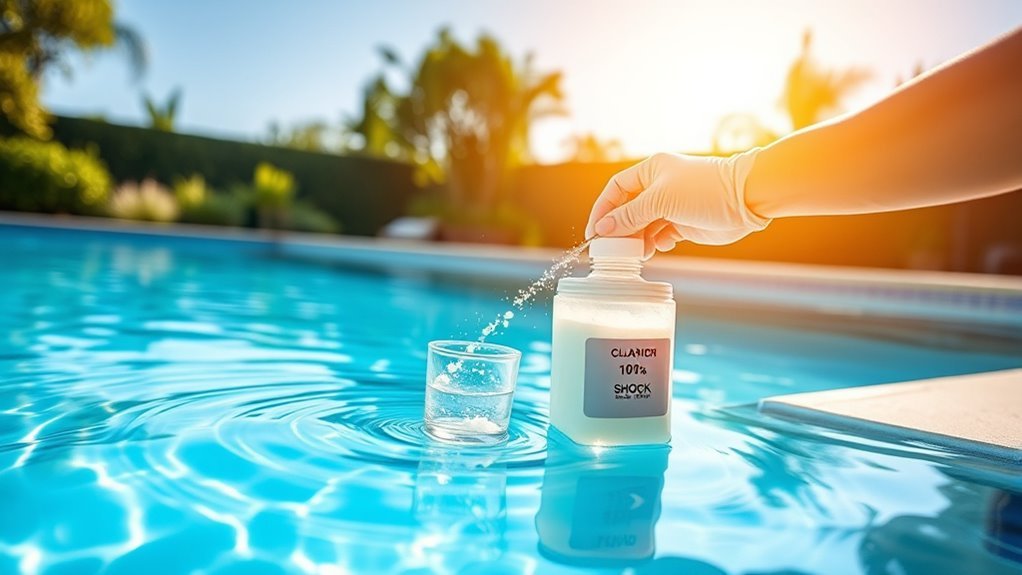
Now that you know why shocking your pool is important, it’s helpful to understand the different types of shock treatments available. Each type serves a specific purpose and works differently to keep your pool clean and safe.
Understanding the types of pool shock helps maintain cleanliness and safety effectively.
Here are four common types of pool shock:
- Calcium Hypochlorite (Cal-Hypo): A powerful, fast-acting shock that raises chlorine levels quickly.
- Sodium Dichlor: A stabilized shock that dissolves easily and doesn’t raise pH much.
- Potassium Monopersulfate (Non-Chlorine Shock): Oxidizes contaminants without adding chlorine, allowing quicker swimming.
- Lithium Hypochlorite: High-purity chlorine shock that dissolves quickly but is less common.
Choosing the right shock depends on your pool type, water conditions, and how soon you want to swim again.
Chemical Reactions and Residual Levels After Shocking
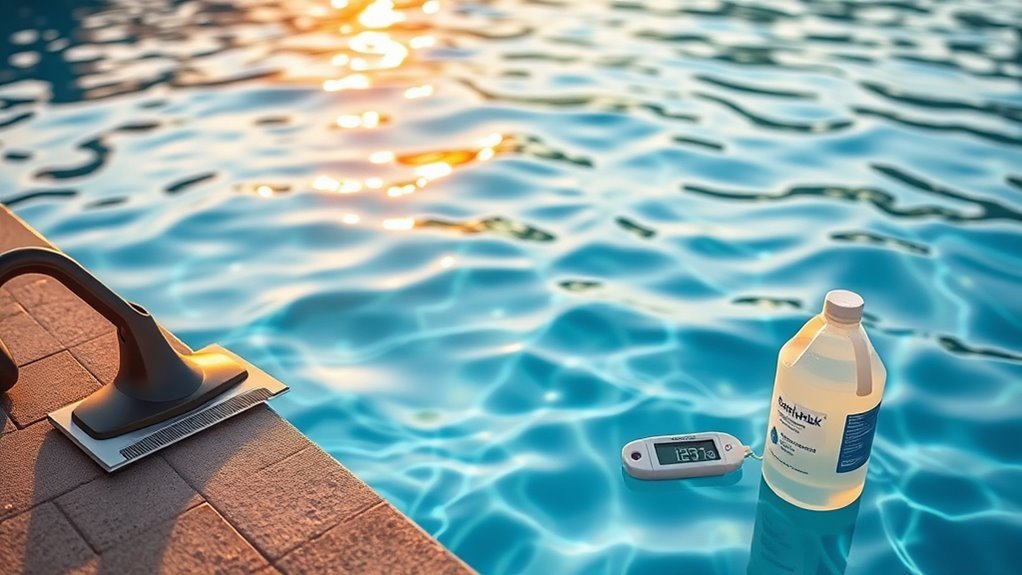
When you shock your pool, chemical reactions immediately begin breaking down contaminants and organic matter, which affects the residual chlorine levels in the water. The shock oxidizes bacteria, algae, and other impurities, helping restore water clarity and safety.
As these reactions occur, the free chlorine level spikes, creating a residual that continues disinfecting. However, this residual chlorine gradually decreases as it neutralizes contaminants and reacts with sunlight and pool materials.
It’s important to monitor the chlorine levels after shocking because swimming too soon, when chlorine is still high, can cause skin and eye irritation.
Understanding how these chemical changes happen helps you determine when your pool water is safe for swimming, ensuring a comfortable and healthy experience.
Recommended Waiting Times Based on Shock Type
Since different types of pool shock contain varying chemicals and strengths, the waiting time before you can swim changes accordingly. You need to know which shock you’ve used to gauge safe re-entry times.
Different pool shocks require different waiting times before swimming to ensure safety from chemical exposure.
- Calcium Hypochlorite (Cal-Hypo): Wait at least 8 hours to avoid skin and eye irritation.
- Sodium Dichlor: Usually requires a 4 to 6-hour wait due to its stabilized nature.
- Potassium Monopersulfate (Non-Chlorine Shock): You can swim almost immediately, often after 15 minutes.
- Lithium Hypochlorite: Similar to Cal-Hypo, give it about 8 hours before swimming.
Knowing the shock type helps you plan your pool time safely without risking exposure to harsh chemicals.
Testing Pool Water Before Swimming
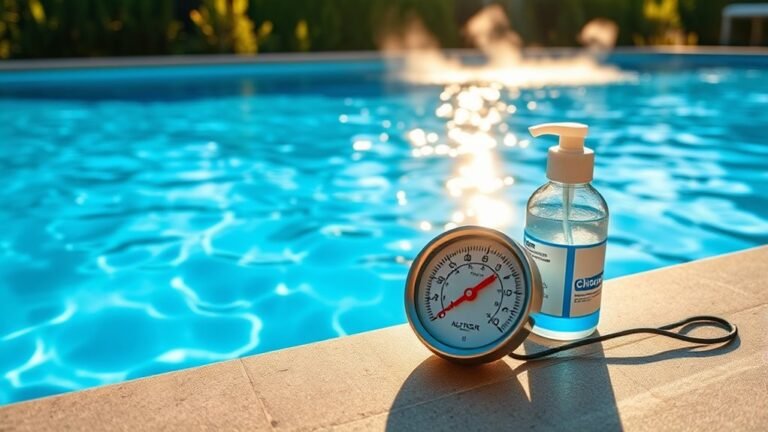
How can you be sure the pool is safe to swim in after shocking it? Testing the water is essential before you plunge in. First, use a reliable pool test kit or test strips to measure free chlorine and pH levels.
You want the free chlorine to drop back to 1-3 ppm, which indicates it’s safe for swimmers. The pH should be balanced between 7.2 and 7.8 to avoid irritation.
Also, check the combined chlorine level; it should be near zero, as high combined chlorine means the pool still has contaminants.
If any readings are off, wait longer and retest. Regular testing ensures you don’t swim in harsh chemicals or unsafe water, keeping your swim both enjoyable and healthy.
Health Risks of Swimming Too Soon After Shocking
Although shocking a pool is necessary for maintaining cleanliness, swimming too soon afterward can expose you to harmful chemicals that irritate your skin, eyes, and respiratory system. When you jump in too early, you risk:
- Skin irritation – High chlorine levels can cause redness, itching, and dryness.
- Eye discomfort – Chlorine and other chemicals may burn your eyes or cause excessive tearing.
- Respiratory issues – Breathing in chemical fumes might trigger coughing, wheezing, or worsen asthma.
- Chemical ingestion – Swallowing water with elevated chemicals can upset your stomach or cause nausea.
To safeguard your health, it’s crucial to wait until chemical levels stabilize. Ignoring this can lead to discomfort and potential health complications, making your swim far less enjoyable.
Tips for Safe Swimming Post-Shock
To protect yourself from irritation and other health issues after shocking your pool, you’ll want to follow some practical safety tips before swimming again.
First, always test the chlorine levels with a reliable pool test kit. Swim only when the chlorine concentration drops to safe levels, typically below 3 ppm.
Always check chlorine levels with a test kit and swim only when safe, below 3 ppm.
Avoid jumping in immediately, even if the water looks clear, since harmful chemicals may still be present.
Rinse off thoroughly with fresh water after swimming to remove any residual chemicals on your skin or hair.
Keep an eye on any signs of irritation such as redness or itching, and exit the pool at once if you experience discomfort.
Finally, maintain good pool hygiene by showering before entering and avoiding swimming if you have open wounds to minimize risks.
Factors That Influence Waiting Time After Shocking
Since several factors affect how long you should wait after shocking your pool, understanding them can help you determine the safest time to swim again. The waiting time isn’t one-size-fits-all; it depends on key elements related to your pool and shock treatment.
- Type of Shock Used: Different chemicals, like chlorine or non-chlorine shock, require varying wait times.
- Shock Concentration: Higher amounts of shock mean longer wait times to allow chemicals to dissipate.
- Water Temperature: Warm water speeds up chemical reactions, often reducing the wait time.
- Pool Size and Circulation: Larger pools or poor circulation can slow chemical dispersal, increasing waiting time.
Frequently Asked Questions
Can Pool Shock Damage Pool Equipment or Liners?
Yes, pool shock can damage your pool equipment or liners if used improperly.
You should always follow the manufacturer’s instructions and avoid over-shocking to protect your investment and keep everything running smoothly.
How Often Should I Shock My Pool During Summer?
Just like tending a garden in full bloom, you should shock your pool once a week during summer.
This routine keeps your water sparkling and healthy, letting you plunge in confidently without worry or delay.
What Is the Best Time of Day to Shock a Pool?
You should shock your pool in the late afternoon or early evening. This timing lets the chlorine work effectively overnight without UV rays breaking it down,
so your pool’s ready and safe to swim in by morning.
Can Pets Safely Swim in a Pool After Shocking?
You shouldn’t let pets swim immediately after shocking your pool.
Wait until chlorine levels drop to safe limits, usually 24-48 hours, to protect their sensitive skin and respiratory system from irritation or harm.
Does Pool Shocking Affect Saltwater Pools Differently?
Imagine salt crystals dancing as you shock your saltwater pool; yes, it affects it differently. Your saltwater system works with chlorine generation, so shocking boosts chlorine levels more quickly, requiring careful monitoring before you dive back in safely.
Conclusion
After shocking your pool, you should wait at least 8 hours before swimming to ensure chemical levels drop to safe limits. Remarkably, studies show that nearly 60% of pool owners swim too soon, risking skin and eye irritation.
To keep yourself safe, always test your water before jumping in and follow the recommended waiting times based on your shock type. Taking these simple steps helps you enjoy a clean, healthy swim every time.
Remember, knowing how long after shocking a pool you can swim is crucial for your safety and comfort. Always prioritize proper chemical balance and safe swimming practices.