How You Can Swim Safely in the Nile River
To swim safely in the Nile River, it is essential to check the current and depth first, as they can be strong and unpredictable. Choosing calm, clear areas away from waterfalls or debris is crucial for your safety. Always swim with a buddy and never go alone.
Wearing a life jacket and water shoes provides extra protection. Avoid swimming at night and stay alert for wildlife that may be present in the water.
Following these tips helps keep you safe while enjoying the Nile River. There is more to know for confidently experiencing the river, so always stay informed and prepared.
Understand the River’s Current and Depth
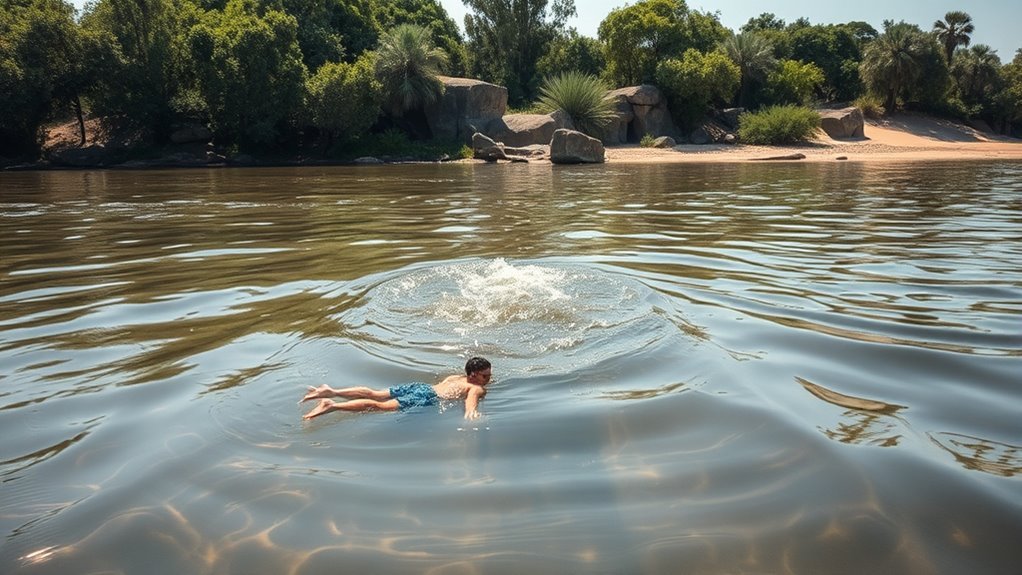
Before you immerse yourself in the Nile, you need to understand its current and depth. The Nile’s flow varies greatly depending on the season and location, so you can’t assume it’s always gentle.
Pay close attention to signs of strong currents, such as ripples moving faster than usual or swirling water. These can easily sweep you off your feet. Also, the river’s depth changes unexpectedly; some spots might plunge suddenly.
If you’re unfamiliar with an area, avoid diving in headfirst. Instead, test the water depth gradually. Knowing these factors helps you anticipate dangers and stay safe.
Always respect the river’s power, and don’t underestimate how quickly conditions can change while you swim.
Choose Safe Swimming Zones
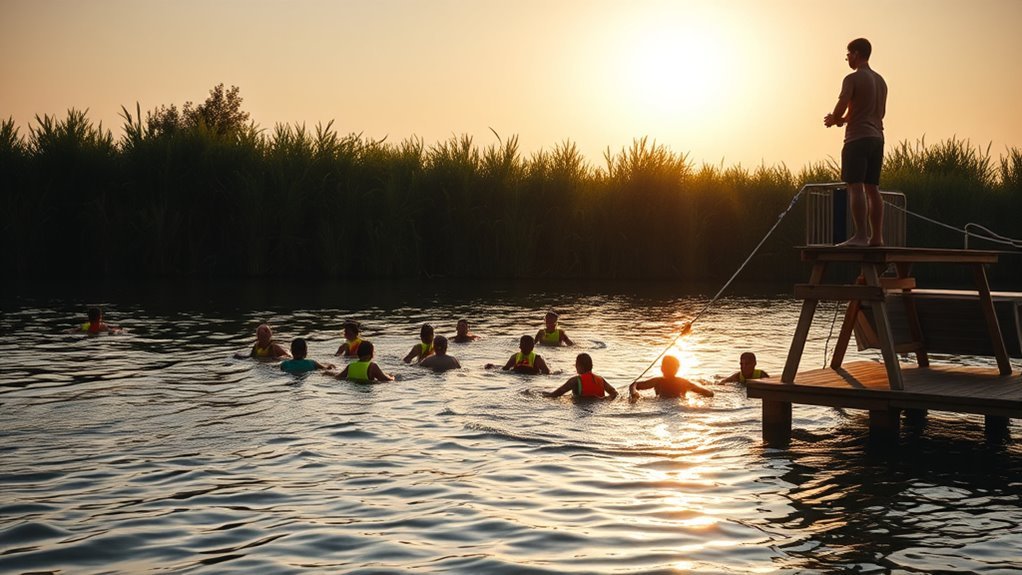
Knowing the river’s current and depth sets the stage for picking the safest spot to swim. You want to choose areas where the water flows gently and the depth stays manageable.
Avoid zones near waterfalls, sharp bends, or where debris tends to collect. Look for designated swimming spots, often marked by locals or safety signs. These spots usually have fewer hidden hazards and calmer waters.
| Safe Zone Criteria | What to Look For |
|---|---|
| Calm Water | Minimal current, smooth flow |
| Clear Water | Good visibility, no debris |
| Moderate Depth | Between 1-2 meters ideal |
| Away from Obstacles | No rocks, plants, or logs |
| Locally Recommended | Confirmed by experienced swimmers |
Pick your zone carefully to enjoy a safe, invigorating swim.
Swim With a Buddy or Group
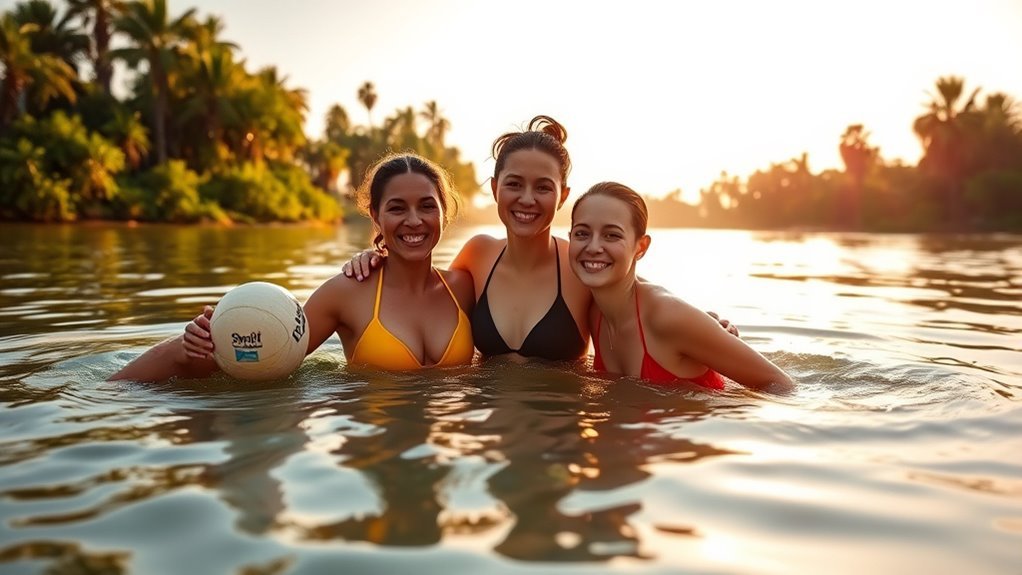
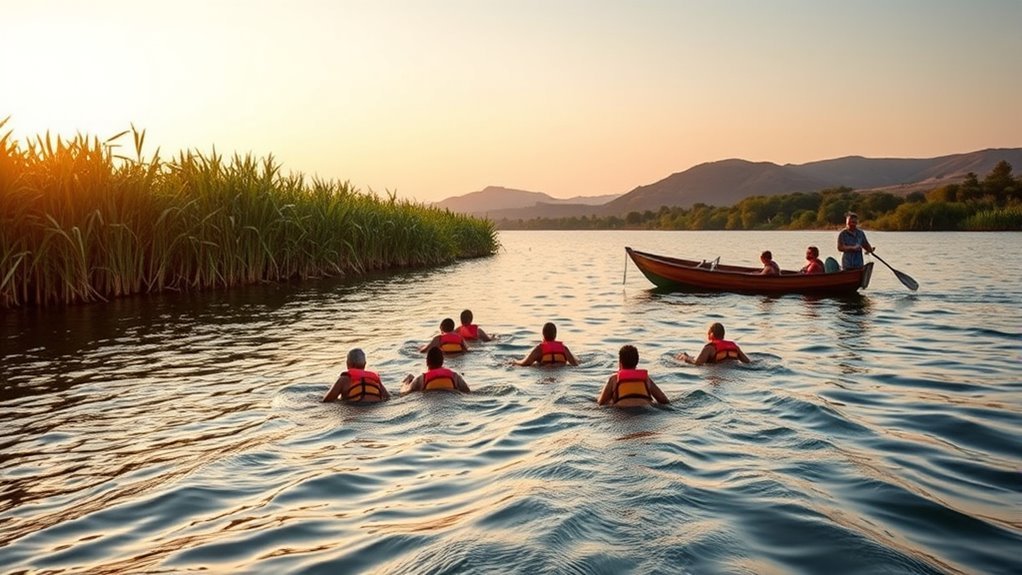
Whenever you swim in the Nile, always go with a buddy or a group to boost your safety. Having someone with you means you can watch out for each other, quickly respond if trouble arises, and share the experience.
Swimming alone increases risks because there’s no one to call for help or assist if you get tired or caught in a current. When you swim with others, you can keep an eye on changing conditions and alert each other to hazards.
Stick close together and communicate regularly, so everyone stays aware and safe. Whether you’re an experienced swimmer or a beginner, don’t underestimate the value of companionship.
Swimming in the Nile is safer and more enjoyable when you’re not alone.
Use Proper Swimming Gear
Even if you’re confident in your swimming skills, using proper gear is essential for staying safe in the Nile. Start with a well-fitted life jacket to keep you afloat, especially in strong currents.
Wear water shoes to protect your feet from sharp rocks or debris underwater. A swim cap and goggles can improve visibility and protect your eyes from irritants.
Consider a wetsuit if the water is cool, as it helps regulate your body temperature. Avoid loose clothing that can weigh you down or get caught on underwater obstacles.
Make sure all your gear is secure and comfortable before entering the water. Proper gear not only boosts your safety but also enhances your confidence while swimming in the Nile’s unpredictable environment.
Avoid Swimming at Night
Because visibility drops considerably after dark, you shouldn’t swim in the Nile at night. Low light makes it hard to see currents, obstacles, or hazards in the water, increasing your risk of accidents.
You also won’t spot warning signs or signals from others nearby, which could be pivotal for your safety. Swimming during daylight lets you maintain better control and awareness of your surroundings.
If you’re swimming with others, staying visible ensures you can quickly get help if something goes wrong. Nighttime swimming also makes it difficult for rescuers to locate you in an emergency.
To stay safe, plan your swim during daylight hours and exit the water well before sunset. Prioritize your safety by avoiding the river after dark.
Be Aware of Local Wildlife
Staying safe in the Nile means more than just watching the time of day. You also need to keep an eye on the wildlife around you. The river is home to creatures that can be dangerous if provoked or surprised.
To swim safely, follow these key tips:
- Learn to identify common animals like crocodiles and hippos. They usually avoid humans but can attack if threatened.
- Avoid swimming near riverbanks or dense vegetation where animals like snakes may hide.
- Stay calm and move slowly if you spot wildlife. Sudden movements can provoke aggression.
- Never feed or disturb the animals. This can alter their natural behavior and increase risks.
Know How to Signal for Help
If you find yourself in trouble while swimming in the Nile, knowing how to signal for help can make all the difference. Use clear, recognizable signals to attract attention from people nearby or boats passing by.
Here are some effective signals:
| Signal Type | How to Perform |
|---|---|
| Waving Arms | Raise both arms and wave vigorously |
| Shouting | Call loudly for help repeatedly |
| Using a Whistle | Blow a whistle in short, sharp bursts |
Stay calm and persistent when signaling. If you have a brightly colored item, wave it to increase visibility. Remember, quick and clear communication can save your life, so practice these signals before you swim in the Nile.
Stay Hydrated and Protected From the Sun
After signaling for help, your body still needs proper care to keep you safe while swimming in the Nile. Staying hydrated and shielding yourself from the sun are essential to avoid heat exhaustion or sunburn.
Follow these steps to protect yourself:
- Drink water regularly before, during, and after swimming to maintain hydration.
- Apply waterproof sunscreen with high SPF at least 30 minutes before entering the water.
- Wear a wide-brimmed hat and UV-protective sunglasses when out of the water.
- Take breaks in shaded areas to cool down and prevent overheating.
Learn Basic Water Rescue Skills
Because emergencies can happen anytime in the Nile, you should learn basic water rescue skills to respond quickly and safely.
Start by understanding how to recognize when someone is in distress. Look for signs like struggling to keep their head above water or calling for help.
Practice reaching assists using poles, ropes, or flotation devices to avoid putting yourself at risk.
Knowing how to perform a safe tow or support can help you bring someone to shore effectively.
Learn simple CPR and first aid techniques to provide immediate care if needed.
Taking a water rescue course or training with certified professionals will build your confidence and competence.
These skills can save lives and make your Nile swimming experience safer for you and those around you.
Follow Local Guidelines and Regulations
Mastering water rescue skills is just one part of staying safe while swimming in the Nile. Equally important is following local guidelines and regulations. These rules exist to protect you from unexpected hazards unique to the river.
Here’s what you should do:
- Check for posted signs about swimming areas, currents, and wildlife warnings.
- Always swim in designated zones where lifeguards or local authorities monitor conditions.
- Respect any seasonal restrictions, especially during flood periods or breeding seasons for local fauna.
- Consult locals or officials before swimming to get real-time updates on river conditions.
Frequently Asked Questions
Are There Specific Times of Year When Swimming Is Safer in the Nile?
Yes, you’ll find swimming safer during the dry season, typically from November to March. The water levels are lower, currents milder, and fewer crocodiles around, making it easier for you to enjoy a safer swim.
What Are the Common Health Risks From Swimming in the Nile?
You’ll face health risks like waterborne diseases, including schistosomiasis, caused by parasites, and bacterial infections from contaminated water.
Always avoid swallowing water and check local health advisories to protect yourself while swimming in the Nile.
Can Swimming in the Nile Help With Any Local Therapies or Treatments?
You won’t believe it, but swimming in the Nile can complement local therapies by promoting circulation and easing muscle tension.
Just remember, it’s not a miracle cure. Always combine it with proper medical advice and caution.
Is It Safe to Drink Water From the Nile After Swimming?
No, you shouldn’t drink water from the Nile after swimming. It contains bacteria and parasites that can make you sick.
Always use clean, treated water for drinking to stay safe and healthy during your visit.
Are There Swimming Lessons or Guides Available Near the Nile?
Looking for a guide or lessons? You’ll find expert instructors and local guides near the Nile, ready to teach you safe swimming techniques. Don’t hesitate, they’ll help you navigate the river’s currents like a pro.
Conclusion
Swimming safely in the Nile is like steering a powerful story—you need to respect its currents and know the plot. Just like a local swimmer once told me, “The river’s strength isn’t just in its flow, but in how wisely you move with it.”
By choosing safe spots, swimming with others, and following guidelines, you’ll turn the Nile from a challenge into an unforgettable adventure. Stay smart, stay safe, and enjoy the river’s magic.
Remember, swimming safely in the Nile means understanding its power and respecting its flow. With the right precautions, you can experience the beauty of the Nile River confidently and securely.