Why Is My Swimming Pool Green?
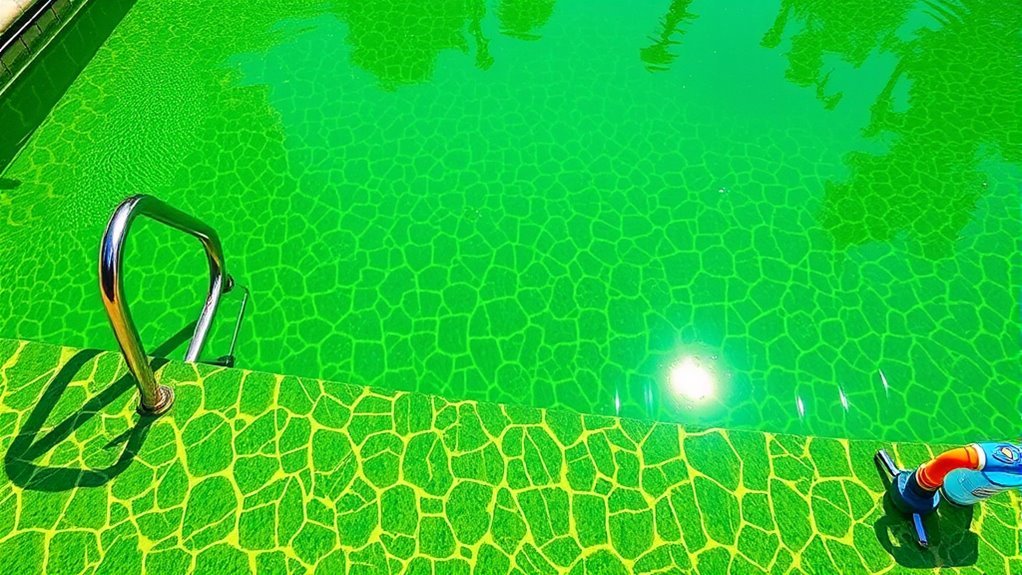
Your swimming pool turns green mainly because algae have taken hold when chlorine levels drop and water chemistry falls out of balance. Poor filtration and circulation allow algae and debris to build up, while wrong pH or alkalinity reduce chlorine’s effectiveness. Metals like copper can also tint the water.
Shocking the pool, brushing surfaces, vacuuming, and maintaining proper chemical levels and filtration help clear it up. Keep going to discover how to fix and prevent green pool water.
Common Causes of Green Pool Water
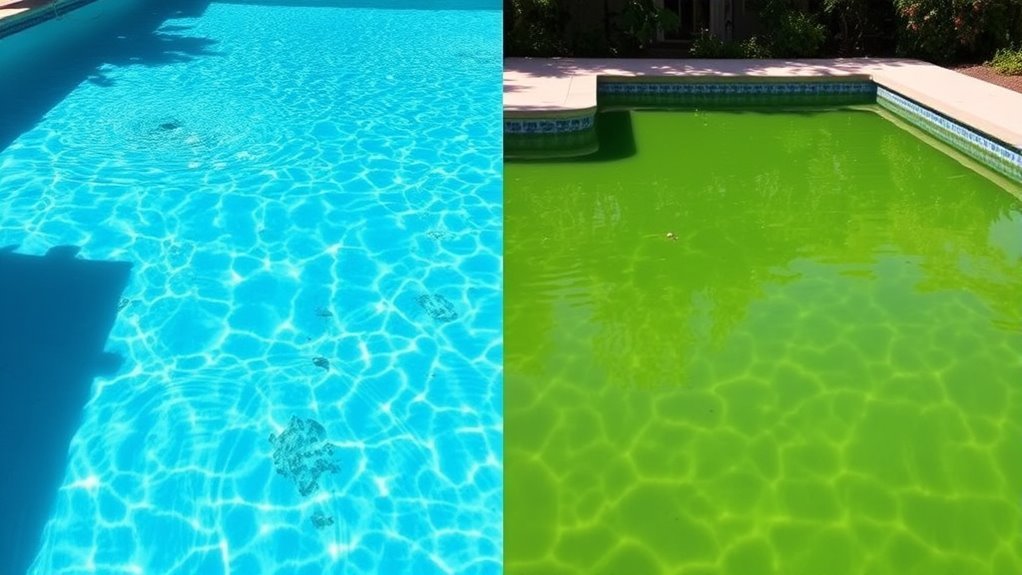
Although a green pool might seem harmless, it usually signals an underlying problem you need to address quickly. When you notice that green tint, it often means your water chemistry is off balance. Low chlorine levels allow contaminants to thrive, turning your pool murky.
A green pool often indicates low chlorine and imbalanced water chemistry that needs immediate attention.
Poor filtration can also cause green water since your filter isn’t removing debris effectively.
Additionally, if the pH or alkalinity drifts too far from the ideal range, minerals can precipitate and discolor the water.
You might also have metals like copper or iron in your water, which react with chemicals and cause a greenish hue.
The Role of Algae in Pool Discoloration
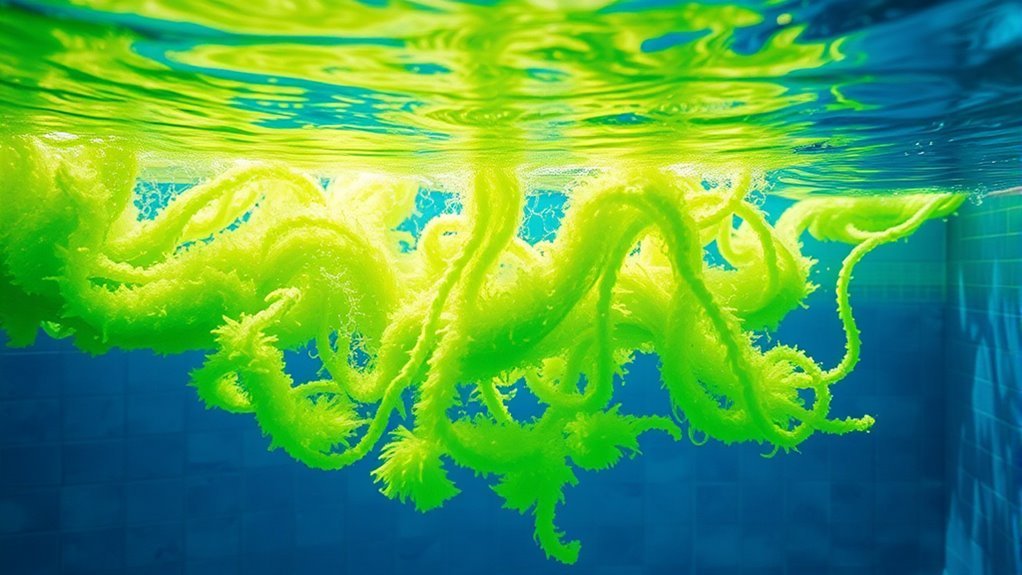
When your pool water turns green, algae are often the main culprit behind the discoloration. These tiny plants thrive in warm, sunny environments and multiply quickly if the chemical balance in your pool isn’t right.
Different types of algae affect your pool in various ways, making it essential to identify which one you’re dealing with.
| Algae Type | Color | Characteristics |
|---|---|---|
| Green | Bright green | Most common, easily visible |
| Yellow (Mustard) | Yellowish-green | Clings to pool surfaces |
| Black | Dark green/black | Hard to remove, grows on walls |
| Blue-green | Bluish-green | Slimy texture, rare |
| Pink Slime | Pink/red | Bacterial, not algae but similar |
Knowing the role of algae helps you tackle the problem effectively.
Importance of Water Circulation and Filtration
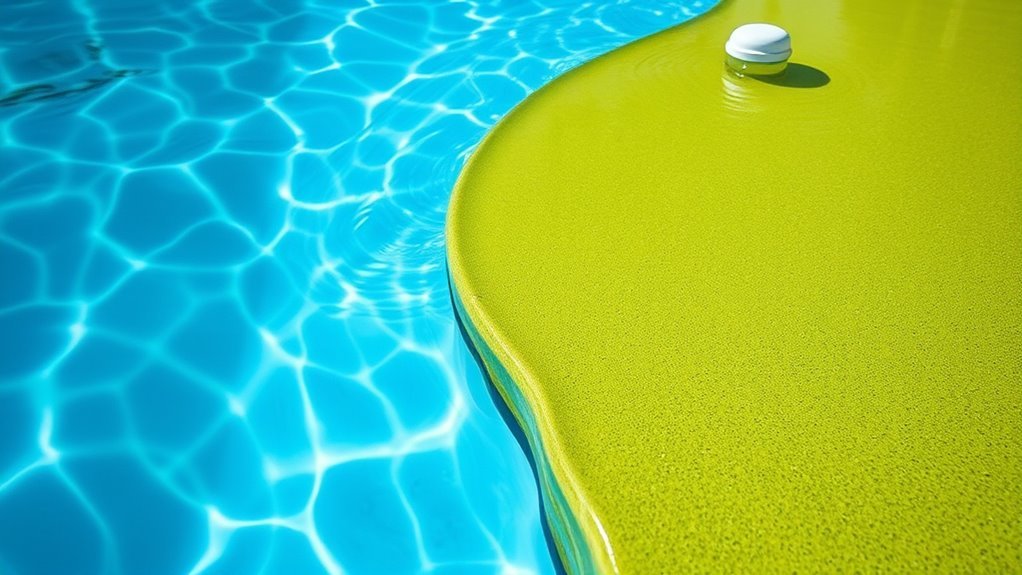
Because stagnant water invites algae growth and debris buildup, maintaining proper water circulation and filtration is essential for keeping your pool clear and healthy.
Proper water circulation and filtration prevent algae and debris, keeping your pool clear and healthy.
When water moves consistently, it prevents algae from settling and spreading, making it easier for your filtration system to trap dirt, leaves, and other contaminants.
You need to run your pool pump for several hours daily to guarantee sufficient circulation. Also, clean or replace your filter regularly to maintain excellent performance.
Neglecting circulation allows pockets of still water where algae thrive, turning your pool green.
By staying on top of circulation and filtration, you reduce algae risks and improve water clarity, ensuring a more enjoyable swimming experience.
Chemical Imbalances That Lead to Green Pools
If your pool water turns green despite good circulation and filtration, chemical imbalances are often the culprit. When chlorine levels drop too low, algae can grow quickly, turning your water green.
You also need to keep an eye on pH levels; if the pH is too high or too low, chlorine becomes less effective at killing algae.
Additionally, alkalinity plays a role in maintaining stable pH, so if it’s off, your pool chemistry gets thrown out of balance.
Metals like copper or iron in the water can oxidize and cause a greenish tint, even without algae.
Regularly testing and adjusting these chemical levels helps prevent green water, so you’ll want to stay on top of your pool’s chemical balance to keep it clear and inviting.
Steps to Restore Clear and Clean Pool Water
Keeping your pool’s chemical levels balanced is the first step, but restoring clear water often requires more targeted action. You’ll need to shock the pool to kill algae, brush the walls and floor to loosen it, and run the filter continuously to remove debris.
Testing and adjusting pH and chlorine levels guarantees the water stays safe and clear. Here’s a quick guide:
| Step | Action |
|---|---|
| Shock the Pool | Add chlorine shock to kill algae |
| Brush & Vacuum | Scrub surfaces and vacuum debris |
| Filter Continuously | Run filter 24/7 until clear |
Follow these steps consistently, and your pool will regain its sparkling clarity in no time.
Frequently Asked Questions
Can Pool Covers Prevent Green Water?
Yes, pool covers can help prevent green water by blocking sunlight, which algae need to grow. Make sure you use the cover consistently and maintain proper chemical levels to keep your pool clear and algae-free.
How Often Should I Test My Pool Water?
You should test your pool water at least twice a week during peak swimming season and once a week during off-season.
Regular testing helps you maintain balanced chemicals and prevent issues like algae growth or cloudy water.
Does Pool Size Affect Algae Growth?
Yes, pool size affects algae growth because larger pools need more chemicals and consistent circulation. You’ll have to manage water balance carefully to prevent algae, especially if your filtration system isn’t strong enough for the pool’s volume.
Are Natural Algaecides Safe for Swimmers?
Yes, natural algaecides are generally safe for swimmers when used as directed. You’ll want to follow the instructions carefully to avoid irritation, and guarantee proper circulation and filtration to keep your pool clean and healthy.
Can Rainwater Cause My Pool to Turn Green?
Yes, rainwater can introduce contaminants, dilute chemicals, and alter pH levels, causing algae growth and turning your pool green.
You’ll need to balance chemicals, clean filters, and maintain proper circulation to keep it clear and inviting.
Conclusion
It’s funny how your pool turns green just when you think everything’s perfect—often, it’s a mix of algae growth, poor circulation, and chemical imbalances working together against you.
But don’t worry; by regularly checking your water chemistry, maintaining your filters, and brushing away algae, you’ll restore that crystal-clear sparkle in no time.
So next time your pool looks more like a pond, remember—it’s just a coincidence of neglected care that’s easy to fix. Regular pool maintenance and proper chemical balance are key to preventing and resolving why your swimming pool is green.