Why Is My Betta Swimming Sideways?
If your betta is swimming sideways, it’s likely struggling with balance or buoyancy issues. This behavior is often caused by swim bladder disorder, infections, or injuries. Poor water quality and stressful tank environments can also disrupt normal swimming behavior.
You’ll want to check the water parameters, tank setup, and diet to help your fish recover and stay healthy. Keep an eye out for other stress signs. Further insight can help you support your betta’s wellbeing better.
Common Health Issues Causing Sideways Swimming
Although bettas are resilient fish, you might notice them swimming sideways when they’re dealing with health issues like swim bladder disorder, infections, or injuries.
Swim bladder disorder affects your betta’s buoyancy, making it difficult to maintain a normal swimming position.
Swim bladder disorder disrupts your betta’s buoyancy, causing trouble with normal swimming and balance.
Infections, often bacterial or parasitic, can cause inflammation or discomfort, leading your fish to swim unevenly.
Physical injuries, such as fin tears or body trauma, may also disrupt balance and movement.
If you spot your betta swimming sideways, inspect their environment for water quality and look for signs of illness like discoloration or lethargy.
Early identification and treatment are vital.
Keeping the tank clean and stable helps prevent many issues that cause abnormal swimming behavior in your betta fish.
Impact of Swim Bladder Disorder on Betta Fish
When your betta swims sideways, swim bladder disorder often plays a key role. This condition affects the fish’s swim bladder, an internal organ that controls buoyancy. When the swim bladder is damaged or inflamed, your betta struggles to maintain balance and orientation, causing it to tilt or float awkwardly.
You might notice your betta drifting on its side, flipping upside down, or having difficulty swimming upright.
Swim bladder disorder can result from overfeeding, constipation, infections, or physical injury. If left untreated, it can severely impact your betta’s ability to eat, swim, and avoid stress.
To help your betta recover, you’ll need to adjust its diet, provide clean water, and possibly seek veterinary advice.
Prompt action improves your betta’s chances of returning to normal swimming behavior.
Effects of Water Quality on Betta Behavior
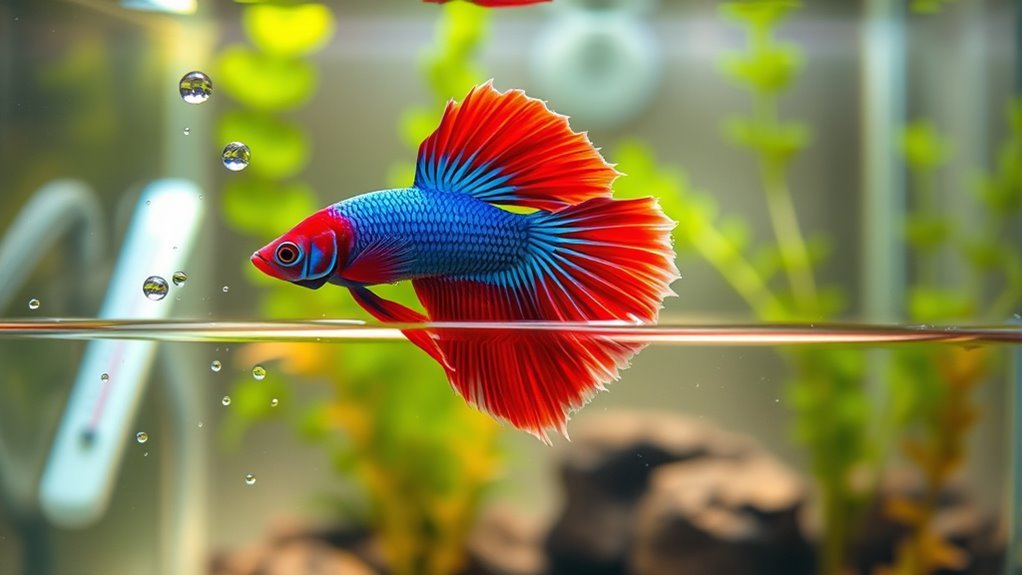
Since bettas live in water, the quality of their environment directly influences their behavior and health. Poor water conditions, like high ammonia, nitrite, or nitrate levels, can stress your betta and cause unusual swimming, including swimming sideways.
Poor water quality can stress bettas, leading to abnormal behaviors like swimming sideways.
If the water’s too cold or too warm, your fish might become lethargic or erratic. Low oxygen levels can also impact how your betta moves, making it struggle to maintain balance.
Regularly testing and maintaining proper pH, temperature, and cleanliness helps prevent these issues. By keeping the water clean and stable, you ensure your betta feels comfortable and behaves normally.
If you notice sideways swimming, checking water quality should be your first step to ruling out environmental stress before exploring other causes.
How Tank Environment Influences Swimming Patterns
Because your betta relies on its surroundings, the tank environment plays a crucial role in shaping its swimming patterns. When the setup is off, your betta might swim sideways or erratically as it tries to adapt.
Pay attention to these key factors:
Tank Size and Shape: Small or oddly shaped tanks can restrict movement, causing unusual swimming angles.
Decor and Plant Placement: Crowded or poorly arranged decorations can confuse your betta’s navigation, prompting sideways swimming.
Water Flow: Strong currents from filters or pumps may push your fish off balance, disrupting its normal swimming.
Identifying Signs of Stress in Betta Fish
Although bettas are resilient, they often show clear signs when they’re stressed. You might notice your betta swimming sideways or struggling to maintain balance, an early indicator of stress or swim bladder issues.
Other signs include faded color, clamped fins, lethargy, and loss of appetite. If your betta frequently hides or scratches against tank objects, it’s a signal something’s wrong.
Rapid gill movement or gasping at the surface can also point to poor water quality or oxygen levels. Pay close attention to these behaviors because catching stress early helps you respond quickly.
Preventative Measures to Keep Your Betta Healthy
Noticing signs of stress in your betta is a helpful way to catch health issues early, but preventing problems before they start is even better. You can keep your betta swimming strong and straight by focusing on these key areas:
Spotting betta stress early helps, but proactive care keeps your fish healthy and vibrant.
- Maintain clean water: Regular water changes and a good filtration system prevent toxins from building up, keeping your betta’s environment healthy.
- Monitor water temperature: Betta fish thrive in water between 76-82°F. Use a reliable heater to avoid fluctuations that stress your fish.
- Provide a balanced diet: Feed high-quality betta pellets and occasional treats like frozen or live foods to boost immunity and energy.
Treatment Options for Sideways Swimming Bettas
When your betta starts swimming sideways, taking prompt action can make all the difference. First, isolate your fish in a quarantine tank to monitor symptoms and prevent spread if infection is suspected.
Check water quality immediately—perform a partial water change and ensure parameters like temperature and pH are ideal.
If swim bladder disorder is the cause, fasting your betta for 24-48 hours followed by feeding cooked, peeled peas can help relieve constipation.
For bacterial or parasitic infections, use appropriate medications such as antibiotics or antiparasitics, following dosage instructions carefully.
Always consult a vet or aquatic specialist if symptoms persist or worsen. Early intervention improves recovery chances and helps your betta return to normal swimming behavior quickly.
Frequently Asked Questions
Can Bettas Swim Sideways Due to Genetics?
Yes, bettas can swim sideways due to genetics, but it’s rare. Usually, sideways swimming signals health or swim bladder issues.
If your betta swims that way often, consider checking water quality and diet first.
Does Diet Affect a Betta’s Swimming Style?
Did you know 70% of betta swim issues link to diet? Yes, your betta’s swimming style can change if it lacks proper nutrition.
Feeding balanced meals keeps them active and swimming normally, preventing sideway swimming.
Are Male and Female Bettas Affected Differently by Swim Bladder Issues?
Male and female bettas can both suffer from swim bladder issues, but males might show symptoms more prominently due to their larger size and more active swimming.
You should monitor both genders closely for any signs.
Can Sideways Swimming Be a Sign of Aging in Bettas?
Yes, sideways swimming can be a sign of aging in bettas, as their swim bladder and balance may weaken over time. However, it’s important you also check for illness or injury to rule out other causes.
How Long Does It Take for Bettas to Recover From Swim Bladder Problems?
Your betta usually starts improving within a few days to a week after proper care for swim bladder issues. Keep the water clean, feed easily digestible foods, and avoid overfeeding to help speed recovery.
Conclusion
If you’re worried that sideways swimming means your betta is beyond help, don’t be. Many common issues like swim bladder disorder or water quality problems can be treated effectively once you spot the signs.
By improving your tank environment and keeping a close eye on your betta’s health, you can help your fish swim normally again. With a little care and attention, your betta can thrive and bring you joy for a long time.
Addressing the reasons why your betta is swimming sideways promptly is key to restoring its health. Proper care and maintaining good water conditions ensure your betta swims happily and healthily once more.