How to Build a Swimming Pool in 10 Easy Steps
To build your swimming pool in 10 easy steps, start by planning your design and choosing the perfect spot that’s sunny and private. Selecting the ideal location is crucial for maximizing enjoyment and ensuring proper sunlight exposure. Get the needed permits and prepare the site by clearing debris and marking boundaries.
Excavate carefully to the right shape and depth, then build the pool shell with reinforced concrete. This foundation ensures durability and safety for your swimming pool. Apply finishes, install equipment like pumps and heaters, and fill your pool gradually.
Perform final inspections for safety and function. Each step is designed to guarantee your pool is perfect and ready for use. Keep going to discover how every phase contributes to creating your dream swimming pool.
Planning Your Swimming Pool Design
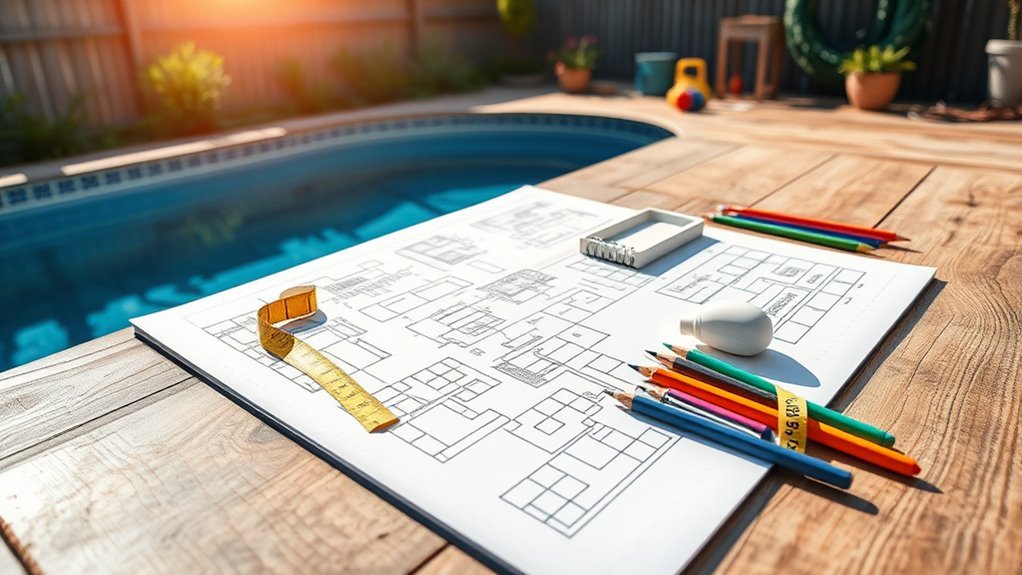
Before you begin construction, you need to carefully plan your swimming pool design to guarantee it fits your space, budget, and lifestyle. Start by deciding the pool’s shape and size. Consider whether you want a sleek lap pool or a freeform oasis.
Plan your swimming pool’s shape and size to perfectly match your space, budget, and lifestyle needs.
Think about how you’ll use the pool: Will it be for exercise, relaxation, or entertaining guests?
Next, choose materials that balance durability and aesthetics, such as concrete, fiberglass, or vinyl.
Don’t forget to factor in features like steps, lighting, and heating, which can enhance your experience but also affect costs.
Finally, sketch your ideas or use design software to visualize the pool.
Clear planning here saves headaches later, ensuring your new pool brings lasting enjoyment without surprises.
Selecting the Right Location
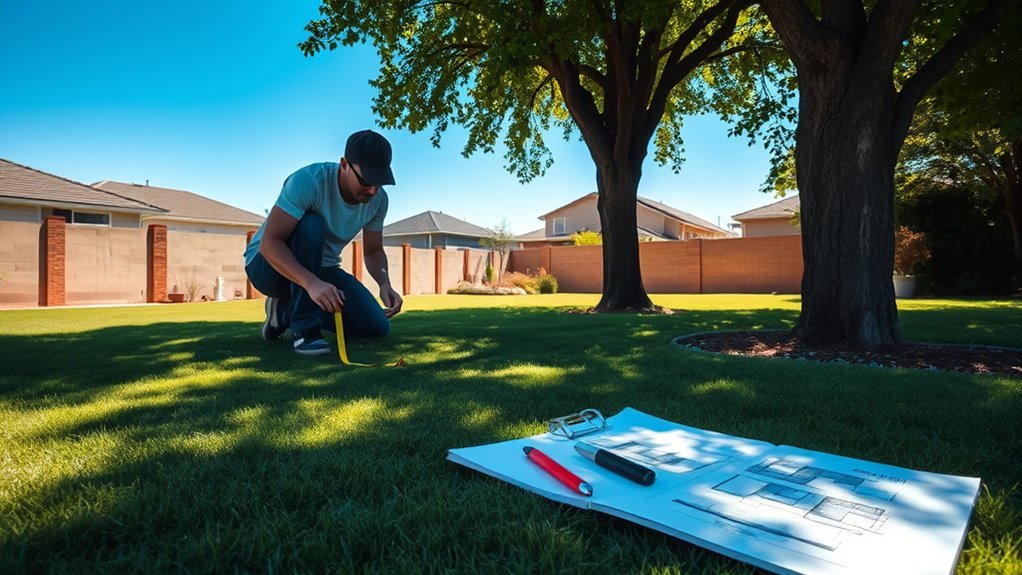
Although choosing the perfect location for your pool might seem straightforward, it requires careful thought to guarantee safety, convenience, and ideal enjoyment.
First, pick a spot that gets plenty of sunlight to keep the water warm and inviting. Avoid areas with overhanging trees to reduce debris and maintenance.
Consider privacy by selecting a location shielded from neighbors’ views or street traffic.
Ensure the ground is level and has good drainage to prevent flooding and structural issues.
Also, think about proximity to your house for easy access and supervision, especially if you have kids.
Finally, check for underground utilities and avoid planting too close to large roots that could damage the pool structure.
Taking these factors into account sets a solid foundation for your pool project.
Obtaining Necessary Permits
Since building a swimming pool involves significant construction, you’ll need to secure the proper permits from your local authorities. Start by contacting your city or county building department to find out which permits apply to your project.
These may include zoning permits, building permits, and electrical or plumbing approvals. Be prepared to submit detailed plans showing the pool’s location, size, and any safety features you’ll install.
The review process guarantees your pool meets local codes and safety standards, so don’t skip it. Applying early helps prevent delays once construction begins.
If you’re working with a contractor, they might handle the permit process, but it’s wise to confirm. Staying compliant protects your investment and avoids costly fines later on.
Preparing the Site for Construction
When you’re ready to build your pool, clearing and leveling the site is essential to guarantee a stable foundation. Start by removing debris, rocks, and vegetation from the area where the pool will go.
Clearing and leveling your pool site ensures a strong, stable foundation for lasting enjoyment.
Make sure to mark the pool’s perimeter clearly with stakes and string to visualize the exact boundaries.
Next, check the slope of the ground; you want it as level as possible to avoid complications later.
Use a shovel or a rented leveling tool to even out any high spots and fill low areas with compacted soil.
Proper drainage is also vital. Ensure the site won’t collect water, which could undermine the pool’s structure.
Taking these steps carefully sets you up for smooth construction ahead.
Excavating the Pool Area
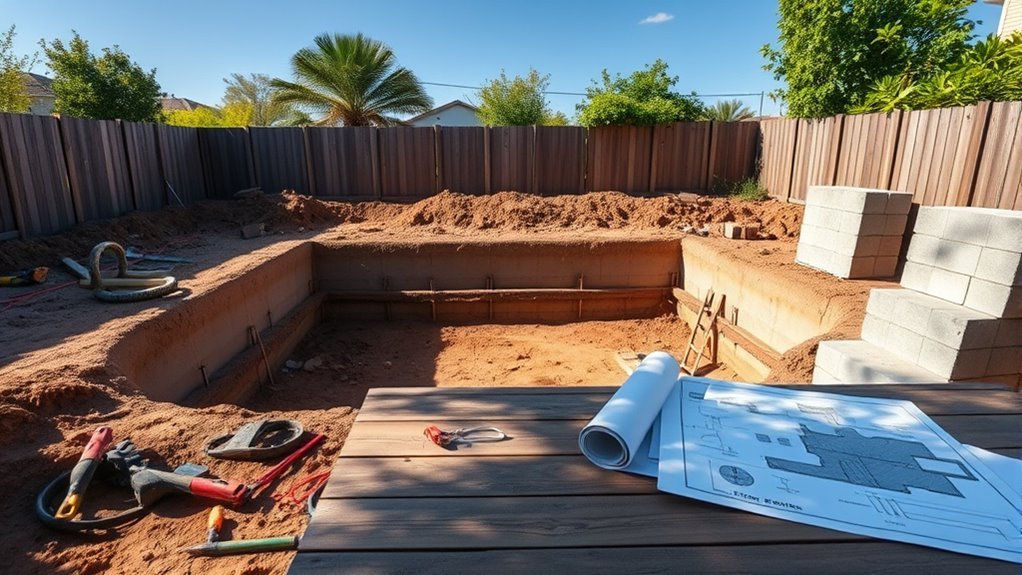
Before you start digging, make sure you have the exact dimensions and depth planned for your pool. Mark the perimeter clearly with stakes and string to guide your excavation.
Use a measuring tape to double-check every measurement. Begin by removing the topsoil layer carefully to prevent unnecessary mess.
Then, dig according to your marked outline, keeping the walls as straight as possible.
Use a mechanical excavator for efficiency, but if you’re doing it manually, work systematically to maintain shape and depth.
Constantly check your progress with a level and tape measure.
Remove loose soil regularly to keep the area clean and safe.
Once the hole matches your design, smooth out the bottom and sides to prepare for the next construction step.
Installing Plumbing and Electrical Systems
Although you’ve completed the excavation, installing the plumbing and electrical systems is crucial to guarantee your pool functions smoothly. Start by laying out the plumbing pipes for water circulation, drainage, and filtration. Use durable PVC pipes and ensure all joints are sealed tightly.
Next, install the electrical wiring for pumps, lighting, and heaters, following local codes and safety standards. Always use a licensed electrician for electrical work to avoid hazards. Double-check all connections before covering them.
| Component | Purpose |
|---|---|
| PVC Pipes | Water circulation and drainage |
| Pumps | Water filtration and movement |
| Electrical Wiring | Power for pumps and lighting |
| Safety Devices | Ground-fault circuit interrupters (GFCI) protection |
Proper installation prevents leaks and electrical failures, ensuring your pool operates efficiently.
Constructing the Pool Shell
How do you transform an empty hole into a sturdy pool foundation? Start by installing steel rebar to reinforce the walls and floor; this framework gives your pool the strength it needs.
Next, set up formwork to shape the concrete precisely. Once everything is in place, pour the concrete evenly, ensuring it fills all areas without gaps or air pockets.
Set up formwork carefully and pour concrete evenly to avoid gaps and ensure a solid shape.
Use a trowel to smooth the surface and maintain the desired thickness throughout.
Allow the concrete to cure properly, usually for several days, to achieve maximum durability. This solid shell will support your pool’s structure and resist ground pressure.
Applying Pool Finishes and Coatings
Once the pool shell has cured, you’ll apply finishes and coatings that protect the structure and enhance its appearance. Start by cleaning the surface thoroughly to guarantee proper adhesion.
Then, choose a finish that fits your style and budget. Common options include:
- Plaster: Smooth and durable, offering a classic white or tinted surface
- Pebble: Textured and slip-resistant, with a natural stone look
- Tile: Elegant and customizable, ideal for waterlines or entire pools
- Paint: Affordable and quick, but requires regular maintenance
Apply the finish evenly, following manufacturer instructions for drying times and layers. Proper application not only adds beauty but also seals the pool against water damage and chemicals, ensuring longevity and safety for years to come.
Installing Pool Equipment and Features
Before you fill the pool with water, you’ll need to install the essential equipment and features that keep it clean, safe, and enjoyable. Start by setting up the pump and filter system to circulate and purify the water effectively. Connect the plumbing lines carefully, ensuring all joints are secure to prevent leaks.
Next, install the pool heater if you want to extend your swimming season. Don’t forget to add the skimmer and return jets, which help maintain water flow and cleanliness.
For safety, place ladders or steps for easy entry and exit, and consider installing lighting for nighttime use.
Finally, set up any additional features like automatic cleaners or water features. Proper installation now saves you from costly fixes later.
Filling the Pool and Final Inspections
Where should you start when it’s time to fill your pool? First, make sure all plumbing and equipment are fully installed and tested. Then, slowly fill the pool with water, keeping an eye on the structure for any leaks or irregularities.
While filling, you should:
- Monitor water levels to avoid overfilling
- Check pool walls and floor for cracks
- Ensure pool equipment like pumps and filters operate correctly
- Keep the area clean and free of debris
Once full, conduct a final inspection with a professional to confirm everything meets safety and building codes. This step guarantees your pool is safe, functional, and ready for use.
After passing these checks, you can start balancing the water chemistry and enjoy your new pool!
Frequently Asked Questions
How Do I Maintain Water Quality After Building the Pool?
You should test and balance the water’s pH and chlorine regularly, clean filters weekly, remove debris daily, shock the pool periodically, and maintain proper circulation to keep your pool water clear, safe, and inviting.
Regularly monitoring the chemical levels ensures the water remains balanced and prevents issues such as algae growth or irritation. Cleaning the filters weekly helps maintain efficient water flow and filtration.
Daily removal of debris like leaves and insects prevents contamination and keeps the pool looking clean. Periodic shocking of the pool eliminates bacteria and contaminants that normal chlorination might miss.
Maintaining proper circulation is crucial to distribute chemicals evenly and prevent stagnant areas where algae could thrive. Following these steps consistently will help you enjoy a healthy and refreshing pool environment.
What Safety Measures Should I Implement Around the Pool?
You should install a secure fence with a self-latching gate, use pool covers, place non-slip surfaces around the pool, and keep rescue equipment nearby.
Always supervise swimmers to guarantee everyone stays safe and accidents are prevented.
How Often Should Pool Equipment Be Serviced?
You should service your pool equipment at least once every 3 to 6 months. Regular checks keep everything running smoothly, prevent costly repairs, and guarantee your pool stays clean and safe for everyone to enjoy.
Can I Add Heating Systems to My Pool Later?
Yes, you can add heating systems to your pool later. Many options, like solar or electric heaters, are designed for easy installation after your pool’s built.
Just make certain your plumbing and electrical setup can handle it.
What Are the Best Chemicals for Pool Cleaning?
You’ll want chlorine, bromine, and pH balancers—they keep your pool 99.9% bacteria-free. Don’t forget algaecides and clarifiers to maintain crystal-clear water.
Using these chemicals consistently ensures your pool stays safe and inviting.
Conclusion
Building your swimming pool might seem overwhelming, but by taking it step by step, you’ll see it come to life before you know it. Remember, “Rome wasn’t built in a day,” so be patient and enjoy the process.
With careful planning, the right location, and thorough construction, your backyard oasis will soon be ready for you to plunge in and make lasting memories.
Stay focused, follow these steps, and your dream pool will become a reality! Building your swimming pool with these easy steps ensures a smooth process and a stunning final result.