3 Ways to Save Money on How Much Swimming Pool Installation Does Cost
You can save money on swimming pool installation by choosing cost-effective materials like vinyl or fiberglass, which are quicker and cheaper to install than concrete. Understanding how much swimming pool installation does cost can help you make smarter decisions and avoid overspending.
Schedule your installation during off-peak seasons, such as fall or winter, to get better rates and faster project starts. Preparing your site in advance by clearing debris and marking utilities reduces labor time and unexpected fees.
Keep these tips in mind, and you’ll uncover more ways to cut costs effectively. By planning ahead and selecting the right materials and timing, your pool installation can be both affordable and efficient.
Choose Cost-Effective Pool Materials

Although the type of pool material you select greatly affects the final cost, you can save money by choosing options like vinyl or fiberglass instead of concrete.
Vinyl pools typically cost less upfront and are quicker to install, saving you labor expenses.
Fiberglass pools come pre-molded and require less maintenance, which can lower long-term costs.
Concrete pools, while customizable and durable, demand more labor and materials, pushing your budget higher.
When you pick vinyl or fiberglass, you also reduce installation time, letting you enjoy your pool sooner without extra fees.
Keep in mind, choosing the right material isn’t just about price—it’s about how well it fits your lifestyle and maintenance preferences.
Schedule Installation During Off-Peak Seasons

If you want to cut down on swimming pool installation costs, scheduling your project during off-peak seasons can make a big difference. Pool contractors often have fewer jobs in the fall and winter, so they may offer better rates or be more willing to negotiate prices.
Schedule pool installation in fall or winter for better rates and easier scheduling with contractors.
Plus, you’ll face less competition for scheduling, meaning your project can start sooner without rush fees.
Keep in mind that weather conditions might slow things down, but careful planning can minimize delays.
By choosing to install your pool when demand is lower, you’re likely to save money and get more personalized attention from your contractor.
Plan and Prepare Your Site in Advance
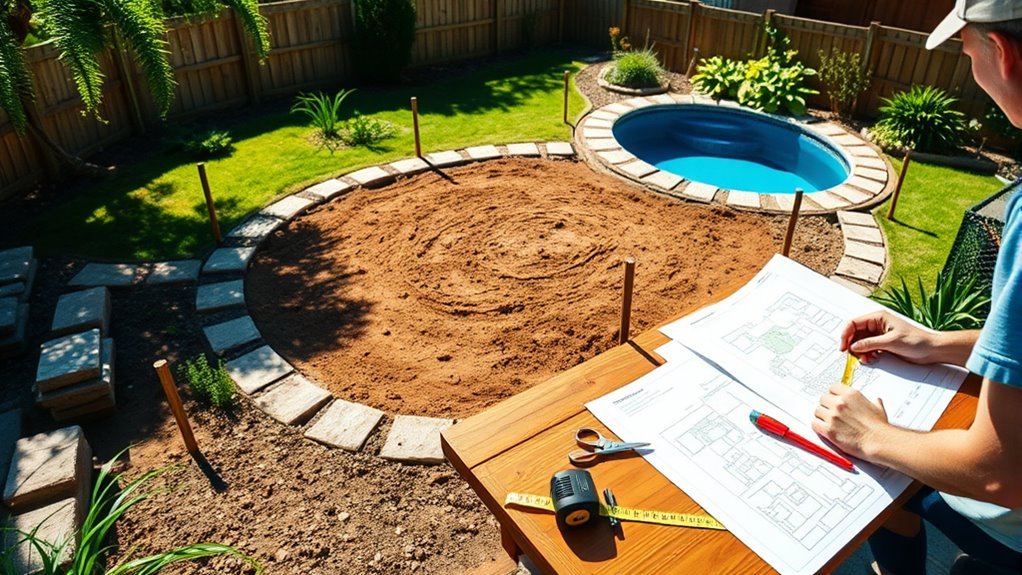
Choosing the right time for installation is just one way to save money. Another smart move is to plan and prepare your site in advance. Before the crew arrives, clear the area of debris, plants, and any obstacles that could slow down work.
If you have uneven terrain, consider leveling it yourself or hiring a landscaper beforehand. This reduces excavation time and labor costs.
Also, make sure to locate and mark underground utilities to avoid costly damages.
Having a detailed site plan ready helps installers work efficiently, cutting down on unexpected expenses. By taking these steps, you’ll streamline the process and keep installation costs lower.
Preparation isn’t just about convenience; it directly impacts your budget.
Frequently Asked Questions
How Does Pool Size Affect the Overall Installation Cost?
Your pool size directly impacts installation costs because larger pools require more materials, labor, and excavation. Bigger pools also increase expenses for permits and equipment, so choosing an appropriate size helps you manage your budget effectively.
Are There Financing Options Available for Pool Installation?
About 60% of pool installers offer financing options. You can easily find plans with low-interest rates or no payments for months, letting you spread out costs and enjoy your pool now without breaking the bank upfront.
What Maintenance Costs Should I Expect After Installation?
You’ll face costs for chemicals, cleaning supplies, equipment repairs, and energy to run pumps. Regular maintenance, like skimming and balancing water, can add up, so budget for ongoing expenses to keep your pool safe and clean.
Can Adding Features Like Lighting Increase Installation Expenses?
Yes, adding features like lighting will increase your installation expenses because they require additional materials and labor.
However, you can choose energy-efficient options to save on long-term costs while enhancing your pool’s ambiance.
How Long Does the Typical Pool Installation Process Take?
Think of pool installation like planting a garden—it usually takes 4 to 8 weeks.
You’ll watch progress daily, from digging to finishing touches, before you can plunge into your new backyard oasis.
Conclusion
If you choose cost-effective materials, schedule installation during off-peak seasons, and prepare your site in advance, you’ll not only save money but also avoid common delays.
It’s no coincidence that being smart about your pool installation timing and choices leads to a smoother process and a better budget. When you plan ahead, everything seems to fall into place—just like how the perfect swim feels like a revitalizing reward for your careful preparation.
By following these tips, you can significantly reduce how much swimming pool installation does cost, making your dream pool more affordable and enjoyable.