How Do You Teach an Infant to Swim in 3 Easy Steps
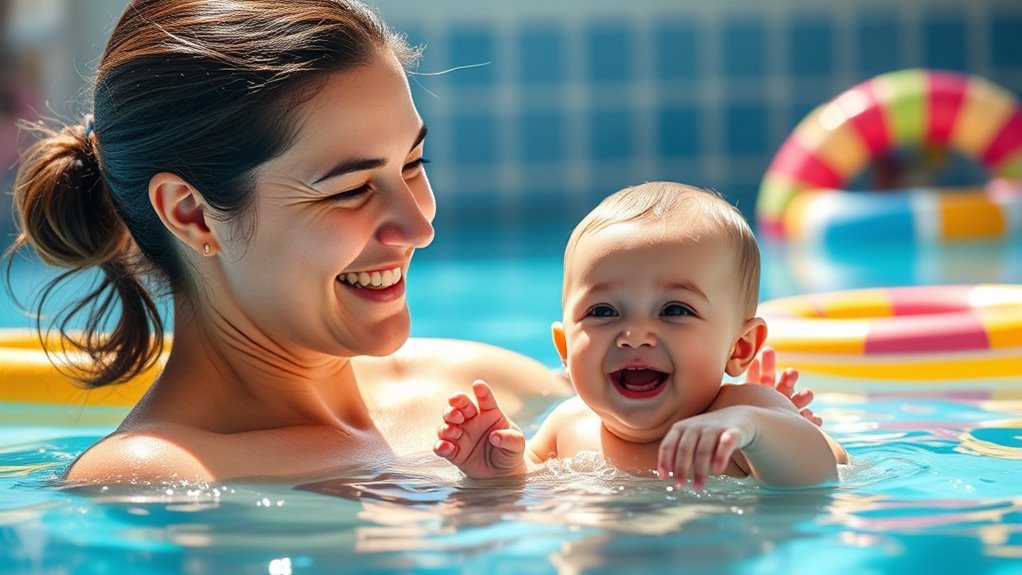
To teach your infant to swim, start by gently introducing them to water with short, positive sessions that build comfort and trust. Teaching an infant to swim involves patience and consistent practice to ensure they feel safe and happy in the water.
Next, focus on basic water safety skills like breath control and supported kicking while always supervising closely. These foundational skills are crucial for developing your baby’s confidence and safety awareness in the pool.
Finally, keep the experience fun with playful games and praise to boost their confidence and enjoyment. If you keep exploring these steps, you’ll uncover even more ways to nurture your little one’s swim skills and safety.
Getting Your Infant Comfortable With Water
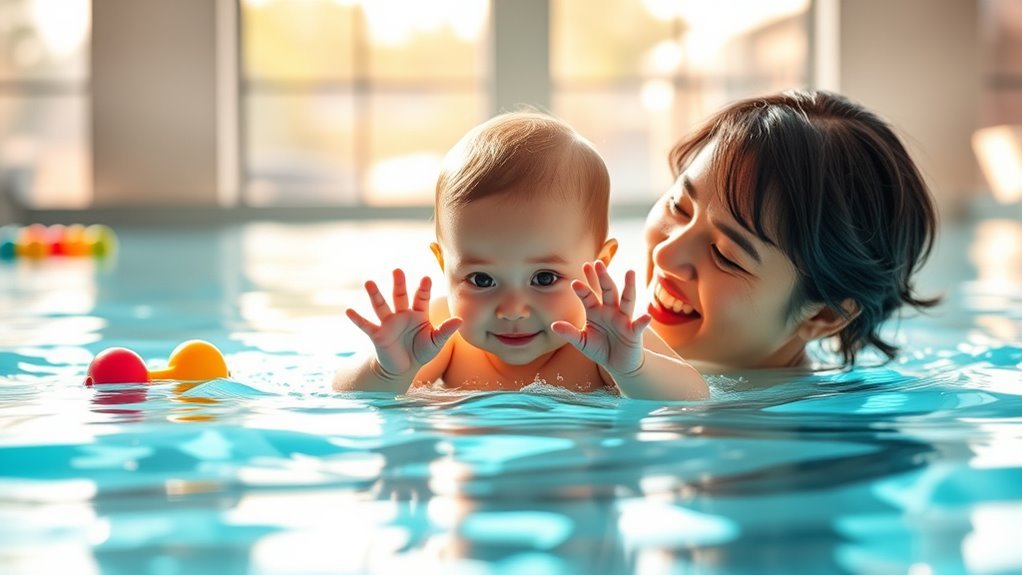
Before introducing formal swimming lessons, you need to help your infant feel safe and relaxed in the water. Start by gently introducing your baby to water during bath time, letting them splash and play while you maintain close eye contact and soothing tones.
Gradually progress to shallow water in a pool or bathtub, supporting their head and body securely. Keep sessions short and positive to prevent overwhelming your infant. Use calm, reassuring touches and smiles to build trust.
Avoid forcing your baby underwater; instead, encourage curiosity and comfort by letting them explore at their own pace.
Consistency is key. Regular, gentle exposure will help your infant develop a positive association with water, setting a strong foundation for future swimming lessons.
Teaching Basic Water Safety and Skills
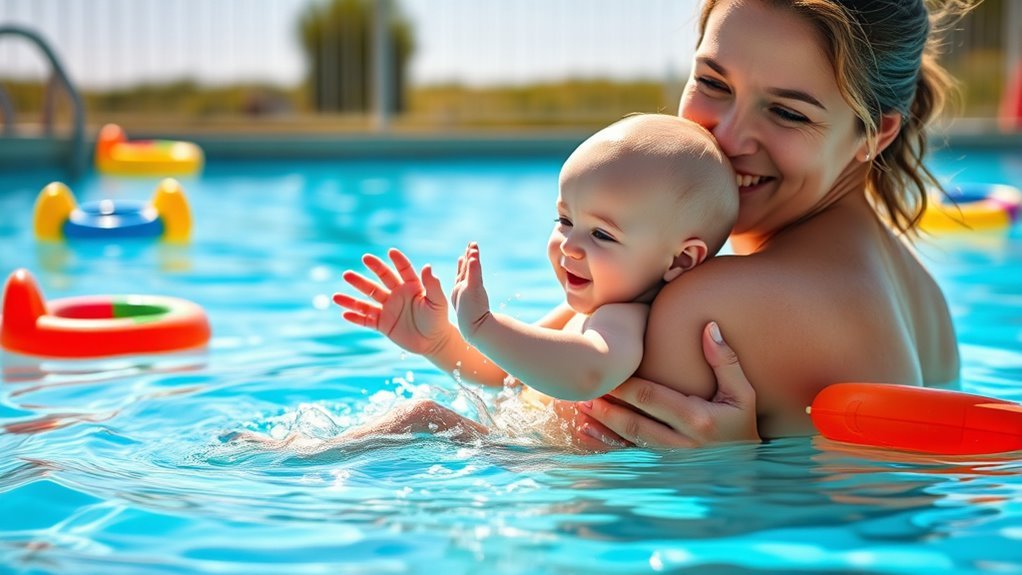
Once your infant feels comfortable in the water, you can start teaching basic water safety and skills to build their confidence and awareness.
Begin by showing them how to hold their breath and blow bubbles, which helps them get used to water around their face.
Start with teaching breath-holding and blowing bubbles to ease water comfort around their face.
Gently support their body as they kick their legs and move their arms to simulate swimming motions.
Teach them to respond to your voice and signals, so they learn to stay close and listen.
Always reinforce the importance of staying calm in the water and never going near it without adult supervision.
These foundational skills create a safer environment and prepare your infant for more advanced swimming lessons as they grow.
Building Confidence and Enjoyment in the Pool
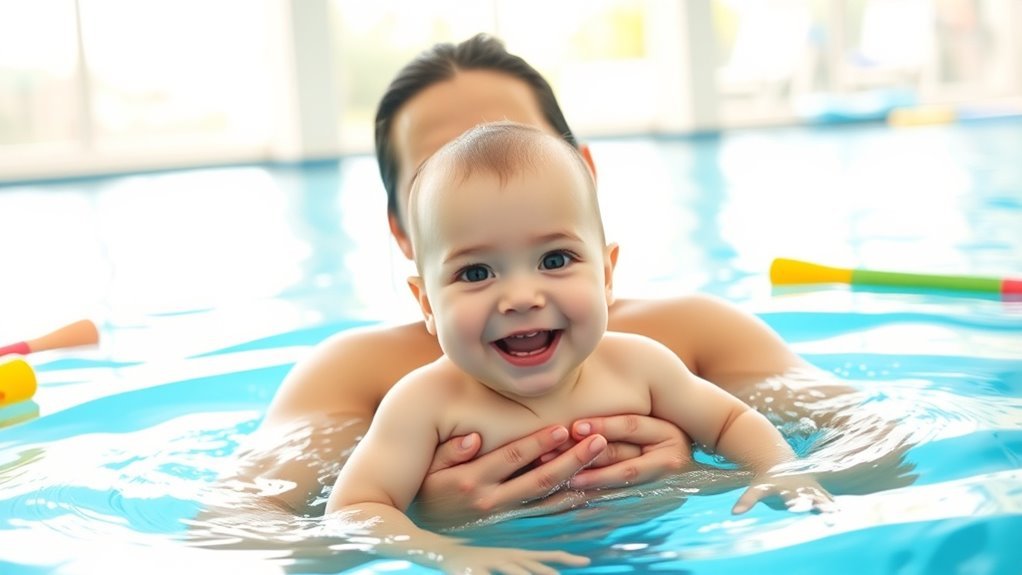
Creating a positive and fun atmosphere in the pool helps your infant build confidence and look forward to swim time. You want to keep sessions lighthearted, using playful tones and gentle encouragement.
Let your baby explore the water at their own pace, celebrating small achievements to boost their comfort. Incorporate toys and games to make learning enjoyable. Stay close and supportive to foster trust.
| Activity | Purpose | Tips |
|---|---|---|
| Splashing games | Familiarize with water | Use soft toys, gentle splashes |
| Floating support | Build water comfort | Hold securely, smile often |
| Singing songs | Create a joyful mood | Use simple, repetitive tunes |
| Gentle submersion | Encourage water trust | Always be supportive, slow |
These steps help your infant associate swimming with fun and safety.
Frequently Asked Questions
What Is the Best Age to Start Infant Swim Lessons?
You can start infant swim lessons as early as 6 months old. At this age, your baby can get comfortable in the water, build basic skills, and develop water confidence with gentle, supervised guidance.
Are There Specific Swim Gear Recommended for Infants?
You absolutely need snug swim diapers and a baby wetsuit. Without them, your little one might freeze or cause a splashy mess!
Plus, a cute swim cap keeps ears warm and goggles protect those precious eyes underwater.
How Can I Handle Fear of Water in Infants?
You can handle your infant’s fear of water by introducing it gently, staying calm, offering plenty of cuddles, and using playful splashes.
Keep sessions short and positive so they feel safe and start enjoying water gradually.
What Are the Health Benefits of Infant Swimming?
You’ll boost your infant’s physical strength, coordination, and cardiovascular health through swimming. It also enhances cognitive development, builds confidence, and strengthens your bond.
Plus, it promotes better sleep and water safety awareness from an early age.
How Often Should Infant Swim Sessions Be Scheduled?
You should schedule infant swim sessions like gentle waves, about 1-2 times a week. This rhythm lets your baby build comfort and strength without overwhelming their tiny muscles or senses.
Keep it consistent, but playful.
Conclusion
Teaching your infant to swim can be one of the most rewarding experiences you’ll ever have. By getting them comfortable with water, introducing basic safety and skills, and building their confidence, you’re setting them up for a lifetime of fun and safety.
Remember, every splash is a giant leap toward their independence in the pool. So plunge in with patience and love—you’ll watch your little one transform into a tiny water champion before you know it!
With these simple steps, teaching an infant to swim becomes an enjoyable journey. Focus on comfort, safety, and confidence to ensure a positive swimming experience. Your infant’s swimming skills will grow, making swim lessons a joyful part of their early development.