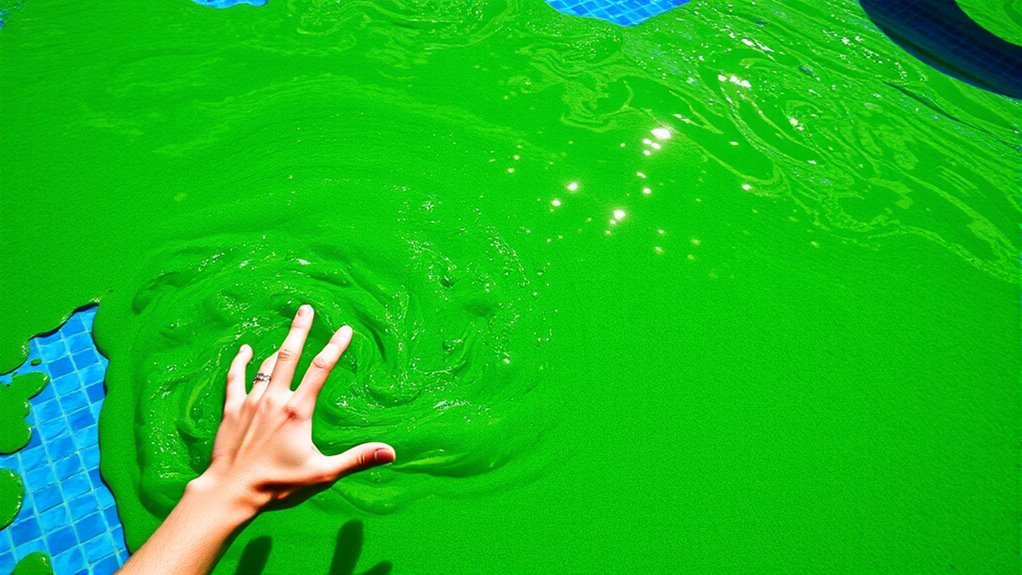
What Happens if You Swim in a Pool With Algae?
If you swim in a pool with algae, you risk slipping on slimy surfaces and exposing yourself to harmful bacteria that can cause skin rashes, ear infections, and respiratory issues. Algae make the water cloudy and murky, reducing visibility and safety, while increasing chlorine demand and clogging filters.
This not only affects water quality but also raises maintenance costs. To understand more about how algae grow and affect your pool, keep exploring these important details.
Causes of Algae Growth in Pools
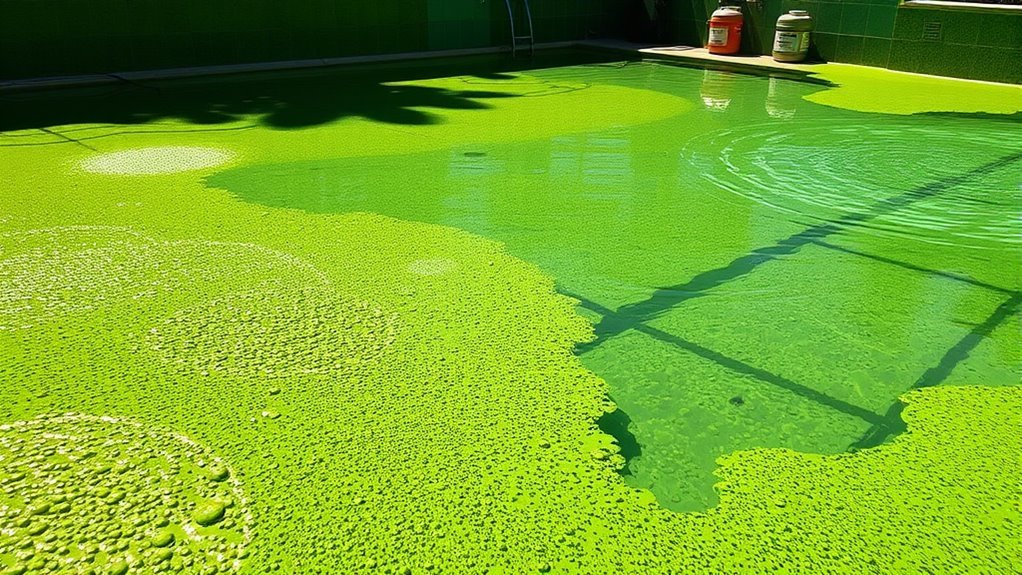
Although you might keep your pool clean, algae can still grow when conditions are right. Algae thrive in warm, sunny water, so if your pool’s temperature stays high, it creates an ideal environment.
You mightn’t realize that poor circulation or filtration allows nutrients to build up, feeding algae growth. If you don’t maintain proper chlorine levels, algae can quickly take hold because the sanitizer isn’t strong enough to kill it.
Additionally, debris like leaves and dirt introduce organic matter that algae feed on. If you skip regular brushing and vacuuming, algae can cling to pool surfaces and multiply.
Health Risks Associated With Swimming in Algae-Infested Water
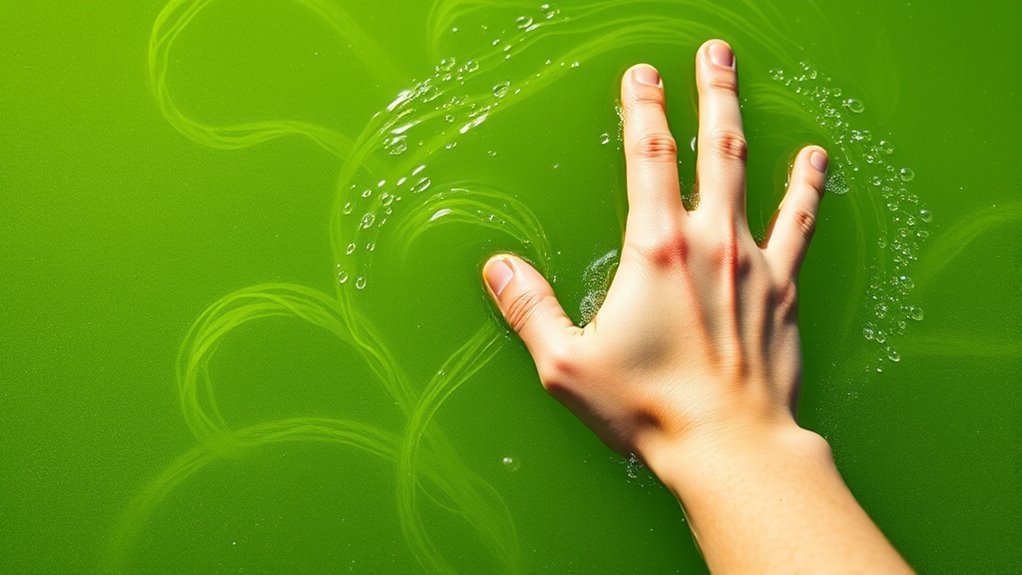
When you swim in a pool infested with algae, you expose yourself to several health risks. Algae create a slippery surface that can cause falls, while harboring harmful bacteria and pathogens. These microorganisms may lead to skin rashes, ear infections, and respiratory problems.
| Health Risk | Possible Symptoms |
|---|---|
| Skin Irritation | Redness, itching, rash |
| Ear Infections | Ear pain, itching, discharge |
| Respiratory Issues | Coughing, wheezing, congestion |
Swimming in such conditions weakens your immune system’s defense, increasing infection chances. To stay safe, avoid algae-infested pools or ensure proper cleaning and chemical treatment before entering the water.
Effects of Algae on Pool Water Quality
Beyond the health risks, algae considerably impact your pool’s water quality. When algae start growing, you’ll notice several changes that affect your swimming experience and maintenance routine. Here’s what algae do to your pool water:
- Cloudiness: Algae multiply rapidly, turning your water murky and reducing visibility.
- pH Imbalance: They alter the chemical balance, making it tougher to maintain proper pH levels.
- Increased Chlorine Demand: Algae consume chlorine, forcing you to add more to keep the water sanitized.
- Unpleasant Odor and Taste: Algae can produce a musty smell and strange taste, making the water uninviting.
If you want clear, safe water, controlling algae growth is essential for maintaining pool quality.
Common Types of Pool Algae and Their Characteristics
Since algae come in various forms, recognizing the common types can help you tackle them effectively. Green algae is the most frequent culprit, forming slimy, green patches that make your pool look dirty. It thrives in sunlight and poor circulation.
Yellow or mustard algae show up as dusty, yellow spots, often resistant to standard chlorine levels. You’ll find this type in shady corners and on pool surfaces.
Black algae is tougher; it appears as dark, stubborn spots, often on pool walls or steps. Its protective coating makes it harder to remove.
How Algae Impact Pool Safety and Maintenance
Identifying the type of algae in your pool is just the first step, as each kind affects pool safety and maintenance differently. Algae can quickly turn your pool from an invigorating oasis into a hazardous and high-maintenance zone.
You’ll notice slippery surfaces that increase the risk of falls, and cloudy water that hides potential dangers beneath the surface.
Besides safety, algae also:
- Accelerate filter clogging, reducing circulation efficiency
- Increase chemical demand, raising maintenance costs
- Encourage bacterial growth, compromising water quality
- Cause staining on pool walls and floors, damaging surfaces
Preventing and Treating Algae in Swimming Pools
Although algae can quickly take hold in your pool, you can prevent and treat it effectively with the right approach. Start by maintaining proper water chemistry. Keep chlorine levels between 1-3 ppm and pH between 7.2-7.6.
Prevent algae by keeping chlorine levels at 1-3 ppm and pH between 7.2 and 7.6.
Regularly brush pool surfaces and vacuum debris to stop algae from settling. Ensure your filtration system runs daily for at least 8 hours to circulate water and remove contaminants.
If you spot algae, shock your pool with a high dose of chlorine and use an algaecide designed for your pool type. Don’t forget to clean or backwash your filter afterward.
Consistency is key; monitoring and adjusting your pool’s balance prevents algae growth and keeps your water clear and safe for swimming.
Frequently Asked Questions
Can Algae in Pools Stain Swimwear or Pool Surfaces?
Yes, algae in pools can stain your swimwear and pool surfaces. If you don’t act quickly, the pigments can set, leaving stubborn green or yellow marks that are tough to remove and ruin your gear or tiles.
Does Swimming in Algae-Filled Water Affect Pool Filtration Systems?
Doesn’t clogged filters slow everything down? Yes, swimming in algae-filled water can strain your pool’s filtration system, causing blockages and reducing efficiency.
You’ll need more frequent cleanings and maintenance to keep it running smoothly.
Are Certain Pool Chemicals Less Effective Against Algae?
Yes, some chemicals like chlorine can be less effective against certain algae types. You’ll often need algaecides or specialized treatments to fully eliminate algae and keep your pool water clear and safe.
How Quickly Can Algae Reappear After Treatment?
Algae can bounce back in as little as 24 to 48 hours if conditions stay ripe.
You’ve got to stay on your toes, maintaining proper chemicals and filtration to keep algae from making a comeback.
Can Algae Growth Attract Insects or Other Pests to the Pool Area?
Yes, algae growth can attract insects like mosquitoes and other pests to your pool area because stagnant, algae-filled water provides a breeding ground. You’ll want to keep your pool clean to avoid these unwanted visitors.
Conclusion
Swimming in an algae-filled pool is like diving into a green swamp—slippery, murky, and potentially risky. You might think it’s just an eyesore, but those tiny invaders can turn your invigorating swim into a breeding ground for germs and skin irritations.
Algae can make surfaces slippery, increasing the risk of falls and injuries. It also reduces water clarity, making it harder to see underwater hazards. Plus, the presence of algae can lead to unpleasant odors and an overall uninviting swimming environment.
To keep your pool sparkling and safe, you’ve got to tackle algae head-on with regular care and treatment. Don’t let algae crash your swim party—stay vigilant and keep the water crystal clear! Maintaining proper pool chemistry and routine cleaning are key to preventing algae growth and ensuring a healthy swimming experience.