How Do You Lower Ph in Your Swimming Pool Quickly
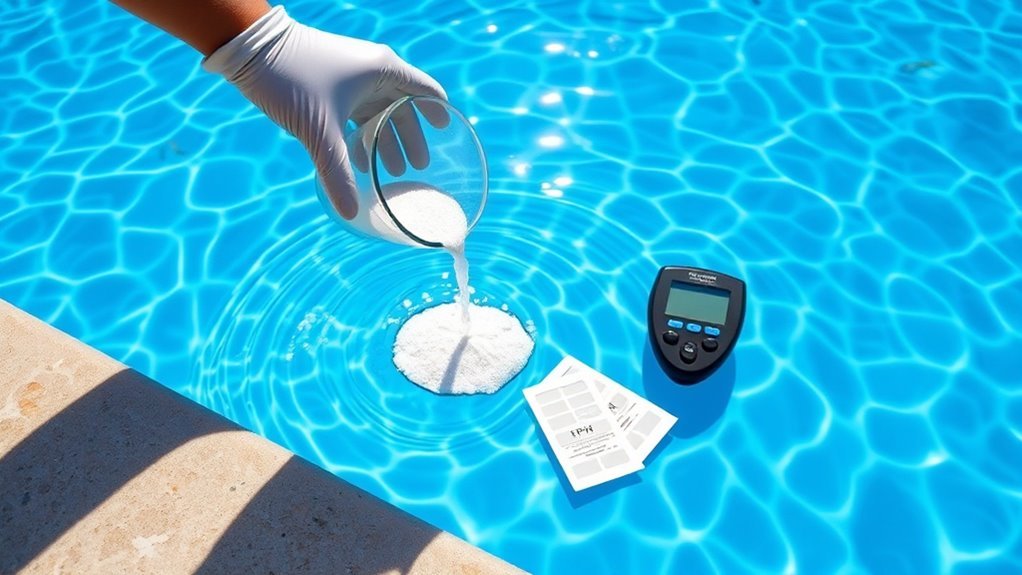
To lower your pool’s pH quickly and effectively, start by adding muriatic acid or sodium bisulfate in small, careful amounts. These chemicals are commonly used to reduce pH levels in swimming pools. Make sure the pool pump is running to ensure good circulation throughout the water.
Always wear protective gear such as gloves and goggles when handling acids. Dilute the acid properly before adding it to the pool to avoid damage to the pool surfaces or irritation to your skin.
After treatment, test the pH several hours later. Repeat the process if necessary until the pH level reaches the ideal range of 7.2–7.8. Using these methods helps keep your pool water safe and comfortable.
With a few simple tips, you can maintain the perfect chemical balance in your swimming pool easily and efficiently.
Understanding Pool Ph and Its Importance
Although it might seem technical, understanding pool pH is essential for keeping your water safe and comfortable. The pH level measures how acidic or basic your pool water is, ranging from 0 to 14. Ideally, you want it between 7.2 and 7.8.
When the pH is balanced, chlorine works efficiently to kill bacteria and algae, and swimmers won’t experience irritation in their eyes or skin.
If it’s off, your pool can become cloudy, equipment may corrode, and cleaning chemicals won’t work properly.
By regularly testing and adjusting your pool’s pH, you maintain a healthy swimming environment.
Knowing this helps you take quick action when the pH rises, ensuring your pool stays inviting and safe all season long.
Common Causes of High Ph Levels in Pools
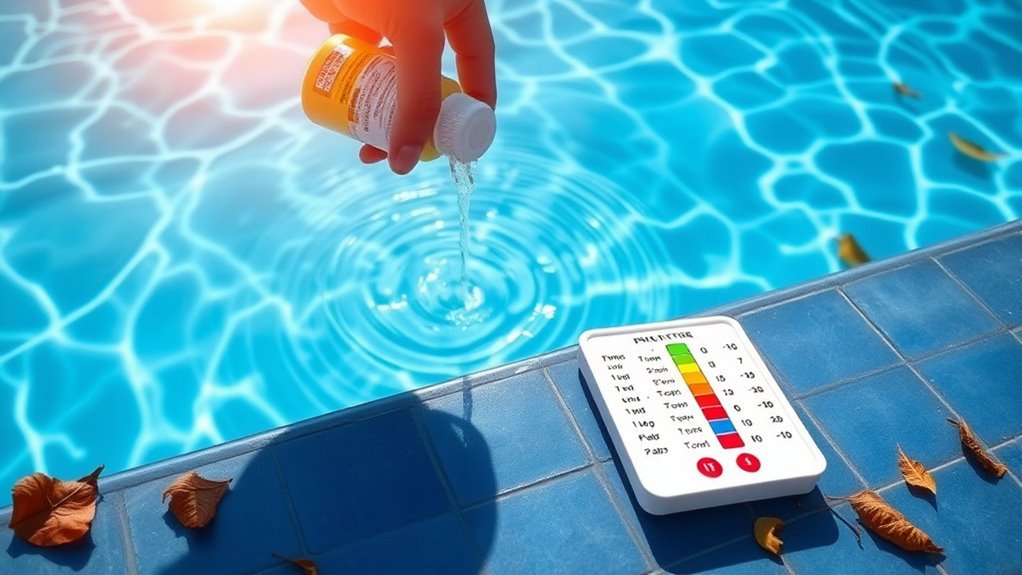
When you notice your pool’s pH climbing above the ideal range, it usually points to specific causes you can address. One common reason is the use of alkaline chemicals, like baking soda or certain chlorine types, which raise pH levels.
Another cause is source water with naturally high pH, especially if you refill or top off your pool frequently.
Source water with high pH can raise your pool’s levels, especially with frequent refilling or topping off.
Also, heavy pool usage can introduce body oils, sweat, and lotions that affect pH balance.
Additionally, algae growth can increase pH as they consume carbon dioxide during photosynthesis.
Finally, inadequate aeration can cause carbon dioxide to dissipate, raising pH.
Identifying these causes helps you tackle the problem quickly and maintain balanced water for a safe, comfortable swimming experience.
Testing Your Pool Water for Accurate Ph Measurement
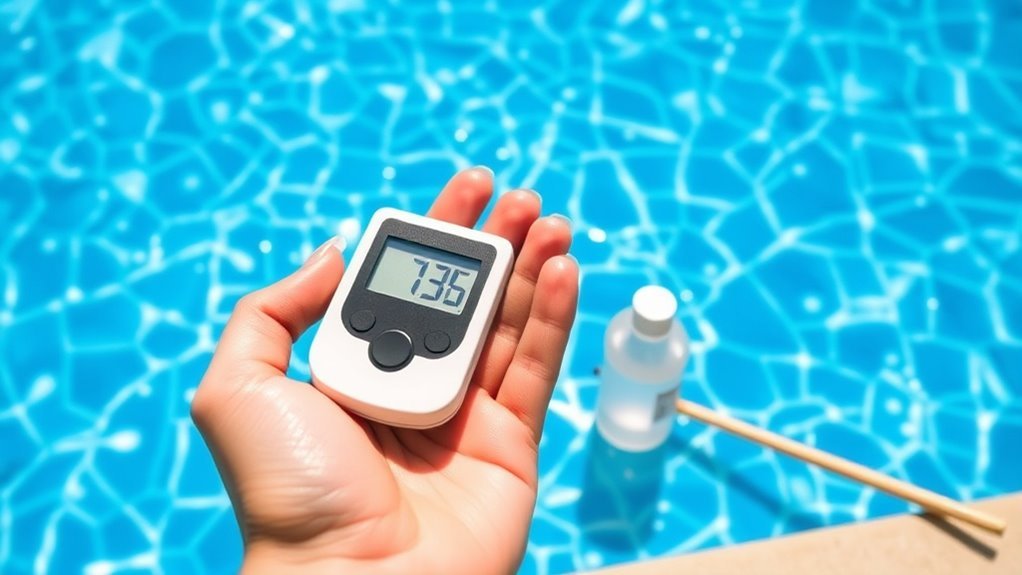
Understanding what causes high pH levels is just the first step; you also need to measure your pool’s pH accurately to know how much adjustment is necessary. Use a reliable test kit or digital pH meter to get precise readings.
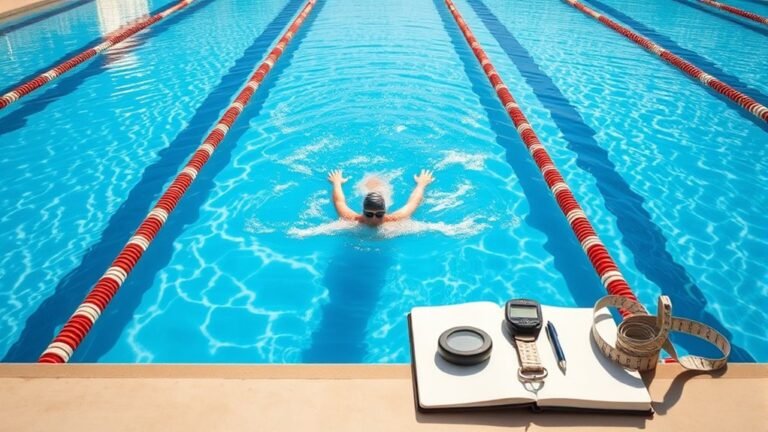
Test your pool water at least twice a week, preferably in the morning before swimming. Collect water samples away from skimmers and returns, about elbow-deep.
| pH Level | Water Condition | Action Needed |
|---|---|---|
| <7.2 | Too acidic | Raise pH |
| 7.2-7.8 | Ideal range | Maintain |
| >7.8 | Too alkaline | Lower pH urgently |
Regular testing helps you maintain balanced water and avoid costly damage to equipment and surfaces.
Using Muriatic Acid to Lower Ph Quickly
If your pool’s pH rises above the ideal range, you can quickly bring it down by adding muriatic acid. Start by wearing protective gear like gloves and goggles, since muriatic acid is highly corrosive.
To lower high pool pH, use muriatic acid with proper protective gear due to its corrosive nature.
Dilute the acid in a bucket of water, never pour water into acid, to reduce risk.
Then, slowly pour the diluted solution around the pool’s perimeter while the pump is running to ensure proper circulation.
After application, wait at least four hours before retesting your pH to determine if more adjustment is needed.
Remember to add muriatic acid gradually, as adding too much at once can cause rapid pH drops, harming your pool equipment or irritating swimmers.
Handling muriatic acid carefully lets you restore balanced pH quickly and safely.
Applying Sodium Bisulfate as a Safer Alternative
Although muriatic acid works effectively, you might prefer using sodium bisulfate as a safer alternative to lower your pool’s pH. Sodium bisulfate, also known as dry acid, is less corrosive and easier to handle than liquid acids.
It comes in a granular form that dissolves quickly in water, allowing you to reduce the pH without the strong fumes associated with muriatic acid.
To use it, simply measure the recommended amount based on your pool size and sprinkle it evenly across the surface or into the skimmer.
It lowers pH gradually, giving you more control and reducing the risk of overcorrection.
Using sodium bisulfate offers a safer, more manageable way to maintain your pool’s water balance without sacrificing effectiveness.
Tips for Even Distribution and Safe Handling of Chemicals
When adding chemicals to your pool, you’ll want to distribute them evenly to prevent any concentrated spots that could damage surfaces or disrupt water balance. Start by diluting the chemical in a bucket of water before pouring it slowly around the pool’s perimeter. This helps the substance spread out and mix thoroughly.
Avoid dumping chemicals in one spot to reduce the risk of staining or corrosive damage. Always wear protective gloves and goggles to shield your skin and eyes from irritation.
Handle chemicals in a well-ventilated area and store them in a cool, dry place away from children and pets. Never mix different chemicals directly, as this can cause dangerous reactions.
Following these steps ensures safe handling and effective pH adjustment.
Preventative Measures to Maintain Balanced Ph Levels
To keep your pool water healthy and comfortable, you need to take proactive steps that prevent pH imbalances before they start.
Regularly test your pool’s pH levels at least twice a week, especially during hot weather or heavy use. Adjust chemicals promptly when you notice shifts.
Maintain proper circulation and filtration to evenly distribute chemicals and prevent stagnant areas where pH can fluctuate.
Avoid overusing alkaline substances like baking soda, which can raise pH too much.
Keep debris out of the pool since organic matter can affect water chemistry.
Finally, store chemicals properly and add them in recommended amounts to avoid sudden pH swings.
Frequently Asked Questions
Can Rainwater Affect My Pool’s Ph Level?
Yes, rainwater can lower your pool’s pH because it’s slightly acidic. When it rains, the dilution and acidity can drop pH levels.
You’ll want to test and adjust your pool’s chemistry afterward to keep it balanced.
How Does Ph Affect Chlorine Effectiveness?
Think of pH as the stage where chlorine performs; if it’s off, chlorine can’t shine. You’ll find chlorine loses effectiveness when pH climbs above 7.8, letting bacteria sneak past your defenses.
Keep pH balanced!
Is It Safe to Swim Immediately After Lowering Ph?
You shouldn’t swim immediately after lowering pH; wait at least a few hours. This allows the chemicals to disperse and stabilize, preventing skin irritation or eye discomfort.
Always test the water before jumping back in.
Can Baking Soda Be Used to Adjust Ph?
You can’t use baking soda to lower pH; it actually raises it. To lower pH quickly, you’ll want to use muriatic acid or sodium bisulfate instead.
Baking soda’s better for increasing alkalinity safely.
How Often Should I Test Pool Ph During Summer?
You might think daily testing is too much, but you should test your pool pH at least twice a week during summer. This keeps water balanced, preventing damage and ensuring a safe, enjoyable swimming experience.
Conclusion
Now that you know how to lower your pool’s pH quickly and safely, you might think the job’s done—but wait. What if a simple mistake sends your levels soaring again? Don’t worry, with the right testing and careful chemical handling, you’ll keep that perfect balance longer than you expect.
Stay vigilant, act fast, and your pool will stay crystal clear. Ready to plunge into hassle-free swimming? The secret’s in your hands.
Lowering pH in your swimming pool quickly is key to maintaining water quality. By following these steps and regularly checking your pool’s chemistry, you ensure a safe and enjoyable swimming environment.