How Long Does It Take to Learn Swimming With a Step-By-Step Guide
You can learn basic swimming in about four to six weeks if you follow a step-by-step guide and practice consistently. Learning swimming step-by-step helps you build skills gradually and confidently. Start by getting comfortable in the water, mastering floating, and learning proper breathing techniques.
Then, focus on basic strokes like the front crawl and breaststroke while gradually building endurance. Each step builds your confidence and skill. Keep progressing this way, and soon you’ll find yourself swimming with ease and learning even more to improve your technique.
Understanding the Basics of Swimming
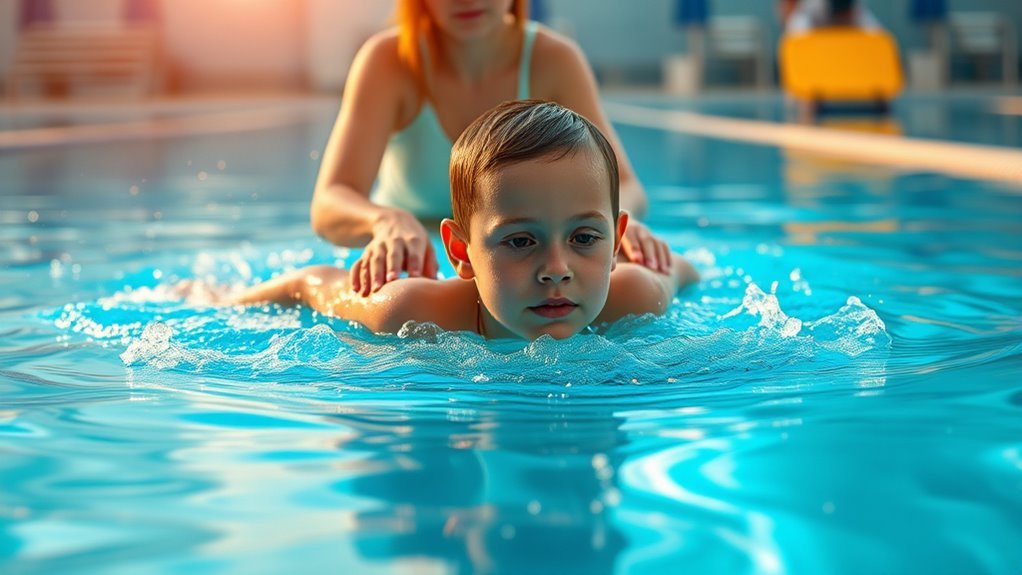
Before you plunge into swimming, it’s important to grasp the basics. You need to understand how your body behaves in water and learn fundamental skills like floating, breathing, and basic strokes.
Start by getting comfortable with water. Practice holding your breath and blowing bubbles. Mastering buoyancy helps you stay afloat without panic.
Begin by embracing the water—practice breath control and buoyancy to float calmly and confidently.
Then, focus on arm and leg movements; they propel you forward and keep you balanced. Knowing how to coordinate breathing with strokes is vital to avoid exhaustion.
Remember, swimming isn’t just about strength but also technique and rhythm. By grasping these core concepts early, you’ll set a solid foundation, making your learning process smoother and safer.
This approach prepares you well before moving on to more advanced skills.
Assessing Your Comfort Level in Water
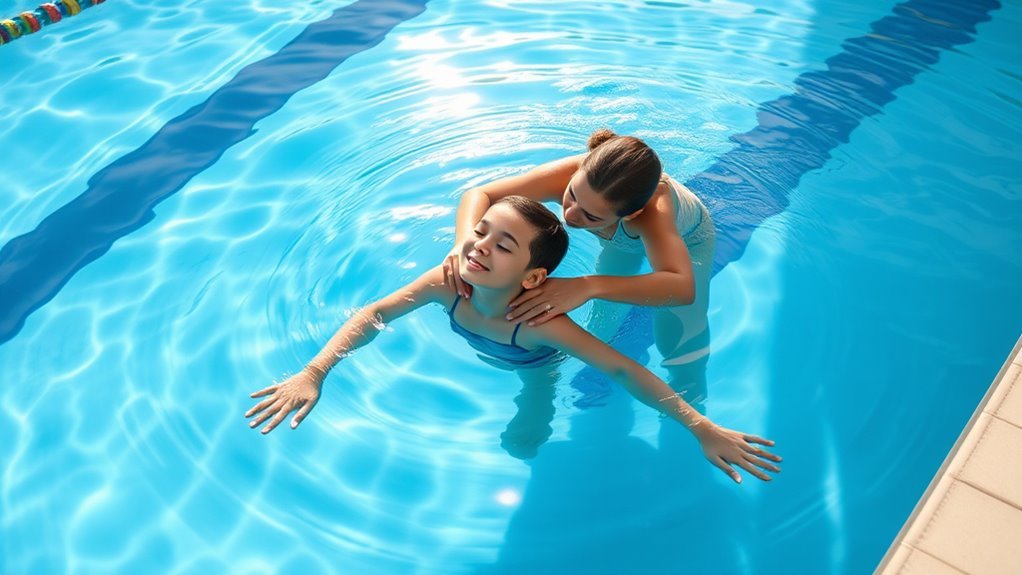
Once you’ve grasped the basics of swimming, it’s important to check how comfortable you feel in the water. This self-assessment helps you identify areas needing improvement and builds your confidence.
Try these steps to gauge your comfort level:
- Submerge Your Face: See if you can comfortably put your face in the water without panicking.
- Float and Glide: Practice floating on your back and stomach, then push off the pool wall to glide smoothly.
- Move Independently: Swim short distances without assistance, focusing on controlled movements and relaxed breathing.
If any of these feel challenging or cause anxiety, spend extra time practicing in a shallow, safe environment. Your comfort in water directly influences your progress and enjoyment while learning to swim.
Learning to Breathe Properly While Swimming
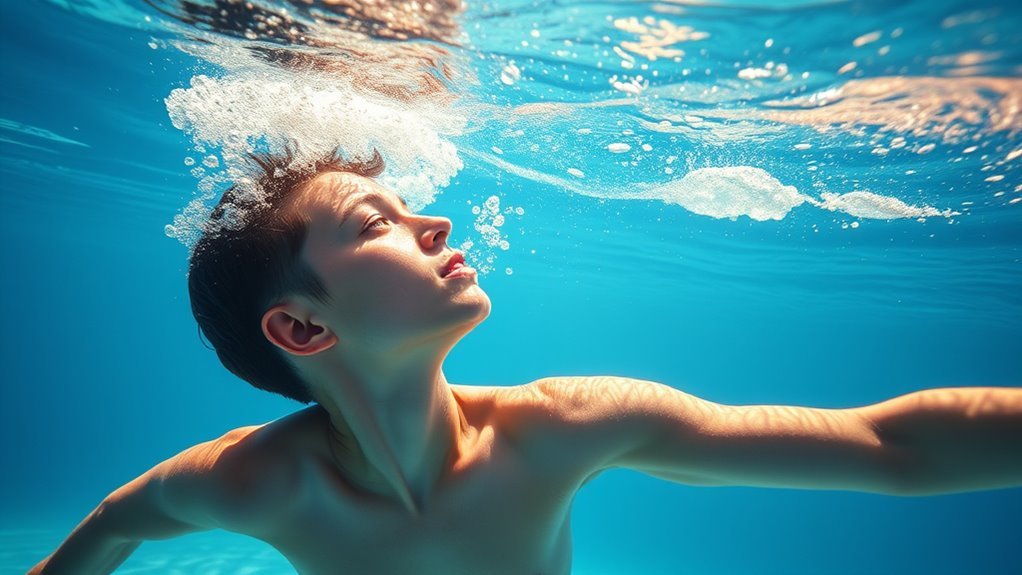
Although it can feel tricky at first, learning to breathe properly while swimming is essential for maintaining rhythm and conserving energy. You’ll want to time your breaths with your strokes, exhaling underwater and inhaling quickly when you turn your head to the side. This technique prevents you from holding your breath, which tires you out faster.
| Step | Action | Tip |
|---|---|---|
| 1 | Exhale underwater | Use your nose or mouth |
| 2 | Turn head to the side | Keep one ear in the water |
| 3 | Inhale quickly | Don’t lift your head too much |
| 4 | Resume face-down position | Maintain a smooth rhythm |
Practice this consistently to build comfort and endurance in your swimming sessions.
Mastering Floating and Body Position
Getting comfortable with floating and maintaining the right body position will dramatically improve your swimming efficiency. To master this, start by relaxing your body to reduce tension, which helps you stay buoyant.
Relaxing your body to reduce tension is key to staying buoyant and improving swimming efficiency.
Next, focus on aligning your body horizontally, keeping your head in line with your spine to minimize drag.
Finally, distribute your weight evenly between your chest and hips to maintain balance in the water.
Here’s how to practice:
- Lie back gently in the water, breathing calmly, and feel your body rise naturally.
- Engage your core slightly to keep your hips from sinking.
- Keep your face partially submerged, eyes looking upward, ensuring your neck stays relaxed.
Mastering these steps sets a solid foundation before you move on to strokes.
Practicing Basic Swimming Strokes
With a solid grasp of floating and body position, you can start focusing on basic swimming strokes. Begin with the front crawl, as it’s the most efficient and widely used stroke. Practice coordinating your arm movements with steady, rhythmic breathing to the side.
Next, try the breaststroke, which emphasizes simultaneous arm and leg movements, making it easier to learn. Pay close attention to timing—arms pull as legs kick. Don’t rush; perfect each motion before combining them smoothly.
Use drills like kicking with a board or pulling with a buoy to isolate and improve specific parts of each stroke. Consistent practice will build muscle memory, making your strokes feel natural and fluid.
Building Endurance and Strength
How can you swim longer without tiring quickly? Building endurance and strength is key. Focus on consistent practice and targeted exercises to boost your stamina in the water. Here’s how you can get started:
- Increase Distance Gradually: Start with manageable laps and add more each session to build lung and muscle endurance.
- Incorporate Interval Training: Swim at a faster pace for short bursts, then rest briefly to improve cardiovascular fitness.
- Strengthen Muscles Outside the Pool: Use bodyweight exercises like push-ups, planks, and squats to enhance core and upper body strength, essential for powerful strokes.
Overcoming Common Challenges and Fears
Though swimming can seem intimidating at first, you can overcome common challenges and fears by addressing them directly. Start by familiarizing yourself with water gradually. Spending time in the shallow end helps build comfort.
Practice controlled breathing to reduce anxiety and prevent panic. If you fear swallowing water, learn proper head positioning and breathing techniques to minimize it.
Don’t rush; take breaks when you feel overwhelmed. Using flotation devices initially can boost your confidence while you master basic movements.
Remember, everyone progresses at their own pace, so be patient with yourself. Facing fears head-on, combined with consistent practice, makes swimming less formidable and more enjoyable.
This approach helps you build the skills and confidence needed to swim safely and effectively.
Setting Realistic Goals and Tracking Progress
Because learning to swim involves multiple skills, setting realistic goals helps you stay motivated and track your progress effectively. You can break down your swimming journey into manageable steps that give you clear milestones.
Here’s how to set goals and monitor your improvement:
- Define specific skills: Focus on mastering one skill at a time, like floating, breathing, or kicking.
- Set timeframes: Give yourself achievable deadlines, such as learning to float within two weeks.
- Record progress: Keep a journal or use an app to note your achievements and areas needing work.
Frequently Asked Questions
What Swimming Gear Do I Need to Start Learning?
You’ll need a swimsuit, goggles, and a swim cap to start. Consider fins and a kickboard for practice.
These essentials help you stay comfortable, see underwater, and improve your technique as you learn.
How Often Should I Practice Swimming Each Week?
You should practice swimming at least three times a week to see steady progress. Studies show consistent practice boosts skill retention by 40%, so sticking to a regular schedule really helps you improve faster and build confidence.
Can Adults Learn to Swim as Easily as Children?
Yes, you can learn to swim as easily as children, but it might take more patience and practice.
Stay consistent, focus on technique, and don’t get discouraged—you’ll improve steadily with time and effort.
Is It Necessary to Take Formal Swimming Lessons?
Oh, sure, you can totally master swimming by just flailing around—no lessons needed!
But if you want to actually swim confidently and safely, taking formal lessons is definitely worth your time and effort.
What Are the Benefits of Swimming for Mental Health?
Swimming boosts your mental health by reducing stress, improving mood, and increasing relaxation. You’ll feel less anxious, sleep better, and gain confidence.
It’s a great way to clear your mind and stay emotionally balanced.
Conclusion
Learning to swim is like riding a bike—you might wobble at first, but with practice, you’ll find your balance and confidence. By understanding the basics, mastering your breathing, and building strength step by step, you’ll glide through the water with ease.
Remember, everyone progresses at their own pace, so set realistic goals and keep track of your progress. Soon enough, swimming will feel as natural as breathing itself.
Keep going—you’ve got this! With consistent effort and patience, you’ll learn swimming with a step-by-step guide in no time.