Why Is My Goldfish Swimming Upside Down?
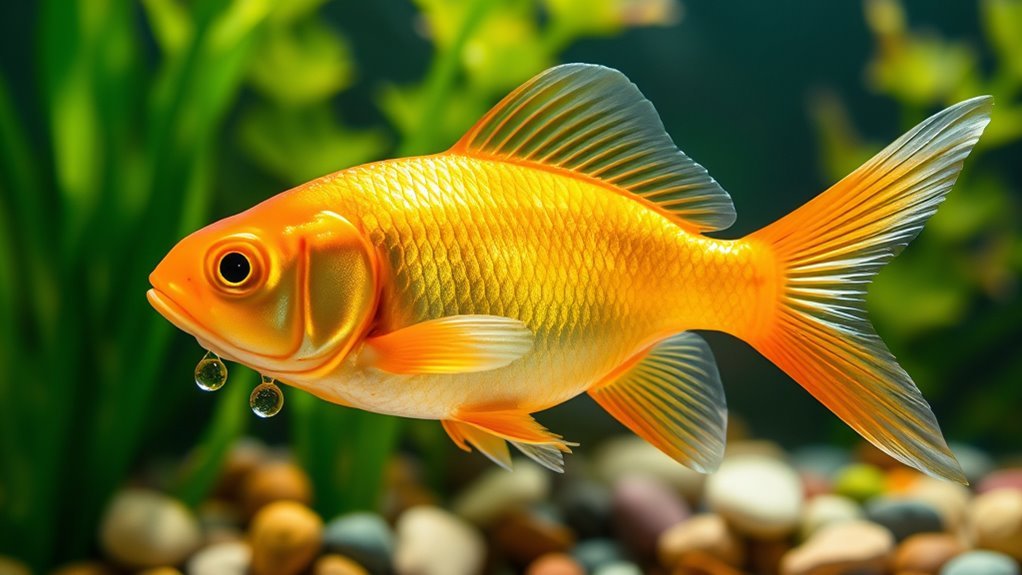
If your goldfish is swimming upside down, it likely has swim bladder disorder, a common issue affecting its buoyancy and balance. This disorder can stem from constipation, diet problems, or injury.
Poor water quality and stress also play significant roles in causing this behavior. Feeding peas or soaking pellets often helps alleviate symptoms.
Maintaining clean water and avoiding overfeeding are crucial preventive measures. If you want to understand what else might cause this behavior and how to prevent it, keep exploring these important factors.
Understanding Swim Bladder Disorder in Goldfish
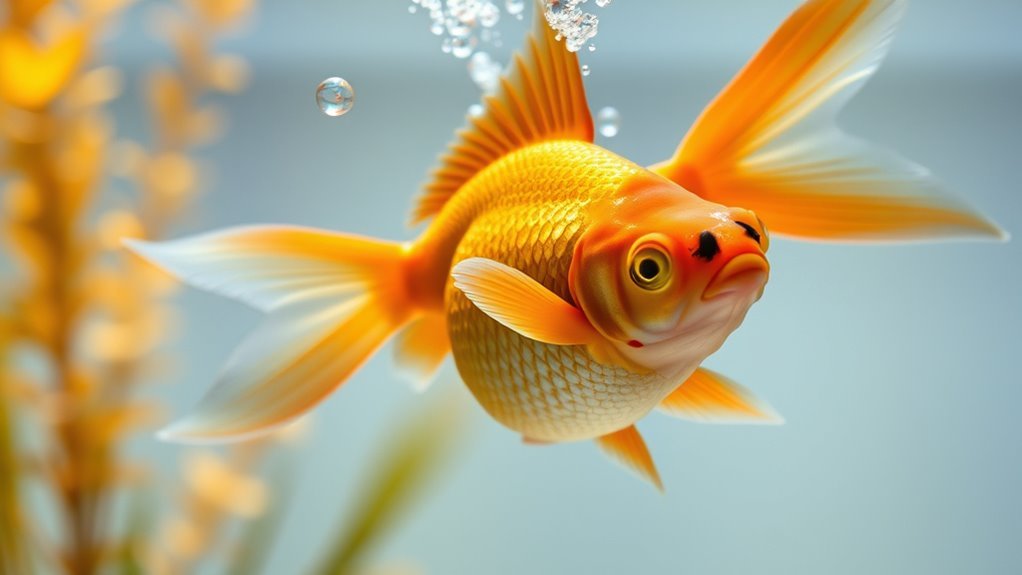
Although goldfish are graceful swimmers, you might notice them struggling to maintain balance or swimming upside down due to swim bladder disorder. This condition affects the swim bladder, an internal gas-filled organ that helps your goldfish control buoyancy.
When it malfunctions, your fish can’t regulate its position in the water properly. Several factors can cause this disorder, including constipation from overfeeding, sudden changes in diet, or physical injury.
You might see your goldfish floating on its side, spinning, or sinking to the bottom.
If you catch it early, you can often improve their condition by adjusting feeding habits, like soaking pellets or feeding peas to ease digestion. Remember, swim bladder disorder isn’t usually fatal, but timely care is essential to help your goldfish get back to swimming normally.
How Water Quality Affects Goldfish Behavior
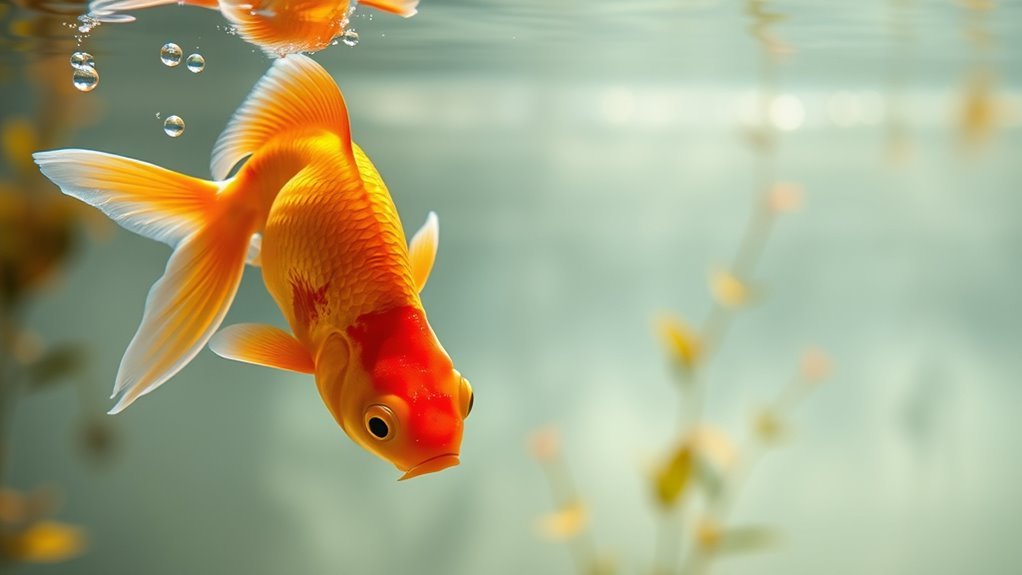
Since goldfish rely entirely on their aquatic environment, maintaining good water quality directly influences their health and behavior. Poor water conditions can cause stress, leading your goldfish to swim erratically or even upside down.
High ammonia or nitrite levels irritate their gills, making breathing difficult and affecting buoyancy control. Sudden changes in pH or temperature also disrupt their equilibrium, causing disorientation.
You should regularly test water parameters and perform partial water changes to keep toxins low and oxygen levels high.
Avoid overcrowding and remove uneaten food promptly to prevent waste buildup.
The Role of Diet in Goldfish Swimming Patterns
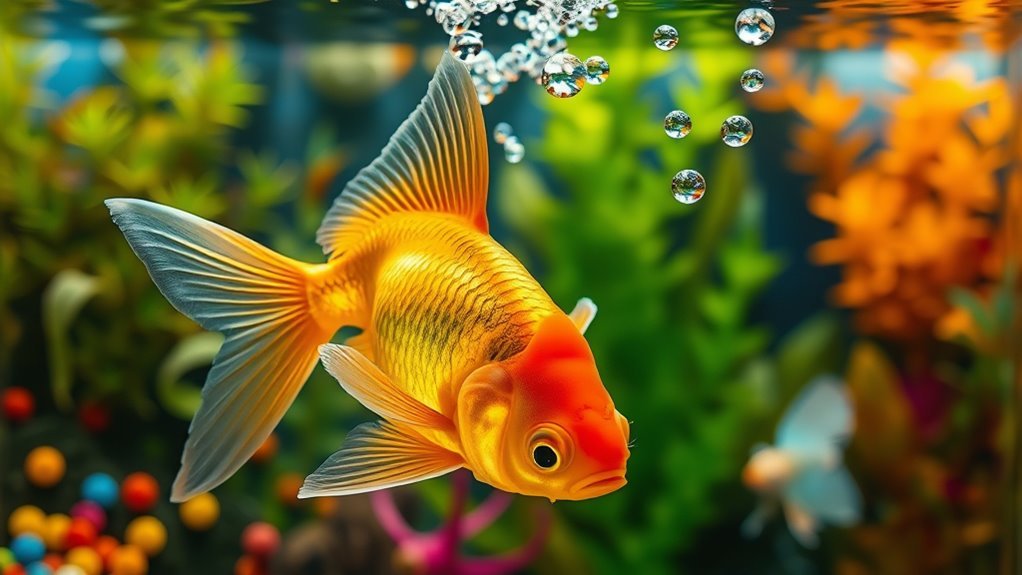
Maintaining good water quality sets the foundation for healthy goldfish behavior, but what your fish eats also plays a big role in how they swim. If your goldfish’s diet lacks essential nutrients or is too heavy in fillers, it can cause swim bladder issues, leading to upside-down swimming.
Overfeeding or feeding inappropriate foods like bread can create digestive problems, affecting buoyancy. To keep your goldfish swimming normally, provide a balanced diet rich in high-quality flakes, pellets, and occasional vegetables like peas, which help prevent constipation.
Be mindful of portion sizes and feeding frequency to avoid bloating. By controlling their diet carefully, you’ll support proper digestion and buoyancy, reducing the chances of odd swimming patterns.
Identifying Signs of Stress in Goldfish
When your goldfish starts showing unusual behavior, it’s often a sign of stress that you shouldn’t overlook. You might notice it swimming upside down, gasping at the surface, or hiding more than usual.
Pay attention if your goldfish’s fins clump together or if it seems lethargic. Rapid gill movement or loss of appetite also indicates stress.
Environmental factors like poor water quality, sudden temperature changes, or overcrowding often cause these signs. You should regularly check water parameters and ensure the tank is clean and appropriately sized.
Stress weakens your goldfish’s immune system, making it vulnerable to illness. By recognizing these signs early, you can take timely action to improve your goldfish’s environment and health, preventing further complications.
Common Infections That Cause Upside Down Swimming
If your goldfish is swimming upside down, stress might be only part of the problem. Infections can also cause this unusual behavior. Swim bladder infections are common culprits; bacteria or parasites infecting the swim bladder disrupt your goldfish’s buoyancy control.
You might notice your fish struggling to stay upright or floating uncontrollably. Additionally, fungal infections can affect organs linked to balance, worsening swimming issues. Sometimes, internal parasites invade the digestive tract, causing blockages that impact the swim bladder’s function.
These infections often come with other symptoms like lethargy, loss of appetite, or visible spots on the body. If you spot these signs alongside upside-down swimming, it’s a strong indicator an infection might be affecting your goldfish’s health and swimming ability.
When to Consult a Veterinarian for Your Goldfish
Though some swimming issues might resolve with home care, you should consult a veterinarian whenever your goldfish shows persistent upside-down swimming or other worrying symptoms.
If your fish struggles to maintain balance for more than a day or two, it’s a clear sign that professional help is needed.
Also, watch for signs like lethargy, loss of appetite, visible sores, or unusual spots. These symptoms can indicate underlying infections or swim bladder disorders that require medical treatment.
Don’t wait if you notice sudden changes in behavior or physical appearance.
A vet can diagnose the exact cause, prescribe medication, and guide you on proper care.
Early intervention increases your goldfish’s chances of recovery and prevents complications.
Always prioritize your pet’s health by seeking expert advice promptly.
Tips for Preventing Upside Down Swimming in Goldfish
To keep your goldfish swimming upright and healthy, you need to maintain a clean tank environment and provide a balanced diet. Regular water changes and avoiding overfeeding can prevent swim bladder issues that cause upside down swimming.
Here are some practical tips to help you:
| Action | Description | Frequency |
|---|---|---|
| Water Changes | Replace 25-30% of water | Weekly |
| Balanced Diet | Feed high-quality, varied food | Twice daily |
| Avoid Overfeeding | Only feed what goldfish can eat in 2 mins | Daily |
| Monitor Water Quality | Check ammonia, nitrite, nitrate levels | Twice weekly |
| Tank Size & Setup | Provide at least 20 gallons per fish | Initial setup |
Follow these guidelines to reduce stress and promote normal swimming behavior in your goldfish.
Frequently Asked Questions
Can Goldfish Swim Upside Down and Still Be Healthy?
You generally can’t expect your goldfish to swim upside down and stay healthy; it usually signals a swim bladder issue or stress.
If your fish swims upside down often, you should check water quality and diet immediately.
Does the Tank Size Affect Goldfish Swimming Behavior?
Yes, tank size affects your goldfish’s swimming behavior. In small tanks, they get stressed and swim erratically.
Providing a spacious, well-filtered tank lets your goldfish swim naturally and stay healthy.
Are Certain Goldfish Breeds More Prone to Swimming Upside Down?
About 30% of fancy goldfish breeds, like the Bubble Eye and Oranda, are more prone to swimming upside down due to their body shape and swim bladder issues.
You’ll want to monitor their behavior closely.
Can Temperature Changes Cause Goldfish to Swim Upside Down?
Yes, sudden temperature changes can stress your goldfish and disrupt its buoyancy, causing it to swim upside down.
Keep the water temperature stable to help your fish stay healthy and avoid this unsettling behavior.
Is Upside Down Swimming Contagious Among Goldfish?
Only about 10% of goldfish with swim bladder issues show upside down behavior simultaneously, so it’s not contagious.
You won’t catch it from one fish, but keep an eye on water quality to prevent problems.
Conclusion
If your goldfish is swimming upside down, it’s likely dealing with swim bladder disorder, which affects about 10% of pet goldfish. Poor water quality, diet, or stress can trigger this issue.
By keeping their tank clean, feeding them properly, and watching for signs of infection, you can help your goldfish swim normally again. Don’t hesitate to consult a vet if the problem persists—you want your finned friend happy and healthy!
Understanding why your goldfish is swimming upside down is essential to providing the right care and treatment. Proper maintenance and attention can make a big difference in your goldfish’s well-being.