Can You Go Swimming After a Tattoo?
You shouldn’t go swimming right after getting a tattoo because your skin is an open wound, making it vulnerable to infection from bacteria in pools, lakes, or oceans. Chlorine and saltwater can also irritate and fade your new ink.
It’s best to wait 2 to 4 weeks depending on your tattoo’s size and location, allowing your skin to heal fully. If you want to keep your tattoo looking great and avoid complications, understanding the best care steps helps a lot.
Understanding the Tattoo Healing Process
Although getting a tattoo might feel like the final step, the healing process is just beginning. You need to treat your new ink carefully to guarantee it heals properly.
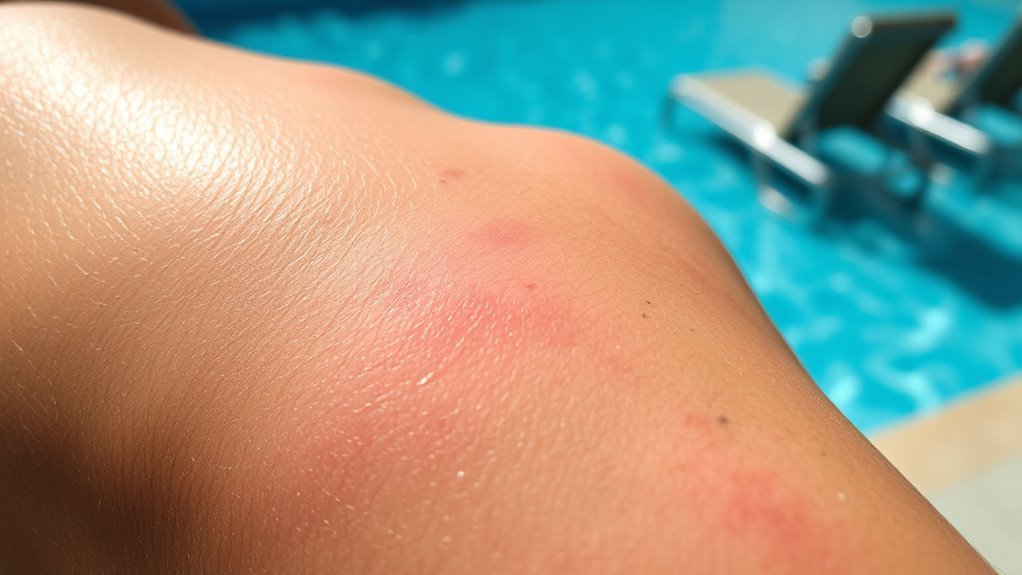
Right after the tattoo session, your skin is fundamentally an open wound, making it vulnerable to infection and irritation.
Immediately after tattooing, your skin is an open wound, susceptible to infection and irritation.
Over the next few days, your body will work to repair the damaged skin, creating a scab as part of the natural healing cycle. During this time, your tattoo may itch, peel, or feel tender. That’s normal.
Keeping the area clean and moisturized helps speed healing and preserves the tattoo’s appearance.
Avoid picking at scabs or scratching, as this can cause scarring or patchy ink. Understanding this process helps you care for your tattoo responsibly.
Risks of Swimming Too Soon After Getting Tattooed
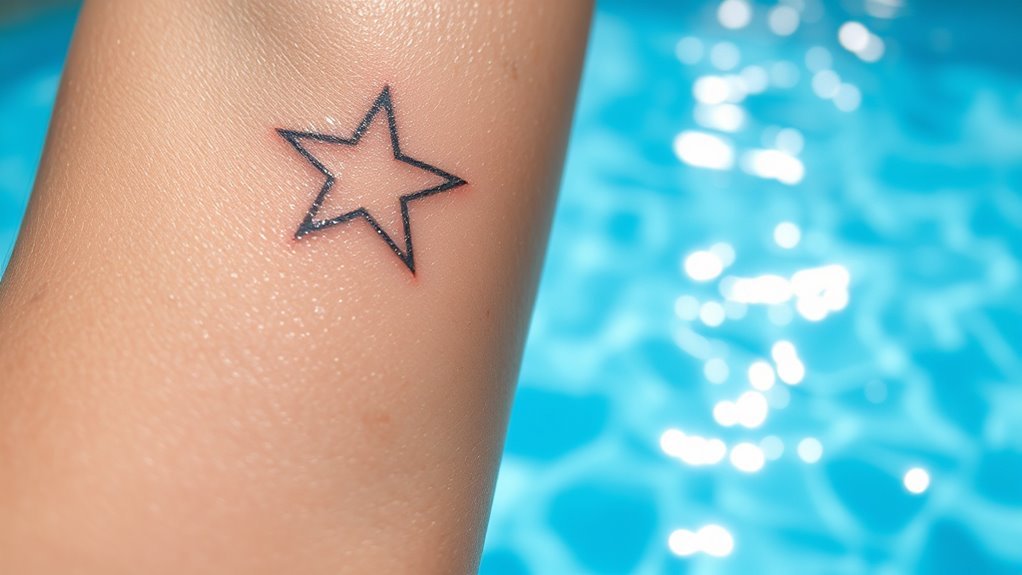
Since your tattoo is fundamentally an open wound during the initial healing phase, swimming too soon can expose it to bacteria and harsh chemicals that increase the risk of infection.
Pools, lakes, and oceans often contain microorganisms that your fresh tattoo isn’t ready to handle.
When bacteria enter the wound, they can cause redness, swelling, pain, and even pus, delaying healing and potentially leading to serious complications.
Additionally, chlorine and saltwater can irritate your skin, drying out the tattoo and causing scabbing or fading.
You might also experience increased itching or discomfort, which can tempt you to scratch and damage the area further.
To protect your tattoo and ensure proper healing, you should avoid swimming in any body of water until it’s sufficiently healed.
How Long to Wait Before Swimming
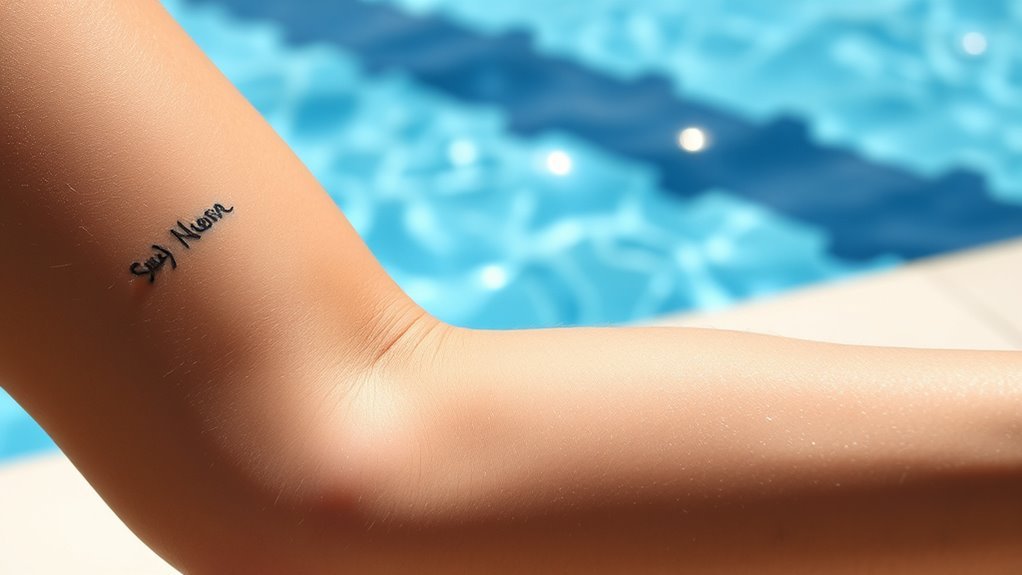
To keep your tattoo safe from infection and irritation, you need to give it enough time to heal before swimming. Typically, waiting at least 2 to 4 weeks is recommended, depending on your tattoo’s size and location.
During this period, your skin forms a protective barrier, reducing the risk of bacteria entering the wound.
Here’s a quick guide:
| Tattoo Size | Recommended Wait Time | Reason |
|---|---|---|
| Small (1-3 inches) | 2 weeks | Surface heals faster |
| Medium (3-6 inches) | 3 weeks | Deeper healing needed |
| Large (6+ inches) | 4 weeks or more | Extensive skin recovery |
Types of Water to Avoid During Tattoo Healing
Where should you steer clear of water during your tattoo’s healing process? Avoid pools, hot tubs, and lakes because they often contain bacteria that can infect your fresh tattoo. Even chlorinated water in pools can irritate the healing skin and slow recovery.
Steer clear of ocean water too; salt and microorganisms can cause inflammation or infection. Rivers and ponds are risky as they harbor various contaminants and bacteria.
Also, avoid soaking in bathtubs, since stagnant water can expose your tattoo to germs.
Stick to quick showers instead to keep your tattoo clean without prolonged water exposure. By steering clear of these water types, you reduce the risk of infection and protect the vibrant look of your new tattoo as it heals.
Tips for Protecting Your Tattoo When Near Water
Although you should avoid prolonged water exposure during healing, you can still protect your tattoo when you’re near water by taking simple precautions. Here’s how to keep your ink safe:
- Cover it up with a waterproof bandage or plastic wrap to prevent direct contact with water.
- Limit time near water, avoiding dips or splashes that can irritate your tattoo.
- Moisturize regularly using a fragrance-free ointment or lotion recommended by your tattoo artist.
- Clean hands before touching your tattoo to avoid introducing bacteria when you adjust coverings or apply ointment.
Signs of Infection or Complications From Water Exposure
Even with careful protection, exposing your new tattoo to water can sometimes lead to problems. Watch closely for signs of infection like increased redness, swelling, or warmth around the tattoo.
If you notice pus, unusual discharge, or a foul odor, that’s a clear warning. You might also experience intense pain or a burning sensation, which isn’t typical for healing tattoos.
Fever or chills could indicate your body is fighting an infection. Keep an eye out for raised bumps or blisters, as these can signal complications from bacteria or irritants in the water.
If you spot any of these symptoms, avoid further water exposure and contact a healthcare professional promptly to prevent worsening issues. Early attention helps guarantee your tattoo heals properly and safely.
Alternatives to Swimming While Your Tattoo Heals
Since swimming can delay your tattoo’s healing, you’ll want to find other ways to stay active and cool. Here are some great alternatives that won’t risk your new ink:
1. Walking or Jogging
Get fresh air and gentle exercise without exposing your tattoo to water.
2. Indoor Workouts
Try yoga, Pilates, or bodyweight exercises at home or the gym.
3. Cooling Off with a Fan or Air Conditioning
Stay comfortable without risking infection.
4. Using a Damp, Clean Cloth
Gently wipe your skin if you need to cool down without submerging your tattoo.
These options help you maintain your routine while protecting your tattoo during the essential healing phase.
Frequently Asked Questions
Can Tattoo Ink Cause Allergic Reactions During Swimming?
Yes, tattoo ink can cause allergic reactions, especially if you swim soon after getting inked. Your skin might react to chlorine or bacteria in water, so it’s best to wait until your tattoo fully heals before swimming.
Swimming too early can irritate the tattooed skin and increase the risk of infection. The chemicals in pool water, like chlorine, can aggravate the skin and cause redness or itching.
To avoid complications, follow your tattoo artist’s aftercare instructions carefully and keep the tattoo clean and dry until healed. Only resume swimming once the skin has completely recovered.
Does Sunscreen Affect a Healing Tattoo in Water?
Of course, slathering sunscreen on your healing tattoo in water won’t magically protect it—it can actually clog pores and trap bacteria.
How Does Chlorine Impact the Color of a Healed Tattoo?
Chlorine can fade your healed tattoo’s colors over time by breaking down the ink pigments. To keep your tattoo vibrant, you should limit exposure to chlorinated water and always moisturize your skin after swimming.
Can Tattoos Be Submerged in Saltwater After Fully Healing?
Yes, you can submerge tattoos in saltwater after they’ve fully healed, but you should still rinse the area with fresh water afterward to remove salt and prevent irritation.
Don’t overdo it to keep your tattoo vibrant.
Are Waterproof Tattoo Covers Effective for Swimming?
About 80% of people find waterproof tattoo covers effective for swimming. You’ll protect your tattoo from water and bacteria, but make sure the cover seals well and avoid prolonged exposure to keep your ink vibrant and infection-free.
Conclusion
As your new tattoo begins to heal, imagine a delicate painting slowly drying under a gentle sun—any splash from a pool or ocean can blur its vibrant colors and invite unwanted infection.
Waiting at least two to four weeks before swimming lets your skin seal and protects your artwork. Meanwhile, think of this time as a chance to pamper your tattoo with care, keeping it safe from harsh waters until it’s ready to shine in all its glory.
Remember, taking proper tattoo aftercare seriously during the healing process is essential. Avoid swimming too soon to prevent damage and infection, ensuring your tattoo heals beautifully and remains vibrant for years to come.