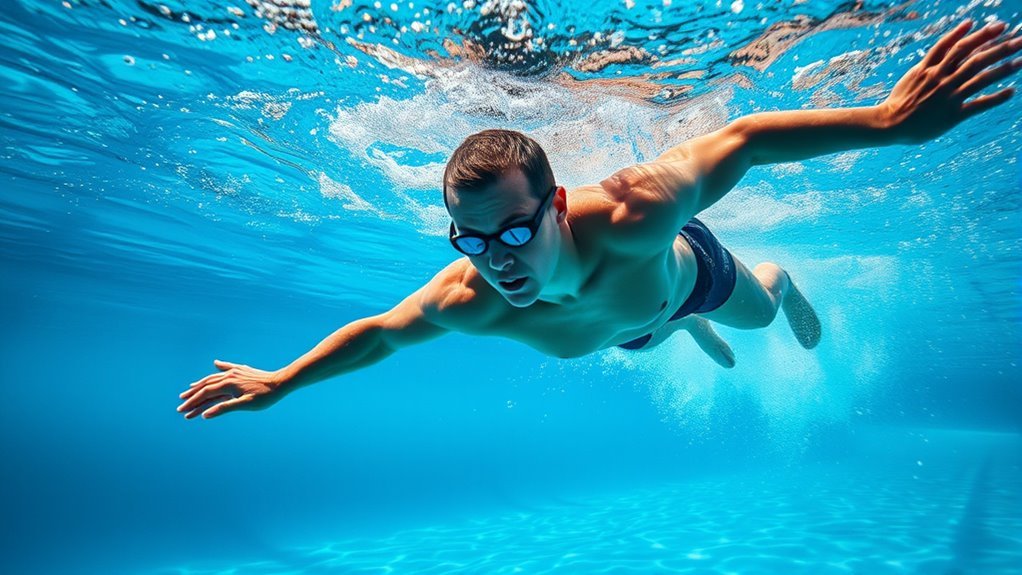
Why Does Swimming Make You So Tired?
Swimming makes you so tired because it demands full-body effort, working your arms, legs, core, and back all at once. You constantly push against water resistance, which slows your movements and ramps up muscle tension. Timing your breathing with strokes uses extra energy and oxygen.
Plus, your muscles fatigue from lactic acid buildup, and your mind stays focused on technique, adding mental strain. There’s more to uncover about what really drains your energy during a swim.
The Full-Body Workout Effect
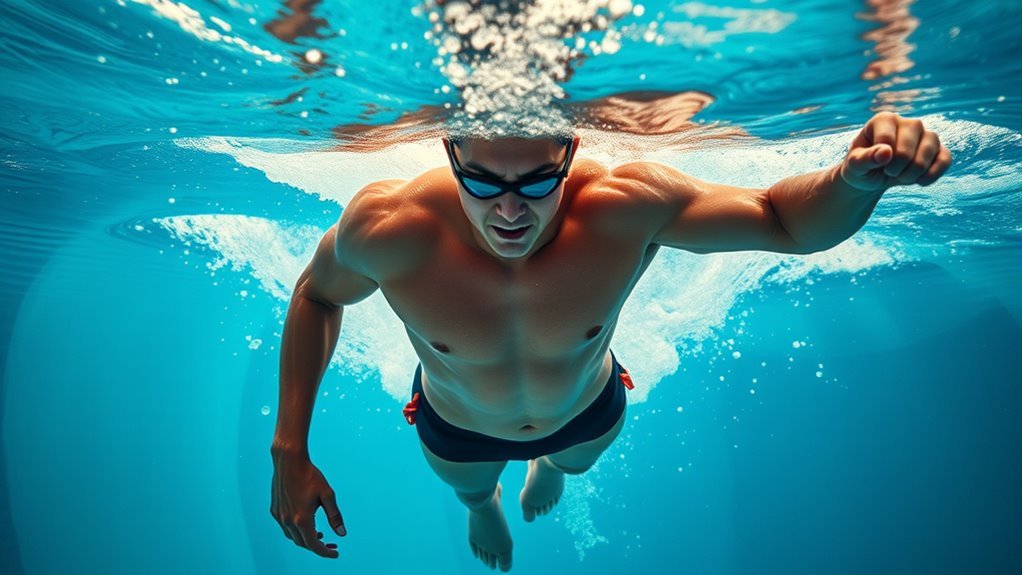
Because swimming engages nearly every muscle group in your body, it acts as a full-body workout that can quickly tire you out. When you swim, your arms, legs, core, and back all work together to propel you through the water.
Each stroke demands strength and coordination, so your muscles are constantly active. Unlike land exercises where you might isolate certain muscles, swimming keeps you moving in a synchronized way.
This continuous effort burns energy fast, making fatigue set in sooner than you might expect. You also use your breathing muscles more intensely, which adds to the overall fatigue.
The Resistance of Water
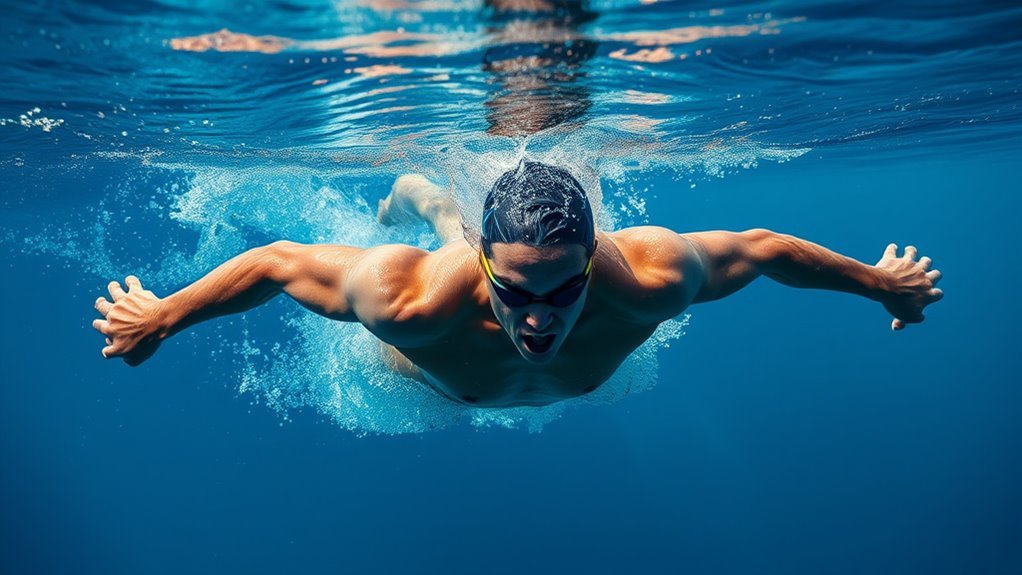
Swimming challenges your muscles not only through movement but also by pushing against the water itself. Water is much denser than air, so every stroke requires more effort to overcome its resistance.
This resistance makes your muscles work harder, leading to quicker fatigue. Here’s how water resistance affects you:
- Constant Pressure: Water pushes back against your movements, so you continuously exert force.
- Full Body Engagement: You use multiple muscle groups simultaneously to move efficiently.
- Slower Movements: The resistance slows your pace, increasing muscle tension and energy use.
- Increased Energy Demand: Fighting against water means your body burns more calories and oxygen.
This resistance is a big reason swimming feels so tiring even if you’re moving slower than on land.
Breathing Techniques and Oxygen Demand

Although you control your breathing on land effortlessly, coordinating breaths while moving through water demands more skill and energy. When you swim, you can’t just breathe whenever you want; you have to time your inhales and exhales with your strokes.
Breathing on land is easy, but swimming requires precise timing of breaths with each stroke.
This coordination increases your oxygen demand because your muscles are working hard, and your body needs a steady supply of oxygen to keep going. Holding your breath or taking shallow breaths limits oxygen intake, making your muscles tire faster.
Practicing rhythmic breathing techniques helps you maximize oxygen delivery and maintain energy longer. So, the more efficiently you manage your breathing, the less tired you’ll feel.
Mastering this skill turns swimming from a gasping struggle into a smooth, sustainable rhythm.
Energy Systems Used in Swimming
Mastering your breathing not only improves oxygen flow but also influences how your body taps into different energy systems during swimming. Depending on your pace and duration, your muscles rely on various sources to fuel your strokes.
Here’s how your body manages energy:
- ATP-PC System: Powers short bursts of intense effort, like sprinting off the blocks, lasting up to 10 seconds.
- Anaerobic Glycolysis: Kicks in during high-intensity swims lasting from 10 seconds to about 2 minutes, producing energy without oxygen but causing fatigue.
- Aerobic System: Dominates during longer, steady swims, using oxygen to generate energy efficiently over extended periods.
- Mixed Systems: Most swims blend these systems, constantly shifting based on your speed and stamina.
Understanding these helps you appreciate why swimming can leave you feeling drained in different ways.
Muscle Fatigue and Recovery
When your muscles work hard during a swim, they produce byproducts like lactic acid that contribute to fatigue. This buildup interferes with your muscle fibers’ ability to contract efficiently, making your movements feel heavy and slow.
As you continue swimming, microscopic damage occurs in your muscle cells, signaling the need for recovery. To bounce back, your body repairs these fibers, builds strength, and clears out waste products.
Proper rest, hydration, and nutrition speed up this process, helping you avoid prolonged soreness and exhaustion.
If you push too hard without adequate recovery, muscle fatigue intensifies, reducing your performance and increasing injury risk.
Listening to your body and allowing time to recover ensures that each swim session leaves you stronger, not more drained.
Mental Focus and Fatigue in Swimming
Physical exhaustion doesn’t just affect your muscles; it also drains your mental energy. When you’re swimming, you constantly focus on your technique, breathing, and pacing. This intense concentration requires sustained mental effort, which can quickly tire your brain.
Here’s why mental fatigue hits during swimming:
- You must maintain proper form to avoid injury and swim efficiently.
- Controlling your breathing rhythm demands ongoing awareness.
- Steering through the pool and timing your strokes keeps your mind engaged.
- Managing fatigue and pushing through discomfort requires mental resilience.
All these mental demands add up, making swimming uniquely exhausting. So, when you feel wiped out after a swim, remember it’s not just your body working hard; your brain’s been putting in serious effort too.
Frequently Asked Questions
Does Water Temperature Affect How Tired You Feel After Swimming?
Yes, water temperature affects how tired you feel after swimming. Cold water forces your body to work harder to stay warm, draining your energy faster, while warm water can make you feel more relaxed but still fatigued from exertion.
How Does Swimming Compare to Running in Terms of Fatigue?
Swimming generally causes less joint impact than running, but you’ll still feel fatigued due to full-body effort and breath control.
Running often tires your legs more, while swimming exhausts your entire body evenly.
Can Swimming Improve Your Overall Sleep Quality?
Yes, swimming can improve your sleep quality by reducing stress and tiring your muscles. You’ll relax faster and fall asleep more easily after a swim, making your rest deeper and more invigorating overall.
Why Do Some Swimmers Feel More Energized After Swimming?
You feel energized after swimming because it boosts your circulation, releases endorphins, and improves oxygen flow.
Plus, the full-body workout wakes up your muscles and mind, leaving you refreshed and ready for the day.
Does Diet Impact Swimming Endurance and Fatigue Levels?
Imagine you’ve fueled up with a balanced meal rich in carbs and protein before swimming; you’ll notice better endurance and less fatigue.
Yes, your diet directly impacts how long and how well you swim.
Conclusion
When you swim, your whole body works against water’s resistance, making every movement a full-body workout. You’re constantly managing your breathing, which demands more oxygen and adds to your tiredness. Your muscles use different energy systems, quickly leading to fatigue that needs recovery.
Plus, staying mentally focused drains you more than you might expect. Imagine swimming through thick syrup—that’s how your body feels. This resistance and constant effort explain why swimming leaves you so exhausted, highlighting the intense physical and mental demands of swimming.