What Is a Lap in Swimming?
When you swim a lap, you usually swim from one end of the pool to the other and back, covering two lengths. A length is just one trip across the pool. But remember, pool size matters—laps can mean different distances in 25- versus 50-meter pools.
Many confuse laps with lengths or sets, so it’s key to know the difference. If you want to improve your swimming and track progress better, there’s more to explore about laps and counting them accurately. Understanding what constitutes a lap is essential for effective training and goal setting.
Defining a Lap in Swimming
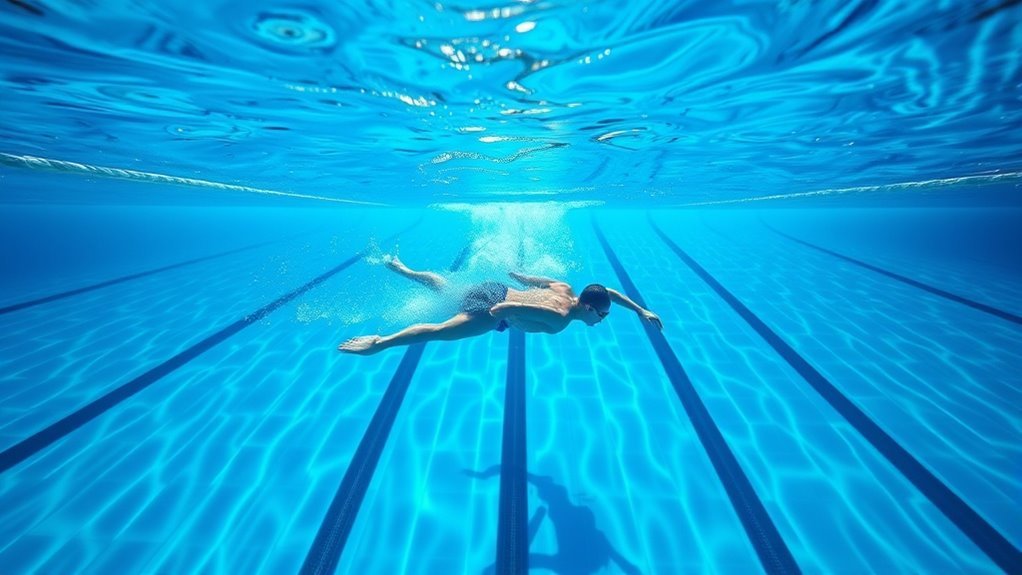
What exactly counts as a lap in swimming? When you swim, a lap generally means swimming from one end of the pool to the other and back again, completing a round trip.
So, if you start at one wall, swim to the opposite wall, then turn and return to the original wall, you’ve completed one lap. This definition is commonly used in many swimming programs and workouts.
You’ll notice that a lap involves two lengths of the pool, covering both directions. Understanding this helps you track your distance and pace accurately during training.
Keep in mind, the exact distance depends on your pool’s length, but the concept of going there and back stays consistent.
Knowing this makes your swimming goals clearer and easier to measure.
Lap vs. Length: Understanding the Difference
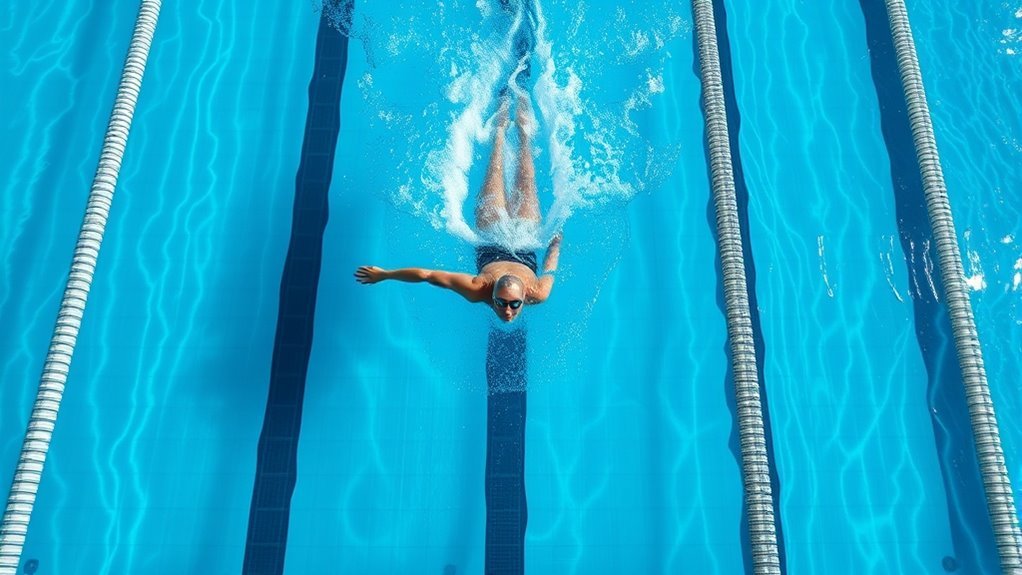
How do you tell a lap apart from a length in swimming? A length is simply swimming from one end of the pool to the other. When you swim across a 25-yard or 25-meter pool, that’s one length.
A length in swimming is just one trip from one end of the pool to the other.
A lap usually means swimming down the pool and back, so two lengths combined. When you count laps, you’re counting round trips, not just one way.
This distinction matters because training plans often specify laps for total distance, while pool markings measure lengths. If your coach tells you to swim 10 laps, you’ll swim 20 lengths in total.
Understanding this difference helps you track your exercise accurately and avoid confusion when setting goals or measuring your progress in the pool.
How Pool Size Affects Lap Measurement
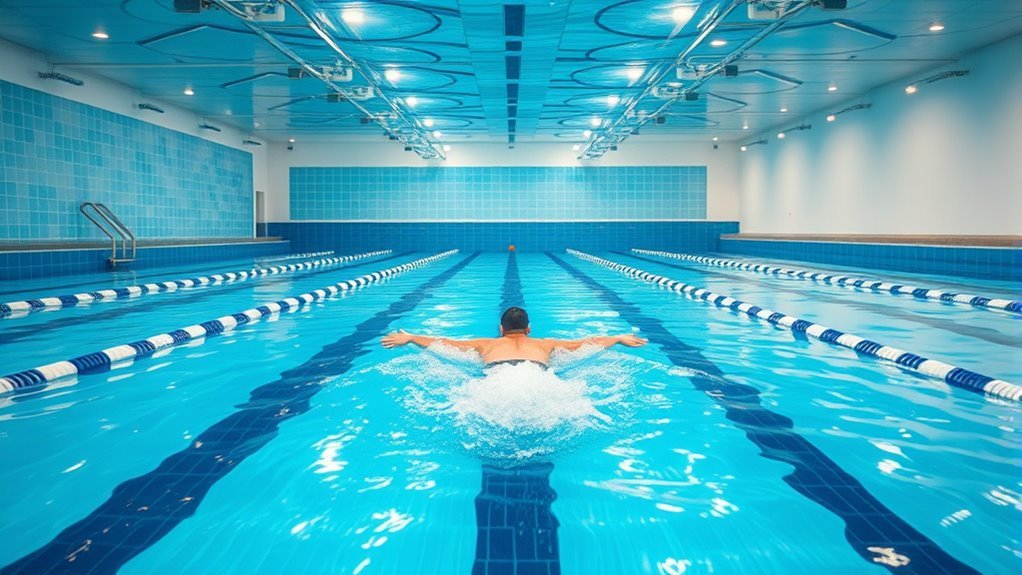
Because pool sizes vary, the way you measure laps can change depending on where you swim. Standard pools come in different lengths, and this affects how you count laps.
- In a 25-yard or 25-meter pool, one lap usually means swimming down and back, totaling 50 yards or meters.
- In a 50-meter Olympic-size pool, a lap is often just one length, 50 meters.
- If you swim in a non-standard pool, you’ll need to adapt your lap counting based on its length.
- When tracking distance for workouts, always confirm the pool size to measure laps accurately.
Knowing the pool size helps you set realistic goals and compare your swim distances properly.
Common Misconceptions About Laps
Why do so many swimmers get confused about what counts as a lap? One common misconception is thinking a lap equals a full pool length down and back. In reality, a lap usually refers to one length of the pool, not a round trip.
Another mix-up occurs when swimmers assume laps are standardized regardless of pool size. Since pools vary from 25 to 50 meters, the distance of a lap changes, so it’s essential to know the pool’s length.
Some people also confuse laps with intervals or sets, which are different workout components.
By understanding these distinctions, you’ll track your swimming progress more accurately and avoid frustration when comparing workouts or race distances.
Getting laps right helps you swim smarter, not just harder.
Counting Laps During Swim Workouts
Tracking your laps accurately during swim workouts can make a big difference in measuring your progress and setting goals. To count laps effectively, follow these steps:
- Define a lap clearly before you start. Know if you’re counting one length or a full there-and-back.
- Use a waterproof lap counter or swim watch to avoid losing track mid-swim.
- Break your workout into sets and count laps per set to stay organized and motivated.
- Record your laps immediately after each set so you can track improvements and adjust your training.
The Role of Laps in Swim Competitions
How do laps impact your performance in swim competitions? Each lap you complete represents a critical segment of the race, testing your speed, endurance, and technique. You’ll need to manage your energy wisely across laps to maintain a strong pace without burning out too soon.
Coaches and officials use laps to measure your progress and determine your final standing. Knowing exactly how many laps you must swim helps you strategize your turns and breathing patterns for maximum efficiency.
During relays or longer events, laps become even more essential, as every second counts and transitions must be seamless.
Ultimately, laps structure the entire competition, guiding you through the race and shaping how you approach each segment to achieve your best performance.
Tracking Progress Using Laps
Although laps may seem like just repetitive swimming motions, they offer valuable insights into your progress and improvement over time. By tracking laps, you can measure how far and how fast you swim, helping you set tangible goals.
Tracking laps reveals your swimming progress and helps set clear, achievable goals.
Here’s how laps help you gauge your progress:
- Distance Tracking: Count laps to monitor the total distance you cover in each session.
- Pace Evaluation: Use lap times to assess and improve your swimming speed.
- Endurance Measurement: Notice how many laps you can swim continuously without tiring.
- Technique Consistency: Observe if your stroke efficiency remains steady over multiple laps.
Regularly recording these factors will show you where you’re improving and where you need to focus, making your training more effective.
Tips for Accurate Lap Counting
Counting laps accurately plays a big role in understanding your swimming progress. To keep your count precise, start by focusing on each turn and wall touch; this moment marks the completion of one lap.
Use a waterproof lap counter or a swim watch with a lap counting feature to reduce human error. If you prefer manual counting, try snapping your fingers or tapping your goggles at every lap to stay on track.
Avoid distractions and maintain a steady rhythm throughout your swim. Break your session into smaller sets, counting laps within each set, then total them at the end.
Finally, practice regularly. Accurate lap counting gets easier as you build consistency and awareness in the water.
Frequently Asked Questions
How Do Lap Counters Work in Swimming Pools?
Lap counters track your laps by using buttons or sensors you activate each time you complete one. They display your total laps on a screen, helping you stay aware of your progress without losing focus.
What Is the Origin of the Term “Lap” in Swimming?
Imagine tracing the edge of a race track—”lap” comes from Old English “hlæp,” meaning a circuit or run.
You’ve got a term rooted in running that swimmers adopted for each pool length they complete.
Are Laps Counted Differently in Open Water Swimming?
Yes, laps in open water swimming are counted differently since there are no pool walls. You usually count each complete circuit of a course or distance swum, not just lengths, making it less precise than pool laps.
This method accounts for the continuous nature of open water swimming, where turns are not as clearly defined. Instead of counting every length, swimmers track full loops or segments of the swim course to measure their progress.
How Do Swimmers Stay Motivated During Long Lap Sessions?
You stay motivated during long lap sessions by setting small goals, mixing up strokes, using music or podcasts, visualizing success, and reminding yourself of your progress.
Breaking it down keeps your mind and body engaged.
What Are the Health Benefits of Swimming Multiple Laps?
Swimming multiple laps boosts your heart health, tones muscles, and improves lung capacity. It’s like giving your body a full tune-up, helping you burn calories, reduce stress, and build endurance all at once.
Regular swimming sessions can enhance cardiovascular fitness, making your heart stronger and more efficient. In addition, it engages nearly all muscle groups, promoting overall muscle tone and strength.
The rhythmic breathing involved also increases lung capacity, which benefits respiratory health. Plus, swimming is a low-impact exercise that reduces joint stress while providing a full-body workout.
Conclusion
Now that you know a lap in swimming usually means swimming down and back, don’t worry if it feels confusing at first—pool sizes and terminology vary.
You might think counting laps is tricky, but with practice and simple strategies, you’ll get it down fast.
Remember, understanding laps helps you track progress and improve your workouts, making your swim sessions more effective and enjoyable.
Keep at it, and you’ll see the difference! Tracking your laps is key to making consistent progress in your swimming routine.