What Is the Fastest Swimming Stroke?
You swim fastest using the freestyle stroke because its body position reduces drag, and it provides continuous propulsion with alternating arm strokes and a flutter kick. The freestyle stroke is known for its efficiency and speed, making it the preferred choice for competitive swimmers.
While backstroke is slower due to being on your back and creating more resistance, the butterfly offers power but demands intense coordination. Breaststroke focuses on timing over speed, emphasizing technique rather than velocity.
If you keep exploring, you’ll discover how technique and conditioning play key roles in maximizing your swim speed. Mastering different strokes and improving your physical fitness can help you become a faster swimmer overall.
Overview of the Four Competitive Swimming Strokes
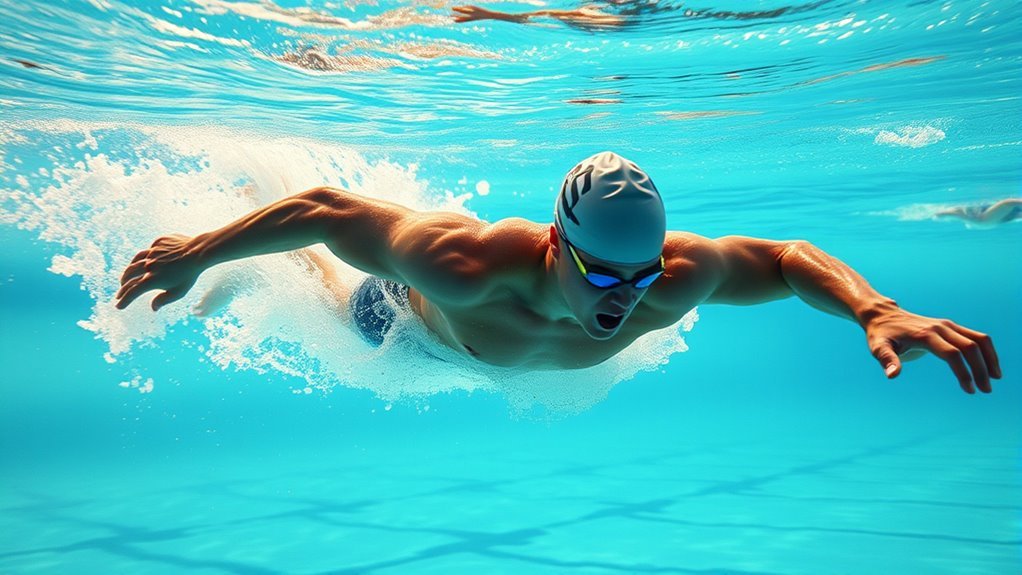
Although you might be familiar with various swimming styles, understanding the four competitive strokes: freestyle, backstroke, breaststroke, and butterfly, will help you appreciate their unique techniques and speeds.
Freestyle, often called the front crawl, uses alternating arm movements and a flutter kick, making it the most common and versatile stroke.
Freestyle, or front crawl, features alternating arms and flutter kicks, making it the most versatile swim stroke.
Backstroke is performed on your back with similar arm and leg actions but requires strong coordination to maintain a straight path.
Breaststroke involves symmetrical arm pulls and a frog-like kick, emphasizing timing and glide.
Butterfly demands simultaneous arm strokes and a powerful dolphin kick, requiring strength and rhythm.
Each stroke challenges you differently, balancing speed, endurance, and technique, so knowing these fundamentals is key before diving deeper into their speed comparisons.
Speed Comparison: Freestyle vs. Backstroke
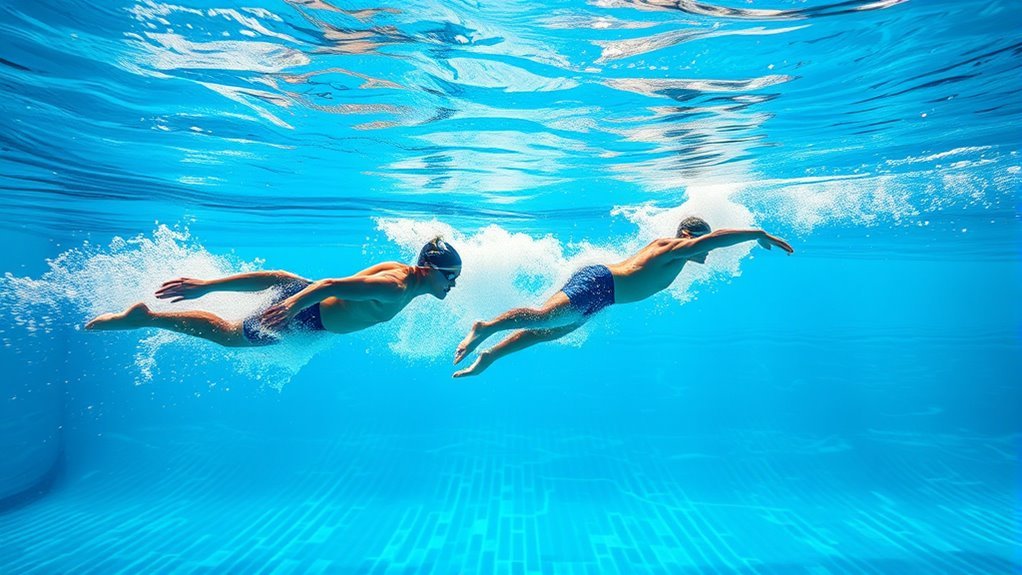
When you compare freestyle and backstroke, you’ll notice that freestyle generally outpaces backstroke due to its body position and propulsion mechanics.
In freestyle, you swim face down, which reduces drag and allows your legs and arms to generate powerful, continuous propulsion. Your flutter kick and alternating arm strokes keep you moving steadily forward.
In contrast, backstroke requires you to lie on your back, which creates more water resistance and limits how effectively you can kick and pull.
While backstroke still uses a flutter kick and alternating arms, your body position makes it harder to maintain the same speed as freestyle.
The Mechanics Behind Butterfly Stroke Speed
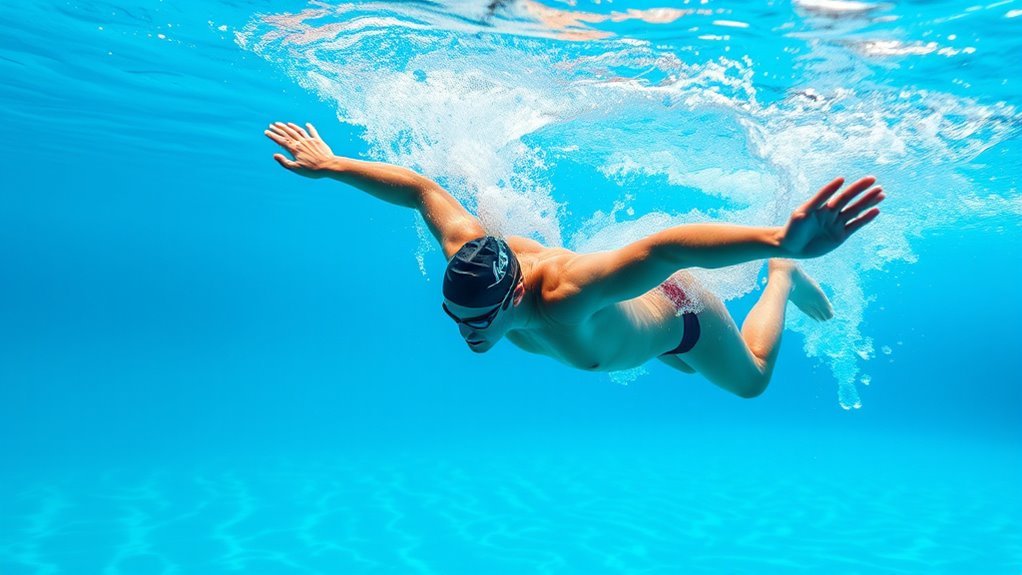
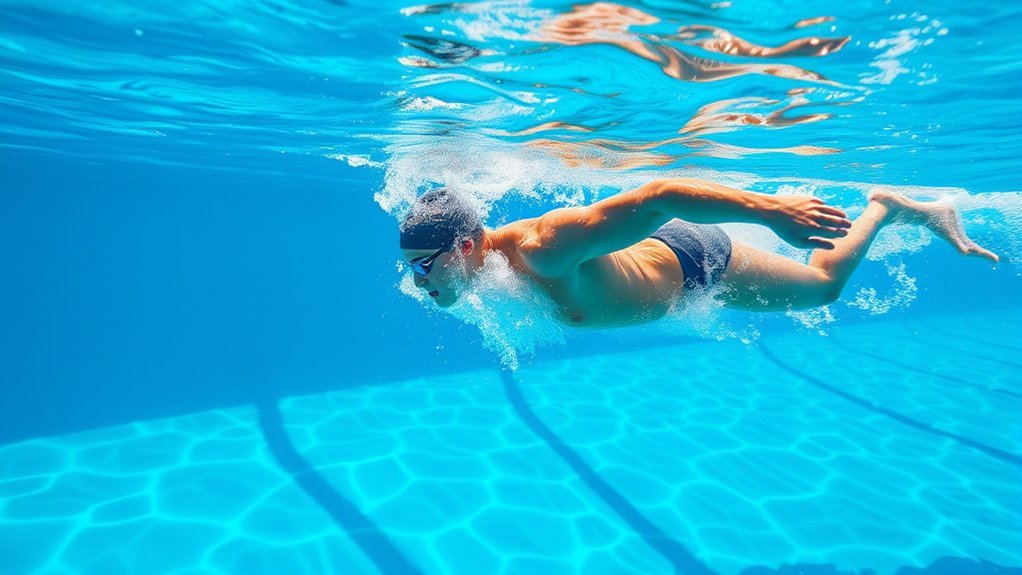
Freestyle’s speed advantage comes from efficient body position and propulsion, but butterfly offers a different kind of power that can rival it in short bursts. You generate speed in butterfly by combining a strong dolphin kick with simultaneous arm pulls that maximize water displacement.
Your core plays a crucial role, helping you maintain rhythm and reduce drag. Timing is everything; your arms and legs must move in harmony to propel you forward efficiently.
| Aspect | Butterfly Stroke | Impact on Speed |
|---|---|---|
| Arm Movement | Simultaneous pull | Generates powerful propulsion |
| Leg Movement | Dolphin kick | Provides continuous thrust |
| Body Motion | Undulating wave-like | Reduces drag and enhances flow |
| Timing | Coordinated arms & legs | Maximizes propulsion efficiency |
Breaststroke: Technique and Velocity
Since breaststroke relies heavily on timing and technique rather than raw power, you need to focus on mastering the glide phase to maximize your velocity. After you complete the kick, extending your body fully and streamlining reduces drag, allowing you to coast through the water efficiently.
Your arm pull should be powerful yet precise, sweeping outwards and then snapping inward beneath your chest to generate forward thrust. Coordinating your breathing with the pull and kick keeps your rhythm smooth and prevents unnecessary resistance.
Remember, your kick is essential. Using a whip-like motion with your feet turned outward helps propel you effectively.
Factors Influencing Swimming Speed and Performance
Although raw strength matters, your swimming speed depends more on technique, conditioning, and efficiency. You need to focus on perfecting your stroke mechanics to minimize drag and maximize propulsion.
Streamlining your body position reduces resistance, letting you glide through water smoothly.
Building cardiovascular endurance and muscle stamina allows you to maintain speed without tiring quickly.
Breathing control also plays a pivotal role; improper timing can disrupt your rhythm and slow you down.
Additionally, starts and turns impact your overall performance. Explosive push-offs and quick shifts save valuable seconds.
By combining these factors, you’ll optimize your swimming performance regardless of the stroke you choose.
Frequently Asked Questions
How Do Swimming Suits Impact Stroke Speed?
Swimming suits reduce drag and improve your hydrodynamics, letting you glide faster through water. They compress your muscles, enhance buoyancy, and help you maintain your stroke efficiency, so you can swim quicker and with less effort.
What Training Routines Improve Stroke Speed the Most?
You’ll improve stroke speed most by combining interval training, technique drills, and strength workouts. Focus on high-intensity sprints, perfecting your form, and building muscle endurance consistently.
Don’t forget proper rest and recovery to maximize gains.
Are There Age Limits for Competitive Swimming Strokes?
You won’t face strict age limits in competitive swimming strokes; instead, events are categorized by age groups. This lets you compete fairly, whether you’re a young beginner or a seasoned adult swimmer.
Keep training!
How Does Water Temperature Affect Swimming Speed?
Cold water can slow you down because your muscles tighten, while warm water helps your muscles relax, improving speed.
Too hot, though, might cause fatigue faster, so finding the right balance is key for ideal performance.
Can Diet Influence a Swimmer’s Stroke Performance?
Yes, your diet can influence stroke performance by providing essential nutrients that boost energy, muscle strength, and recovery. Eating balanced meals with carbs, proteins, and fats helps you swim more efficiently and maintain stamina during training.
A proper diet supports muscle repair and reduces fatigue, which is crucial for swimmers who train intensely. Hydration also plays a key role in maintaining optimal performance and preventing cramps. Incorporating nutrient-rich foods ensures your body has the fuel it needs for both practice and competition.
Conclusion
You might think freestyle always takes the crown for speed, but there’s more beneath the surface. Each stroke has its unique power and technique that can surprise you. When you combine strength, timing, and skill, the fastest stroke isn’t just about raw speed—it’s about how you use your body in the water.
So next time you swim, remember: the fastest swimming stroke might just be the one you master best. Understanding the fastest swimming stroke means appreciating the blend of technique and power that makes it effective. Whether it’s freestyle, butterfly, backstroke, or breaststroke, the key to speed lies in your mastery of the stroke.