How You Can Safely Wear Contact Lenses While Swimming
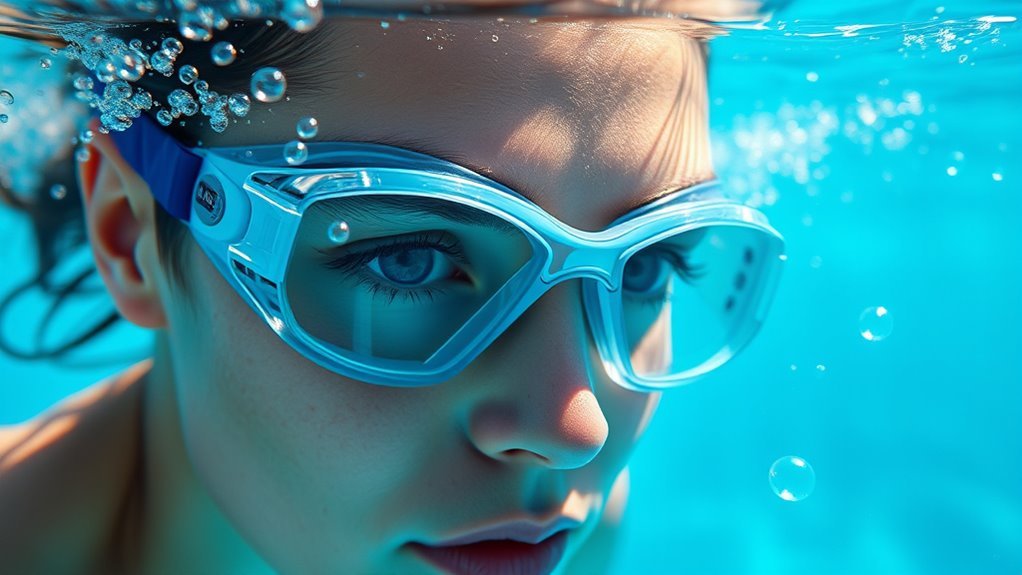
To safely wear contact lenses while swimming, it’s essential to follow key contact lens safety tips to protect your eyes from infections and discomfort. Use daily disposable lenses to minimize the risk of bacteria buildup. Always wear well-fitting waterproof goggles to keep water and contaminants away from your eyes.
Before swimming, wash your hands thoroughly and insert your lenses carefully. After swimming, remove your lenses promptly and clean them with a proper disinfecting solution—never rinse them with tap water. Avoid wearing lenses overnight after swimming to prevent complications.
If you want to keep your eyes healthy and comfortable in water, there’s more important advice to contemplate. Following these contact lens safety tips will help ensure your swimming experience is both enjoyable and safe.
Understanding the Risks of Swimming With Contact Lenses
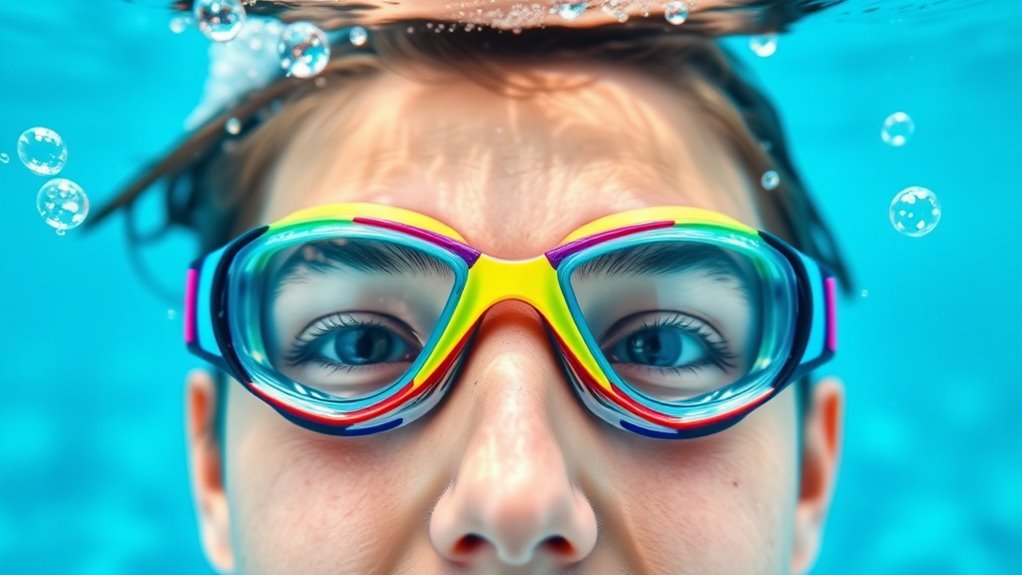
Although swimming with contact lenses might seem convenient, it can expose your eyes to serious risks. When you swim, water containing bacteria, viruses, and parasites can get trapped between your lenses and your eyes, increasing the chance of infections like keratitis.
You might also experience irritation or redness because water breaks down the lens material or causes lenses to stick to your eyes. This discomfort can lead to scratches on your cornea or blurry vision.
Besides, pool chemicals like chlorine can cause your lenses to absorb harmful substances, further irritating your eyes. If you aren’t careful, these issues can result in long-term damage or even vision loss.
Understanding these risks helps you make smarter choices about wearing contact lenses around water.
Choosing the Right Type of Contact Lenses for Swimming
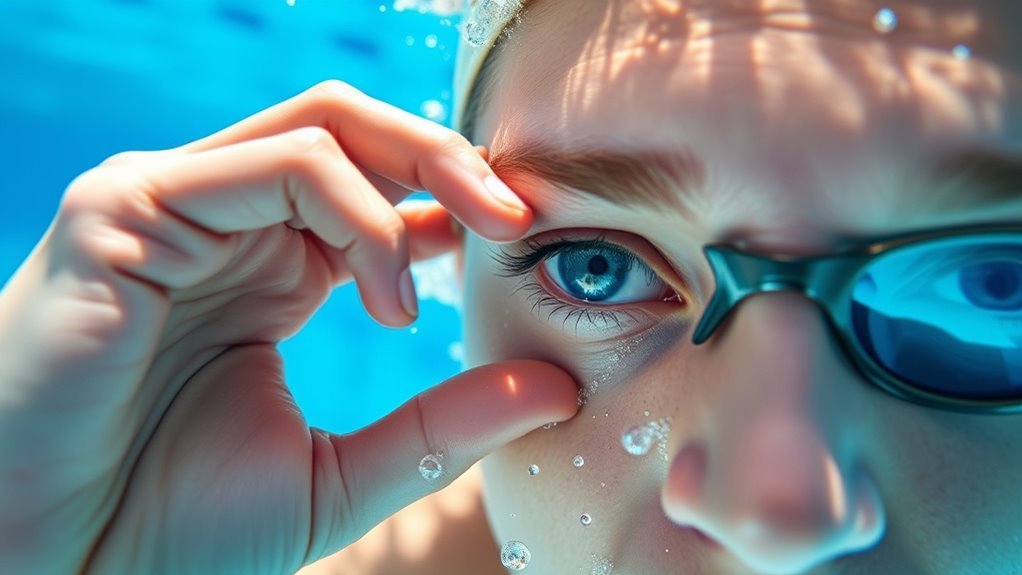
Since swimming with contact lenses carries risks, choosing the right type can help protect your eyes. Daily disposable lenses are your best bet because you wear them once and toss them afterward, reducing the chance of contamination or infection.
Avoid using extended-wear lenses for swimming since they’re designed for overnight use, which increases infection risks when exposed to water.
If daily disposables aren’t an option, consult your eye care professional about the safest alternatives for water activities.
Soft lenses generally offer more comfort in the water, but they can still trap microorganisms, so proper hygiene is essential.
Importance of Using Waterproof Swim Goggles
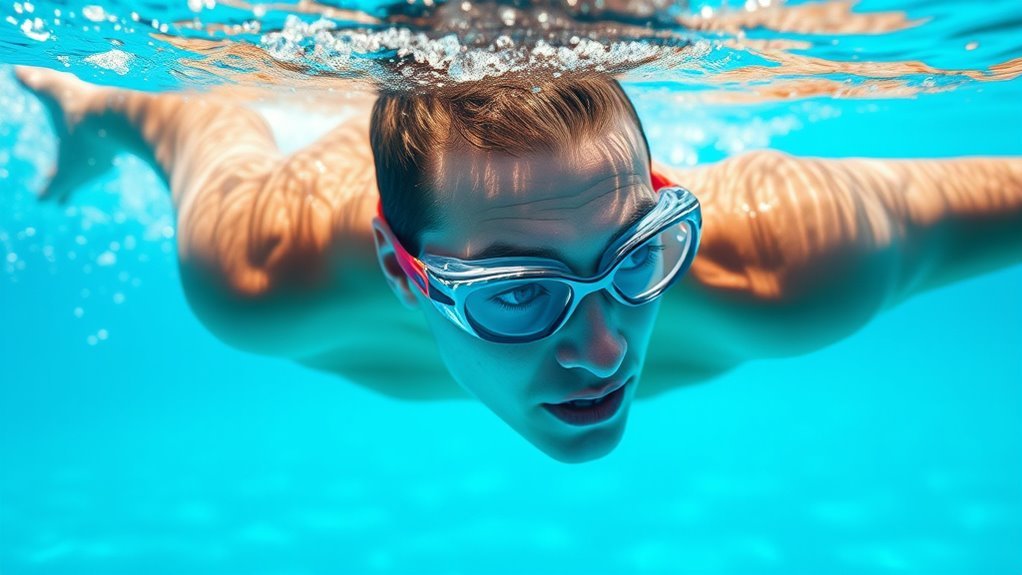
When you wear waterproof swim goggles, you create a protective barrier that keeps water and harmful microorganisms away from your contact lenses. This barrier prevents bacteria, algae, and other contaminants in pools or natural bodies of water from irritating your eyes or causing infections.
Goggles also reduce the risk of lenses dislodging or washing out while you swim, ensuring your vision stays clear and comfortable. Choosing goggles that fit snugly and seal well around your eyes is vital to maintain this protection.
How to Properly Insert and Remove Contact Lenses Before and After Swimming
Before you plunge into the water, make sure you insert your contact lenses with clean hands and follow proper hygiene to reduce the risk of eye infections. Wash your hands thoroughly with soap and dry them with a lint-free towel before touching your lenses.
Always wash and dry your hands thoroughly before handling contact lenses to prevent eye infections.
Place the lens on your fingertip, check for damage or debris, then gently place it on your eye. Blink slowly to help it settle.
After swimming, remove your lenses as soon as possible to prevent irritation. Again, wash your hands well before handling them.
Look upward, pull down your lower eyelid, and gently pinch the lens to lift it off your eye.
Avoid rubbing your eyes while wearing lenses in the water, and never wear lenses overnight after swimming.
Cleaning and Disinfecting Contact Lenses Post-Swim
Although you might be enthusiastic to relax after swimming, you should clean and disinfect your contact lenses immediately to remove any harmful microorganisms or debris.
First, wash your hands thoroughly with soap and water before handling your lenses.
Next, place each lens in your palm, apply fresh multipurpose solution, and gently rub the lens for about 20 seconds to remove contaminants. Rinse each lens with more solution, then store them in a clean lens case filled with fresh disinfecting solution.
Avoid using tap water or saliva, as they can introduce bacteria.
Finally, allow your lenses to soak for the recommended time specified by your solution’s instructions before wearing them again.
This routine helps protect your eyes from infections and keeps your lenses safe after swimming.
Using Daily Disposable Lenses for Swimming Activities
Taking the extra step to clean and disinfect your lenses after swimming helps reduce infection risks, but you can make your routine even simpler by opting for daily disposable lenses.
These lenses are designed for one-time use, so you wear a fresh pair each time you swim, eliminating the need for cleaning solutions afterward.
Using daily disposables minimizes the chance of bacteria or contaminants sticking to your lenses, which is especially important in pools, lakes, or oceans where water quality varies.
Plus, if a lens gets lost or damaged while swimming, you won’t have to worry about reuse.
Just toss them after your swim and use a new pair the next time.
This approach offers both convenience and added safety for your eyes during swimming activities.
Recognizing Symptoms of Eye Infections From Swimming With Contacts
If you swim while wearing contact lenses, you need to know the signs of an eye infection early. Infections can develop quickly, so recognizing symptoms helps you act fast. Watch for redness, pain, blurry vision, or unusual discharge.
Don’t ignore persistent irritation or sensitivity to light. These could mean an infection caused by bacteria or other microbes from the water on your lenses.
| Symptom | What You Might Feel | Why It’s Important |
|---|---|---|
| Redness | Eye looks bloodshot | Indicates inflammation |
| Pain | Sharp or throbbing | Could signal serious infection |
| Blurry Vision | Difficulty focusing | Infection may affect sight |
| Discharge | Watery or thick mucus | Sign of bacterial contamination |
Keep an eye out and remove lenses if symptoms appear.
When to Consult an Eye Care Professional About Swimming With Contacts
Whenever you notice persistent redness, pain, or vision changes after swimming with contact lenses, you should consult an eye care professional promptly. Don’t ignore symptoms that worsen or last more than a day.
It’s also wise to seek advice before swimming if you have a history of eye infections or dry eyes, as your risk may be higher.
Additionally, if you experience unusual discharge, light sensitivity, or the feeling of something stuck in your eye, book an appointment.
Early intervention can prevent serious complications and protect your vision.
Watch for these signs:
- Redness that won’t fade
- Sharp or throbbing eye pain
- Blurred or reduced vision
- Excessive tearing or discharge
- Sensitivity to light or glare
Frequently Asked Questions
Can Swimming With Contacts Cause Long-Term Vision Problems?
Yes, swimming with contacts can cause long-term vision problems if bacteria or irritants enter your eyes. You should always wear waterproof goggles or remove lenses before swimming to protect your eye health and avoid infections.
Are Colored Contact Lenses Safe to Wear While Swimming?
Colored contact lenses aren’t safe to wear while swimming because water can carry harmful bacteria, increasing infection risk.
You should always remove them before swimming or wear watertight goggles to protect your eyes and lenses effectively.
How Do Chlorine Levels in Pools Affect Contact Lenses?
Think of chlorine as a sly trickster in your pool’s kingdom—it can irritate your eyes and warp your contact lenses. You’ll want to protect your lenses because chlorine can cause discomfort and damage their surface.
Chlorine interacts with the material of your contacts, potentially leading to scratches or cloudiness that affect your vision. Additionally, the chemical can dry out your lenses, making them less comfortable to wear while swimming.
Can Swimming With Contacts Increase the Risk of Allergy Symptoms?
Yes, swimming with contacts can increase allergy symptoms because allergens and irritants stick to your lenses. They trap particles against your eyes, worsening redness, itching, and discomfort.
Is It Safe to Swim in Natural Bodies of Water With Contacts?
Imagine Sarah, who swam in a lake with contacts and got a painful eye infection.
It’s generally unsafe to swim in natural water with contacts due to bacteria risks; you should wear goggles or avoid lens use there.
Conclusion
Swimming with contact lenses isn’t a new idea—think of it like a modern-day aquanaut’s secret—but you’ve got to be smart about it. Always wear waterproof goggles, choose the right lenses, and clean them thoroughly after your swim.
Daily disposables can be a lifesaver here. If your eyes feel irritated or red, don’t ignore it—see your eye care professional promptly.
With these tips, you can plunge in safely without risking your precious vision. Remember, to safely wear contact lenses while swimming, always prioritize eye protection and proper lens care.