When Can You Take Babies Swimming Safely?
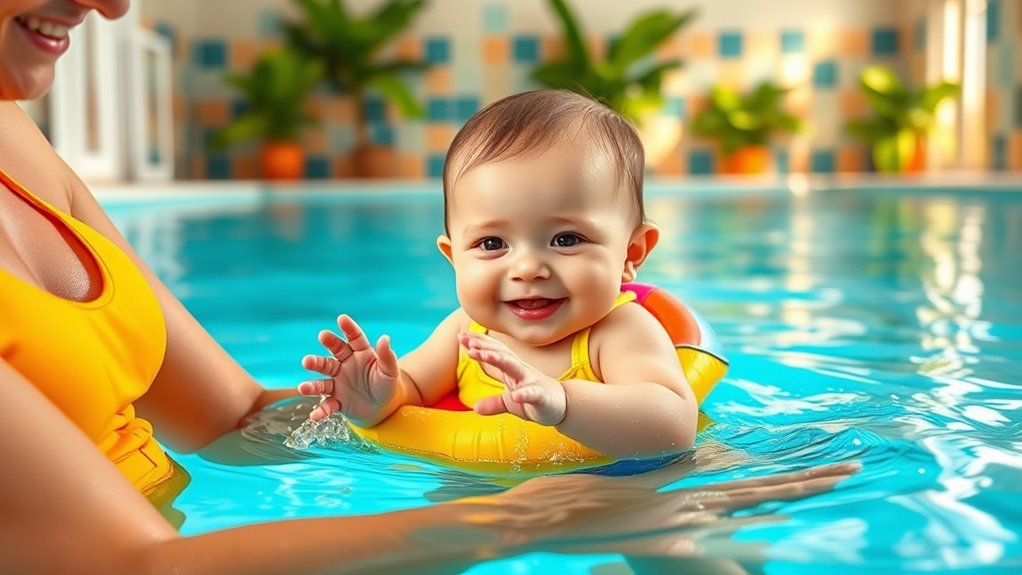
You can take your baby swimming safely around six months old when they have better head and neck control and a stronger immune system. Swimming with babies requires careful preparation to ensure safety and enjoyment. Before swimming, make sure your baby is healthy, free from rashes or infections, and up-to-date on vaccinations.
Keep sessions short, use warm, clean water, and never leave your baby unattended. Choosing the right environment and gear is key to a safe, positive experience. There’s more to know to make your little one’s first swim enjoyable and safe.
Ideal Age to Start Baby Swimming
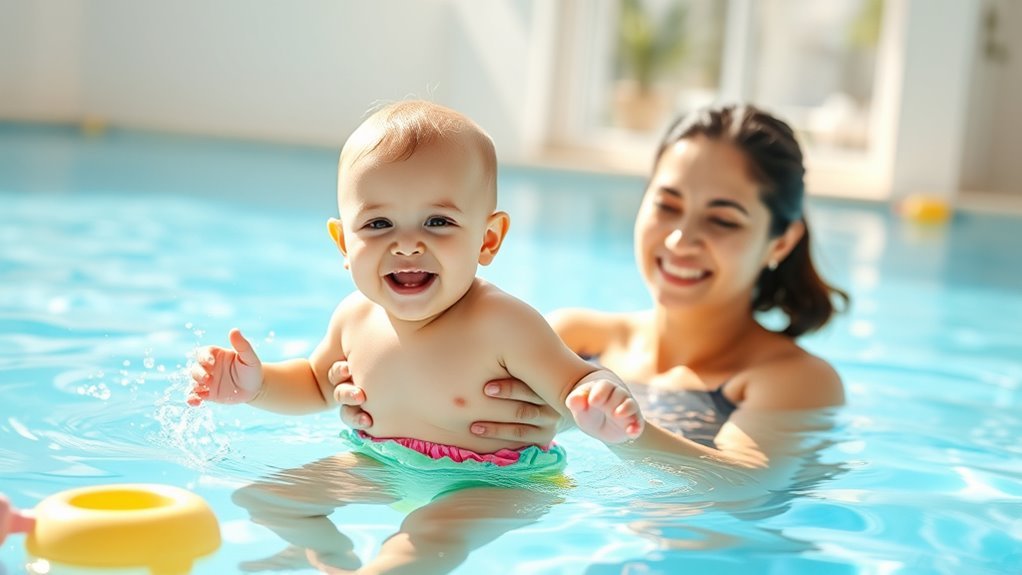
Although every baby develops at their own pace, most experts recommend waiting until your little one is around six months old before introducing them to swimming.
At this age, babies typically have better head and neck control, which is essential for safety in the water.
You’ll find that their immune systems are also stronger, reducing the risk of infections.
Starting too early might overwhelm your baby or expose them to cold temperatures they can’t regulate well yet.
When you do take them swimming, keep sessions short and gentle to help build a positive association.
This way, you’re setting the stage for a fun, safe experience that supports their growing confidence and comfort in the water.
Health Considerations Before Swimming
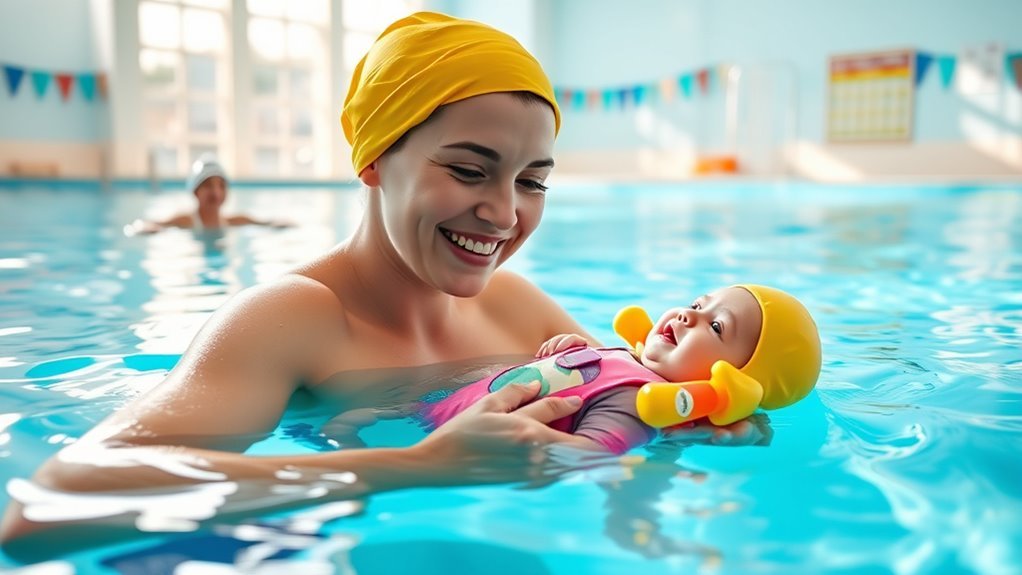
Before you take your baby swimming, you should check their overall health to make certain they’re ready for the water. If your baby has any skin irritations, rashes, or infections, it’s best to wait until these heal completely.
Always ensure your baby’s skin is clear of irritations before introducing them to swimming.
Avoid swimming if your baby has a cold, fever, or respiratory issues, as exposure to chlorine and cold air can worsen symptoms.
Make sure your baby is up to date with routine pediatric checkups and vaccinations, which help protect against infections.
Also, consider any allergies or sensitivities your baby may have, especially to pool chemicals.
Always consult your pediatrician if you’re unsure whether your baby is healthy enough for swimming.
Taking these steps ensures a safe and enjoyable swimming experience for your little one.
Importance of Immune System Development
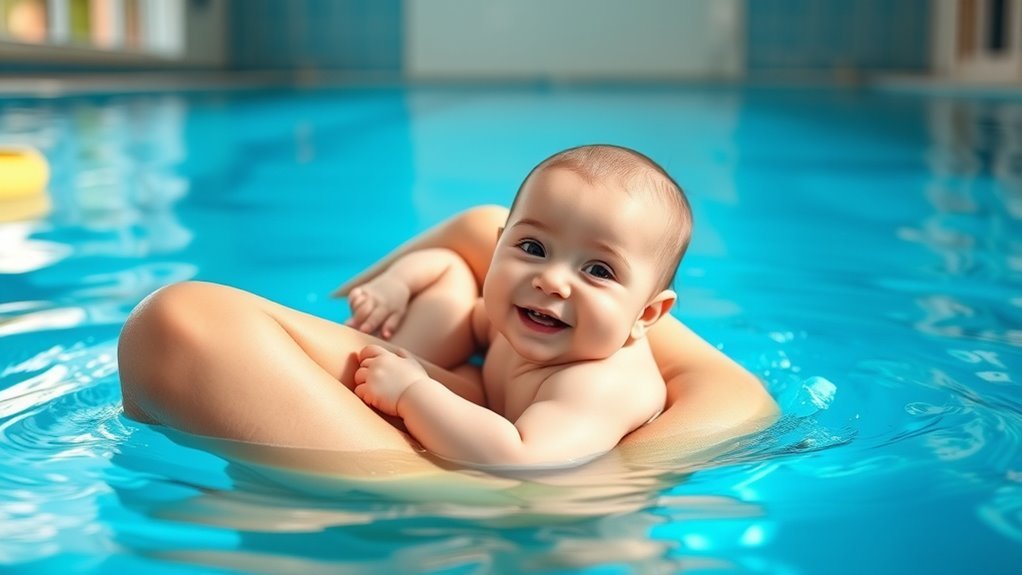
Since your baby’s immune system is still developing, exposing them to new environments like swimming pools requires careful consideration. Their immune defenses aren’t fully built yet, so you need to be cautious about potential germs and irritants in the water.
To support your baby’s immune health when introducing swimming, keep these points in mind:
- Wait until your baby is at least 6 months old, as maternal antibodies start to wane and their own immune system strengthens.
- Ensure the pool is clean and properly chlorinated to minimize exposure to harmful bacteria and viruses.
- Limit the frequency and duration of swims initially to avoid overwhelming their immune system.
Being mindful of your baby’s immune development helps you create safe and enjoyable swimming experiences.
Water Safety Tips for Babies
To keep your baby safe in the water, you need to follow specific precautions that minimize risks and guarantee a positive experience. Always supervise your baby closely. Never leave them unattended. Use appropriate flotation devices designed for infants, and ensure pool water is clean and properly chlorinated. Keep swim sessions short to prevent your baby from getting cold or tired.
| Tip | Why It Matters | How to Implement |
|---|---|---|
| Constant Supervision | Prevents accidents | Stay within arm’s reach |
| Proper Gear | Ensures buoyancy & safety | Use infant swim vests |
| Short Sessions | Avoids fatigue and chills | Limit swim time to 10-15 min |
Following these tips helps create a safe, enjoyable swimming experience for your baby.
Choosing the Right Swimming Environment
When you pick a swimming spot for your baby, safety and comfort should come first. You want a place that’s clean, warm, and calm to help your little one feel secure. Here’s what to look for:
- Water Temperature: Choose pools heated to around 32°C (89°F). Cold water can make babies uncomfortable and risk hypothermia.
- Cleanliness: Make sure the pool is well-maintained with clear water and proper chlorine levels to prevent infections.
- Calm Environment: Avoid busy or noisy pools. Quiet settings reduce stress and distractions, letting your baby enjoy the experience.
Essential Swimming Gear for Infants
A few key items can make your baby’s swimming experience safer and more enjoyable. Start with a well-fitting swim diaper to keep the pool clean and avoid accidents. Choose a comfortable, UV-protective swimsuit to shield your baby’s delicate skin from sun exposure.
A swim cap can help keep your little one warm and protect their head from sunburn. Invest in infant-specific floatation devices, but never rely on them for safety. They’re just aids.
Bring a soft towel or hooded bathrobe to wrap your baby immediately after swimming to prevent chills.
Finally, consider waterproof swim diapers and gentle, tear-free baby shampoo for post-swim care.
With the right gear, you’ll ensure your baby stays safe, comfortable, and happy during every swim session.
Benefits of Early Swimming Experiences
Having the right gear in place sets the stage for more than just comfort and safety. It opens the door to numerous benefits that early swimming experiences offer your baby. When you introduce your little one to water early on, you’re not just creating fun moments; you’re promoting healthy development and bonding.
The right gear unlocks comfort, safety, and countless benefits for your baby’s early swimming journey.
Here are three key benefits you’ll notice:
- Physical Growth: Swimming helps build muscle strength and coordination as your baby moves in the water.
- Cognitive Development: The sensory stimulation from water encourages brain development and problem-solving skills.
- Emotional Bonding: Sharing swim time boosts your connection, providing comfort and security to your baby.
Starting swimming early sets a foundation for a lifetime of confidence and enjoyment in the water.
Signs Your Baby Is Ready for Swimming
Before you take your baby swimming, you’ll want to look for certain signs that show they’re ready. First, your baby should have good head control, typically by around 4 to 6 months. This helps them stay safe and comfortable in the water.
Also, check if your baby enjoys water during bath time. They shouldn’t be overly fussy or stressed.
Healthy weight gain and overall good health are important too; avoid swimming if your baby has a cold or skin irritation.
In conclusion, make sure your baby’s doctor gives the green light, especially if they were born prematurely or have health concerns.
Watching these signs helps ensure a positive and safe swimming experience for your little one.
Frequently Asked Questions
Can Babies Swallow Pool Water Safely?
No, babies shouldn’t swallow pool water because it can contain harmful bacteria and chemicals.
You should watch them closely and teach gentle water habits to keep them safe while enjoying swimming activities together.
How Often Should Babies Swim Each Week?
You should swim with your baby one to two times a week to build comfort and skills while avoiding overexposure.
Keep sessions short, around 10-20 minutes, and always watch for signs of tiredness or cold.
What Is the Best Swim Diaper Brand?
You’ll find that brands like Pampers Splashers, Huggies Little Swimmers, and i play swim diapers work best. They’re designed to contain messes, stay snug in water, and keep your baby comfortable during swim time.
Can Swimming Help With Baby Colic?
Yes, swimming can help soothe baby colic by relaxing their muscles and promoting better digestion.
You’ll notice your baby feeling calmer and happier after a gentle swim session, making it a helpful, fun remedy.
Should Babies Wear Sunscreen During Swimming?
Yes, you should apply baby-safe, broad-spectrum sunscreen before swimming. Babies’ skin is delicate and can burn easily, so protect them with sunscreen, hats, and shade to keep them safe while enjoying the water.
Conclusion
Imagine your baby’s bright eyes sparkling as they splash gently in warm, clear water. You can start this joyful journey once their immune system is strong enough, usually around six months. Before you plunge in, check their health, pick a safe pool, and gather the right gear.
With these steps, you’re not just teaching swimming—you’re opening a world of fun, confidence, and bonding that will ripple through their growing years. Remember, taking babies swimming safely means choosing the right time and environment, ensuring a positive and secure experience for your little one.