
How Big Is a Swimming Pool Guide to Standard Sizes
You’ll find residential pools typically range from 10×20 to 15×30 feet, with depths around 3 to 6 feet for comfort and usability. Olympic pools are much larger, measuring 50 by 25 meters, designed for competition standards.
Pool shape and size impact water volume, maintenance, and costs, so you’ll want to take into account your backyard space and budget carefully. If you’re planning a pool, understanding these basics will help you pick the perfect size and style to suit your needs.
Common Sizes for Residential Swimming Pools

When choosing a residential swimming pool, you’ll find that most common sizes range between 10 to 20 feet in width and 20 to 40 feet in length.
This range suits various backyard spaces without overwhelming them.
If you want a compact pool for relaxation and light swimming, a 10×20-foot pool works well.
For families or those who enjoy swimming laps, you might prefer something closer to 15×30 feet.
Depths typically vary from 3 to 6 feet, allowing for both shallow lounging and deeper swimming areas.
Remember, the size you pick should balance your landscape, budget, and intended use.
Customizing dimensions is always an option, but sticking to these common sizes makes installation and maintenance simpler and often more affordable.
Dimensions of Olympic and Competition Pools
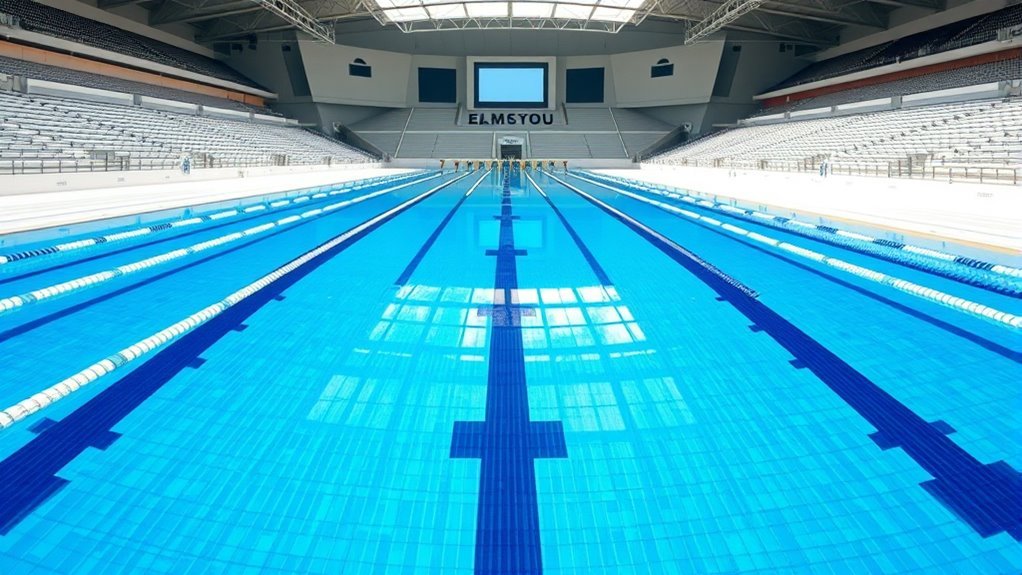
How big are Olympic and competition swimming pools?
Olympic pools measure 50 meters in length and 25 meters in width, with a minimum depth of 2 meters. They contain ten lanes, each 2.5 meters wide, but only eight lanes are used for competition.
This size guarantees swimmers have ample space to perform at their best without interference.
For short course competitions, pools are typically 25 meters long and 21 meters wide, with lane widths similar to Olympic pools.
Both types must meet strict standards for water temperature, lane markings, and starting blocks to ensure fairness and safety.
If you’re training or competing seriously, understanding these dimensions helps you prepare for real-world conditions and choose the right facility that matches official competition standards.
Popular Pool Shapes and Their Typical Sizes
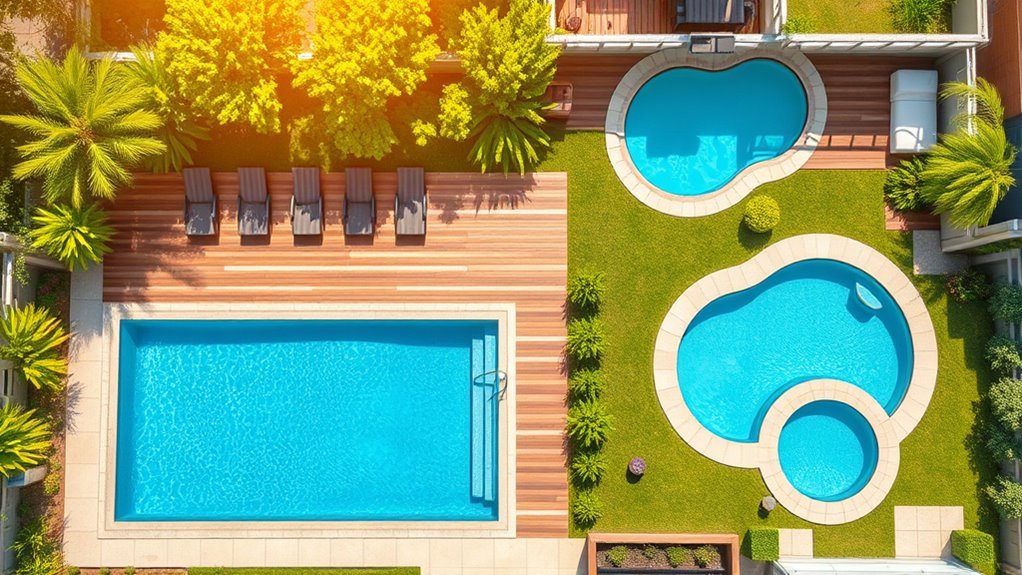
Understanding the exact dimensions of Olympic and competition pools sets a foundation for exploring the variety of pool shapes you might encounter. When choosing your pool shape, consider common options like rectangular, oval, kidney, and freeform.
Rectangular pools, typically 10 by 20 feet or larger, are popular for lap swimming and simple maintenance.
Oval pools often measure around 12 by 24 feet, providing a smooth, elegant look with gentle curves.
Kidney-shaped pools, usually 14 by 28 feet, offer a natural feel ideal for landscaping integration.
Freeform pools vary widely but often fall between 15 and 30 feet in length, giving you creative freedom with irregular shapes.
Each shape’s size influences its use and aesthetic, so pick one that fits your space and lifestyle.
How Pool Size Affects Water Volume and Maintenance
Since the size of your swimming pool directly determines its water volume, it also impacts the effort and cost required for maintenance. Larger pools hold more water, which means you’ll need more chemicals, longer filtration times, and greater energy to keep everything balanced.
Smaller pools, while easier to manage, might require more frequent cleaning due to less water diluting contaminants.
Here’s how pool size affects maintenance:
- Chemical Costs: Bigger pools need more chlorine and pH balancers, increasing expenses.
- Cleaning Time: Larger water volume means longer pump runs but less frequent debris accumulation.
- Energy Use: Heating a bigger pool demands more energy, raising utility bills.
- Water Replacement: Bigger pools lose more water to evaporation, requiring you to top up regularly.
Understanding this helps you prepare for the practical side of pool ownership.
Choosing the Right Pool Size for Your Backyard Space
The size of your pool not only influences maintenance but also determines how well it fits into your backyard. Before deciding, measure your available space carefully to ensure the pool won’t overwhelm the area.
Think about how you want to use it, whether for laps, family fun, or relaxation, as this impacts the ideal dimensions. Smaller yards benefit from compact pools that leave room for landscaping and seating, while larger yards can accommodate more expansive designs.
Consider your pool’s purpose to choose dimensions that suit your space and lifestyle perfectly.
Don’t forget to consider setbacks from property lines and local regulations.
Visualize how the pool integrates with existing features like patios or gardens.
Choosing the right size means balancing functionality with aesthetics, making sure your pool enhances your outdoor space without crowding it. This thoughtful approach guarantees your backyard remains enjoyable and inviting year-round.
Impact of Pool Size on Installation and Construction Costs
Although pool size plays a major role in your overall budget, you’ll find that larger pools generally require more materials, labor, and time, which all add up to higher installation and construction costs. When planning your pool, keep these cost factors in mind:
- Excavation and Groundwork: Bigger pools need more digging, increasing equipment and labor expenses.
- Materials: More concrete, tiles, and liners mean your supply costs rise considerably.
- Labor: Skilled workers spend longer on large pools, pushing up hourly wages.
- Permits and Inspections: Larger pools often face stricter regulations, which can add fees and delays.
Understanding these aspects helps you manage your budget and avoid surprises during construction.
Pool Size Considerations for Families and Entertaining
When planning your pool size, consider how many people will regularly use it and what activities you want to enjoy. If your family includes kids who love splashing or adults who want to swim laps, you’ll need enough space to accommodate those needs comfortably.
For entertaining guests, think about how many people you’ll host at once. A larger pool with shallow areas works well for socializing, while deeper zones suit diving or games.
Also, factor in space for poolside seating and movement.
Balancing size with your yard’s layout guarantees everyone can relax and have fun without feeling cramped. Choosing the right pool size helps you create an inviting environment that fits your lifestyle and maximizes enjoyment for family and friends alike.
Tips for Measuring and Planning Your Swimming Pool Space
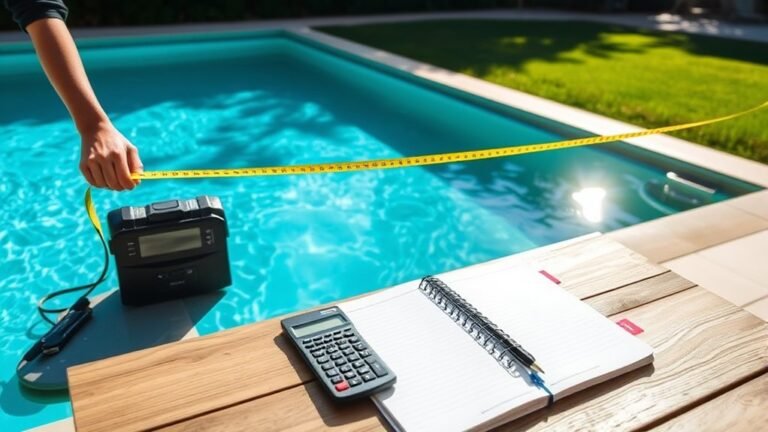
Choosing the right pool size is just the start; you’ll also need to carefully measure and plan your available space to guarantee a perfect fit. Start by evaluating your yard’s dimensions and any obstacles like trees or structures. Accurate measurements help avoid costly mistakes and ensure your pool complements your landscape.
Here’s how to plan effectively:
- Measure twice, cut once: Double-check yard dimensions to avoid surprises.
- Consider pool shape and clearance: Allow space for walking, furniture, and safety.
- Factor in local regulations: Check setback requirements and permits.
- Visualize with sketches or software: Picture your pool in the space to confirm comfort and flow.
Frequently Asked Questions
What Materials Are Best for Building a Durable Swimming Pool?
You’ll want concrete or gunite for durability, as they’re strong and long-lasting.
Fiberglass pools resist algae and require less maintenance, while vinyl offers affordability but less longevity.
Choose based on your budget and upkeep preference.
How Long Does It Typically Take to Build a Swimming Pool?
Rome wasn’t built in a day, and neither is your pool.
Typically, it takes about 6 to 12 weeks to finish building, depending on size, materials, and weather conditions.
You’ll want patience.
What Safety Features Are Recommended for Residential Pools?
You should install a secure fence with a self-latching gate, use pool covers, and have alarms on doors and the pool itself.
Also, keep rescue equipment nearby and teach kids about water safety to prevent accidents.
How Can I Improve Pool Energy Efficiency and Reduce Costs?
You can slash your pool’s energy bill to nearly zero by using a solar cover, energy-efficient pumps, and smart timers.
Don’t forget regular maintenance—dirty filters can suck up energy faster than a hurricane drains a lake!
What Are the Common Pool Maintenance Schedules and Tasks?
You’ll want to skim debris daily, test and balance chemicals weekly, clean filters every few weeks, and inspect equipment monthly.
Deep clean the pool and check water levels monthly to keep everything running smoothly and safely.
Conclusion
Choosing the perfect swimming pool size is like finding the ideal backdrop for your backyard memories. Whether you want a cozy retreat for quiet afternoons or a spacious splash zone for lively gatherings, the right dimensions make all the difference.
Keep in mind how size influences upkeep, costs, and the feel of your outdoor oasis. With thoughtful planning, your pool will become a invigorating haven that fits your lifestyle beautifully, without overwhelming your space.
By understanding standard swimming pool sizes and their benefits, you can create a backyard paradise tailored to your needs. Selecting the right size ensures your pool is both functional and enjoyable, making your outdoor space a true sanctuary.