
How to Use Swimming for Good Relief From Plantar Fasciitis Pain
You can use swimming for good relief from plantar fasciitis pain by choosing low-impact strokes like backstroke or gentle freestyle kicks that minimize foot strain. Swimming is an excellent exercise for plantar fasciitis because it reduces pressure on your feet while promoting healing.
Start with short sessions and warm up by stretching your calves and feet to avoid aggravating your condition. Swimming boosts circulation and supports healing while reducing pressure on your plantar fascia.
Combine swimming with stretching, orthotics, and ice therapy for best results. Keep track of your pain and progress to adjust your routine as needed—explore more ways to optimize your recovery.
Understanding Plantar Fasciitis and Its Impact
Although you mightn’t realize it at first, plantar fasciitis can considerably affect your daily activities by causing sharp heel pain. This condition results from inflammation of the plantar fascia, a thick band of tissue connecting your heel to your toes.
You often feel pain during your first steps in the morning or after extended periods of rest. If you ignore it, the pain might worsen, making walking or standing uncomfortable and limiting your mobility.
You might notice stiffness and tenderness along your foot’s bottom, making activities like climbing stairs or exercising difficult.
Understanding how plantar fasciitis impacts your daily life is vital because it helps you recognize symptoms early and seek effective relief strategies before the pain disrupts your routine further.
Benefits of Swimming for Plantar Fasciitis Relief
Since swimming reduces pressure on your feet, it offers an excellent way to stay active while managing plantar fasciitis pain. You can enjoy a full-body workout without the impact that aggravates your condition.
Swimming provides a low-impact, full-body workout that helps manage plantar fasciitis pain effectively.
Swimming also promotes healing by increasing blood flow to your feet, which helps reduce inflammation and speeds recovery. Plus, the buoyancy of water supports your body, easing stress on your plantar fascia.
Here are three key benefits of swimming for plantar fasciitis relief:
- Low-impact exercise: Avoids aggravating foot pain while maintaining fitness.
- Improved circulation: Enhances blood flow for faster tissue repair.
- Muscle strengthening: Builds overall leg and foot strength to support your arch.
Swimming can be a smart, pain-friendly way to stay active and heal.
Best Swimming Strokes to Minimize Foot Strain
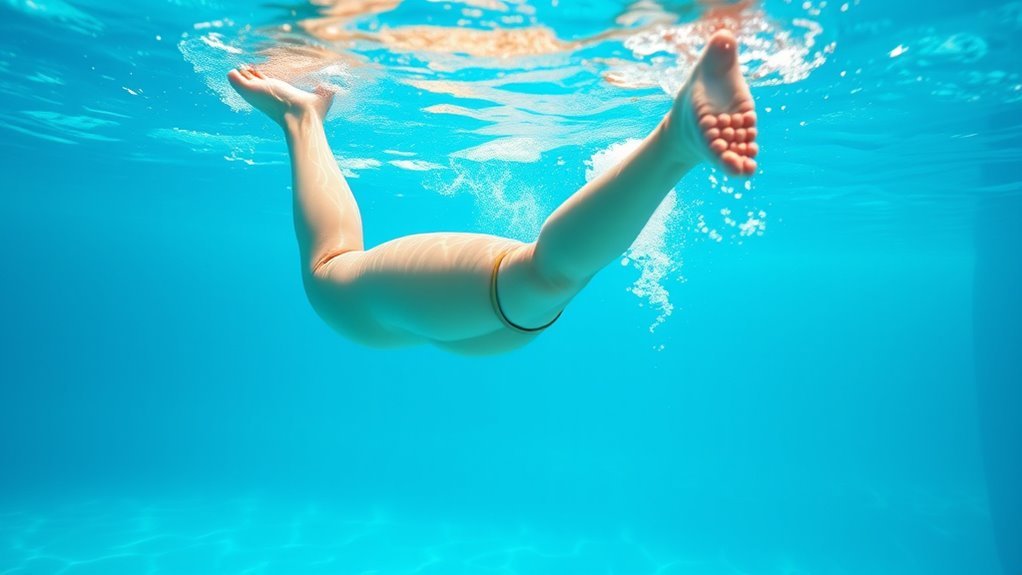
To get the most relief from swimming while managing plantar fasciitis, choosing the right strokes matters. You’ll want to focus on strokes that minimize foot strain.
The backstroke is excellent because your feet remain mostly relaxed and pointed, reducing pressure on the plantar fascia. The freestyle stroke also works well if you keep your kick gentle and avoid excessive ankle flexion.
Avoid the breaststroke kick since it requires forceful outward foot movement, which can aggravate plantar fascia pain.
When swimming, keep your ankles loose and avoid stiff or pointed toes that increase tension.
Tips for Starting a Swimming Routine Safely
Before you plunge into swimming regularly, it’s important to ease into your routine to prevent aggravating plantar fasciitis. Start slow and listen to your body to avoid overuse or strain. Here are three key tips to help you begin safely:
- Warm Up Thoroughly: Spend 5-10 minutes stretching your calves and feet before hitting the pool to prepare your plantar fascia for activity.
- Choose Low-Impact Strokes: Begin with strokes like backstroke or freestyle that put less stress on your feet.
- Limit Session Duration: Start with short swims, about 15-20 minutes, and gradually increase time as your foot strengthens and adapts.
Combining Swimming With Other Plantar Fasciitis Treatments
Although swimming offers excellent low-impact exercise for plantar fasciitis, combining it with other treatments can speed up your recovery and provide more extensive relief.
You should integrate stretching, orthotics, and ice therapy alongside swimming to address pain from multiple angles. This combined approach helps reduce inflammation, improve foot mechanics, and maintain mobility.
| Treatment | Benefit | When to Use |
|---|---|---|
| Stretching | Increases flexibility | Before and after swimming |
| Orthotics | Supports arch and alignment | Throughout the day |
| Ice Therapy | Reduces inflammation and pain | After activity or flare-ups |
How to Track Progress and Adjust Your Swimming Plan
Tracking your progress helps you understand how well swimming and other treatments are easing your plantar fasciitis. To keep improving, you need to regularly evaluate how your body responds and tweak your swimming plan accordingly. Here’s how to do it effectively:
- Record pain levels before and after swimming sessions using a simple scale from 1 to 10. Note any changes over days or weeks.
- Track your swimming routine, including duration, intensity, and frequency. This lets you spot patterns linked to pain relief or flare-ups.
- Adjust based on feedback from your body. If pain decreases, gradually increase your swim time or intensity. If pain spikes, reduce stress and consult a healthcare professional.
Frequently Asked Questions
Can Swimming Worsen Plantar Fasciitis Symptoms?
Swimming rarely worsens plantar fasciitis symptoms since it’s low-impact and supports your body weight.
However, improper kicking technique or overdoing it might irritate your heel, so you should focus on gentle, controlled movements and rest as needed.
What Swimming Gear Is Best for Plantar Fasciitis?
You’ll want to choose swim fins with soft, flexible soles to gently pamper your feet.
Also, consider water shoes with cushioned insoles—they’ll give your plantar fascia a friendly hug while you glide through the water.
How Long Does It Take to See Pain Relief From Swimming?
You’ll typically start noticing pain relief within two to four weeks of consistent swimming sessions.
Stick to gentle, low-impact exercises, and don’t push too hard to allow your plantar fascia the time it needs to heal.
Is Swimming Suitable for All Plantar Fasciitis Severity Levels?
Swimming’s soothing support suits several severity stages. You can safely swim with mild to moderate plantar fasciitis, but severe cases might need doctor’s direction.
Always listen to your body and adjust activity accordingly for best benefits.
Can Swimming Replace Physical Therapy for Plantar Fasciitis?
No, swimming can’t fully replace physical therapy for plantar fasciitis.
You should use swimming as a low-impact exercise alongside targeted stretches and treatments prescribed by your therapist to get the best pain relief and recovery results.
Conclusion
You can ease plantar fasciitis pain by swimming regularly, choosing gentle strokes, and moving without strain. Swimming allows you to build strength, improve flexibility, and reduce pressure on your feet all at once. This low-impact exercise is ideal for managing discomfort while staying active.
Combine swimming with stretching, icing, and proper footwear for better results. These complementary approaches support healing and reduce inflammation effectively. Tracking your progress and adjusting your routine can help you find what works best for your body.
Stay consistent and patient with your swimming regimen. Swim smart, listen to your body, and watch your plantar fasciitis pain fade away step by step. Using swimming for plantar fasciitis relief can lead to lasting comfort and improved foot health.