Do You Need to Know Swimming for Snorkeling?
You don’t have to be a strong swimmer to enjoy snorkeling safely, especially if you use flotation gear like a snorkeling vest and stick to calm, shallow waters. Knowing some basic swimming skills can help, but it’s not a strict requirement for snorkeling. Practicing breathing through your snorkel on land or in a pool helps build confidence.
Always snorkel with a buddy, stay relaxed, and know your limits. With the right preparation and gear, you’ll navigate the water comfortably. Keep exploring to discover how to boost your skills and pick the best spots.
Understanding the Basics of Snorkeling
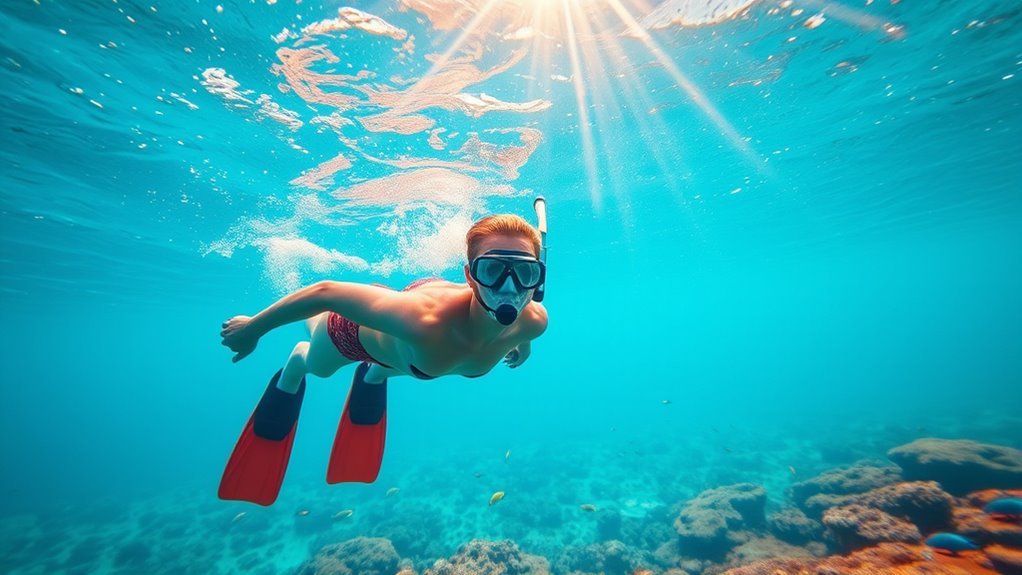
Before you plunge in, it’s important to understand the basics of snorkeling to guarantee a safe and enjoyable experience. You’ll need a mask to see clearly underwater, a snorkel to breathe while your face is submerged, and fins to help you swim efficiently.
Make sure your mask fits snugly without leaking, and practice breathing through the snorkel on land first.
Ensure your mask seals well and get comfortable breathing through the snorkel before hitting the water.
When you’re in the water, keep your body horizontal and relaxed to reduce effort and enjoy better visibility.
Avoid touching or disturbing marine life, and always be aware of your surroundings.
Ultimately, never snorkel alone. Having a buddy ensures help is nearby if you encounter any trouble.
These basics set the stage for a fun, safe snorkeling adventure.
Swimming Skills That Enhance Snorkeling Safety

Although snorkeling gear helps you explore underwater, strong swimming skills are essential to keep you safe and confident in the water. Being comfortable with basic strokes, treading water, and controlled breathing improves your ability to navigate currents and avoid fatigue. It also helps you respond calmly in unexpected situations.
Here’s a quick look at key swimming skills that enhance snorkeling safety:
| Skill | Benefit |
|---|---|
| Freestyle Stroke | Efficient movement through water |
| Treading Water | Staying afloat without tiring |
| Controlled Breathing | Maintaining calm and oxygen flow |
| Floating Skills | Resting and conserving energy |
Mastering these skills lets you enjoy snorkeling fully while prioritizing your safety.
Can Non-Swimmers Snorkel Confidently?
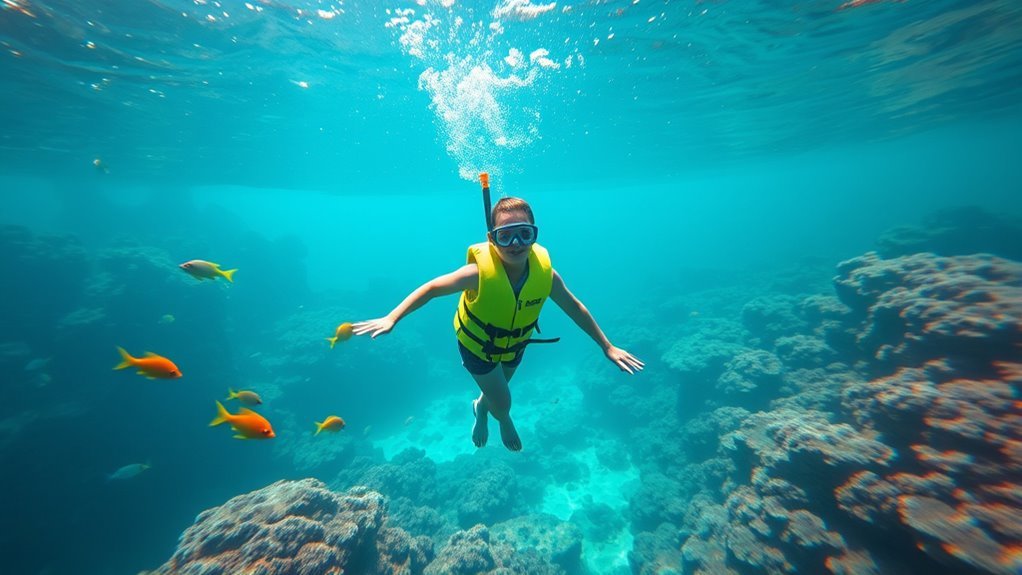
Even if you’re not a strong swimmer, you can still enjoy snorkeling with the right precautions and equipment. Confidence comes from preparation and understanding your limits.
Snorkeling is accessible to everyone with the right gear and a clear understanding of your abilities.
Here’s how you can snorkel safely and comfortably without strong swimming skills:
- Choose calm, shallow waters to minimize risks and easy navigation.
- Use a flotation device like a snorkeling vest to help you stay buoyant effortlessly.
- Practice breathing through your snorkel in a pool or shallow water before heading out.
- Always snorkel with a buddy who can assist if you encounter any trouble.
Essential Safety Gear for Snorkeling Beginners
When you’re starting out with snorkeling, having the right safety gear makes all the difference in your comfort and security. First, a well-fitting mask is essential. It keeps water out and ensures clear vision underwater.
Pair it with a snorkel that’s easy to breathe through and fits comfortably.
Don’t skip a life vest or snorkeling vest. It provides buoyancy, helping you stay afloat effortlessly, especially if you’re not a strong swimmer.
Fins can improve your movement and reduce fatigue, so choose ones that fit snugly without causing blisters.
Finally, consider wearing a rash guard or wetsuit for protection against sunburn, jellyfish stings, and cold water.
With this gear, you’ll feel safer and more confident as you explore beneath the surface.
How to Build Water Confidence Before Snorkeling
Before you jump into snorkeling, building your water confidence is key to enjoying the experience safely and comfortably. Start by getting familiar with the water in a controlled environment like a pool. Gradually increase your comfort level by practicing basic skills.
Here’s how to build your confidence:
- Practice breathing through a snorkel while holding your face in the water.
- Master floating and treading water to feel secure without exerting too much effort.
- Get accustomed to wearing your gear so it feels natural during your swim.
- Swim with a buddy or instructor who can provide support and encouragement.
Tips for First-Time Snorkelers Who Aren’t Strong Swimmers
If you’re not a strong swimmer, snorkeling can still be an enjoyable and safe activity with the right approach. Start by wearing a life vest or flotation device to keep you buoyant without extra effort.
Even weak swimmers can enjoy snorkeling safely by using a life vest for effortless buoyancy.
Practice using your snorkel gear in shallow, calm water before venturing further. Always snorkel with a buddy or guide who can assist if needed.
Focus on slow, steady breathing through the snorkel to stay relaxed and conserve energy. Avoid strong currents or rough water, and stick to areas where you can easily stand if necessary.
Remember to take breaks and float on your back if you feel tired. With these tips, you can confidently explore underwater sights without needing advanced swimming skills.
Choosing the Right Snorkeling Locations for All Skill Levels
Although snorkeling can be enjoyed by people of all skill levels, choosing the right location plays a crucial role in ensuring a safe and enjoyable experience. You want to pick spots that match your comfort and ability, so you can focus on the beauty underwater without worry.
Here are four key factors to consider when selecting a snorkeling location:
- Water Conditions: Look for calm, shallow waters with minimal currents, especially if you’re a beginner or not a strong swimmer.
- Visibility: Clear water helps you see marine life better and feel more secure.
- Accessibility: Choose easily reachable spots with safe entry and exit points.
- Marine Life: Pick locations known for diverse but non-aggressive sea creatures to enhance your experience without added risk.
Selecting the right place ensures your snorkeling adventure is both fun and safe.
Frequently Asked Questions
Can Snorkeling Improve Your Swimming Abilities Over Time?
Yes, snorkeling can improve your swimming abilities over time. You’ll build endurance, practice breathing techniques, and enhance your comfort in the water, all of which contribute to stronger swimming skills as you snorkel regularly.
How Does Snorkeling Affect Breathing Techniques Compared to Regular Swimming?
Picture breathing through a straw while floating peacefully; snorkeling trains you to inhale slowly and deeply, unlike regular swimming’s rhythmic gasps.
You’ll build calm, controlled breathing, enhancing lung capacity and underwater comfort effortlessly.
What Marine Life Is Safest to Encounter While Snorkeling?
You’ll find peaceful creatures like clownfish, parrotfish, and sea turtles safest to encounter while snorkeling. Avoid touching or chasing them, stay calm, and respect their space to enjoy a safe and memorable experience underwater.
Are There Age Restrictions for Snorkeling Without Swimming Skills?
There aren’t strict age restrictions for snorkeling without swimming skills, but most operators require kids to be at least 8 years old and recommend using flotation devices.
Always check specific tour guidelines before booking to stay safe.
How Does Snorkeling Differ From Scuba Diving in Skill Requirements?
Diving into two worlds, snorkeling lets you float on the surface with basic skills, while scuba diving demands more training, breathing techniques, and equipment mastery.
You’ll need stronger skills and certification for scuba diving adventures.
Conclusion
Now that you know swimming skills can boost your snorkeling safety and confidence, are you ready to take the plunge? Even if you’re not a strong swimmer, with the right gear, preparation, and location, snorkeling can be an enjoyable adventure.
Building your water confidence step by step will make the experience safer and more fun. So, why wait? Immerse yourself and discover the amazing underwater world waiting just beneath the surface!
Remember, snorkeling doesn’t require expert swimming skills, but being comfortable in the water is essential for a safe and enjoyable experience. Embrace snorkeling today and explore the vibrant marine life with confidence!