How You Can Go Swimming Safely With Lash Extensions
You can go swimming safely with lash extensions by applying a water-resistant sealant beforehand. Wearing snug goggles helps keep water and chemicals off your lashes, protecting them from damage. Tie your hair back and avoid heavy makeup to further reduce the risk.
After swimming, rinse your lashes gently with lukewarm water and pat dry with a soft towel—never rub. Using oil-free cleansers and lash serums helps maintain your extensions longer. Taking these steps protects your extensions, and there’s more you can do to keep them looking fresh.
Understanding the Impact of Water on Lash Extensions
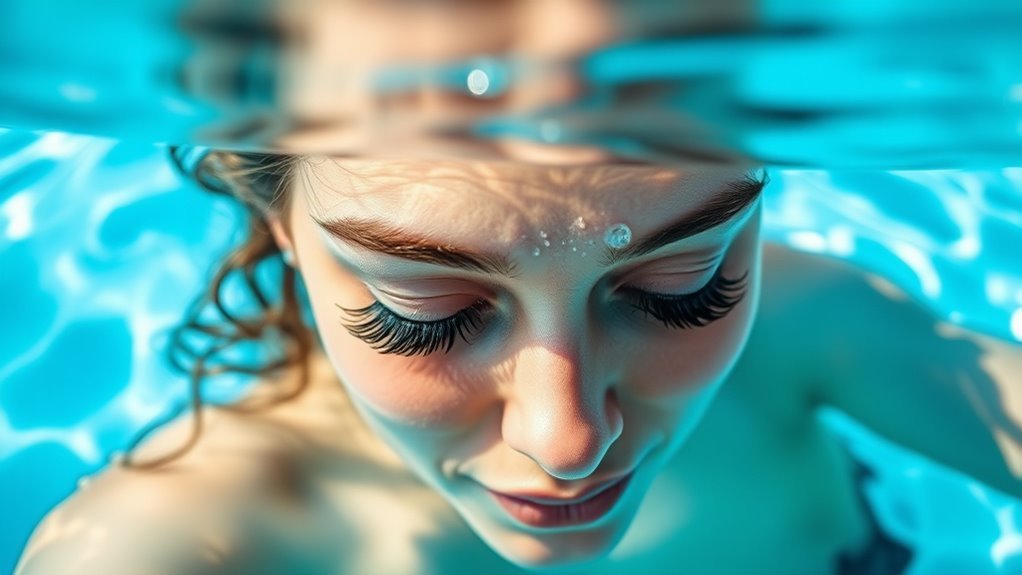
Although lash extensions are designed to withstand daily wear, water can affect their durability more than you might expect. When your lashes get wet, the adhesive bonds holding the extensions weaken, especially with prolonged exposure.
Chlorine and saltwater can speed up this process by breaking down the glue faster. You might notice your lashes start to lift or fall out sooner if you swim frequently without taking precautions.
Even though brief water contact won’t ruin your extensions instantly, repeated exposure can reduce their lifespan considerably. Understanding this impact helps you make better decisions about when and how to swim.
Protecting your extensions means keeping water exposure minimal and avoiding harsh chemicals that compromise the adhesive’s strength.
Preparing Your Lash Extensions Before Swimming
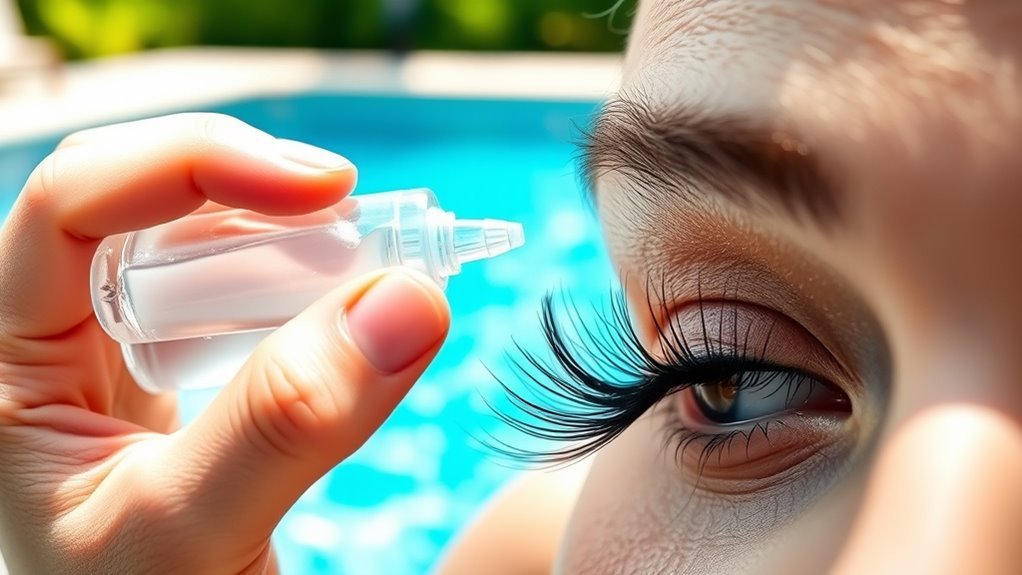
Since water and chemicals can weaken your lash extensions, taking steps before you swim can help protect them. Preparing your lashes properly ensures they stay intact and look great even after a dip.
Here’s what you can do:
- Apply a protective barrier: Use a water-resistant sealant or lash primer designed for extensions to create a shield against moisture.
- Avoid heavy makeup: Skip mascara and heavy eye products that can smudge or cause the extensions to clump when wet.
- Tie back your hair: Keep lashes dry by securing your hair away from your face, reducing the chance of water splashing onto your eyes.
Following these simple steps can considerably extend the life of your lash extensions while you enjoy swimming safely.
Choosing the Right Swimwear to Protect Your Lashes
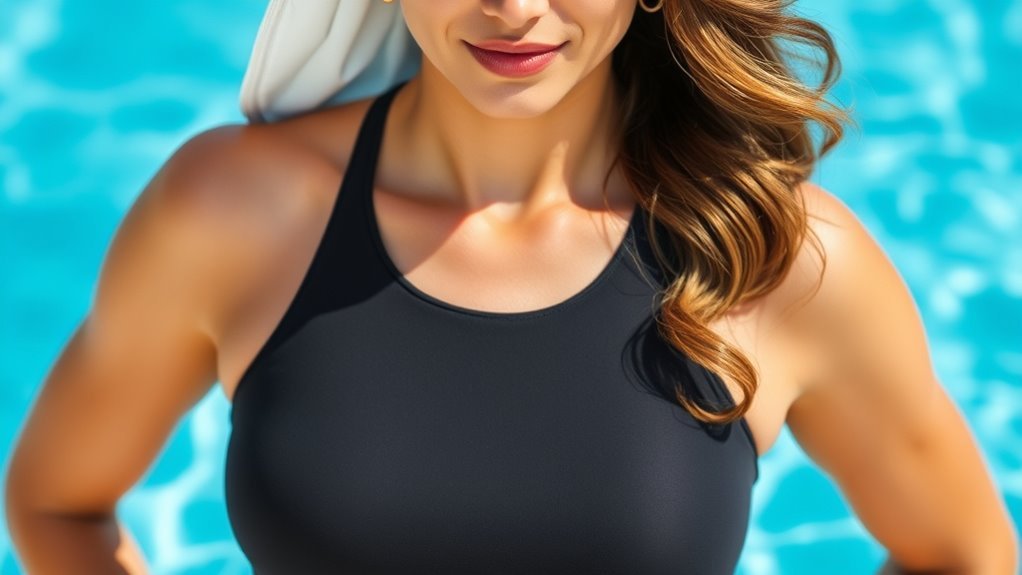
When you choose swimwear that offers extra coverage around your face, you can better safeguard your lash extensions from water and chemicals. Look for swim caps or hats designed to shield your hair and face; they help minimize direct exposure to chlorinated or salt water.
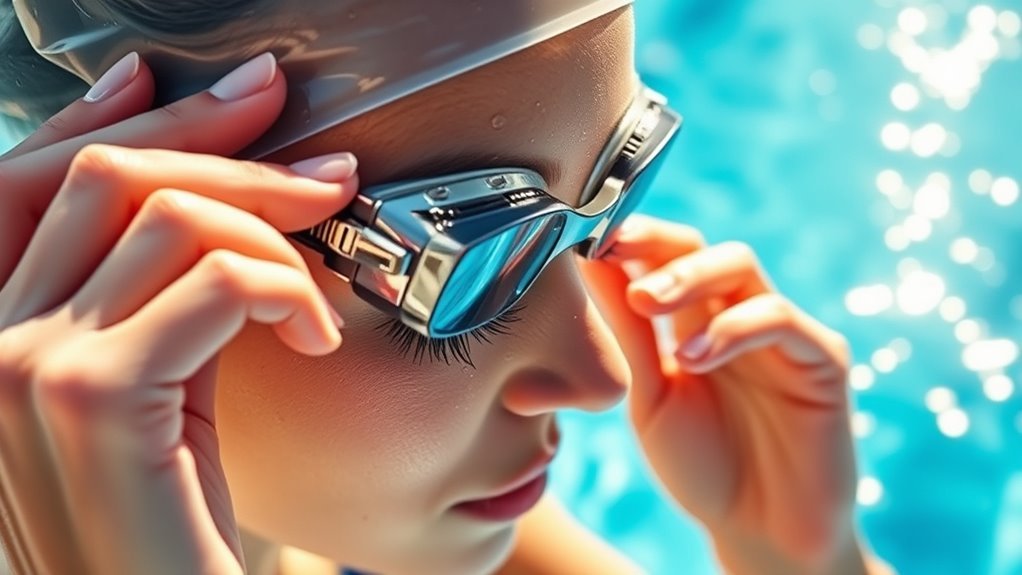
Swim goggles with a snug fit create a barrier around your eyes, preventing water from reaching your lashes. Opt for goggles with adjustable straps to ensure comfort without putting pressure on your eyes or lashes.
If you prefer a hooded swimsuit or rash guard with a high neckline, these can reduce water splashes near your face. By selecting swimwear that offers both protection and comfort, you’ll enjoy your swim while keeping your lash extensions intact and looking fresh.
How to Rinse and Dry Lash Extensions After Swimming
To keep your lash extensions looking their best after swimming, you’ll want to rinse them gently with fresh water as soon as possible. This helps remove chlorine, salt, and other residues that can weaken the adhesive.
After rinsing, drying your lashes carefully is essential to avoid damage.
Follow these steps to rinse and dry your lash extensions properly:
- Use lukewarm water to rinse your lashes gently without rubbing or tugging.
- Pat your lashes dry with a soft, lint-free towel; avoid rubbing to prevent extension loss.
- Let your lashes air dry completely or use a cool setting on a blow dryer held at a distance to speed up the process.
This routine helps maintain the longevity and appearance of your lash extensions after every swim.
Products That Help Maintain Lash Extensions in Water
Although swimming can challenge the durability of your lash extensions, using the right products can make a significant difference in protecting them. Start with a water-resistant eyelash sealant; it forms a protective barrier that helps repel moisture and prevents premature lash shedding.
Applying a gentle, oil-free cleanser before swimming ensures your lashes stay clean without breaking down the adhesive.
After swimming, use a lash conditioning serum to nourish and strengthen both natural lashes and extensions.
Consider wearing swim goggles to shield your lashes from chlorinated or salty water, but if you prefer not to, these products become even more vital.
Avoiding Common Mistakes When Swimming With Lash Extensions
Protecting your lash extensions with the right products is just one part of the equation. You also need to avoid common mistakes that can ruin your lashes when swimming.
First, don’t rub your eyes vigorously after swimming; this can loosen or break the extensions.
Second, avoid using oil-based makeup removers or skincare products around your eyes, as oils weaken the lash adhesive.
Third, don’t skip rinsing your face with fresh water immediately after swimming. Chlorine and salt can degrade the lashes and adhesive if left on too long.
Following these simple steps will help you keep your lash extensions intact, letting you enjoy swimming without worry or damage to your beautiful lashes.
Signs Your Lash Extensions Need Professional Care After Swimming
If you notice your lash extensions feeling heavy, clumpy, or unusually loose after swimming, it’s a clear sign they need professional attention. You might also spot gaps where lashes have fallen out or see glue residue buildup that water alone can’t eliminate.
If your eyes feel irritated or red, don’t ignore it. This could indicate damage or an allergic reaction caused by chlorine or saltwater.
Another sign is when your lashes lose their curl or appear droopy, suggesting the adhesive has weakened.
Instead of trying to fix these issues yourself, schedule a visit with your lash technician. They can safely assess the damage, reapply or adjust extensions, and ensure your lashes stay healthy and beautiful after your swim.
Tips for Long-Lasting Lash Extensions Despite Frequent Swimming
When you swim often, maintaining your lash extensions requires extra care to keep them looking fresh and secure. Frequent exposure to water can weaken the adhesive, so it’s important to adopt habits that protect your lashes.
- Rinse and Dry Immediately: After swimming, gently rinse your lashes with clean water and pat them dry with a soft towel to remove chlorine or salt residue that can damage the glue.
- Use Waterproof Sunscreen: Apply a waterproof, oil-free sunscreen around your eyes to shield your extensions from harsh chemicals and UV rays.
- Avoid Rubbing or Pulling: Be gentle when drying your face or removing makeup; rubbing can cause lashes to fall out prematurely.
Frequently Asked Questions
Can Swimming Pools Cause Allergic Reactions With Lash Extensions?
Yes, swimming pools can cause allergic reactions with lash extensions because chlorine and other chemicals may irritate your eyes or skin around the lashes.
To prevent this, you should rinse your eyes thoroughly after swimming and use protective eyewear.
How Often Should I Replace Lash Extensions if I Swim Regularly?
You should replace your lash extensions every 2-3 weeks if you swim regularly. Despite myths, chlorine can weaken glue, so keeping up with fills prevents premature fallout and keeps your lashes looking fresh and fabulous.
Are Saltwater Pools Better or Worse for Lash Extensions?
Saltwater pools are generally better for your lash extensions because they contain fewer harsh chemicals than traditional chlorinated pools.
However, you should still rinse your lashes with fresh water afterward to prevent damage and maintain their longevity.
Can I Use Waterproof Mascara With Lash Extensions While Swimming?
You can’t just slap on waterproof mascara like it’s the roaring ’20s and plunge in; it may cause clumping or damage.
Instead, protect your lash extensions with a swim mask and avoid heavy makeup to keep them intact.
Do Different Lash Extension Materials React Differently to Chlorine?
Yes, different lash extension materials react differently to chlorine. Synthetic lashes can weaken or discolor, while silk or mink may hold up better but still risk damage.
You should rinse them immediately after swimming to protect your extensions.
Conclusion
Swimming with lash extensions doesn’t have to be risky. Did you know that over 70% of lash extension wearers notice damage after just one swim without proper care? By prepping your lashes, choosing protective swimwear, and rinsing them carefully afterward, you can keep them looking fabulous.
Avoid common mistakes like rubbing your eyes or using harsh products. Instead, use gentle cleansers and lash-safe conditioners to maintain their strength and shine. Taking these precautions helps extend the life of your extensions.
With these simple steps, you’ll enjoy the water while keeping your lashes flawless and strong. Remember, proper lash care is key to swimming safely with lash extensions and preserving their beauty.