How Do You Empty a Swimming Pool in 5 Easy Steps
To empty your swimming pool in five easy steps, start by preparing the area and gathering essential equipment like a pump, hose, and gloves. Proper preparation is key to a smooth and safe pool draining process.
Next, turn off all pool systems and remove ladders, covers, and accessories. This ensures nothing gets damaged or obstructs the draining.
Then, choose the best draining method for your pool size, whether using a submersible pump or a siphon. Each method has its benefits depending on your specific pool setup.
Start draining safely by keeping the hose away from your foundation and monitoring water flow closely. This helps prevent any accidental damage to your property.
Finally, clean the pool thoroughly and inspect it for any signs of damage or needed repairs. Proper maintenance after draining will keep your pool in good condition.
Keep going to uncover tips on safe disposal and detailed maintenance. These additional steps will help you manage your pool efficiently and responsibly.
Prepare the Pool and Gather Necessary Equipment
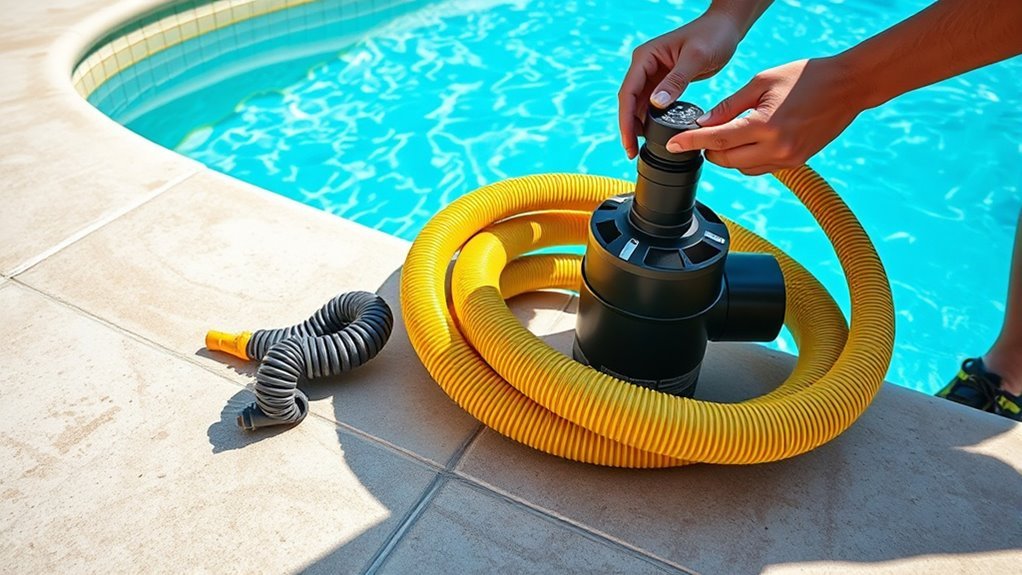
Before you begin emptying your swimming pool, make sure you’ve gathered all the necessary equipment and prepared the area properly. Start by collecting a submersible pump, a garden hose, and a bucket for any residual water.
You’ll also need a wrench or screwdriver to open drain valves, and protective gloves to handle equipment safely. Clear the area around the pool to prevent tripping hazards and protect nearby plants or structures from water damage.
Check local regulations to guarantee proper water disposal. Finally, inspect the pool’s surface and walls for any cracks or damage that could worsen during draining.
Taking these preparatory steps ensures a smooth, safe process and prevents unexpected issues once you start emptying the pool.
Turn Off Pool Systems and Remove Accessories

Since draining the pool affects its mechanical systems, you should turn off the pump, heater, and any automated cleaners to prevent damage. Next, remove all accessories like ladders, diving boards, and pool covers to avoid accidents and make draining easier. Detach hoses and any removable filters as well.
Here’s a quick checklist to help:
| Task | Why It’s Important | When to Do It |
|---|---|---|
| Turn off pump & heater | Prevents mechanical damage | Before draining starts |
| Remove ladders & boards | Avoid injury and obstruction | Before draining starts |
| Detach accessories | Protect equipment from water | Before draining starts |
Following these steps keeps your pool equipment safe and your draining process smooth.
Choose the Right Method to Drain the Water
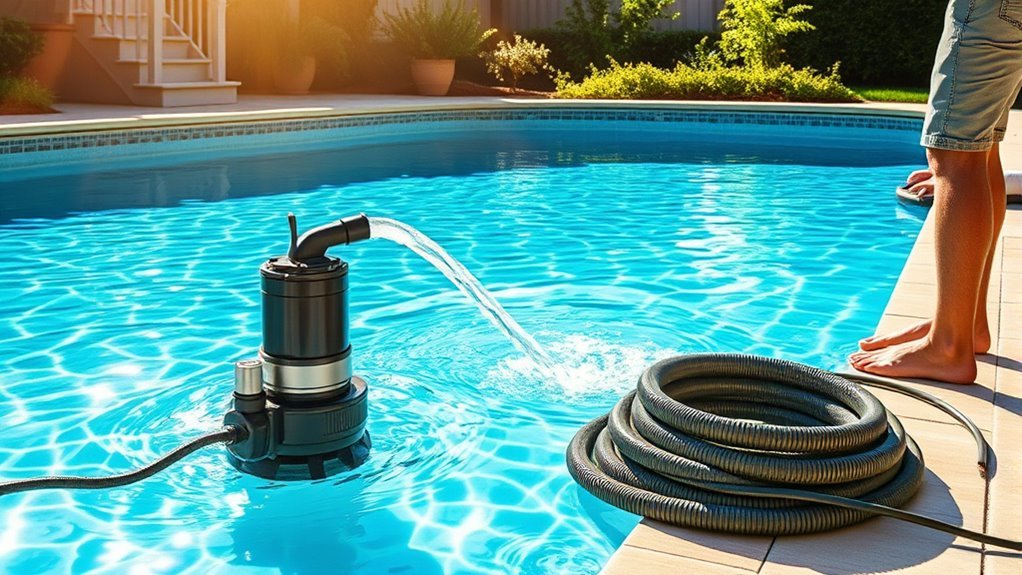
When you’re ready to drain your pool, choosing the right method depends on factors like your pool’s size, local regulations, and available equipment.
For smaller pools, using a submersible pump or a manual siphon might be efficient and straightforward.
If you have a larger pool, consider a high-capacity pump to speed up the process.
Always check local guidelines before draining, as some areas restrict where you can discharge pool water to prevent damage or contamination.
Verify local rules before draining to avoid environmental harm or legal issues.
Another option is draining through the pool’s built-in drain system, if it’s connected to a proper drainage area.
Assess your equipment and neighborhood rules carefully to pick a method that’s safe, legal, and fits your setup.
This ensures a smooth and responsible pool emptying process.
Begin Draining the Pool Safely
Although draining a pool can seem straightforward, you’ll want to take safety precautions to protect yourself and your property. First, check local regulations to ensure you’re allowed to drain pool water into the street or sewer.
Avoid causing flooding or damage to neighbors’ yards. Next, turn off all electrical equipment connected to the pool to prevent hazards. Use a submersible pump or the chosen draining method, placing the hose away from your foundation and landscaping.
Monitor the water level closely as it drops, staying alert for leaks or uneven drainage that could damage the pool structure. Always wear protective gear like gloves and boots, and keep children and pets away during the process.
Following these steps helps you drain your pool efficiently and safely.
Clean and Inspect the Pool After Emptying
After you’ve fully drained your pool, you’ll want to clean and inspect it thoroughly to prevent damage and prepare for refilling. Start by removing any debris, dirt, or algae buildup with a pool brush or vacuum.
Scrub the walls and floor to eliminate stains and prevent mold growth. Check for cracks, chips, or other damage in the pool surface, paying close attention to tiles and grout.
Inspect plumbing fittings, drains, and skimmers for wear or leaks. If you spot any issues, address them promptly to avoid costly repairs later.
Finally, rinse the pool thoroughly to remove cleaning residues. Taking these steps ensures your pool stays in good condition and is ready for a smooth refill and safe swimming season ahead.
Frequently Asked Questions
Can I Drain My Pool During Winter Months?
You shouldn’t drain your pool during winter months because it can damage the structure.
Instead, keep it filled and properly winterize it to prevent freezing issues. Draining risks cracks and costly repairs you’ll want to avoid.
How Long Does It Take to Refill a Swimming Pool?
It usually takes you 8 to 24 hours to refill a swimming pool, depending on its size and your water pressure.
Make sure to monitor the fill, so you avoid overflows or damage to the pool structure.
Is It Safe to Drain a Pool During a Drought?
You shouldn’t drain your pool during a drought since over 40% of outdoor water use goes to pools and lawns. Conserving water helps the environment, so keep your pool filled or use a cover to reduce evaporation instead.
What Are the Environmental Impacts of Emptying a Pool?
You risk harming local ecosystems by releasing chlorinated water, which can kill plants and aquatic life. Draining also wastes water and increases runoff, potentially spreading pollutants into nearby soil and waterways.
Use eco-friendly methods instead.
Can I Use Pool Water for My Garden or Lawn?
Yes, you can use pool water for your garden or lawn, but make sure chlorine levels are low or neutralized first. Too much chemical can harm plants, so test and treat water before watering your greenery.
This helps ensure your plants stay healthy and thrive without any damage from pool chemicals.
Conclusion
Emptying your pool is like guiding a ship through calm waters—you prepare your course, lower the sails, and steer steadily toward the shore. By gathering your tools, turning off the engines, choosing your path, and moving carefully, you navigate each step with ease.
When the last drop leaves the hull, you clean and inspect, readying your vessel for its next voyage. Trust the process, and you’ll sail smoothly every time.
By following these simple steps, you can empty a swimming pool efficiently and safely. Remember to gather your tools, turn off the power, select the best draining path, and proceed with caution. Proper cleaning and inspection after draining ensure your pool is ready for its next use.