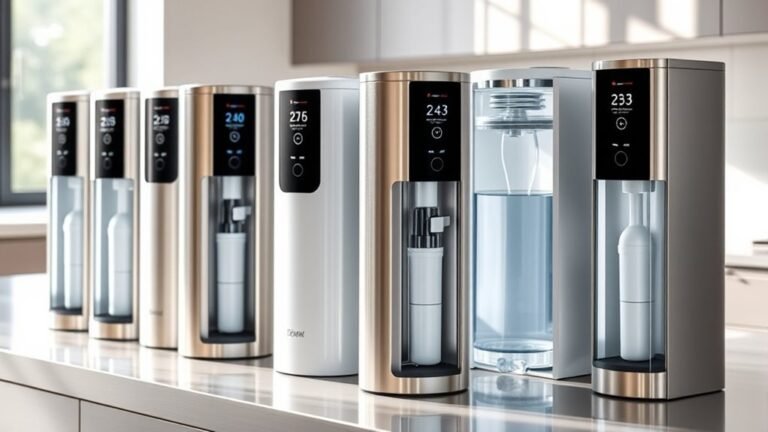
Best Water Filter For Removing Iron That Actually Works!
Hard water with a high iron content can cause unpleasant taste, discoloration, and staining in your home’s plumbing and appliances. Finding an effective solution to remove iron from your water supply is a priority for many homeowners seeking cleaner, better-tasting water.
Designed for anyone dealing with iron-rich water, these filters can improve water quality without complex installation or maintenance. This review will explore various water filters known for their ability to tackle iron, comparing key features like filtration methods, capacity, and ease of use.
By the end, you’ll have a clearer idea of which product fits your needs and how it can help you achieve iron-free water.
Say Goodbye to Rusty Water: Top Solutions for Crystal Clear, Iron-Free Drinking Water
| Image | Product | Price |
|---|
Discover the Ultimate Guide to Choosing the Best Water Filter for Removing Iron
Certification and efficiency
When choosing a water filter that effectively removes iron, it’s wise to pay attention to certifications that verify the product’s claims. Filters tested against NSF/ANSI standards for iron removal provide a reliable benchmark, indicating that their performance has been independently validated rather than solely based on manufacturer assertions. Sometimes manufacturers may promise high removal rates, but looking deeper into verified performance reports offers a clearer picture of what to expect in daily use.
Sometimes manufacturers may promise high removal rates, but looking deeper into verified performance reports offers a clearer picture of what to expect in daily use. Customer reviews often serve as a valuable resource to gauge long-term reliability and efficiency in real-world conditions, highlighting any potential issues or benefits that may not be obvious from specifications alone. Combining this information helps identify filters that consistently maintain water quality and reduce iron content effectively, ensuring a trustworthy choice for healthier water at home.
Iron levels and water quality
Understanding iron levels and water quality begins with testing the concentration of iron present in your water supply. Various methods can help determine how much iron is dissolved, which directly impacts the choice of filtration system. Equally important is identifying the type of iron, as ferrous iron is soluble and often clear or pale yellow, while ferric iron is oxidized, appearing as rust-colored particles.
Equally important is identifying the type of iron, as ferrous iron is soluble and often clear or pale yellow, while ferric iron is oxidized, appearing as rust-colored particles. This distinction guides the selection of a filter designed to handle the specific form found in your water. Alongside iron, checking for additional contaminants such as manganese, sulfur compounds, or sediment can influence the overall water quality and might require a more comprehensive filtration approach.
The pH level of the water also affects iron behavior and filter performance; acidic or highly alkaline water can alter iron solubility and may necessitate adjustments or specialized filters. Hardness, measured by calcium and magnesium content, can contribute to scaling and reduce filter efficiency over time, so water softness might be a factor in deciding the most effective and durable solution. Keeping these factors in mind ensures a well-informed decision tailored to the unique characteristics of your water.
Keeping these factors in mind ensures a well-informed decision tailored to the unique characteristics of your water.
Filter capacity and flow rate
When selecting a water filter to handle iron removal, paying attention to daily water usage needs helps in choosing a system that won’t be overwhelmed by demand and will maintain consistent performance. The lifespan of the filter and how often it requires regeneration cycles influence ongoing maintenance and cost, especially if the system uses a media bed or chemical process to reduce iron content.
Finally, size and installation requirements should align with available space and plumbing setup to avoid complicated setups or the need for professional intervention, making the process smoother and more convenient for first-time buyers or those upgrading older units.
Maintenance and operating costs
When evaluating the maintenance and operating costs of a water filter designed specifically for removing iron, it’s helpful to consider how often the filter cartridges or media must be replaced and the expense associated with those replacements. Filters employing specialized media to target iron typically need cartridge changes anywhere from every six months to a year, with costs varying depending on brand and filter type. Cleaning and backwashing procedures can impact ongoing upkeep as well; some systems feature automatic backwashing cycles that help extend filter life but might require occasional manual cleaning to maintain peak performance.
The energy consumption of these systems is generally low, especially for passive filters or those without electronic components, but units with siphoning pumps or digital controls may draw more power and slightly increase utility bills. Availability and ease of obtaining replacement parts also play a role in overall operating expenses, as sourcing compatible filters or media promptly can reduce downtime and inconvenience.
Considering these factors together offers a clearer picture of the long-term investment involved in choosing an effective iron-removing water filter system.
Types of water filters for iron removal
When selecting a water filter specifically designed to handle iron in your water supply, understanding the types available can make a significant difference. Mechanical filters excel at trapping larger particles but often serve better as a pre-filter stage rather than tackling dissolved iron directly.
Oxidation filters work by converting soluble iron into solid particles that can then be trapped or filtered out more easily, making them effective for higher iron concentrations. Ion exchange filters operate similarly to water softeners by swapping iron and other metals with harmless ions, which benefits households dealing with both hardness and iron issues. Reverse osmosis systems offer a thorough filtration process by forcing water through a semipermeable membrane, which removes not only iron but a wide range of impurities, though they are generally more complex and may waste some water during filtration.
Additionally, specialized iron filter media tailored to target iron can be integrated into various filtration setups to enhance removal efficiency. Selecting the right option depends largely on your water test results and specific needs, such as the iron concentration, water pH, and flow rate requirements. Keeping these factors in mind will help in choosing a system that balances effectiveness, maintenance, and cost, helping to ensure cleaner water with reduced iron content tailored to your household’s demands.
Keeping these factors in mind will help in choosing a system that balances effectiveness, maintenance, and cost, helping to ensure cleaner water with reduced iron content tailored to your household’s demands.
Additional features and considerations
When choosing the best water filter for removing iron, it’s helpful to find one that can smoothly integrate with your existing plumbing to keep installation hassle-free. Filters that handle multiple contaminants are handy since iron is often accompanied by other impurities like manganese or sulfur; having a single system that tackles these makes maintenance easier.
Ease of installation and daily use also matters; simpler designs reduce the need for professional help and allow quick replacement of filter media or cartridges. Paying attention to warranty terms and the availability of customer support can save you time and money down the road, especially if you encounter any issues or need guidance on filter upkeep. Selecting a model balancing these features helps ensure clean, iron-free water without added complications.
FAQ’s
Which Water Filter Brands Have The Best Reputation For Iron Removal?
Brands like APEC, iSpring, and Pelican are well-regarded for their effective iron removal water filters. These companies offer specialized systems designed to reduce iron and improve water quality reliably.
How Does An Iron Water Filter Work To Eliminate Iron Contamination?
An iron water filter works by oxidizing dissolved iron in the water, converting it from a soluble ferrous state to an insoluble ferric state, which forms solid particles. These particles are then trapped and filtered out, removing iron contamination and preventing staining and taste issues.
What Are The Most Effective Types Of Water Filters For Removing Iron From Well Water?
The most effective water filters for removing iron from well water are oxidizing filters, such as catalytic carbon or manganese greensand filters, which convert dissolved iron into solid particles for easy filtration. Additionally, water softeners can be used to remove low levels of iron by ion exchange.
What Maintenance Is Required For Water Filters That Remove Iron To Keep Them Working Efficiently?
To keep iron-removing water filters working efficiently, regularly backwash the filter media to prevent clogging and replace or clean filter components as recommended by the manufacturer. Additionally, periodically check and maintain any chemical dosing systems used to enhance iron removal.
Can A Whole-House Water Filter System Effectively Remove Iron From My Water Supply?
Yes, a whole-house water filter system can effectively remove iron from your water supply, especially if it is designed with specific iron filtration media like manganese greensand or catalytic carbon. However, the system should be properly sized and maintained to ensure optimal iron removal and water quality.
Conclusion
Choosing the best water filter for removing iron depends largely on your specific water quality and household needs. These filters effectively reduce iron content, improving water taste, preventing staining, and protecting plumbing systems. While some models require regular maintenance or professional installation, their long-term benefits often outweigh these factors.
While some models require regular maintenance or professional installation, their long-term benefits often outweigh these factors. Ideal for homeowners dealing with moderate to high iron levels, these filters offer a reliable solution to common water issues. Before purchasing, consider your water’s iron concentration and flow rate to select the most suitable option.
Ultimately, the best water filter for removing iron provides cleaner, clearer water, contributing to a healthier home environment without unnecessary complexity or expense.