How Puppies Can Safely Swim in Chlorine Pools
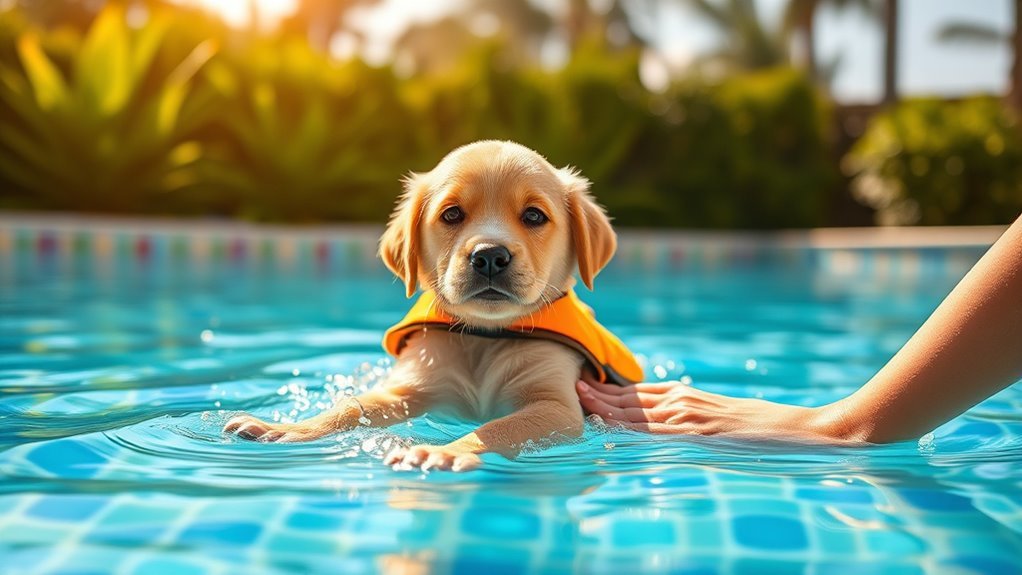
To safely let your puppy swim in a chlorine pool, it’s important to introduce them gradually and always supervise closely. Using a well-fitted dog life jacket can provide extra safety, especially for beginners. Additionally, protecting their eyes with canine goggles may be beneficial if they seem sensitive.
After swimming, rinse your pup thoroughly with fresh water to help prevent skin dryness or irritation caused by chlorine. Keep an eye out for any signs of discomfort like excessive scratching or coughing.
Keep swimming sessions short to avoid overexposure to chlorine. Taking these steps helps keep your puppy comfortable and safe—there’s more to know about protecting their sensitive skin and overall health.
Understanding the Effects of Chlorine on Puppies
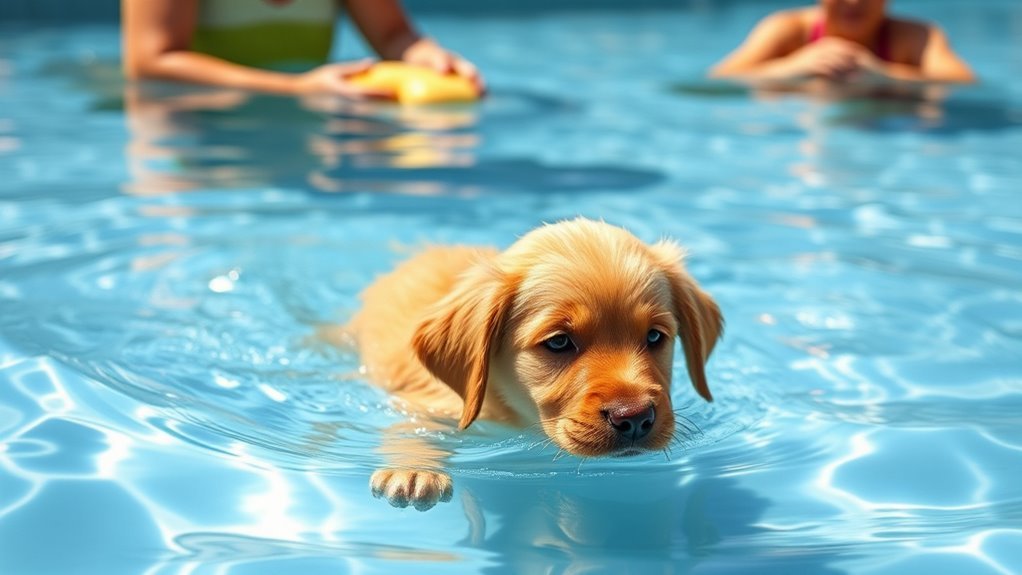
Although chlorine keeps pools clean, it can affect puppies differently than adults. You need to realize that puppies have more sensitive skin and respiratory systems. Chlorine can cause irritation, redness, and dryness on their delicate skin.
If your puppy inhales chlorinated water or fumes, it might trigger coughing or sneezing. Unlike adult dogs, puppies’ immune systems are still developing, making them more vulnerable to potential chemical reactions.
You should watch for signs like excessive scratching, watery eyes, or unusual behavior after swimming. Knowing these effects helps you protect your puppy’s health while enjoying pool time.
Being cautious about chlorine exposure guarantees your puppy stays safe and comfortable, so you both can have a fun, worry-free swim.
Preparing Your Puppy for Pool Time
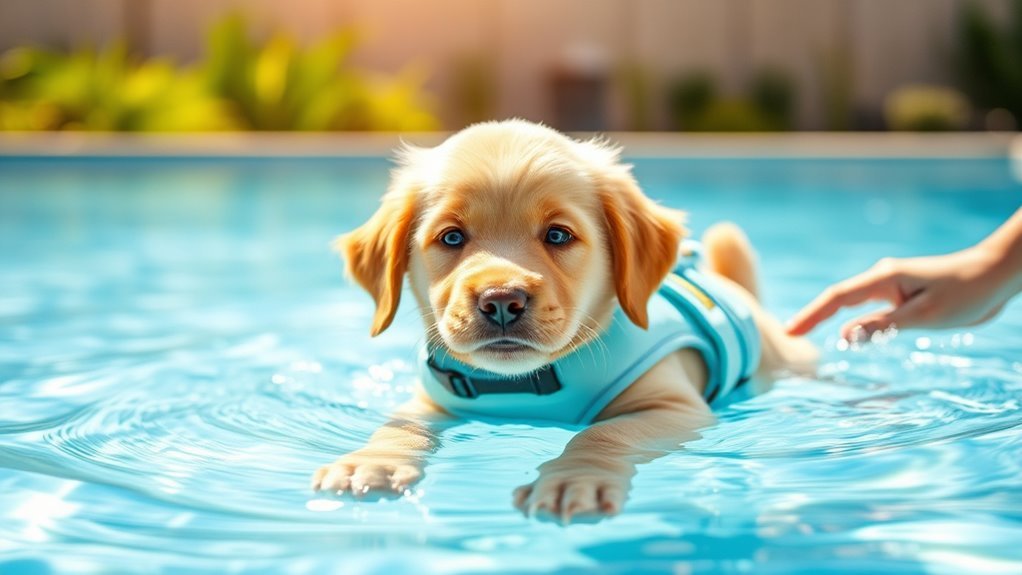
Before you let your puppy jump into the pool, you should take a few steps to guarantee they’re ready and safe. Start by introducing your puppy to water gradually. Use a shallow area or even a kiddie pool to build comfort.
Always supervise closely and watch for signs of stress or fatigue. Make sure your puppy is healthy and up-to-date on vaccinations before swimming. Avoid feeding your puppy right before pool time to prevent discomfort.
Teach basic commands like “come” and “stay” to maintain control during swimming sessions. Rinse your puppy with fresh water after pool time to remove chlorine residue from their fur and skin.
Taking these precautions helps ascertain your puppy enjoys a safe and positive swimming experience.
Essential Safety Gear for Puppy Swimmers
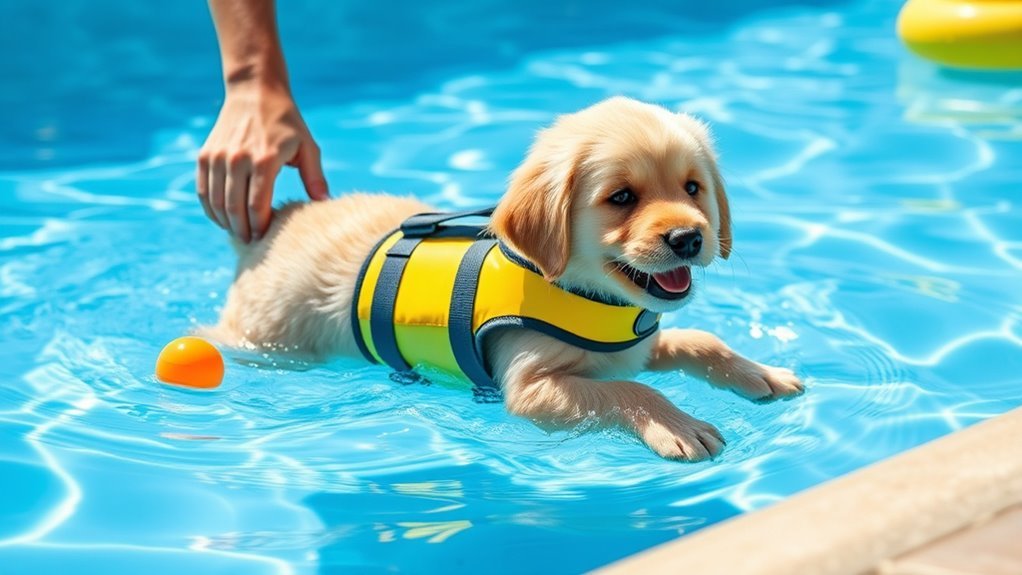
When you take your puppy swimming, equipping them with the right safety gear can make all the difference in keeping them secure and comfortable in the water. Start with a well-fitted life jacket designed specifically for dogs. It provides buoyancy and helps your puppy stay afloat, especially if they’re new to swimming.
Choose one with a handle on top, so you can easily lift your pup out of the pool if needed. Additionally, consider protective goggles to shield their eyes from chlorine irritation.
Non-slip pool ramps or steps are essential for easy entry and exit, preventing stress or injury.
Finally, invest in a cozy, absorbent towel to dry your puppy promptly after swimming, helping to maintain their body temperature and skin health.
Monitoring Your Puppy During Swimming Sessions
Since puppies are still learning to navigate the water, you need to keep a close eye on them throughout every swim session. Stay within arm’s reach to quickly assist if they get tired or overwhelmed.
Watch for signs of fatigue, such as heavy panting, slowed paddling, or attempts to climb out. Interrupt the session immediately if your puppy shows distress or struggles to stay afloat.
Keep swim times short and gradually increase them as your puppy builds stamina. Avoid distractions so you can maintain full attention.
Use gentle encouragement and praise to boost your puppy’s confidence, but never force them to swim longer than they want.
Your constant supervision ensures safety and helps your puppy enjoy their time in the pool.
Post-Swim Care to Protect Your Puppy’s Skin and Eyes
After keeping a close watch on your puppy during swim time, turn your attention to their skin and eyes to prevent irritation from chlorine exposure.
Rinse your puppy thoroughly with fresh, lukewarm water right after swimming to wash away chlorine residue. Use a gentle, puppy-safe shampoo if possible, but avoid over-bathing to maintain natural skin oils.
Always rinse your puppy with lukewarm fresh water after swimming to remove chlorine safely.
Check their eyes for redness or excessive tearing; if you notice discomfort, wipe gently with a damp, soft cloth.
Keep an eye out for any itching or dryness on their skin in the hours following the swim. If irritation persists, consult your vet promptly.
Regular post-swim care helps protect your puppy’s sensitive skin and eyes, keeping them comfortable and healthy after enjoying the pool.
Alternatives to Chlorine Pools for Puppy Swimming
If you want to give your puppy a safe swim without exposing them to chlorine, there are several effective alternatives to contemplate.
Natural bodies of water like lakes or slow-moving rivers offer chlorine-free environments, but always check for strong currents, harmful algae, or pollutants before letting your puppy swim.
You might also consider a dog-specific pool filled with filtered freshwater, designed to be gentler on their skin and eyes.
Inflatable kiddie pools are a convenient option for supervised splashing without chemicals.
Another choice is a saltwater pool, which uses salt instead of chlorine and tends to be less irritating.
Whatever option you pick, always monitor water cleanliness and your puppy’s comfort during and after swimming to keep their experience safe and enjoyable.
When to Consult a Veterinarian About Pool Swimming
Although swimming can be a fun and healthy activity for your puppy, you should consult a veterinarian before introducing them to pool water, especially if your puppy has existing health issues or sensitive skin.
If your puppy has respiratory problems, allergies, or a history of skin infections, a vet’s advice is vital to avoid complications.
Also, puppies under a certain age or those who haven’t completed their vaccinations may be more vulnerable to infections, so check with your vet first.
If your puppy shows signs of irritation, excessive scratching, or unusual behavior after swimming, contact your vet promptly.
Getting professional guidance guarantees your puppy’s safety and helps you enjoy pool time without risking their health.
Frequently Asked Questions
Can Puppies Develop a Preference for Swimming Over Time?
Yes, your puppy can develop a preference for swimming over time if you introduce it gradually, make the experience fun, use positive reinforcement, and guarantee safety. This approach helps your pup associate swimming with enjoyment and comfort.
What Are the Best Puppy Breeds for Swimming Activities?
You might be surprised, but Labrador Retrievers and Portuguese Water Dogs top the list for swimming. Their webbed paws and love for water make them natural swimmers.
You’ll enjoy watching them splash around with boundless energy.
How Can I Train My Puppy to Enjoy Water Safely?
You can train your puppy to enjoy water safely by introducing them gradually, using positive reinforcement, and ensuring shallow water first.
Supervise closely and end sessions on a happy note to build confidence and trust.
Are There Specific Toys Recommended for Puppy Pool Play?
You’ll want to choose floating, non-toxic toys like rubber balls or soft frisbees designed for water. These keep your puppy engaged safely without harmful chemicals or sharp edges.
Avoid small toys that might be swallowed.
How Often Should Puppies Swim to Build Endurance?
You should let your puppy swim two to three times a week to build endurance gradually. Keep sessions short at first, around 5-10 minutes, and always watch for signs of tiredness to avoid overexertion.
Conclusion
You want your puppy to splash joyfully, not struggle silently against harsh chlorine. While the sparkling pool invites fun, its chemicals can sting delicate eyes and skin if you’re not careful. By preparing your pup, using safety gear, and watching closely, you turn potential hazards into happy swims.
Remember, the pool can be a place of safe, wet wonder—not worry—when you prioritize your puppy’s health and comfort every step of the way. Ensuring safe swimming in chlorine pools means protecting your puppy’s sensitive skin and eyes while making the experience enjoyable. With the right precautions, your furry friend can enjoy the water safely and happily.