How You Can Swim Safely After You Get Your Ears Pierced
After getting your ears pierced, it’s important to know how you can swim safely to protect your new piercings. Waiting at least a few weeks before swimming allows the initial healing process to take place, reducing the risk of infection.
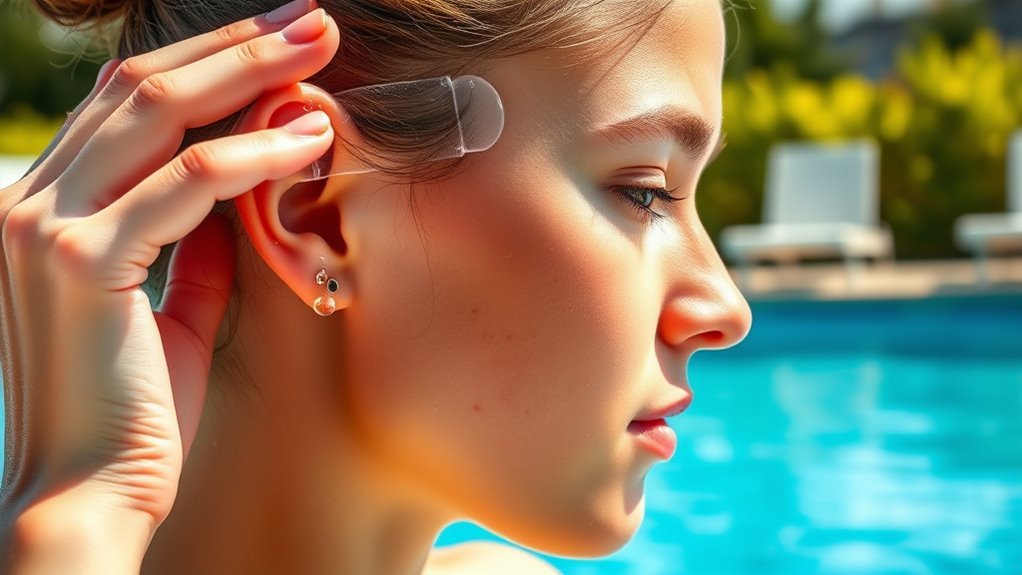
Before entering the water, clean your piercings with saline solution and dry them thoroughly. Using waterproof ear covers or silicone plugs can help protect your ears from bacteria and chlorine exposure.
Avoid diving or fully submerging your head to minimize irritation. After swimming, gently rinse your piercings with saline and pat them dry.
If you want to avoid infections and speed healing, following these steps carefully is key. There are additional measures you can take to keep your piercings safe and healthy during the healing period.
Understanding the Healing Process of New Ear Piercings
Although getting your ears pierced is quick, the healing process takes time and care. You should expect the area to be tender and slightly swollen for the first few days.
Ear piercing is fast, but healing requires patience as tenderness and swelling last several days.
Your body needs about 6 to 8 weeks to fully heal earlobes, while cartilage piercings may take several months.
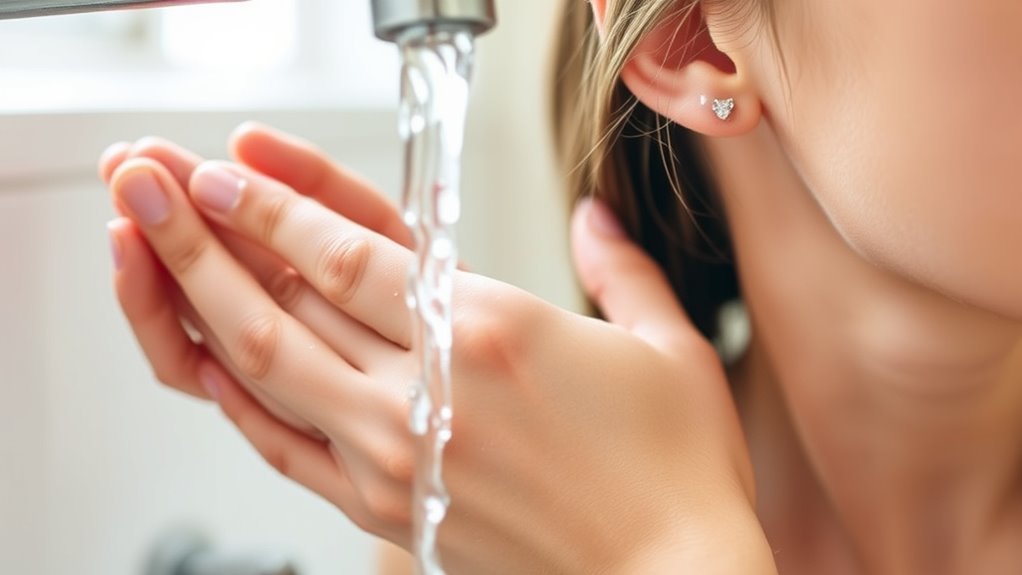
During this time, you must clean the piercing twice daily with a saline solution to prevent infection. Avoid touching or twisting the jewelry unnecessarily, as this can irritate the skin and prolong healing.
You’ll notice a small scab or crust forming—that’s normal, but don’t pick at it.
Pay attention to any signs of redness, excessive swelling, or discharge, as these may signal infection. Being patient and diligent with aftercare helps your piercing heal smoothly and safely.
Risks of Swimming With Fresh Piercings
While caring for your new piercing, it’s important to think about how activities like swimming might affect healing. Swimming with fresh piercings exposes you to several risks that could delay recovery or cause complications.
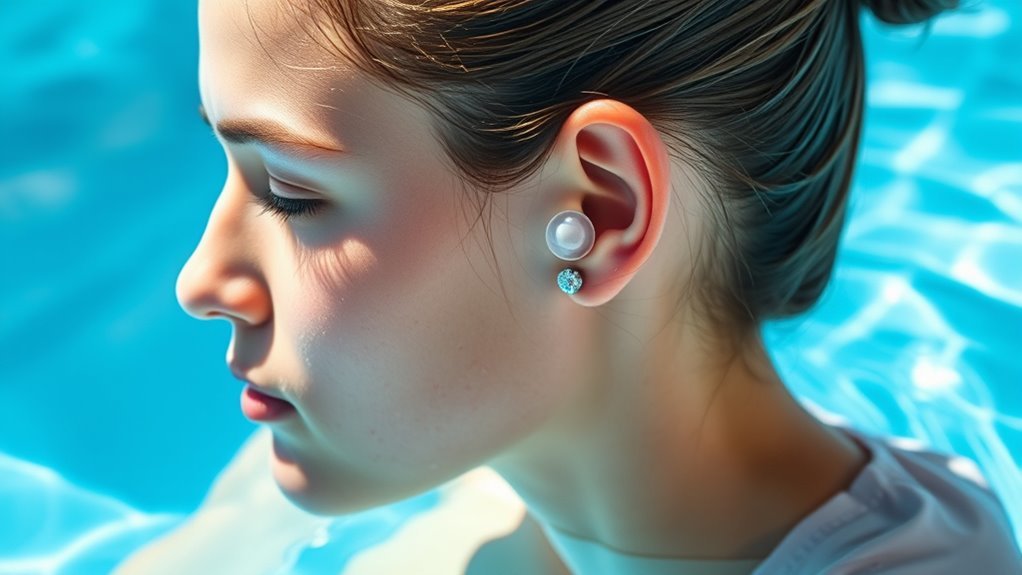
Pool water often contains chlorine, which can irritate the sensitive skin around the piercing. Natural bodies of water like lakes and oceans harbor bacteria that may lead to infections. Additionally, the constant moisture can soften your skin, making the piercing more vulnerable.
Be aware of these risks when considering swimming soon after getting pierced:
- Exposure to bacteria and chemicals increases infection chances
- Prolonged wetness can cause swelling and slow healing
- Physical irritation from water movement may cause discomfort or damage
Taking these risks seriously helps you protect your new piercing.
How to Prepare Your Piercings Before Swimming
Before you plunge into the water, take specific steps to protect your new piercings and reduce the risk of irritation or infection. Start by cleaning your ears gently with saline solution to remove any dirt or bacteria. Dry them thoroughly with a clean towel. Avoid applying creams or lotions before swimming, as these can trap bacteria. Check your earrings for any looseness to prevent loss.
| Step | Why It Matters |
|---|---|
| Clean with saline | Removes bacteria and dirt |
| Dry thoroughly | Prevents moisture buildup |
| Skip creams/lotions | Avoids trapping bacteria |
| Secure earrings | Prevents losing jewelry in water |
Following these steps prepares your piercings for a safer swim without increasing infection risks.
Protective Measures to Use While Swimming
Taking the right precautions once you’re in the water helps protect your new piercings from irritation and infection. To keep your ears safe, you’ll want to create a barrier against bacteria and chemicals commonly found in pools and natural bodies of water.
Protect fresh piercings by creating a barrier against bacteria and chemicals in pools and natural water.
Here are some simple yet effective protective measures:
Wear waterproof ear covers or silicone ear plugs to prevent water from reaching your piercing site.
Apply a thin layer of waterproof antibiotic ointment around the piercing to shield it from contaminants.
Avoid diving or submerging your head completely to minimize water pressure and exposure on the fresh piercing.
Aftercare Tips Following Water Exposure
After you’ve been in the water, it’s important to clean your piercing gently but thoroughly to remove any residual bacteria or chemicals. Use a saline solution or a mild, fragrance-free cleanser to rinse the area.
Avoid harsh soaps or alcohol-based products, as they can irritate the fresh piercing.
Pat the area dry with a clean, soft towel or let it air dry. Don’t rub, which can cause irritation.
Keep your hands clean before touching your piercing to prevent infection.
Also, avoid applying ointments unless recommended by your piercer, as they can trap moisture and bacteria.
Following these steps consistently helps your piercing heal properly and reduces the risk of complications after water exposure.
Staying diligent with aftercare ensures your piercing stays healthy and comfortable.
When to Avoid Swimming After Getting Pierced
If you want your new piercing to heal properly, you should avoid swimming for at least the first few weeks. Swimming too soon can expose your piercing to bacteria and irritants, increasing the risk of infection and delayed healing.
Besides the initial healing phase, steer clear of swimming when:
- You notice redness, swelling, or discharge around the piercing site.
- You’re using pools or natural bodies of water that may not be properly sanitized.
- You feel pain or discomfort in your ear after exposure to water.
Frequently Asked Questions
Can You Swim in a Pool Immediately After Getting Your Ears Pierced?
You shouldn’t swim in a pool immediately after getting your ears pierced because the water can introduce bacteria, causing infection. Wait at least two weeks, keep your piercings dry, and follow your piercer’s care instructions carefully.
Does Saltwater Help or Harm New Ear Piercings?
Saltwater can help clean new piercings because it’s natural and antibacterial, but you shouldn’t swim in it right after getting pierced.
Wait until healing starts; otherwise, saltwater might irritate and slow healing.
What Types of Earrings Are Best for Swimming After Piercing?
Imagine shiny stainless steel posts versus delicate hoops. You’ll want hypoallergenic, non-reactive studs like surgical steel or titanium for swimming after piercing. They resist water and bacteria, keeping your ears safe while you enjoy the pool or ocean.
How Long Does It Typically Take for Ear Piercings to Fully Heal?
It typically takes about 6 to 8 weeks for earlobe piercings to fully heal, but cartilage piercings can take several months.
You should avoid swimming until your piercing heals to prevent infections.
Can Swimming Impact Ear Piercings Done on Cartilage Differently?
Yes, swimming can impact cartilage piercings more because they take longer to heal and are prone to infections. You should avoid swimming in pools, lakes, or oceans until your cartilage piercing fully heals to prevent complications.
Conclusion
Just like a delicate seed needs gentle care to blossom, your new ear piercings require patience and protection to heal properly. By prepping your ears before swimming, using protective measures, and following aftercare tips, you’re giving them the best chance to thrive.
Remember, rushing back into the water too soon can set you back. So, treat your piercings like a precious treasure—and soon, you’ll be swimming worry-free again. To swim safely after you get your ears pierced, always prioritize proper care and protection to avoid infections and promote healing.