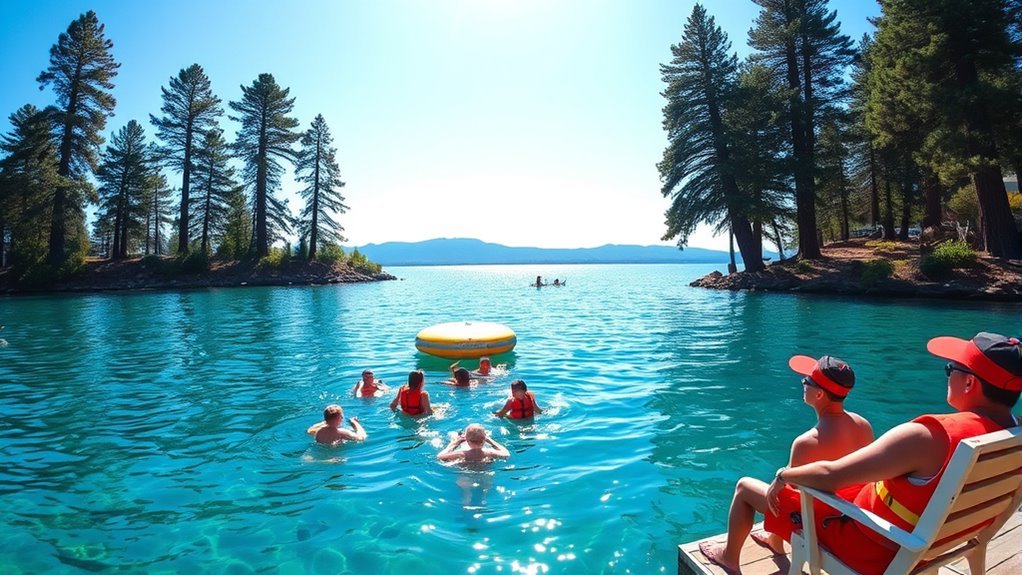
How You Can Swim Safely at Big Bear Lake
To swim safely at Big Bear Lake, it’s crucial to stay alert to the rapidly changing weather conditions, including afternoon winds or storms. Checking the water temperature beforehand is important, and wearing a wetsuit is recommended if the water is cold.
Always swim only in designated safe areas that are away from boats and other hazards. Use proper safety gear such as life jackets and goggles to protect yourself while enjoying the water.
Never swim alone; always have a buddy with you to ensure mutual safety. Keep these tips in mind, and you’ll be better prepared to enjoy Big Bear Lake comfortably and securely.
Understand the Lake’s Weather Patterns
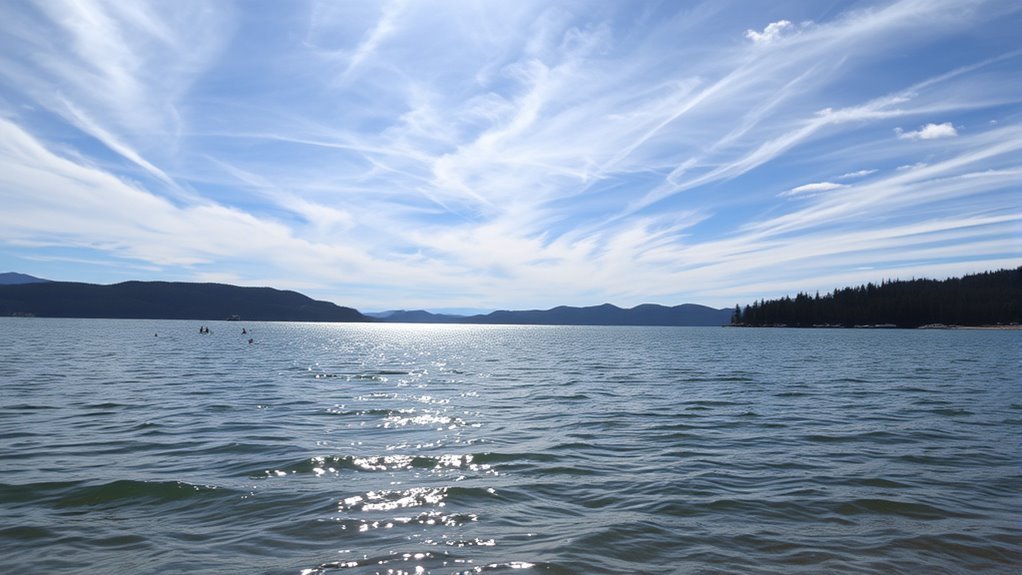
Before you plunge into the water, you should understand Big Bear Lake’s weather patterns because they can change quickly and affect your safety. The lake is nestled in the mountains, so weather can shift from sunny to stormy within minutes.
Big Bear Lake’s mountain weather can change rapidly, so always stay alert before swimming.
You’ll notice that afternoons often bring strong winds, which can create choppy waves and make swimming more challenging. Thunderstorms are common in summer, so keep an eye on the sky and listen for distant thunder.
If you see dark clouds rolling in, it’s best to get out of the water immediately. Also, temperatures can drop rapidly, especially in the evening, increasing the risk of hypothermia.
Staying aware of these weather changes helps you make smart decisions and keeps your swimming experience safe and enjoyable.
Check Water Temperature Before Swimming
Weather changes can also impact the temperature of Big Bear Lake’s water, so it’s important to check how cold it’s before you swim. Cold water can quickly sap your body heat, increasing the risk of hypothermia even on warm days.
Before you plunge in, take a moment to measure the water temperature or ask locals or park officials for recent readings.
If the water feels too chilly, consider wearing a wetsuit to help maintain your body heat.
Keep in mind that water temperature often drops with depth and can vary by location around the lake.
Identify Safe Swimming Areas
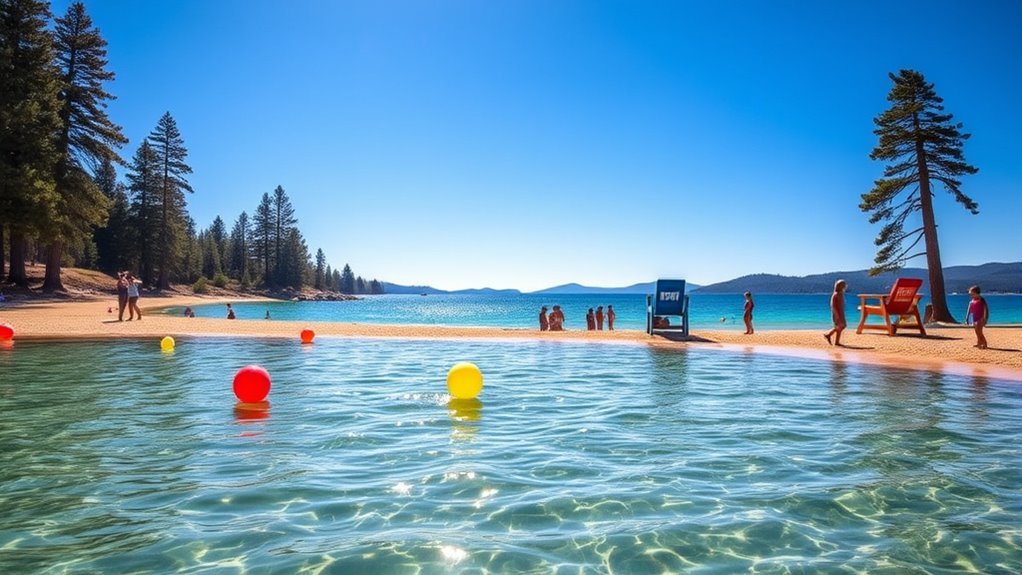
While Big Bear Lake offers many inviting spots to swim, you should always choose areas designated as safe for swimming. These spots are carefully selected to guarantee calmer waters, fewer hazards, and lifeguard supervision when available.
Look for marked swimming zones, often indicated by buoys or signs, and avoid areas near boat docks or heavy boat traffic. Stay clear of regions with strong currents, steep drop-offs, or underwater obstacles like rocks and logs.
Seek marked swimming zones and steer clear of boat docks, strong currents, and underwater hazards for safety.
If you’re unsure, ask local authorities or park staff for recommendations on safe swimming locations.
By sticking to these designated areas, you reduce your risk of accidents and enjoy a safer, more pleasant swimming experience at Big Bear Lake.
Prioritize your safety by respecting these guidelines every time you swim.
Use Proper Swimming Gear
Although Big Bear Lake’s waters may look inviting, you should always wear the proper swimming gear to protect yourself and enhance your experience. Start with a well-fitting life jacket, especially if you’re not a strong swimmer. It provides buoyancy and can be a lifesaver in unexpected currents or fatigue.
Choose swimwear that suits the cooler mountain water temperatures; a wetsuit or swim shirt helps maintain body heat and prevents hypothermia. Don’t forget water shoes—they protect your feet from sharp rocks, slippery surfaces, and hidden debris on the lake bottom.
Goggles improve visibility underwater, helping you avoid hazards and enjoy the scenery. Finally, a swim cap can keep your hair out of your face and reduce drag. Proper gear ensures safety and comfort while you enjoy Big Bear Lake.
Swim With a Buddy or Group
Wearing the right gear keeps you protected, but swimming with a buddy or group adds another layer of safety. When you swim alongside others, you’re less likely to panic if something unexpected occurs. Plus, your friends can help if you get tired or face trouble in the water.
Swimming with a buddy boosts safety by reducing panic and providing help if you get tired or face trouble.
Here are three tips to swim safely with others at Big Bear Lake:
1. Stay Close
Keep within arm’s reach, especially if the water is deep or the current strong.
2. Communicate
Agree on signals for help or to take breaks so everyone stays on the same page.
3. Watch Each Other
Be alert to signs of fatigue or distress in your group and offer assistance immediately.
Swimming together ensures everyone can enjoy the lake safely.
Be Aware of Underwater Hazards
How well do you know the lake beneath your feet? Before diving in, take a moment to consider what lies underwater. Big Bear Lake contains rocks, tree branches, sudden drop-offs, and other hidden obstacles that can cause injury or trap you.
Visibility may vary, so don’t assume the water is clear or shallow just because it looks calm. Stay within designated swimming areas where hazards are minimized and marked. Avoid swimming near docks or boat ramps where submerged debris is common.
If you’re exploring new spots, scan the area carefully and test the depth with a pole or stick before jumping in. Being aware of these underwater hazards helps you stay safe and enjoy your time in Big Bear Lake without unexpected dangers.
Know Emergency Procedures and Contacts
Since emergencies can happen unexpectedly, you should familiarize yourself with the procedures and important contacts before swimming at Big Bear Lake. Knowing what to do and who to call can make a critical difference in a crisis. Here’s what you should keep in mind:
Familiarize yourself with emergency procedures and contacts before swimming at Big Bear Lake to stay safe in a crisis.
- Emergency Numbers: Save local emergency numbers, including 911 and the Big Bear Lake Ranger Station, on your phone before you swim.
- Nearest Help Stations: Identify the closest lifeguard stations or ranger posts around the lake where you can quickly get assistance.
- Basic First Aid: Learn simple first aid techniques like CPR and how to treat minor injuries, so you can help others or yourself if needed.
Being prepared guarantees your safety and helps protect others around you.
Frequently Asked Questions
Are Pets Allowed to Swim in Big Bear Lake?
Yes, you can let your pets swim in Big Bear Lake, but you should always keep an eye on them. Make sure they’re comfortable in the water and follow local rules to keep everyone safe and happy.
What Are the Best Times of Year for Swimming Here?
You’ll find the best swimming times at Big Bear Lake during late spring through early fall, especially June to September. The water’s warmer, and the weather’s friendlier, making it perfect for a invigorating swim.
Can I Bring My Own Flotation Devices or Rent Them?
You can definitely bring your own flotation devices to Big Bear Lake, but rentals are also available nearby.
Just make sure any device you use is Coast Guard-approved for your safety while swimming in the lake.
Are There Lifeguards on Duty at Big Bear Lake?
No, Big Bear Lake doesn’t have lifeguards on duty. You’ll need to stay vigilant, swim with a buddy, and use flotation devices if needed.
Always prioritize safety and be aware of your surroundings while swimming.
How Crowded Does the Swimming Area Get on Weekends?
The swimming area gets pretty crowded on weekends, especially during warm weather and holidays. You’ll want to arrive early to secure a good spot and avoid the busiest times, ensuring a more enjoyable experience.
Conclusion
Swimming safely at Big Bear Lake is easier than you might think. Even if you’re worried about cold water or hidden dangers, checking the temperature and sticking to designated swimming areas can keep you comfortable and secure.
Don’t forget to swim with a buddy and use proper gear to stay safe. By staying informed and prepared, you’ll enjoy the lake’s beauty without stress.
So plunge in confidently and make the most of your time at Big Bear! Remember, safe swimming at Big Bear Lake means respecting the water, following rules, and being cautious at all times.