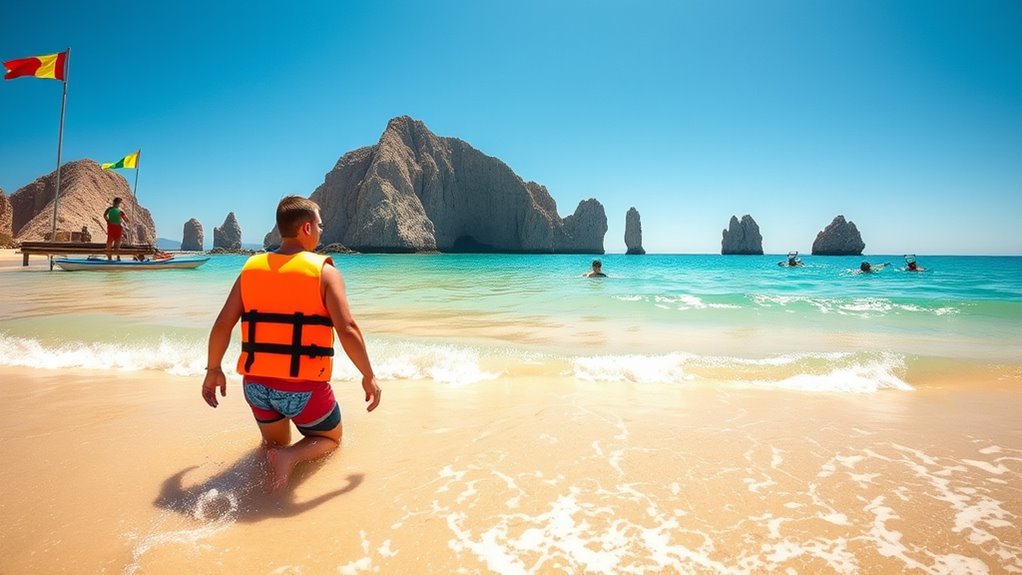
How You Can Swim Safely in Cabo San Lucas
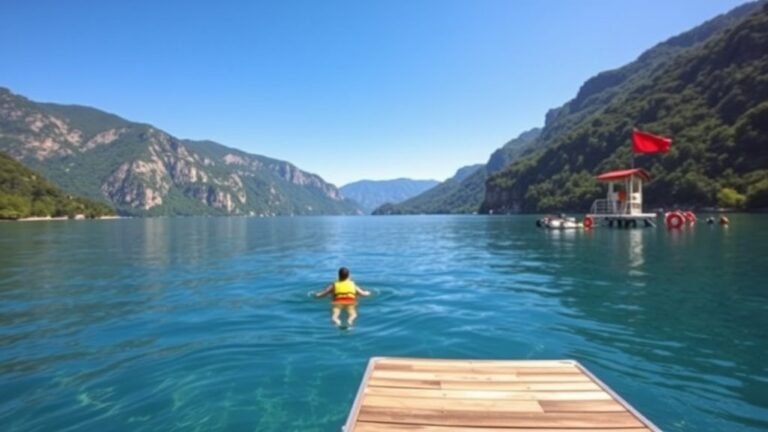
To swim safely in Cabo San Lucas, always check local weather and tide reports before heading out. Choose calm beaches like Medano or Chileno Bay where lifeguards are present. These are the best spots for a safe and enjoyable swim.
Watch out for rip currents by avoiding rough, choppy water. Do not swim near warning signs or close to piers. Using proper gear like life vests can provide extra safety if needed.
Stay hydrated and protect yourself from the sun while swimming. Knowing these basics sets you up for a safer, more enjoyable swim. There are more tips and guidelines to explore for your safety.
Understand the Local Ocean Conditions

Before you plunge into the water, you should understand the local ocean conditions in Cabo San Lucas. The Pacific Ocean and the Sea of Cortez create unique currents and tides that can change rapidly.
Know the local ocean currents and tides in Cabo San Lucas before swimming—they can shift quickly.
You’ll want to check the daily weather and tide reports before swimming. Strong rip currents are common, so always stay alert and avoid swimming during rough seas.
Water temperatures can vary, so prepare accordingly. Pay attention to warning flags or signs posted on the beach; they’re there for your safety.
If you’re unfamiliar with the area, ask local lifeguards or guides about current conditions.
Choose the Right Beaches for Swimming

Where can you find the safest and most enjoyable spots to swim in Cabo San Lucas? Start with Medano Beach, the town’s main swimming area, known for its calm waters and lifeguard presence. Avoid beaches like the Pacific side’s Playa del Amor, where strong currents make swimming risky.
Chileno Bay is another excellent choice; its clear, gentle waters are perfect for swimming and snorkeling. Always opt for beaches marked as safe for swimming and those with visible safety measures like flags or lifeguards.
If you’re unsure, ask locals or hotel staff for recommendations. By choosing the right beaches, you minimize risks and ensure a fun, worry-free experience in Cabo’s beautiful waters.
Check Weather and Tide Reports Before Swimming

Since weather and tides can change rapidly in Cabo San Lucas, you should always verify the latest reports before swimming. Doing this helps you avoid unexpected conditions that could make your swim dangerous or unpleasant. Here’s what to focus on:
- Weather Forecast: Look for clear skies and mild winds to ensure calm water.
- Tide Times: Know when high and low tides occur, as water levels affect swimming safety.
- Wave Height: Avoid swimming if waves are too high, which can be risky.
- Local Alerts: Stay updated on any warnings issued by local authorities or lifeguards.
Recognize and Avoid Rip Currents
Although rip currents can be hard to spot, you need to recognize their signs to stay safe while swimming in Cabo San Lucas. Look for areas where the water appears darker, choppier, or where waves aren’t breaking as they do nearby.
Rip currents often create a narrow channel of fast-moving water heading away from shore. If you get caught in one, don’t panic or swim against it. Instead, swim parallel to the shore until you’re out of the current, then head back to the beach.
Avoid swimming near piers, jetties, or breaks in the waves where rip currents tend to form. Staying alert and understanding how rip currents look and behave can prevent dangerous situations and keep your swim enjoyable.
Swim Near Lifeguard Stations
Recognizing rip currents is just one part of staying safe in the water. To maximize your safety, always swim near lifeguard stations. Here’s why you should stick close:
Recognizing rip currents helps, but swimming near lifeguards greatly boosts your safety in the water.
- Immediate Help: Lifeguards can quickly assist if you get caught in strong currents or feel tired.
- Constant Watch: They monitor water conditions and spot dangers you might miss.
- Clear Zones: Lifeguards usually patrol the safest swimming areas, reducing your risk.
- Emergency Response: In case of accidents, they provide first aid and coordinate rescues.
Use Proper Swimming Gear and Safety Equipment
When you head into the water, wearing the right swimming gear and safety equipment can make all the difference in protecting yourself and boosting your confidence. Choose gear that fits well and suits the local conditions. For example, fins help you swim efficiently, while a snorkel allows easy breathing.
A life vest or flotation device is essential if you’re not a strong swimmer or plan to venture farther out.
| Gear Type | Purpose | Tip |
|---|---|---|
| Swim Goggles | Protect eyes, improve vision | Choose anti-fog lenses |
| Swim Cap | Keeps hair out of face | Helps with visibility |
| Fins | Increase propulsion | Use for stronger strokes |
| Life Vest | Provides buoyancy | Wear when unsure of water |
Using proper equipment guarantees safer, more enjoyable swimming in Cabo’s waters.
Stay Hydrated and Protect Yourself From the Sun
Since the sun in Cabo San Lucas can be intense, you need to stay hydrated and protect your skin to enjoy your time safely. Here’s how you can do it effectively:
- Drink plenty of water throughout the day, especially before and after swimming.
- Apply a broad-spectrum sunscreen with at least SPF 30, and reapply every two hours or after swimming.
- Wear a wide-brimmed hat and UV-protective sunglasses to shield your face and eyes.
- Take breaks in the shade to avoid prolonged direct sun exposure, especially during peak hours from 10 a.m. to 4 p.m.
Be Aware of Marine Life and How to React
Although Cabo San Lucas offers beautiful waters to explore, you need to stay alert for marine life that could pose risks. While most creatures are harmless, some like jellyfish, sea urchins, and certain fish can cause stings or injuries if you’re not careful.
Avoid touching or stepping on any marine animals, and keep an eye on your surroundings as you swim. If you encounter jellyfish, swim away calmly without making sudden movements.
Should you get stung, rinse the area with vinegar or seawater and seek medical help if necessary.
Follow Local Safety Guidelines and Regulations
Keeping an eye on marine life is just one part of staying safe in Cabo San Lucas’ waters. You also need to follow local safety guidelines and regulations to guarantee a worry-free swim.
Here’s what you should keep in mind:
- Observe Warning Flags: Beaches use color-coded flags to signal water conditions; never ignore them.
- Swim in Designated Areas: Stick to marked swimming zones monitored by lifeguards.
- Avoid Swimming at Night: Reduced visibility and fewer people around increase risks.
- Listen to Lifeguards and Officials: They’re trained to spot dangers and will guide you accordingly.
Frequently Asked Questions
What Are the Best Times of Day to Swim Safely in Cabo San Lucas?
You should swim early in the morning or late afternoon when the water’s calmer and fewer crowds are around.
Avoid midday when strong currents and intense sun increase risks, helping you stay safe and comfortable.
Are There Specific Swimming Lessons or Guides Available Locally?
Think of swimming lessons as your compass in the ocean’s maze. You’ll find local guides and instructors in Cabo offering lessons tailored for all levels, ensuring you navigate the waters confidently and safely while enjoying your swim.
What Should I Do if I Experience Cramps While Swimming?
If you get cramps while swimming, stop and float calmly. Gently stretch the affected muscle, and signal for help if needed.
Don’t panic. Breathing slowly helps. Once safe, rest before swimming again to prevent further cramps.
Can I Swim Safely After Eating or Drinking Alcohol?
You can swim safely after eating, but wait at least 30 minutes to avoid cramps.
Avoid alcohol before swimming since it impairs judgment and coordination, increasing your risk of accidents in the water. Stay cautious!
Are There Any Local Emergency Contact Numbers for Swimmers?
Better safe than sorry! You can reach Cabo’s emergency services by dialing 911 for immediate help.
Keep local lifeguard stations’ numbers handy too. They’re your first line of defense when swimming in Cabo.
Conclusion
Now that you know how to swim safely in Cabo San Lucas, you’re ready to plunge in with confidence! Just remember, the ocean can be as tricky as a magician’s trick, so always stay alert and follow the local guidelines.
Choose safe beaches, watch out for rip currents, and never swim alone. With the right gear and a bit of caution, you’ll enjoy the stunning waters without a worry.
By following these swimming safety tips in Cabo San Lucas, you can make your trip truly unforgettable and enjoy the beautiful ocean safely.