How You Can Swim Safely With Contact Lenses
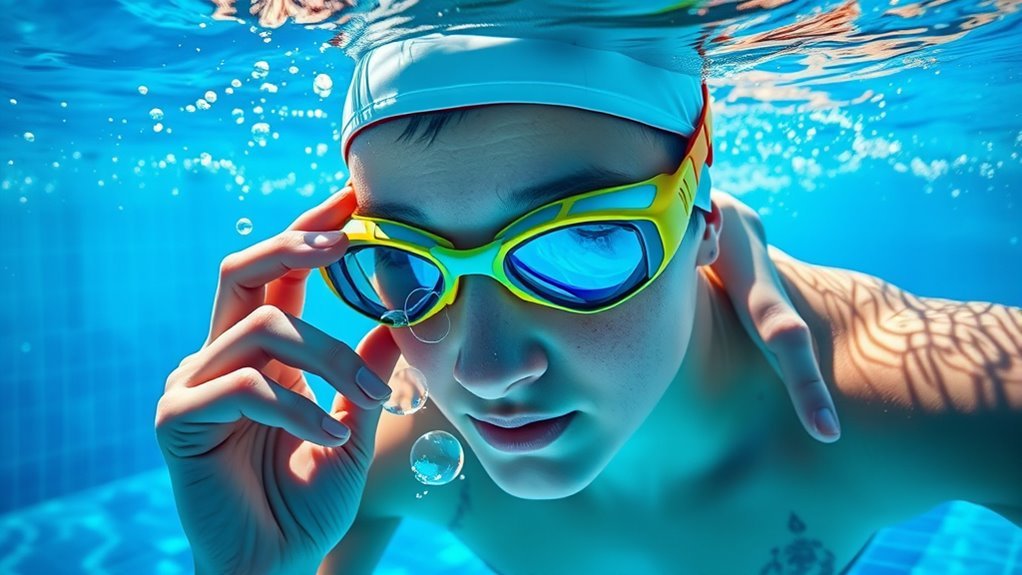
You can swim safely with contact lenses by always wearing waterproof goggles to block water and germs. Choosing daily disposable lenses is a smart option, as you can toss them after swimming, reducing infection risks. Proper lens fit is essential, and you should never swim in untreated water.
After swimming, clean your lenses properly or discard them if they are disposables. Avoid rubbing your eyes to prevent irritation or infections. By taking these precautions, you’ll keep infections away and enjoy clear vision underwater.
Learn more about protecting your eyes during water activities to ensure safety and comfort.
Understanding the Risks of Swimming With Contact Lenses
Although swimming with contact lenses might seem convenient, it carries significant risks you should understand. When you swim with lenses, water can trap between your eye and the lens, creating a breeding ground for bacteria and harmful microorganisms. This increases your risk of eye infections like keratitis, which can be painful and may threaten your vision.
Additionally, water exposure can cause your lenses to swell or stick to your eyes, leading to discomfort or even scratches on the cornea. Pool chemicals like chlorine can also irritate your eyes when combined with lenses.
Even natural bodies of water contain microorganisms that can cling to lenses, amplifying infection risks.
Knowing these dangers helps you make safer choices for your eye health when swimming.
Choosing the Right Type of Contact Lenses for Swimming
When you plan to swim with contact lenses, choosing the right type can considerably reduce your risk of eye infections and discomfort. Daily disposable lenses are often the best choice for swimming since you can discard them immediately after use, minimizing bacteria buildup.
Avoid using extended-wear or rigid gas permeable lenses while swimming, as they can trap water and increase infection risk. Soft lenses generally provide more comfort in wet conditions, but make sure they fit well and don’t shift during movement.
Consult your eye care professional to find lenses specifically designed for active or aquatic use.
Importance of Wearing Swim Goggles Over Contact Lenses
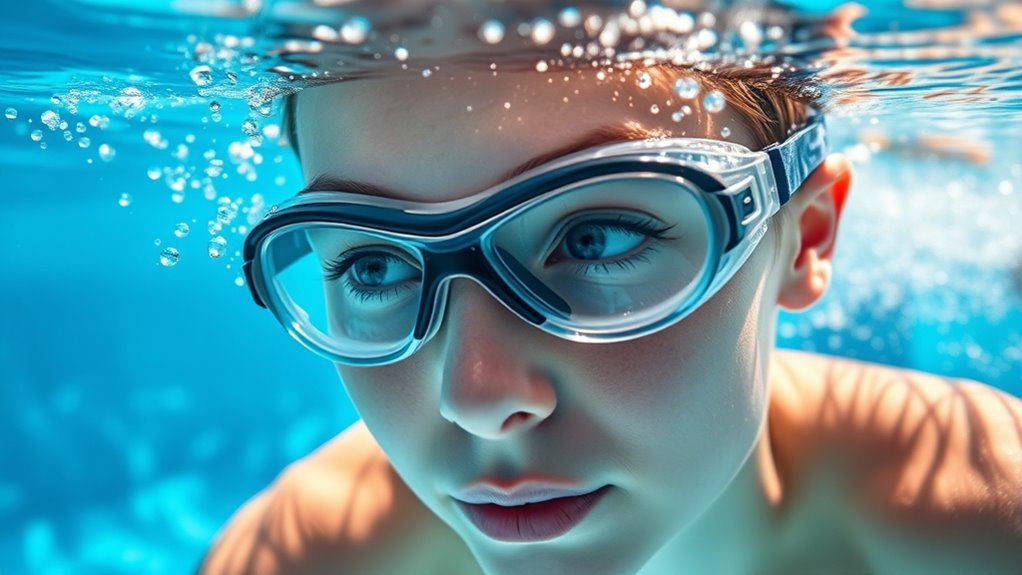
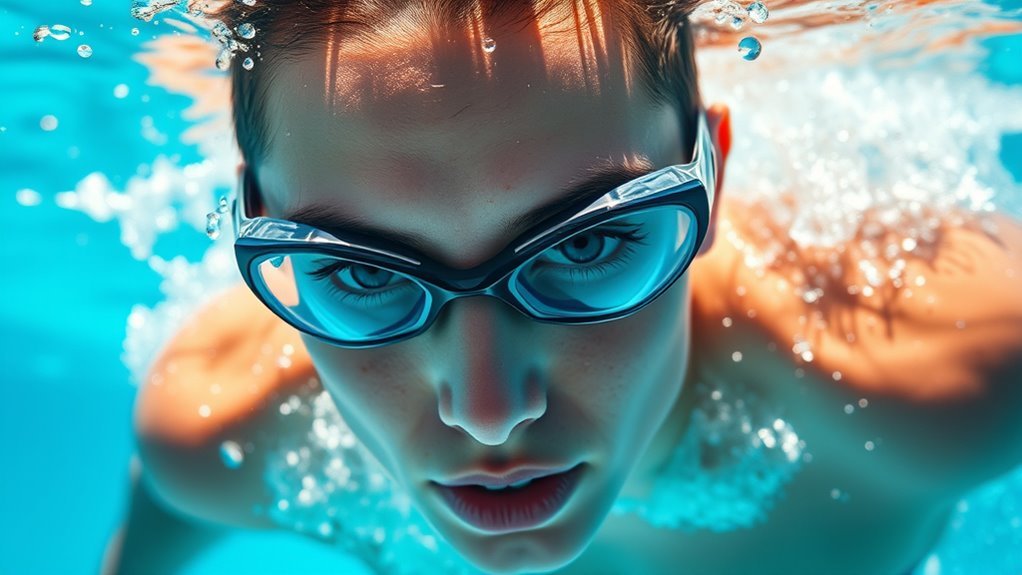
Because water can carry bacteria and chemicals that irritate your eyes, wearing swim goggles over your contact lenses is essential. Goggles create a protective barrier, preventing direct contact between water and your lenses. This reduces the risk of eye infections and discomfort.
Plus, they help keep your lenses in place, so you won’t lose them while swimming.
Here’s why you should always wear swim goggles over your contact lenses:
- Protects eyes from harmful bacteria and chlorine
- Prevents lenses from washing out or shifting
- Enhances underwater visibility by keeping lenses clear
- Minimizes eye irritation and redness after swimming
How to Properly Insert and Remove Contact Lenses for Swimming
To enjoy swimming comfortably with contact lenses, you need to insert and remove them carefully to avoid irritation or infection. Start by washing your hands thoroughly with soap and drying them on a lint-free towel.
When inserting lenses, place them on your fingertip, hold your upper eyelid to prevent blinking, then gently place the lens on your eye. For removal, look upward, pull down your lower eyelid, and slide the lens down to the white of your eye before pinching it out.
| Step | Inserting Tips | Removing Tips |
|---|---|---|
| 1 | Wash hands | Wash hands |
| 2 | Use fingertip to hold lens | Look upward |
| 3 | Hold upper eyelid gently | Pull lower eyelid down |
| 4 | Place lens gently on eye | Slide lens down then pinch out |
Cleaning and Disinfecting Contact Lenses After Swimming
After you carefully remove your contact lenses following a swim, it’s important to clean and disinfect them thoroughly. Swimming water can contain bacteria, chlorine, and other contaminants that cling to your lenses, risking eye irritation or infection.
To keep your lenses safe and comfortable, follow these steps:
- Rinse lenses with a sterile saline solution or multipurpose contact lens solution immediately after removal.
- Gently rub each lens with your fingers using the solution to remove debris.
- Soak the lenses in fresh disinfecting solution according to the product’s recommended time.
- Never reuse old solution or rinse lenses with tap water, which can introduce harmful microorganisms.
Tips for Preventing Eye Infections While Swimming
While swimming with contact lenses increases your risk of eye infections, you can take simple precautions to protect your eyes. Always wear waterproof swim goggles to create a barrier between your lenses and pool water.
Before entering the water, verify your lenses fit properly to prevent water from seeping in. Avoid rubbing your eyes while swimming, as this can introduce bacteria and irritants.
After swimming, remove your lenses promptly and clean them thoroughly using your lens solution. Never use tap water to rinse your lenses or storage case, as it may contain harmful microorganisms.
Finally, replace your lens case regularly to minimize contamination.
When to Avoid Swimming With Contact Lenses
Even if you take precautions, you should avoid swimming with contact lenses in certain situations to protect your eye health. Swimming in untreated or poorly maintained water increases the risk of eye infections and irritation.
If you have any eye conditions, such as dryness or allergies, wearing contacts while swimming could worsen them.
Avoid swimming with lenses if you’re prone to eye infections or have a weakened immune system.
Also, steer clear of swimming with lenses if you don’t have access to proper lens cleaning solutions immediately after swimming.
Swimming in lakes, rivers, or unchlorinated pools
Experiencing eye redness, irritation, or infection
Having compromised immune health
Lacking access to disinfecting lens solutions post-swim
Avoid these scenarios to keep your eyes safe and healthy.
Alternative Vision Solutions for Water Activities
If you want clear vision without risking eye health, consider alternative options to contact lenses when swimming. Goggles with prescription lenses provide protection from water and irritation while giving you sharp vision.
Another option is wearing daily disposable lenses just for swimming and discarding them immediately after. You might also explore orthokeratology (ortho-k) lenses, which reshape your cornea overnight to offer clear, lens-free vision during water activities.
| Alternative Option | Benefits |
|---|---|
| Prescription Goggles | Eye protection, clear underwater vision |
| Daily Disposable Lenses | Temporary use, reduces infection risk |
| Orthokeratology (Ortho-K) | No lenses needed during swimming |
Choose what fits your lifestyle and comfort best to enjoy water safely and clearly.
Frequently Asked Questions
Can Swimming With Contact Lenses Affect My Prescription?
Swimming with contact lenses won’t directly change your prescription, but exposing lenses to water can cause irritation or infection, impacting your vision temporarily.
Always use goggles and follow lens care guidelines to protect your eyes and lenses.
Are Daily Disposable Lenses Better for Swimming Than Monthly Ones?
Yes, daily disposable lenses are better for swimming because you can toss them after use, reducing infection risk. Monthly lenses hold more bacteria and debris, so daily disposables keep your eyes healthier when swimming regularly.
Since daily lenses are used once and discarded, they don’t accumulate harmful microorganisms like monthly lenses can. This makes daily disposables a safer choice for exposure to water.
However, it’s generally recommended to avoid wearing any contact lenses while swimming to prevent eye infections. If you do swim with lenses, daily disposables are the safer option.
How Long Can I Safely Wear Contacts While Swimming?
You shouldn’t wear contacts while swimming for more than a short swim—ideally under an hour. Water exposure can cause infections, so remove them right after swimming.
Use fresh lenses or daily disposables next time to reduce the risk of contamination.
Can Swimming Pools Damage Colored Contact Lenses?
Think of colored lenses as delicate flowers; swimming pools can be harsh storms that fade their colors and damage their petals.
Is Saltwater or Freshwater Safer for Contacts While Swimming?
Freshwater is generally safer for your contacts than saltwater because salt can irritate your eyes and damage lenses.
But neither is ideal, so wear goggles and remove contacts right after swimming to protect your eyes.
Conclusion
Swimming with contact lenses isn’t as risky as you might think—if you take the right precautions. But what happens if you skip just one step? Your eyes could face serious infections or discomfort you never saw coming.
Stay smart: choose lenses designed for water, always wear swim goggles, and never forget proper cleaning afterward. Miss these, and you might regret it.
So, are you ready to swim safely and protect your vision? Remember, swimming with contact lenses requires careful attention to avoid infections and maintain eye health. Follow these tips to enjoy swimming without compromising your eyesight.