How You Can Swim Safely With Newly Pierced Ears
You should wait at least 4 to 6 weeks before swimming with new ear piercings to avoid infection. Proper care and precautions are essential to swim safely with newly pierced ears.
Before entering the water, clean your ears with saline, dry them gently, and make certain your earrings are secure. Use waterproof ear covers or snug-fitting ear plugs and consider wearing a swim cap for extra protection.
After swimming, rinse and dry your ears carefully, then apply antiseptic if recommended. Keep an eye on any irritation, and you can find helpful tips to protect your piercings further.
Understanding the Risks of Swimming With New Piercings
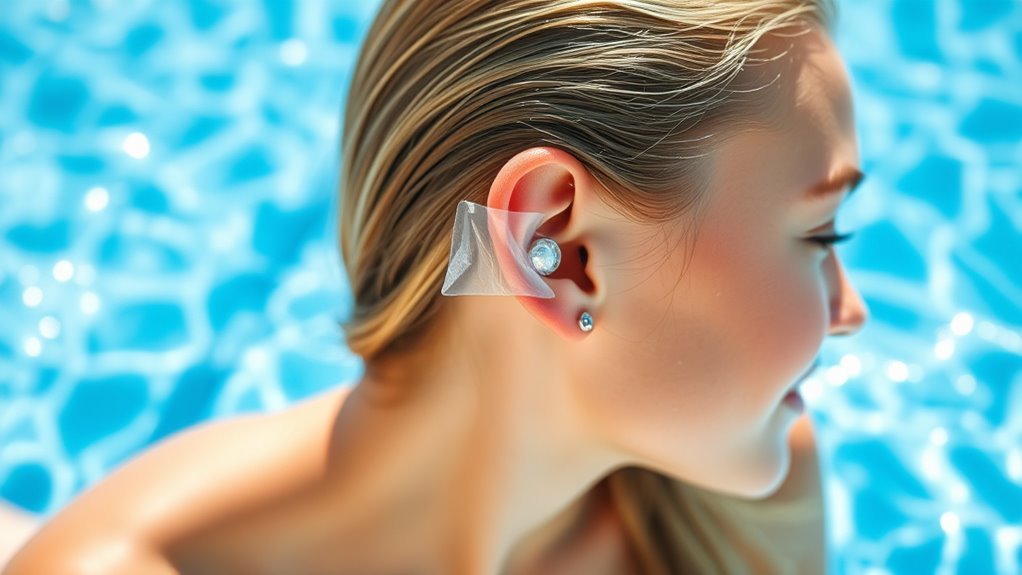
Although swimming can be invigorating and fun, diving in with newly pierced ears can expose you to infections and complications. Your fresh piercing is fundamentally an open wound, making it vulnerable to bacteria and irritants present in pools, lakes, or oceans.
Chlorine and saltwater can irritate the delicate skin around the piercing, slowing healing or causing painful inflammation. Additionally, contaminated water increases the risk of bacterial infections, which may lead to redness, swelling, and discharge.
If you ignore these risks, you might face prolonged healing times or even permanent damage. You need to protect your new piercing by minimizing exposure to water and keeping the area clean and dry.
Recognizing these dangers helps you make safer choices and prevent unnecessary problems during the healing process.
How Long to Wait Before Swimming After Getting Pierced
Since your new piercing is fundamentally an open wound, you should wait at least 4 to 6 weeks before swimming to reduce the risk of infection. This healing period allows your skin to close up enough to keep out bacteria commonly found in pools, lakes, or oceans.
If you swim too soon, you risk introducing harmful germs that can cause painful infections or prolong healing. Keep in mind that everyone’s healing time varies, so listen to your body and consult your piercer if you’re unsure.
Avoid rushing back into swimming even if your piercing looks healed on the surface. Waiting the recommended time guarantees your piercing has a better chance to heal properly and remain healthy, preventing complications that might require medical attention later.
Preparing Your Piercings Before Swimming
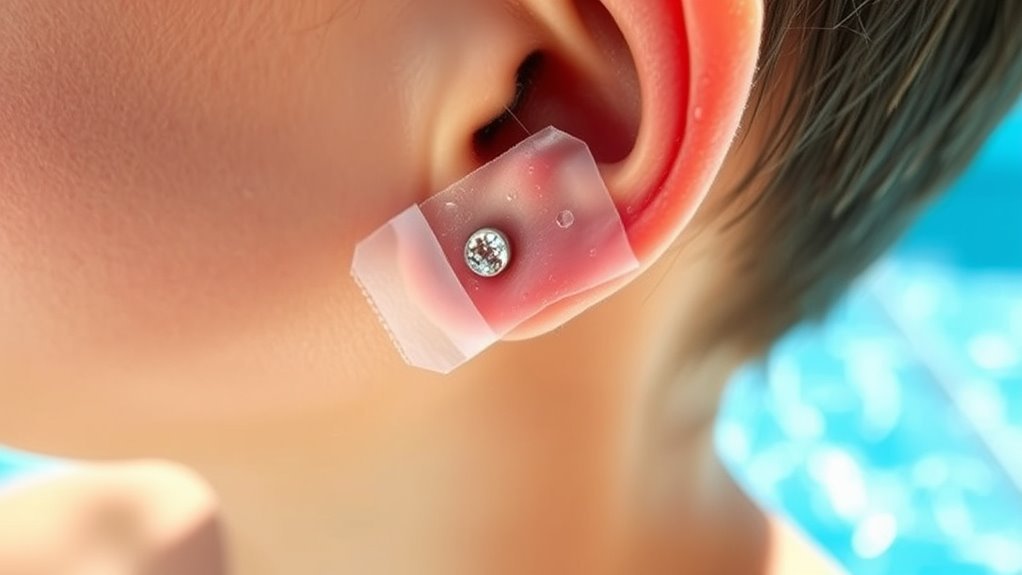
Before you jump into the water, make sure you properly prepare your new piercings to minimize infection risks. Begin by cleaning your ears thoroughly with a saline solution recommended by your piercer. Avoid using harsh soaps or alcohol, which can irritate the skin.
Pat your ears dry with a clean, soft towel. Never rub, as this can damage delicate tissue.
Inspect your earrings for any signs of looseness; tight jewelry helps prevent water and bacteria from entering the piercing.
If your piercer advised applying an antibiotic ointment, do so carefully before swimming.
Finally, avoid touching your piercings with unwashed hands to reduce contamination.
Taking these steps will help protect your healing ears and keep you safe while enjoying the water.
Best Protective Gear for Fresh Ear Piercings
Taking extra precautions beyond cleaning and handling your new piercings can make a big difference in preventing infections while swimming. One of the best ways to protect your fresh ear piercings is by wearing waterproof ear covers or silicone swimming ear plugs. These create a reliable barrier against pool chemicals, bacteria, and saltwater.
Make sure the ear plugs fit snugly but comfortably to avoid irritation. Additionally, consider using a swim cap to cover your ears, adding an extra layer of protection. Avoid using cotton balls or other porous materials, as they can trap moisture and bacteria.
After-Swim Care to Prevent Infection
Although swimming is a great way to stay active, you’ll want to clean and care for your fresh piercings immediately after to prevent infection.
As soon as you finish swimming, rinse your ears with clean, fresh water to remove chlorine, salt, or bacteria.
Gently pat your ears dry with a clean towel. Avoid rubbing, which can irritate the piercing.
Next, apply a saline solution or an antiseptic recommended by your piercer to keep the area clean and promote healing.
Avoid touching your piercings with dirty hands, and don’t remove the jewelry prematurely.
Consistent after-swim care reduces the risk of infection and helps your piercings heal smoothly.
Recognizing Signs of Infection or Irritation
When you notice redness, swelling, or persistent pain around your new piercing, it’s important to recognize these as potential signs of infection or irritation. Identifying these early helps you take quick action and protect your healing ear.
Watch for:
- Unusual discharge that’s yellow or green
- Increased warmth or tenderness around the piercing site
- Itching or burning sensations that don’t improve
- Formation of crusts or scabs beyond normal healing
- A foul smell coming from the piercing
These symptoms suggest your piercing may be struggling. Keep your area clean and avoid swimming if you observe these signs, as water exposure can worsen irritation.
Monitoring your piercing closely allows you to maintain healthy healing and avoid complications.
When to Consult a Professional About Piercing Issues
Noticing signs of infection or irritation means it’s time to pay close attention to your piercing’s condition. If you see persistent redness, swelling, or discharge, don’t hesitate to consult a professional.
Early intervention can prevent complications and help your ear heal properly. Trust your instincts. If something feels wrong or painful, seek expert advice.
| Symptom | What It Means for You |
|---|---|
| Persistent redness | Possible infection needing treatment |
| Pus or unusual discharge | Urgent care recommended |
| Increasing pain | Professional check-up advised |
Frequently Asked Questions
Can Swimming in Saltwater Help Heal New Ear Piercings Faster?
Swimming in saltwater can help clean your new piercings, but it might also irritate them or introduce bacteria.
Is It Safe to Use Earplugs With New Piercings?
Yes, you can use earplugs with new piercings, but make sure they’re clean and fit well to avoid irritation. Avoid inserting them too deeply, and clean both your ears and earplugs regularly to prevent infections.
Can Hair Products Affect Healing When Swimming With New Piercings?
Imagine Sarah’s new piercing got irritated after swimming with hair gel on. It can definitely affect healing. Hair products can cause infections by trapping bacteria, so avoid them before swimming to protect your piercing and speed up recovery.
How Does Chlorine Affect the Healing Process of Ear Piercings?
Chlorine can irritate your new ear piercings, slowing healing and increasing infection risk.
You should avoid swimming in chlorinated water until fully healed or protect your ears with waterproof covers to keep chlorine away from the piercings.
Are There Specific Swimming Strokes to Avoid With New Ear Piercings?
Imagine you tried the butterfly stroke right after piercing; it caused irritation. You should avoid strokes like butterfly that force water directly into your ears, increasing infection risk.
Stick to gentler strokes like freestyle or backstroke instead.
Conclusion
Swimming with newly pierced ears can be tricky, but if you treat them like delicate treasures, you’ll keep them safe and healthy. Give your piercings enough time to heal before taking a dip, protect them with the right gear, and care for them properly afterward.
If you notice any signs of infection, don’t hesitate to see a professional. With a little care, your fresh piercings will heal smoothly—like a calm sea after a storm. Remember, swimming safely with newly pierced ears means patience, protection, and proper aftercare.