How You Can Wear a Pad Safely in the Swimming Pool
To wear a pad safely in the swimming pool, it’s important to choose one specifically designed for swimming, featuring waterproof layers and secure adhesive. This ensures the pad stays in place and provides reliable protection while you enjoy the water.
Make sure the pad is dry before use and fits snugly to prevent slipping. Wearing well-fitting swim bottoms can help keep the pad securely in place throughout your swim.
Avoid using regular pads, as they absorb water and quickly lose their effectiveness. After swimming, change your pad promptly to maintain comfort and hygiene.
Keep these tips in mind, and you can stay confident and protected while swimming. Explore more ways to maintain your comfort and safety in the water.
Choosing the Right Type of Pad for Swimming
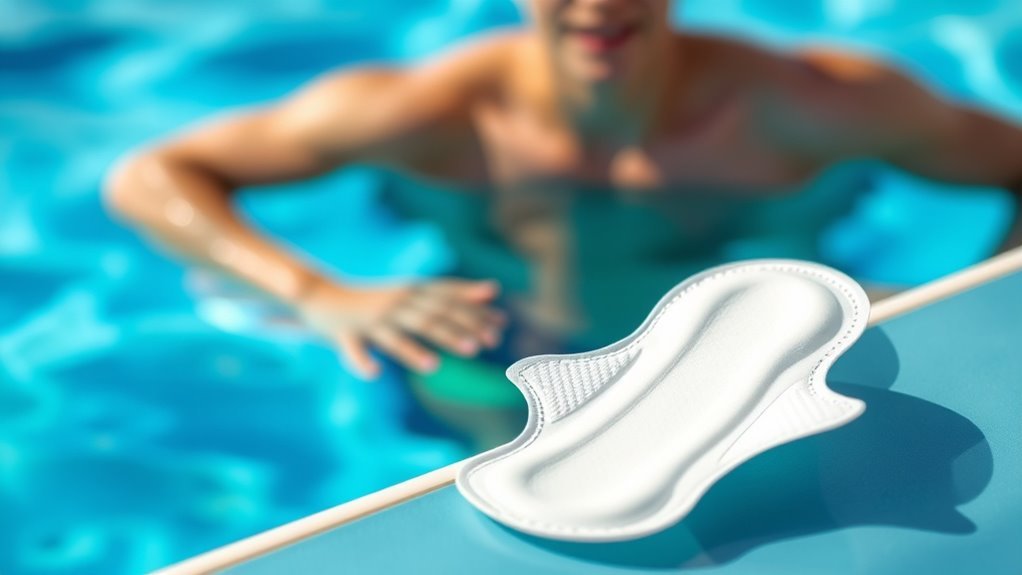
Although traditional pads aren’t designed for water use, you can find specialized swim pads that stay secure and absorbent in the pool. When choosing one, look for pads labeled specifically for swimming or water activities. They’re made with waterproof layers and adhesives that prevent slipping.
You’ll want a thin, flexible design that won’t bulk up or shift when wet. Also, consider pads that offer odor control and quick absorption to keep you comfortable. Avoid regular pads or liners, as they can lose effectiveness and cause discomfort underwater.
Checking user reviews can help you find reliable brands with positive feedback. By selecting the right swim pad, you ensure protection and confidence, letting you enjoy your pool time without worrying about leaks or irritation.
Preparing Your Pad Before Entering the Pool
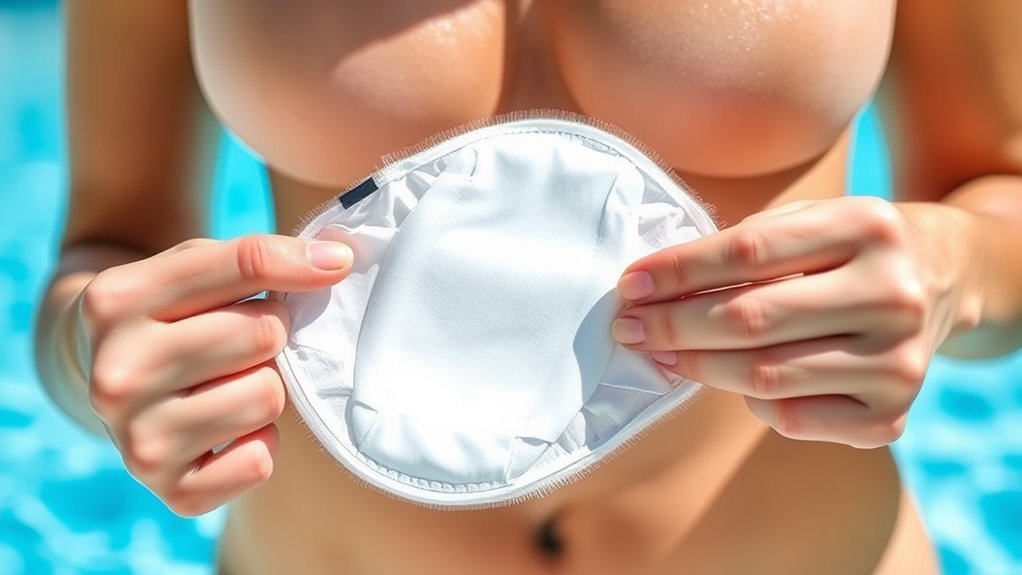
How should you prepare your swim pad before stepping into the pool? Proper preparation guarantees comfort and prevents leaks during your swim. Follow these steps to get your pad ready:
- Choose a water-resistant or swim-specific pad to avoid saturation.
- Place a thin, waterproof liner underneath for added protection against moisture.
- Make sure the pad is completely dry before use; damp pads can cause irritation.
- Trim the pad edges slightly if needed to fit your swimwear snugly without bunching.
Taking these measures helps maintain hygiene and comfort, letting you enjoy your pool time worry-free. Preparing your pad carefully is key to a safe and confident swimming experience.
How to Properly Secure a Pad for Water Activities
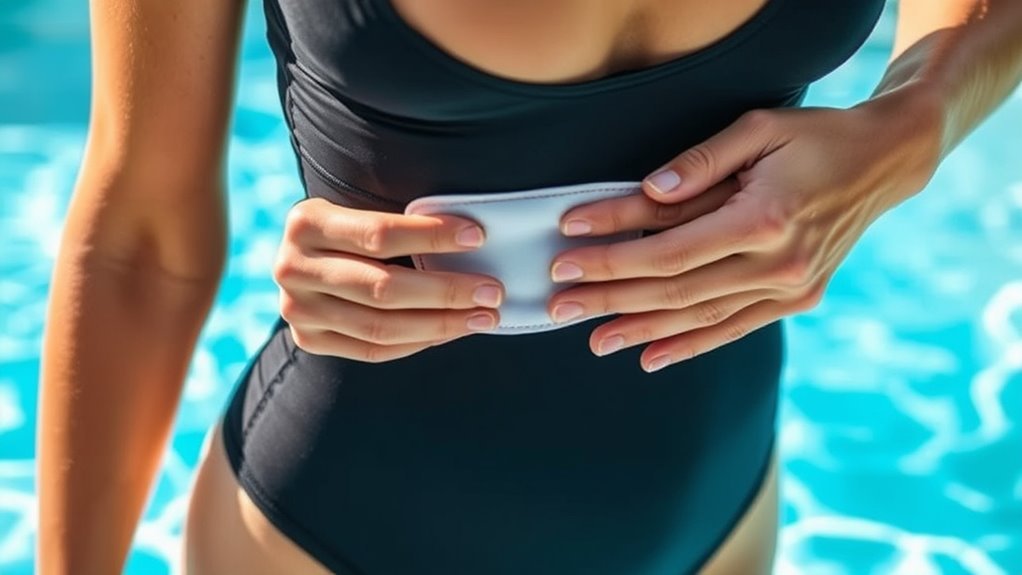
When you secure your pad correctly before water activities, you reduce the risk of leaks and discomfort. Start by choosing a pad designed for heavy flow or one specifically made for water use.
Choosing the right pad for water activities helps prevent leaks and keeps you comfortable during heavy flow.
Peel off the adhesive backing fully and place the pad firmly in your underwear’s center, ensuring it aligns with your body’s contours. Press down on the edges to make sure it sticks well, preventing water from seeping in.
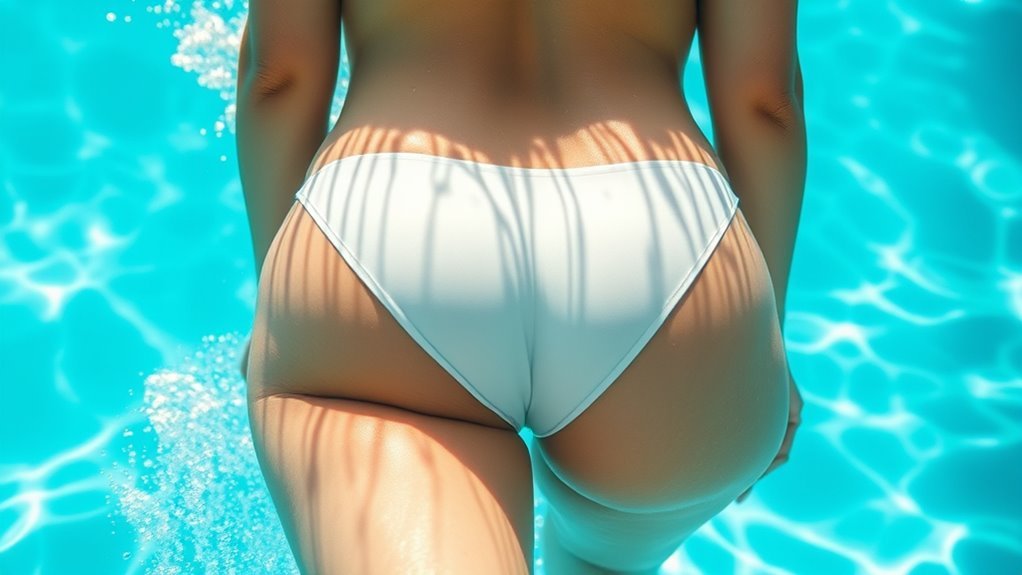
Opt for snug, well-fitting swim bottoms or underwear with secure elastic bands to hold the pad in place during movement. Avoid loose or baggy bottoms that can shift the pad.
Check the fit by moving around a bit before entering the pool to confirm the pad stays put and feels comfortable throughout your swim.
Alternatives to Pads for Swimming on Your Period
If you find pads uncomfortable or unreliable in the water, several effective alternatives can help you swim confidently during your period. You don’t have to skip the pool just because you’re on your period.
Here are four options to contemplate:
1. Tampons
They’re designed to absorb internally, making them ideal for swimming.
2. Menstrual Cups
Reusable and leak-proof when inserted correctly, cups offer a secure fit.
3. Period Swimwear
These swimsuits have built-in absorbent layers to handle light to moderate flow.
4. Sea Sponges
Natural and reusable, they fit internally and are water-friendly, though require proper cleaning.
Try these alternatives to find what suits your comfort and activity level best, ensuring you enjoy swimming without worry.
What to Avoid When Wearing a Pad in the Pool
Although pads aren’t designed for swimming, you might still choose to wear one in the pool. When you do, avoid jumping or diving abruptly, as sudden movements can dislodge the pad.
Don’t rely on regular pads; they absorb water quickly and lose effectiveness. Avoid wearing a pad for extended periods in the pool, since wet pads can cause discomfort and irritation.
Regular pads soak up water fast and become ineffective; avoid long wear in the pool to prevent discomfort.
Also, steer clear of tight swimwear that can shift the pad out of place. Avoid ignoring hygiene—rinse off and change your pad promptly after swimming to prevent infections.
Finally, don’t assume that all pads will work underwater; choose ones made for water activity if possible, and avoid using pads that aren’t designed to handle moisture or movement in the pool environment.
Signs You Should Change Your Pad Immediately
Knowing what to watch for can help you avoid discomfort and potential infections while wearing a pad in the pool. You should change your pad immediately if you notice any of the following signs:
- Saturation: When the pad feels heavy or soaked, it’s time to replace it to prevent leaks.
- Slippage: If the pad shifts or moves out of place, it won’t protect you effectively.
- Odor: A strong or unpleasant smell indicates bacteria growth and the need for a fresh pad.
- Irritation: Any itching, redness, or discomfort signals that your skin might be reacting poorly to the pad or moisture buildup.
Changing your pad promptly keeps you comfortable and reduces the risk of infections while enjoying the pool.
Tips for Staying Comfortable and Confident in the Water
When you wear a pad in the pool, staying comfortable and confident starts with choosing the right product and preparing properly. Pick a swim-specific or waterproof pad designed to handle water without losing shape or absorbency.
Before entering the water, secure your pad with snug, waterproof swimwear to prevent shifting. Change your pad immediately after swimming to maintain hygiene and comfort.
You can boost confidence by wearing dark-colored swimwear to minimize visibility and carrying a spare pad and discreet disposal bag. Stay aware of your body’s signals and don’t hesitate to step out if you feel uneasy.
Frequently Asked Questions
Can Swimming With a Pad Increase the Risk of Infections?
Yes, swimming with a pad can increase infection risk because pads aren’t designed for water exposure, trapping moisture and bacteria.
You should avoid it and use waterproof menstrual products like swimwear liners instead for safety.
How Do Chlorine and Saltwater Affect Pad Materials?
Think of chlorine and saltwater as tiny saboteurs. They break down pad materials, making them soggy and less effective. You’ll want to avoid swimming with pads since these chemicals can weaken their structure and cause leaks.
Is It Safe to Swim With a Pad During Heavy Flow Days?
It’s generally not safe to swim with a pad during heavy flow days because pads can become saturated, risking leaks and discomfort.
Instead, consider using a tampon or menstrual cup designed for swimming.
Can Wearing a Pad in the Pool Cause Skin Irritation?
Yes, wearing a pad in the pool can cause skin irritation because pads aren’t designed for water. They may trap moisture and bacteria, leading to discomfort or rashes.
It’s better to use swim-specific products instead.
How Long Can You Safely Swim While Wearing a Pad?
Like walking on thin ice, you shouldn’t swim longer than 30 minutes wearing a pad. Prolonged water exposure can cause discomfort or leaks.
Change it promptly to stay fresh and avoid irritation while enjoying the pool.
Conclusion
Wearing a pad in the pool might feel tricky, but with the right prep and care, you can stay confident and comfortable like a swimmer gliding through calm waters. Choose a pad designed for water use, secure it properly, and know when to change it.
If you prefer, explore alternatives like menstrual cups or waterproof swimwear. Avoid common mistakes, and you’ll enjoy your swim without worry, feeling fresh and secure every moment.
By following these tips, you can wear a pad safely in the swimming pool and maintain comfort and hygiene throughout your swim.