Do It Yourself Natural Swimming Pool in 3 Easy Steps
You can create your own natural swimming pool in three simple steps, making it an eco-friendly and beautiful addition to your backyard. Start by planning the design, choosing the shape, size, and native plants that will help keep the water clear and natural. This thoughtful planning ensures a sustainable and visually appealing pool.
Next, carefully excavate the area, lining it to hold water effectively while setting stable edges for safety and durability. Proper excavation is crucial to maintain the pool’s structure and function over time.
Finally, install a natural filtration system using aquatic plants and pumps to circulate the water gently. Maintaining a balanced ecosystem in your pool will keep the water clean without harsh chemicals. Explore how to perfect each part to build your ideal natural swimming pool.
Planning and Designing Your Natural Swimming Pool
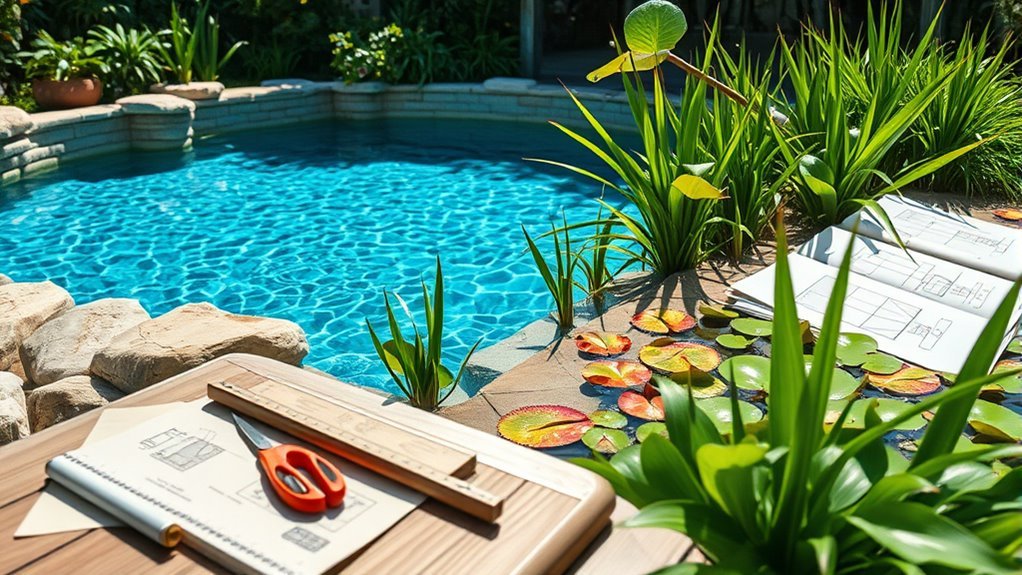
Before you start digging, you need to carefully plan and design your natural swimming pool to guarantee it fits your space and lifestyle. Begin by evaluating your yard’s size, sunlight exposure, and existing landscape features.
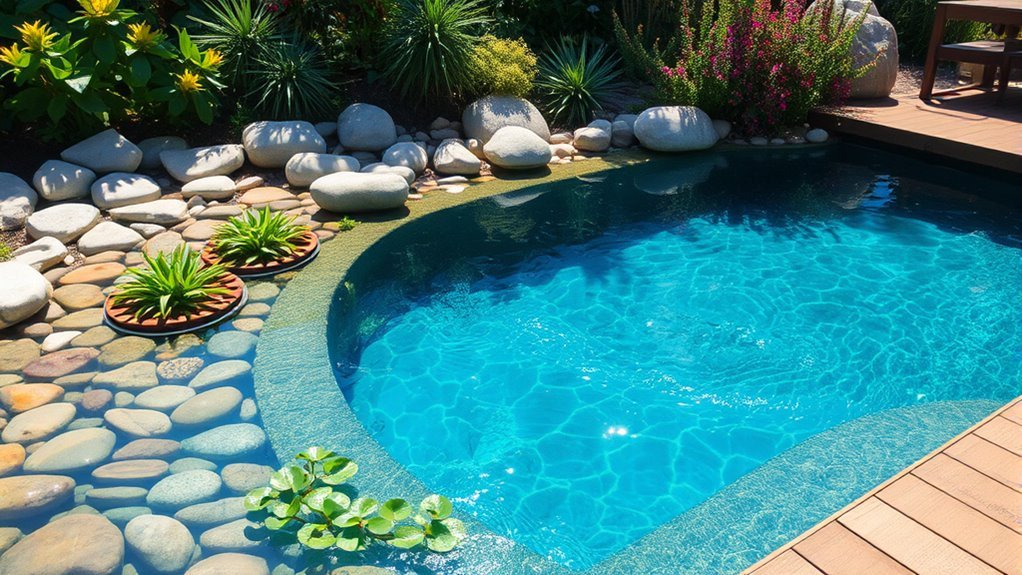
Decide on the pool’s shape and depth, keeping in mind that natural pools typically have a swimming zone and a regeneration zone for plants.
Consider how you’ll integrate native aquatic plants to keep the water clear naturally.
Think about access points, safety features, and how the pool will blend with your garden.
You’ll also want to plan for water circulation and filtration systems that mimic natural processes.
Taking the time to design thoughtfully now ensures your pool not only looks beautiful but also functions efficiently and sustainably for years to come.
Excavation and Construction Process
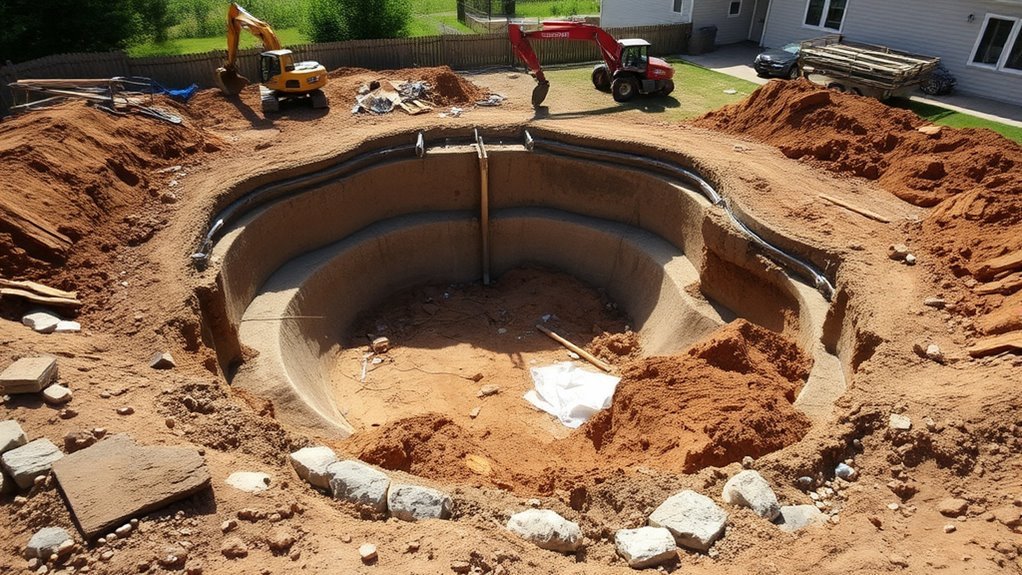
Once your design is set, you can start the excavation and construction phase. Begin by marking the pool outline on the ground using stakes and string.
Use a shovel or mini-excavator to dig according to your planned depth and shape, ensuring smooth, sloped sides for stability. Remove all roots, rocks, and debris to create a clean base.
Next, compact the soil to prevent future settling.
Line the excavation with a high-quality pond liner or waterproof membrane, securing the edges tightly.
Install a sturdy frame or edging material around the pool to support the liner and define the shape.
Finally, prepare the surrounding area for landscaping or decking. Taking these steps carefully will give you a solid foundation for your natural swimming pool.
Installing Filtration and Plant Zones
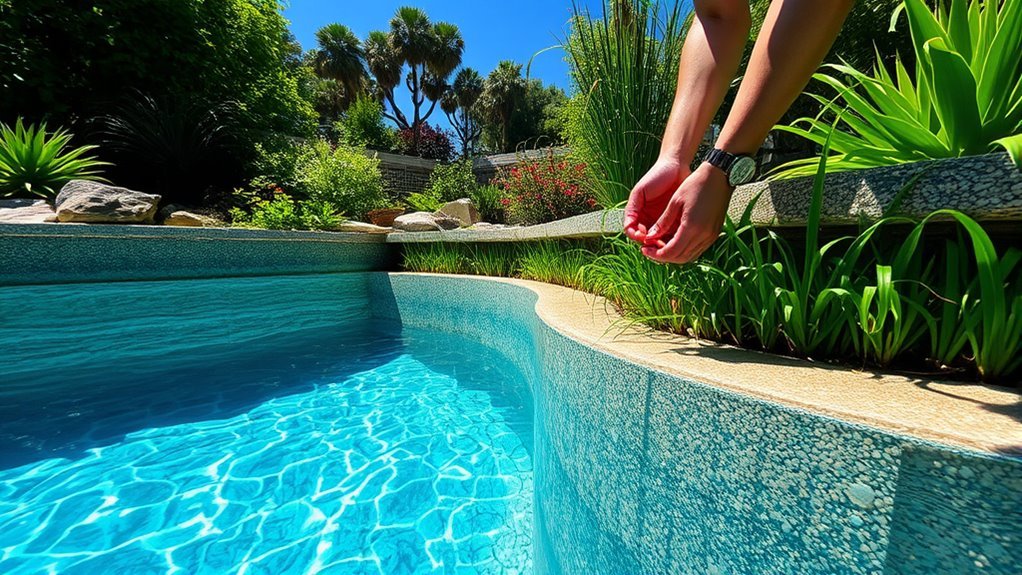
As you move forward, you’ll install the filtration system and create plant zones that naturally purify the water. Begin by setting up a biological filtration area filled with gravel and sand to trap debris and foster beneficial bacteria growth.
Next, design separate plant zones around the pool’s perimeter, selecting native aquatic plants like cattails, reeds, and water lilies. These plants absorb excess nutrients, preventing algae growth and maintaining clear water.
Position your plant zones to allow water to flow through them, ensuring continuous filtration. Connect your pump to circulate water between the swimming and regeneration zones, supporting a healthy ecosystem.
Frequently Asked Questions
How Do I Maintain Water Clarity Without Chemicals?
You keep water clear by regularly cleaning debris, using beneficial plants to filter nutrients, ensuring good water circulation with pumps, and introducing natural algae eaters like snails or fish.
Avoid stagnant water and test water quality often.
What Types of Plants Are Best for Natural Filtration?
Want a jungle in your pool? Go for cattails, water lilies, and hornwort. They’re the superheroes of natural filtration.
They gobble up nutrients, keep algae at bay, and make your water crystal clear without any chemical drama.
Can I Swim Year-Round in a Natural Pool?
You can swim year-round if you maintain your natural pool properly and adjust for seasonal changes.
However, colder climates might require extra heating or winterizing, so check your local conditions to keep it enjoyable all year.
How Do I Prevent Algae Growth Naturally?
Think of your pool as a garden where sunlight and nutrients feed unwanted weeds, algae. You’ll prevent growth naturally by planting aquatic plants that compete for nutrients, adding beneficial bacteria, and ensuring good water circulation to keep it balanced.
What Wildlife Might the Pool Attract?
You’ll attract frogs, dragonflies, birds, and beneficial insects that help balance the ecosystem. Small fish might visit too.
These creatures naturally control algae and pests, creating a lively, healthy environment around your pool.
Conclusion
Now that you’ve planned, dug, and installed your natural swimming pool, you’re ready to plunge into a revitalizing, eco-friendly oasis. Think of it like building your own time machine—transforming your backyard into a timeless retreat where nature and relaxation meet.
With just these three easy steps, you’ve created a sustainable haven that’s both modern and a nod to simpler days.
Enjoy every splash in your personal paradise and embrace the benefits of a do-it-yourself natural swimming pool. This eco-friendly project not only beautifies your space but also promotes a healthy, chemical-free swimming experience. Dive into your sustainable backyard oasis today!