How Do Swim Diapers Hold Urine Effectively
Swim diapers hold urine effectively by fitting snugly around your child’s waist and legs, creating a secure barrier that traps solids while allowing urine to pass through without swelling or leaking. These swim diapers use tight, water-resistant materials and elastic bands that don’t expand when wet, ensuring the diaper stays lightweight and comfortable.
Unlike regular diapers, swim diapers don’t absorb water, which helps keep your child mobile in the pool. The design focuses on preventing leaks while maintaining comfort and freedom of movement.
If you want to understand more about their design and fit, keep exploring. Swim diapers are specially engineered to balance containment and flexibility for active water play.
Unique Design Features of Swim Diapers
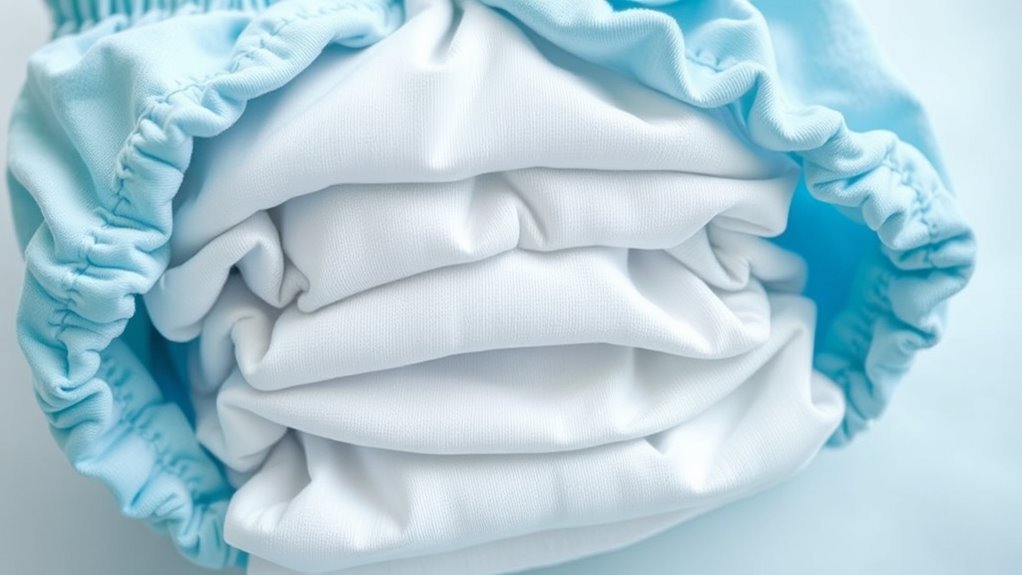
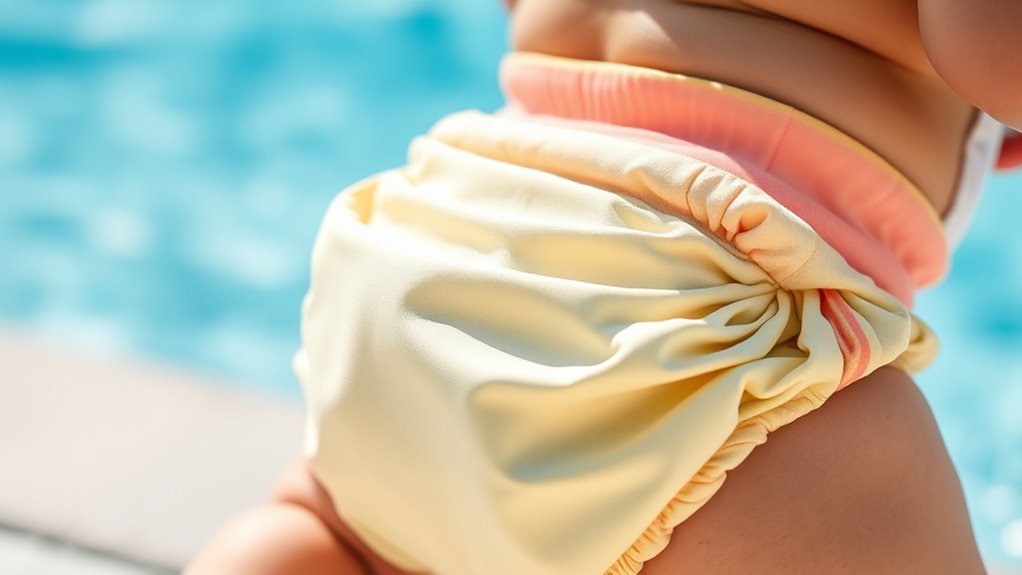
Although they look similar to regular diapers, swim diapers have unique design features that specifically address the challenges of water use. When you put one on, you’ll notice it fits snugly around the waist and legs without elastic bands that expand when wet.
Swim diapers fit snugly without stretchy elastic, specially designed to handle water use challenges.
This tight fit helps prevent leaks and keeps everything contained. Unlike regular diapers, they don’t swell up in water, so your child stays comfortable and mobile.
You’ll also see that they’re designed to be reusable or disposable with a streamlined shape that won’t weigh your child down.
These features ensure that urine stays inside without absorbing pool water, making swim diapers ideal for water activities while maintaining hygiene and convenience.
Materials That Prevent Swelling and Leakage
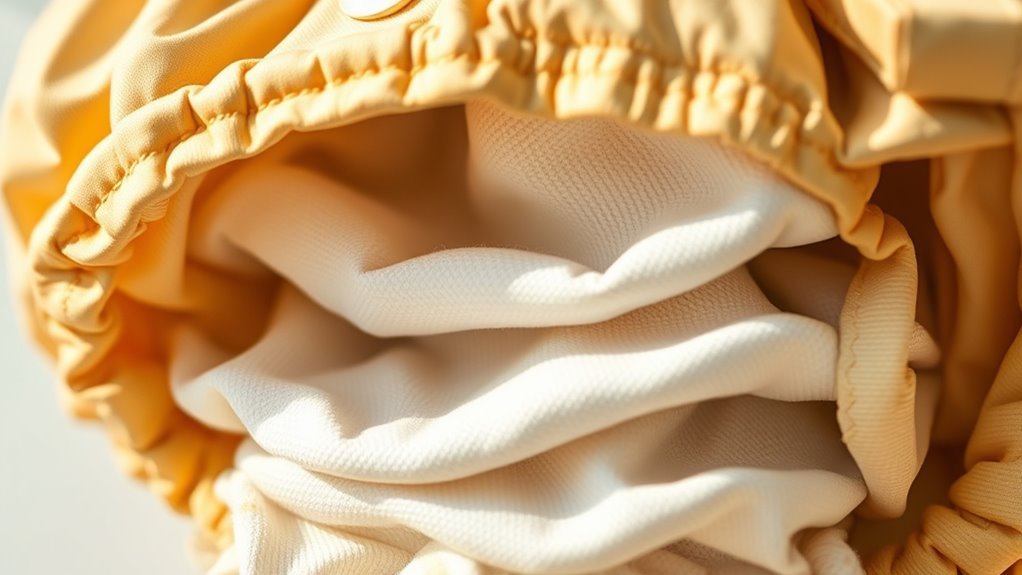
To keep swim diapers effective in water, manufacturers use materials that prevent swelling and leakage. Unlike regular diapers, swim diapers rely on fabrics that resist water absorption, so they don’t balloon or sag when wet. These materials maintain fit and comfort while containing solids without swelling.
You’ll typically find a combination of tight-knit polyester or nylon outer layers paired with a soft, moisture-wicking inner lining. Elastic leg and waist bands also use water-resistant materials to enhance the seal.
| Material Type | Purpose | Benefit |
|---|---|---|
| Polyester/Nylon | Outer shell | Prevents water absorption |
| Moisture-wicking Fabric | Inner lining | Comfort and dryness |
| Elastic Bands | Sealing | Stops leaks around edges |
| Mesh Layers | Ventilation | Allows airflow, prevents swelling |
How Swim Diapers Manage Urine Containment
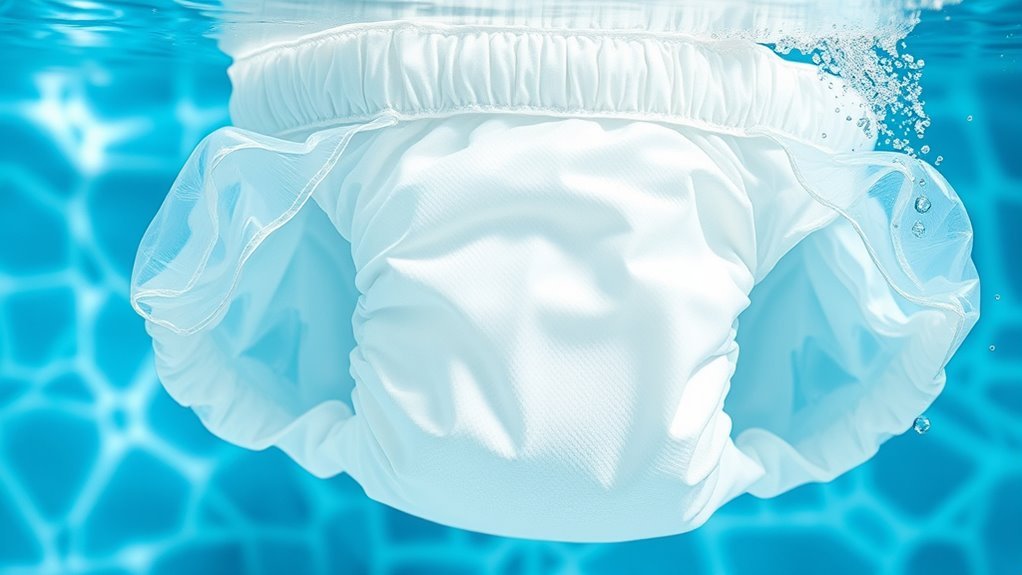
When you choose swim diapers, you expect them to keep the pool clean while letting your little one move freely. Swim diapers manage urine containment by combining snug fits with specialized materials that let water flow through but trap solids.
They use tight elastic bands around the waist and legs to prevent leaks while allowing movement. Unlike regular diapers, they don’t absorb water, which keeps the diaper lightweight and prevents swelling.
Instead, they focus on containing waste without getting soggy, so urine passes through the diaper’s fabric and dilutes in the pool water. The design ensures that solids stay put, minimizing contamination.
This balance helps you maintain hygiene without restricting your child’s fun and comfort in the water.
Differences Between Swim Diapers and Regular Diapers
Because swim diapers don’t absorb water like regular diapers, they stay lightweight and won’t swell during use. Unlike regular diapers, which use super-absorbent polymers to soak up urine and lock in moisture, swim diapers are designed to contain solids without soaking up pool or ocean water.
You’ll notice swim diapers are made from tighter, stretchier fabrics that fit snugly around your baby’s legs and waist to prevent leaks. Regular diapers focus on dryness and comfort for daily wear, while swim diapers prioritize containment and durability in water.
Since they don’t absorb liquid, swim diapers allow your child to move freely without the bulk or weight of a wet diaper. This key difference helps keep pools cleaner and your little one comfortable during water play.
Tips for Choosing the Right Swim Diaper Size and Fit
Selecting the right swim diaper size and fit guarantees your child stays comfortable and leak-free during water activities. To choose the perfect size, check the manufacturer’s weight guidelines and measure your child’s waist and hips for accuracy.
Choosing the right swim diaper size ensures comfort and prevents leaks during water activities.
Avoid diapers that are too tight, as they can cause discomfort and restrict movement, or too loose, which can lead to leaks. Look for adjustable features like elastic waistbands and leg cuffs to ensure a snug yet gentle fit.
Keep in mind that swim diapers don’t absorb urine; their design contains it, so fit is essential to prevent leaks.
Finally, try a few brands to find one that suits your child’s body shape best.
Proper sizing improves both comfort and effectiveness in urine containment.
Frequently Asked Questions
Can Swim Diapers Be Reused After Swimming?
No, you shouldn’t reuse swim diapers after swimming since they’re designed for single use to prevent leaks and contamination.
Always dispose of them properly and put on a fresh one for the next swim to keep things hygienic.
How Should Swim Diapers Be Disposed of After Use?
Like a book with a final page, you should toss used swim diapers into a sealed plastic bag and then the trash.
Don’t flush them—they’ll clog pipes like stubborn weeds in a garden.
Dispose responsibly!
Are Swim Diapers Eco-Friendly or Biodegradable?
Swim diapers aren’t typically eco-friendly or biodegradable since they contain synthetic materials. You can find some eco-friendly options made from natural fibers, but most disposable swim diapers still contribute to landfill waste.
Do Swim Diapers Protect Against Bacteria in Pools?
About 60% of pool-related illnesses come from bacteria, but swim diapers don’t protect against bacteria. You’ll need proper pool sanitation and hygiene since swim diapers mainly contain solids, not bacterial contaminants or viruses.
Can Swim Diapers Be Used for Pets in Water?
Yes, you can use swim diapers for pets in water to contain accidents. Just make certain you pick the right size and check for a comfortable fit, so your furry friend stays happy and the water stays clean.
Conclusion
When you slip on a swim diaper, imagine it as a tiny, high-tech fortress for urine—designed to hold it in without puffing up like a regular diaper. Its snug fit and special materials work together like a superhero team, keeping everything locked away while you splash freely.
Choosing the right size means no leaks or sagging, so you’re ready to conquer the pool like a champion, worry-free and fully protected. Swim diapers hold urine effectively by combining a secure fit with absorbent and waterproof layers, ensuring comfort and cleanliness during water activities.