
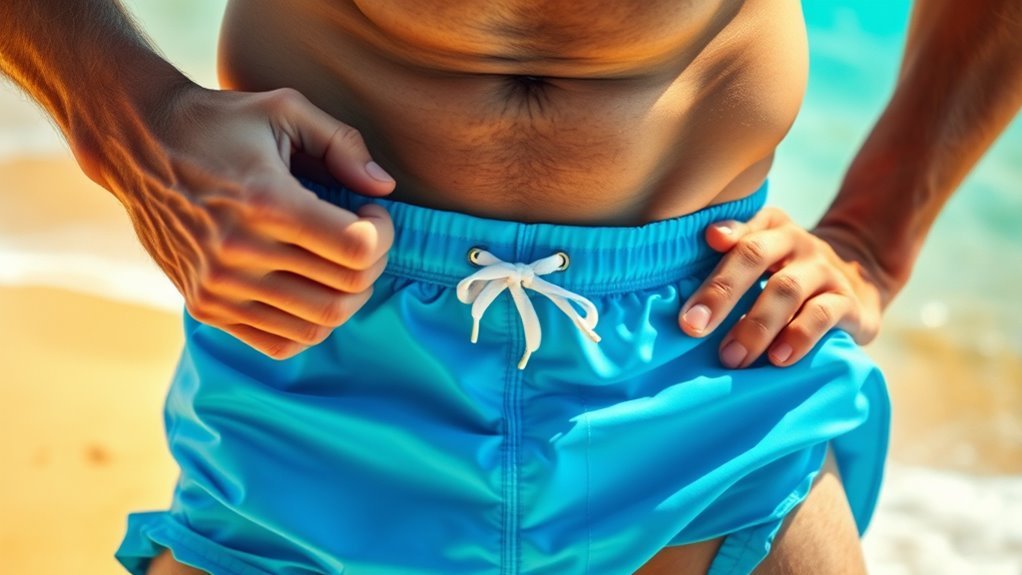
How Do You Decide to Wear Underwear With Swimming Trunks?
You decide to wear underwear with swimming trunks based on comfort, support, and activity level. Choosing the right underwear can provide extra protection against chafing or moisture, which is especially helpful when wearing rough fabrics or cotton blends.
For quick-drying trunks that have built-in liners, you might skip underwear to enjoy more freedom and avoid bunching. Your body shape and swim style also influence your choice, so experimenting with different combinations is a good idea.
Try various options to find what feels best for you. Keep exploring to discover which setup suits you perfectly.
Factors to Consider When Choosing Swimwear Support
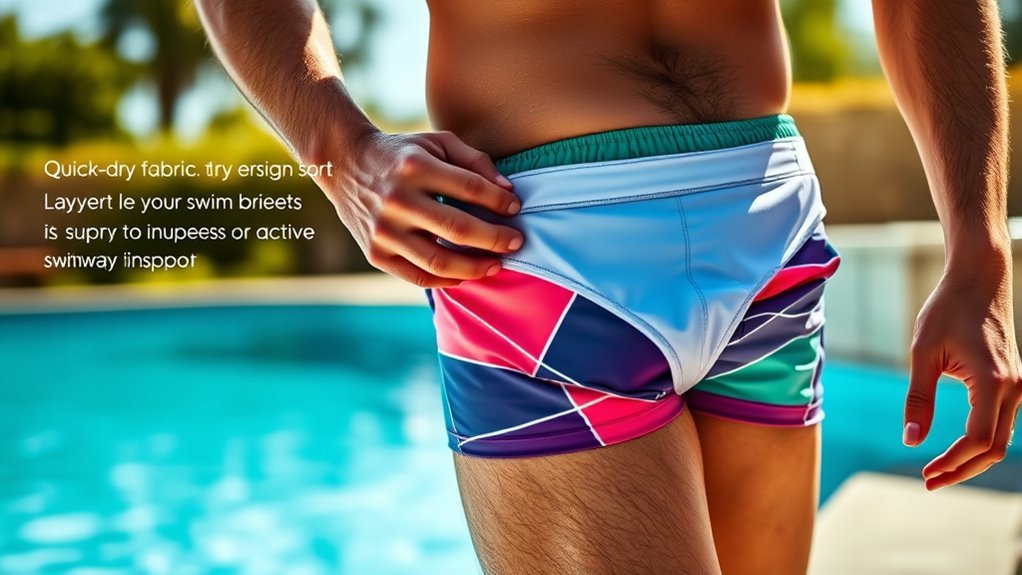
When choosing swimwear support, you should consider factors like comfort, fit, and activity level. First, think about how the swim trunks feel against your skin. Materials that irritate or chafe can ruin your experience.
Next, assess the fit: your swimwear should offer enough support without being too tight or loose. Also, consider what activities you’ll be doing. If you’re swimming laps or engaging in water sports, you’ll need swimwear that stays secure and supports movement.
For casual beach days, comfort might take precedence. Don’t forget to check the lining and whether it provides adequate support since this can impact how you feel during wear.
Benefits of Wearing Underwear With Swimming Trunks

Although many swimmers skip underwear under their trunks, wearing it can offer extra comfort and hygiene. When you wear underwear beneath your swimwear, it provides an additional layer that helps reduce chafing and irritation caused by the fabric rubbing against your skin. This can be especially beneficial during extended swimming sessions or active beach days.
Underwear also helps absorb moisture, keeping you feeling drier and preventing bacterial buildup, which supports better hygiene.
Furthermore, it can enhance modesty by preventing any see-through issues when trunks get wet. If you choose underwear made from quick-drying, breathable materials, it won’t trap water or heat, allowing you to stay comfortable.
Advantages of Going Without Underwear in Swimwear
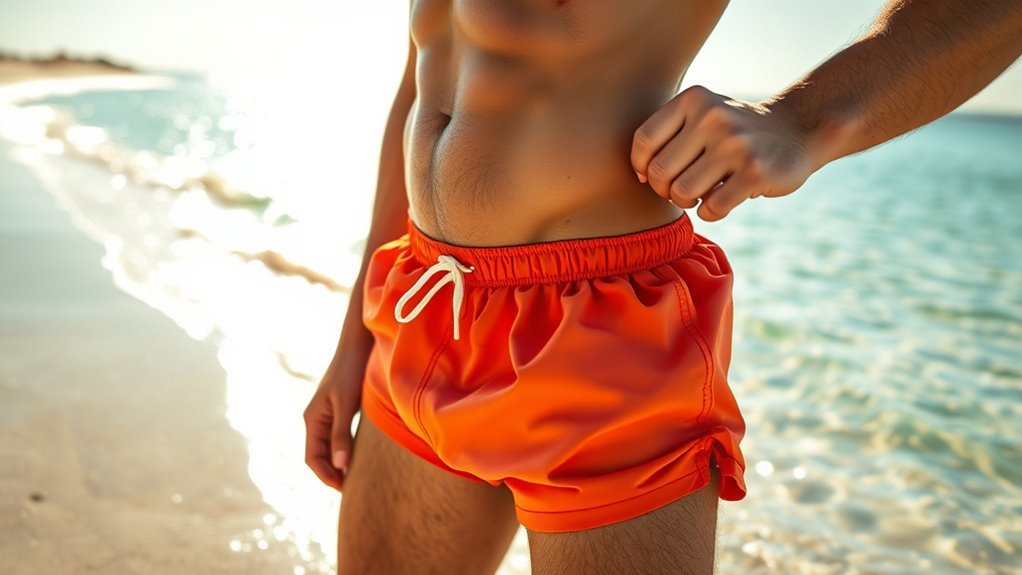
Choosing to skip underwear with your swimming trunks can offer a sense of freedom and simplicity that many find appealing. When you go commando, you avoid extra fabric that might bunch or feel restrictive.
Skipping underwear with swim trunks provides freedom and prevents uncomfortable bunching or restriction.
Here are some advantages you’ll appreciate:
- Enhanced Comfort: Without underwear, you reduce layers, which means less chafing and irritation.
- Better Breathability: Going without lets your skin breathe, helping you stay cooler and drier.
- Simplified Laundry: Fewer garments to wash means less hassle and quicker drying times.
- Improved Fit: Swim trunks are designed with built-in support, so skipping underwear can actually enhance how they sit and feel on your body.
If you value ease and comfort, ditching underwear under your swimwear might be the way to go.
Types of Swim Trunks and Their Design Features
Since swim trunks come in various styles, understanding their design features can help you pick the right pair for your needs.
Classic board shorts are longer, usually reaching the knees, and often don’t have built-in liners. This might influence your choice about wearing underwear.
Brief-style swim trunks are shorter and typically include a mesh lining that provides support and coverage.
Hybrid trunks blend casual shorts with swimwear, often featuring pockets and quick-dry fabric, and may or may not have liners.
Some trunks come with internal mesh briefs that act like underwear, reducing the need for additional layers.
Knowing these differences allows you to decide if you want extra comfort or protection from wearing underwear underneath or if the design itself already meets your preferences.
How Fabric Choice Influences Underwear Decisions
The type of fabric your swim trunks are made from can greatly affect whether you’ll want to wear underwear underneath. Some materials feel better against bare skin, while others might cause discomfort or require extra support. Consider these points when deciding:
- Polyester and Nylon: These quick-drying fabrics are smooth and often come with built-in mesh liners, reducing the need for underwear.
- Cotton Blends: Cotton retains moisture and dries slowly, so wearing underwear might prevent chafing and discomfort.
- Lycra/Spandex: Stretchy and form-fitting, trunks made from these might feel better without underwear to avoid bunching.
- Rough or Textured Fabrics: If the fabric feels coarse, underwear can act as a protective layer.
Your fabric choice guides comfort and practicality when deciding on underwear under swim trunks.
Managing Comfort and Hygiene in Swim Settings
When you wear swim trunks, keeping both comfort and hygiene in mind is essential for an enjoyable experience. You want to avoid chafing or irritation, so choosing swim trunks with built-in liners can help support and protect sensitive areas without the need for extra underwear.
Choose swim trunks with built-in liners for comfort and protection without extra underwear.
If your trunks lack a liner, consider moisture-wicking, quick-dry underwear designed specifically for swimming to stay comfortable and reduce bacteria growth.
Always rinse off promptly after swimming to prevent skin irritation and keep the area clean.
Changing out of wet swimwear as soon as possible also helps maintain hygiene.
Impact of Physical Activity on Swimwear Underwear Choices
If you plan to engage in vigorous swimming or water sports, you’ll want to choose swimwear underwear that moves with you and stays in place. Your choice impacts comfort, performance, and confidence in the water. Consider these factors:
- Support: Opt for snug, supportive underwear to prevent shifting during activity.
- Material: Choose quick-drying, breathable fabrics like nylon or polyester blends.
- Fit: Avoid loose underwear that bunches or tight ones that restrict movement.
- Seam construction: Look for flat seams to reduce friction and enhance flexibility.
Tips for Preventing Chafing and Irritation
Since chafing and irritation can quickly ruin your time in the water, taking proactive steps to prevent them is essential. Start by choosing swim trunks made from soft, quick-drying fabrics that reduce friction against your skin.
If you decide to wear underwear, opt for seamless, moisture-wicking options to minimize irritation.
Apply an anti-chafing balm or petroleum jelly on areas prone to rubbing, like inner thighs and groin.
Make sure your swimwear fits well, not too tight or loose, to avoid excess movement that causes chafing.
After swimming, rinse off salt or chlorine promptly and dry yourself thoroughly.
Finally, change out of wet swimwear as soon as possible to keep your skin dry and comfortable.
These steps help you enjoy your swim without discomfort or distraction.
Cultural and Social Norms Affecting Swimwear Choices
Taking care to prevent chafing and irritation helps you stay comfortable, but your swimwear choices also reflect wider cultural and social influences.
Comfort matters, but swimwear also mirrors cultural and social norms shaping your choices.
When deciding whether to wear underwear with your swimming trunks, consider these factors:
- Local customs: Some cultures expect modesty, so wearing trunks with built-in liners or underwear is common.
- Social settings: Family pools or public beaches often have unspoken dress codes influencing your swimwear choices.
- Fashion trends: Popular styles vary by region, affecting how you blend in or stand out.
- Peer behavior: What friends or community members wear can guide your decision to wear underwear under swim trunks.
Personal Preferences and Experimentation for Best Fit
Although swimwear guidelines vary, your personal comfort ultimately depends on experimenting with different options. You might try wearing swim trunks with and without underwear to see which feels best during swimming or lounging. Pay attention to factors like chafing, support, and dryness.
Some prefer briefs or boxer briefs designed for water, while others find going commando more comfortable. Consider the fit of your trunks, too. Tight trunks may require underwear for support, whereas looser ones might not.
Don’t hesitate to test different fabrics and styles until you find what suits your body and activity level. Remember, what works for someone else mightn’t work for you, so trust your own experience to decide the best fit for your swimwear routine.
Frequently Asked Questions
Can Wearing Underwear With Swim Trunks Affect Swimming Speed?
Wearing underwear with swim trunks can slow you down a bit because it creates extra drag and feels uncomfortable.
You’ll swim faster and feel more agile if you skip underwear and choose trunks with built-in liners instead.
How Do Swim Trunks With Built-In Underwear Compare in Comfort?
Swim trunks with built-in underwear usually offer better comfort since they’re designed for water use, reducing chafing and bunching.
You’ll feel more secure and dry faster compared to wearing regular underwear underneath your trunks.
Are There Specific Underwear Types Recommended for Cold Water Swimming?
For cold water swimming, you’ll want thermal or neoprene-lined underwear that insulates and wicks moisture. Avoid cotton since it traps water.
Look for snug, quick-drying options that keep you warm without restricting movement.
Is It Hygienic to Share Swim Trunks Without Underwear?
Imagine a swim team sharing trunks without underwear; it’s not hygienic. You risk infections and skin irritation.
Always wear your own swim trunks or add a liner to keep things clean and protect your skin from bacteria.
How Does Underwear Impact Drying Time After Swimming?
Underwear slows drying time because it traps moisture against your skin. If you want to dry quickly after swimming, skip underwear and choose swim trunks with built-in liners made of quick-drying materials.
This helps you stay comfortable and dry faster.
Conclusion
So, you’re still stuck on whether to wear underwear with your swim trunks? Here’s a secret: nobody’s hosting a swimsuit fashion police squad—yet. You can go commando and embrace freedom or add underwear for that “just in case” security blanket.
Just remember, whether you’re channeling beach warrior or cautious puddle jumper, it’s your call. So suit up (or don’t), and swim like the indecisive legend you are—because comfort beats conformity every time. When deciding to wear underwear with swimming trunks, prioritize what feels best for your comfort and confidence.