How Long to Run Your Swimming Pool Pump
You should run your swimming pool pump long enough to circulate all the water at least once daily. Typically, this means operating the pump between 6 and 12 hours, depending on your pool size, water temperature, and how often you swim.
Warmer water and heavy use call for longer runtimes, while cooler conditions require less. Using timers and automation helps save energy and keep your water clear.
If you want to get the most from your pump, there are smart ways to fine-tune its schedule. Adjusting the runtime based on your pool’s specific needs can improve efficiency and water quality.
Understanding Your Pool Pump’s Role
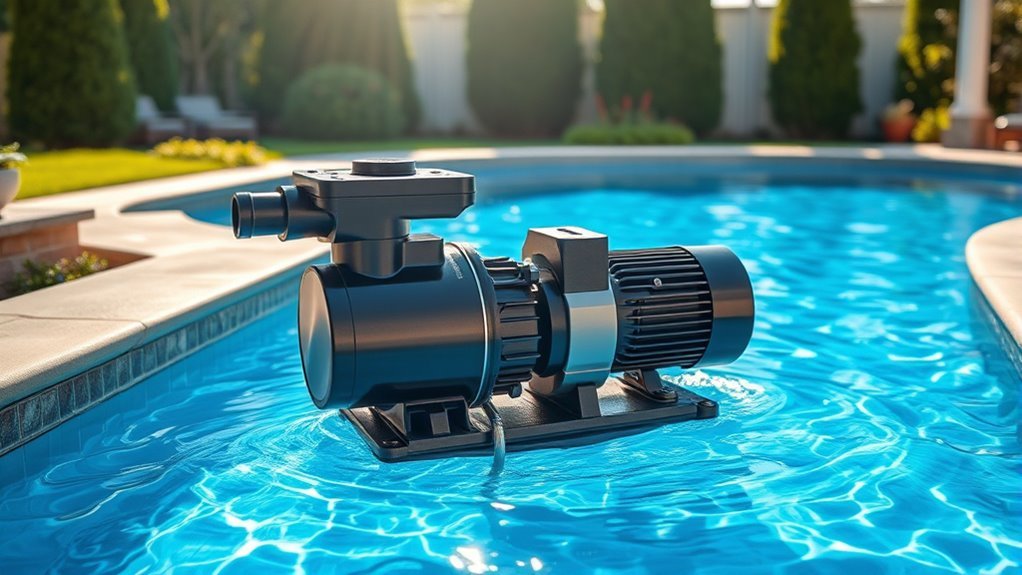
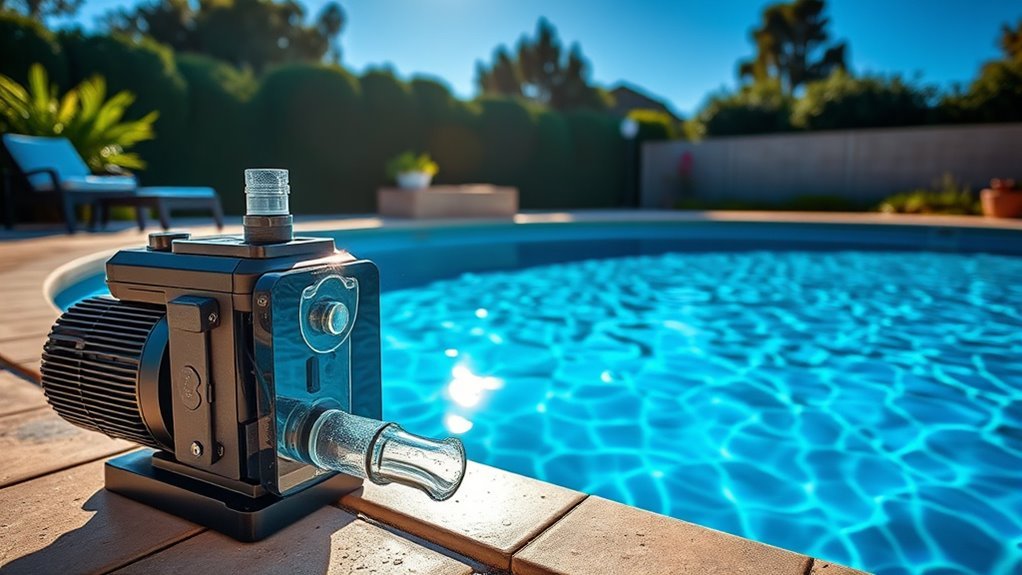
Although it might seem like just a simple motor, your pool pump plays a crucial role in keeping your pool clean and safe. It circulates water through the filtration system, removing debris, dirt, and contaminants.
Without the pump running, water becomes stagnant, encouraging algae growth and bacteria buildup.
Without the pump, water stagnates, fostering algae growth and harmful bacteria buildup in your pool.
You rely on it to push water through the filter, heater, and chemical feeders, ensuring even distribution of chemicals that maintain water balance. The pump also helps prevent cloudy water and unpleasant odors by keeping everything moving.
Understanding this role helps you appreciate why consistent operation is necessary. When your pump runs effectively, it supports a healthy swimming environment, letting you enjoy clear, fresh water every time you immerse yourself.
Factors That Affect Pump Runtime
Knowing how your pool pump works sets the stage for understanding how long you should run it each day. Several factors influence pump runtime.
First, your pool’s size and volume determine how much water needs circulation. Larger pools require longer pump operation.
Second, climate and weather affect water temperature and debris accumulation, which can increase cleaning needs.
Third, the type of filtration system you have plays a role; some filters need more flow time.
Fourth, your pool usage impacts runtime. More swimmers mean more contaminants to filter out.
Finally, energy costs and local utility rates might influence how long you want to run the pump to balance cleanliness with efficiency.
Considering these factors helps you optimize pump runtime without wasting energy.
Calculating Your Pool’s Turnover Rate
Because maintaining clean and clear water depends on proper circulation, you need to understand your pool’s turnover rate. The turnover rate is the time it takes for your pump to circulate all the water in your pool once.
To calculate it, start by determining your pool’s volume in gallons. Then, find out your pump’s flow rate, usually measured in gallons per minute (GPM). Divide the total pool volume by the flow rate multiplied by 60 (minutes per hour).
For example, if your pool holds 12,000 gallons and your pump flows at 60 GPM, the turnover time is 12,000 ÷ (60 × 60) = 3.33 hours.
Knowing this helps you set your pump to run long enough to clean the entire pool water effectively.
Recommended Daily Pump Hours for Different Pool Sizes
When you determine your pool’s turnover rate, you can better decide how many hours to run your pump each day. The size of your pool directly impacts the pump runtime needed to keep your water clean and balanced.
Here’s a quick guide to daily pump hours based on pool size:
- Small pools (up to 10,000 gallons): Run your pump 6 to 8 hours daily to ensure full water circulation.
- Medium pools (10,000 to 20,000 gallons): Aim for 8 to 10 hours daily for proper filtration.
- Large pools (over 20,000 gallons): Target 10 to 12 hours daily to maintain water clarity and hygiene.
Adjust these times depending on usage and weather, but this framework helps you optimize pump efficiency.
How Water Temperature Influences Pump Operation
Although pool pump runtimes often depend on size and usage, water temperature plays a crucial role in how efficiently your pump should operate.
When water is warmer, algae and bacteria grow faster, so your pump needs to run longer to keep the water clean and balanced.
Cooler water slows down this growth, allowing you to reduce pump time without compromising water quality.
Additionally, colder water can make your pump work harder to circulate and filter effectively, especially if your pool has a heater.
You should monitor your pool’s temperature regularly and adjust your pump schedule accordingly.
Energy-Efficient Pump Scheduling Tips
To save on energy costs while keeping your pool clean, you’ll want to schedule your pump to run during off-peak hours and avoid unnecessarily long runtimes. Doing this not only cuts your electricity bill but also extends your pump’s lifespan.
Schedule your pool pump during off-peak hours to save energy and extend its lifespan.
Here are three energy-efficient scheduling tips:
- Use a Timer: Set your pump to operate during early morning or late evening when electricity rates are lower.
- Split Run Times: Instead of running your pump continuously, divide the total runtime into two shorter sessions to improve filtration without wasting energy.
- Adjust for Usage: Run your pump longer on days with heavy pool use or after storms, and reduce runtime when the pool is idle.
Following these steps helps you maintain water quality while minimizing energy waste.
Impact of Pump Type on Runtime Requirements
Understanding how long to run your pool pump depends considerably on the type of pump you have. Different pumps require varying runtimes to maintain water clarity and efficiency.
Single-speed pumps usually run longer because they operate at a constant, high speed. Variable-speed pumps, on the other hand, allow you to adjust flow rates and can run efficiently for shorter periods. Two-speed pumps offer a balance, running longer on low speed and shorter on high speed for cleaning.
| Pump Type | Typical Runtime |
|---|---|
| Single-Speed | 8-12 hours daily |
| Two-Speed | 4-8 hours (low speed) |
| Variable-Speed | 3-6 hours (adjustable) |
Choose your pump type wisely to optimize runtime and save on energy costs.
Signs You’re Running Your Pump Too Little or Too Much
If you don’t run your pool pump enough, your water can become cloudy and invite algae growth. On the other hand, running it too much wastes energy and wears out your equipment faster.
Running your pool pump too little clouds water, too much wastes energy and damages equipment.
Here are three signs to help you find the right balance:
- Cloudy or green water: Indicates insufficient filtration time, allowing debris and algae to accumulate.
- High energy bills: Suggests your pump runs longer than necessary, increasing costs without added benefits.
- Pump overheating or noise: Means the pump is overworked, risking damage and costly repairs.
Adjusting Pump Time Based on Pool Usage
Balancing your pump’s run time depends heavily on how often and intensively you use your pool. If you swim daily or host pool parties, you’ll need longer pump times to maintain cleanliness and chemical balance. Conversely, infrequent use means shorter run times suffice.
| Usage Frequency | Typical Pump Runtime | Reason |
|---|---|---|
| Daily swimmers | 10-12 hours | High debris and chemical load |
| Weekend users | 6-8 hours | Moderate pool activity |
| Occasional swimmers | 4-6 hours | Lower contamination |
| Pool parties | 12-14 hours | Increased dirt and bacteria |
| No use (off-season) | 2-4 hours | Minimal filtration needed |
Adjust your pump time based on activity to keep your water clean without wasting energy.
Using Timers and Automation to Optimize Pump Runtime
When you set timers or use automation for your pool pump, you can guarantee it runs exactly when needed without constant manual adjustments. This approach not only saves energy but also keeps your pool cleaner by maintaining consistent circulation.
Automation lets you tailor pump runtime to your lifestyle and local conditions effortlessly.
Automation customizes pump operation to fit your daily routine and environmental factors with ease.
Here’s how to optimize pump runtime with timers and automation:
- Schedule Off-Peak Hours: Set your pump to run during off-peak electricity times to reduce energy costs.
- Adjust for Weather: Use automation features that respond to temperature or rain, adjusting runtime accordingly.
- Sync with Pool Usage: Program your pump to operate before and after heavy pool use to maintain water clarity.
Using these strategies helps you balance efficiency, cost, and pool health seamlessly.
Frequently Asked Questions
How Often Should I Clean My Pool Pump Filter?
You should clean your pool pump filter at least once a month. However, if your pool gets heavy use or debris, you might need to clean it more often to keep your pump running efficiently.
Can a Dirty Pump Affect Water Clarity?
Yes, a dirty pump can definitely affect water clarity. When your pump’s filter gets clogged, it can’t properly circulate or clean the water, leading to cloudy or murky pool conditions that you don’t want to deal with.
What Maintenance Does a Pool Pump Require Annually?
You’ll want to completely overhaul your pool pump annually. Clean or replace the cartridge, lubricate O-rings, check for leaks, inspect motor bearings, and guarantee electrical connections are tight. Neglecting this turns your pump into a rusty relic!
Are There Safety Concerns When Operating Pool Pumps?
Yes, you should never operate your pool pump without proper grounding and a GFCI outlet to prevent electrical shocks.
Also, avoid touching the pump when wet, and keep the area clear to prevent accidents or damage.
How Do Weather Conditions Impact Pool Pump Performance?
Imagine a hot summer day. Your pool pump works harder because algae grow faster in warm weather, demanding more filtration.
You’ll notice in colder seasons, it runs less, as water stays clearer and circulation slows naturally.
Conclusion
By running your pool pump just the right amount, you keep your water clean without wasting energy. For example, imagine Sarah, who reduced her pump time from 12 to 8 hours daily after calculating her pool’s turnover rate. Not only did her water stay crystal clear, but her energy bills dropped too.
With a little adjustment and smart automation, you can enjoy a sparkling pool and save money—it’s all about finding the perfect balance for your setup. Understanding how long to run your swimming pool pump is key to efficient pool maintenance and energy savings.