5 Factors Affecting How Much to Install an Inground Swimming Pool
When installing an inground swimming pool, several key factors affect how much you will need to invest. Understanding these factors is crucial for budgeting and planning your dream backyard oasis.
The pool’s size and shape directly impact excavation costs and the amount of materials required. Larger or uniquely shaped pools typically demand more labor and resources.
Your choice of construction materials and finishes not only influences the pool’s durability but also its overall price. High-end materials often come with a higher upfront cost but can offer long-term benefits.
Site preparation, including clearing vegetation and grading the land, can add complexity and expense to the project. The condition of your yard plays a significant role in determining preparation needs.
Additional features such as lighting, heating systems, and safety fencing also increase the total cost. These enhancements improve functionality and safety but require extra investment.
Finally, permits and local regulations might involve fees or require specific pool designs. Navigating these requirements is essential to ensure your pool complies with local laws.
By understanding these five factors, you can budget wisely and choose the best options to suit your space and personal needs.
Pool Size and Shape
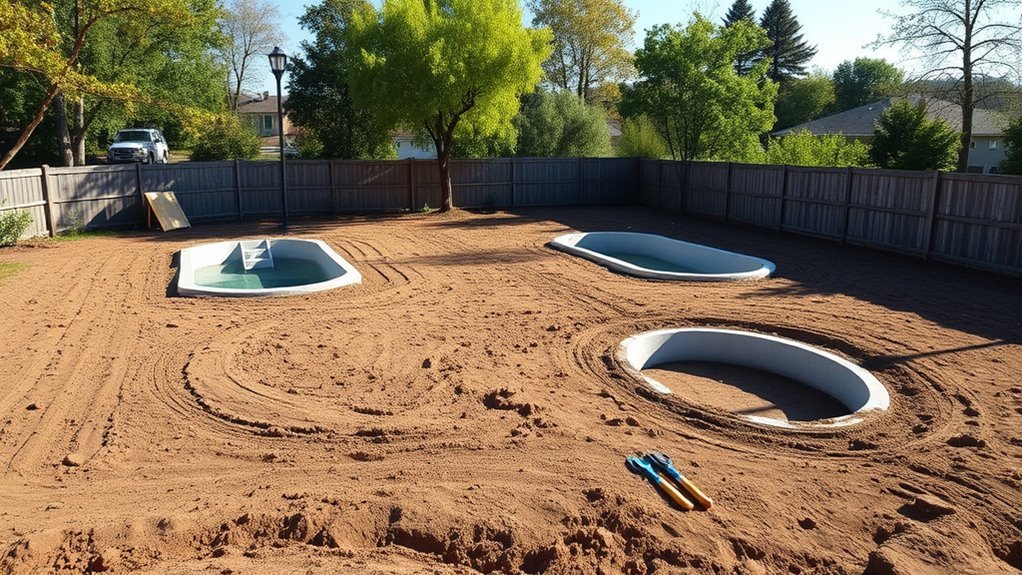
Because your pool’s size and shape directly impact the materials and labor required, they play a major role in the overall installation cost. When you choose a larger pool, you’ll need more excavation, concrete, and plumbing, which naturally raises expenses.
Similarly, complex shapes with curves or multiple levels demand extra skill and time to construct, increasing labor costs. Straightforward rectangular pools are usually more affordable since they’re easier to design and build.
You’ll also want to contemplate how the pool’s size fits your yard; a bigger pool might require additional landscaping work to accommodate it.
Construction Materials and Finishes
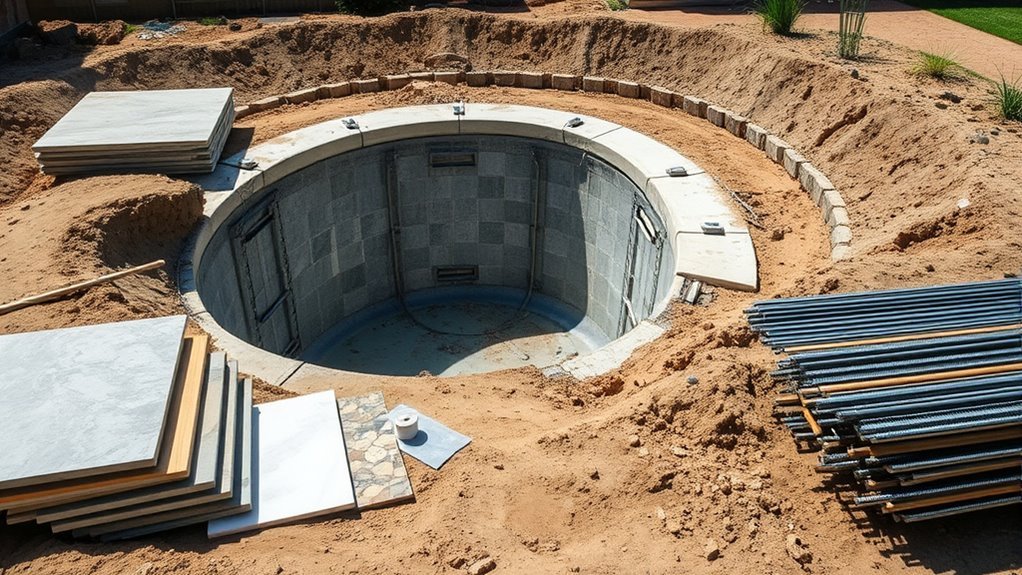
Once you’ve settled on your pool’s size and shape, the next step is choosing the construction materials and finishes. Your choices here directly impact durability, maintenance, and overall cost. Concrete, vinyl, and fiberglass are common materials, each with distinct benefits.
Finishes like plaster, tile, or aggregate affect appearance and longevity. Picking the right combo fits your budget and style.
| Material | Key Advantages |
|---|---|
| Concrete | Highly durable, customizable |
| Fiberglass | Low maintenance, quick install |
| Vinyl | Cost-effective, smooth surface |
| Plaster | Classic look, affordable finish |
| Tile | Elegant, long-lasting finish |
Consider how each option influences installation time and upkeep to make a smart investment.
Site Preparation and Excavation
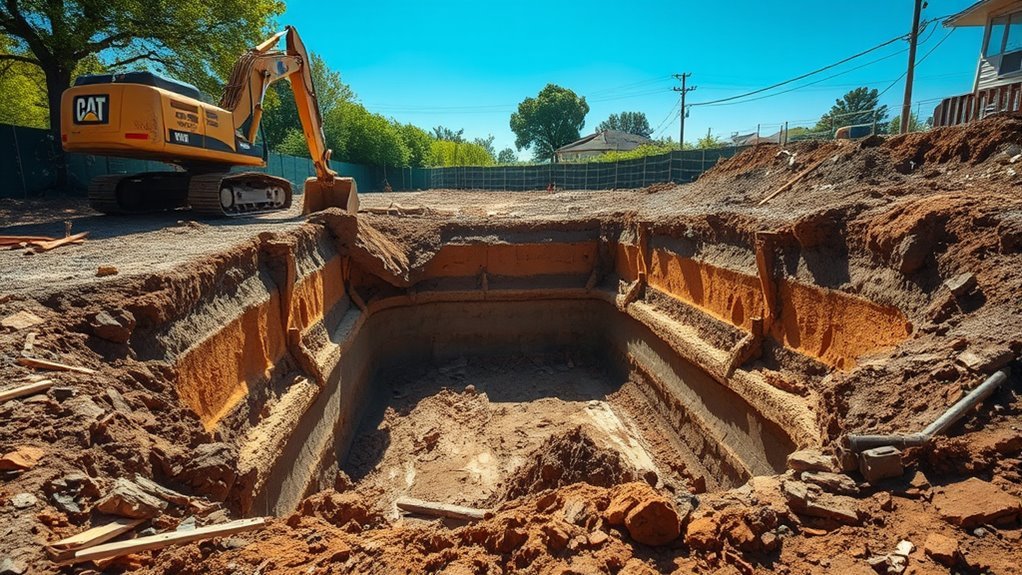
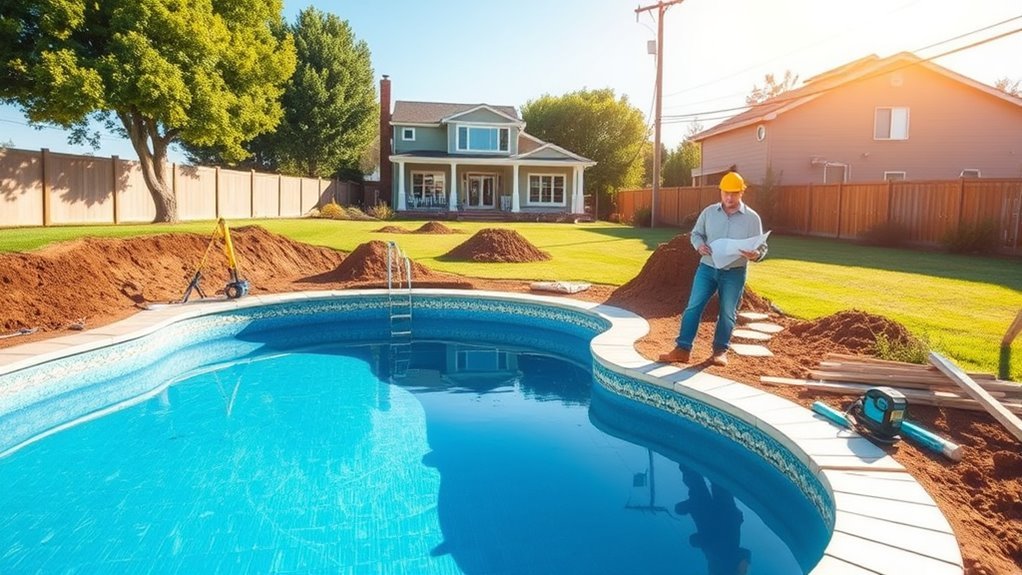
Before the actual digging begins, you’ll need to prepare the site carefully to guarantee a smooth excavation process. First, clear the area of trees, rocks, and debris to avoid delays. Check for underground utilities to prevent costly damages and interruptions.
Your soil type also plays a role; sandy or clay-heavy soils might require extra work or reinforcement.
Next, verify proper grading to manage water drainage and avoid future pool damage.
The size and shape of your pool affect how much excavation is needed. Larger or custom designs mean more digging and higher costs.
Finally, consider access for heavy machinery; tight spaces can complicate excavation, increasing labor time and expenses.
Proper site preparation sets the foundation for a successful pool installation and keeps your budget manageable.
Additional Features and Accessories
Although the basic structure forms the heart of your inground pool, adding features and accessories can substantially enhance its functionality and appeal. You might consider installing lighting to extend swimming hours, or a heating system for year-round comfort.
Enhance your inground pool’s appeal with lighting and heating for extended enjoyment and comfort.
Water features like fountains or waterfalls add aesthetic value and soothing sounds.
Safety accessories, such as pool covers and fences, protect your family and comply with safety standards.
Automated cleaning systems reduce maintenance effort, while built-in seating or tanning ledges increase relaxation options.
Keep in mind that each additional feature impacts your overall cost, so prioritize what suits your lifestyle and budget.
Permits, Inspections, and Local Regulations
When planning your inground pool installation, you’ll need to navigate permits, inspections, and local regulations that guarantee safety and compliance. Before you break ground, check with your city or county building department to find out what permits are required.
These often include zoning approval, building permits, and electrical inspections. Failing to secure proper permits can lead to fines or even having to remove the pool.
Inspections during and after construction ensure your pool meets safety codes, such as fencing and barrier requirements to prevent accidents.
Local regulations may also limit pool size, placement, or require specific safety features. Staying informed and compliant not only avoids legal issues but also protects your investment and ensures a safe environment for everyone.
Frequently Asked Questions
How Long Does It Take to Build an Inground Pool?
It usually takes you about 6 to 12 weeks to build an inground pool. Timing depends on factors like pool size, materials, weather, and permits.
You’ll want to plan for possible delays too.
What Is the Average Maintenance Cost for an Inground Pool?
Like a knight tending his armor, you’ll spend about $1,200 to $1,800 annually on your pool’s upkeep. That covers chemicals, cleaning, and energy costs, keeping your waters sparkling and ready for your next swim.
Can I Install a Pool Myself or Hire a Professional?
You can install a pool yourself if you have strong DIY skills and time, but hiring a professional guarantees proper installation, safety, and saves stress. It’s often worth the investment for peace of mind and quality.
How Does Climate Affect Pool Installation and Usage?
Just like a knight in shining armor adapts to battles, you’ll find climate affects your pool’s installation and usage. Freezing winters demand sturdy covers, while hot summers let you swim daily, influencing maintenance and costs.
What Financing Options Are Available for Pool Installation?
You can finance your pool installation through personal loans, home equity lines of credit, or specialized pool financing programs.
Many companies offer payment plans, so you can spread out the cost without paying everything upfront.
Conclusion
Choosing how much to invest in your inground pool is like painting a masterpiece—you need the right size, materials, and site prep to create something beautiful and lasting. Don’t forget those extra features that add flair, and always check permits to avoid surprises.
By considering these five factors carefully, you’ll make a smart decision that fits your budget and turns your backyard into a revitalizing oasis you’ll enjoy for years. Understanding the key elements affecting inground pool cost will help you plan effectively and achieve the perfect outdoor retreat.