7 Easy Steps to Close an Above Ground Swimming Pool for Winter
To close your above ground swimming pool for winter, start by draining water below the skimmer and cleaning the pool thoroughly. Proper winter pool maintenance begins with balancing the water chemistry, keeping pH, alkalinity, and hardness within the recommended range.
Lower the water level to prevent freeze damage during the cold months. Then, add winterizing chemicals like algaecide and shock treatment to protect the water.
Remove and store accessories after drying them completely. Protect your equipment by draining and covering it to avoid damage.
Finally, secure a heavy-duty winter cover tightly over the pool. Follow these steps to keep your pool safe until spring—and discover tips to make reopening easier.
Drain and Clean the Pool
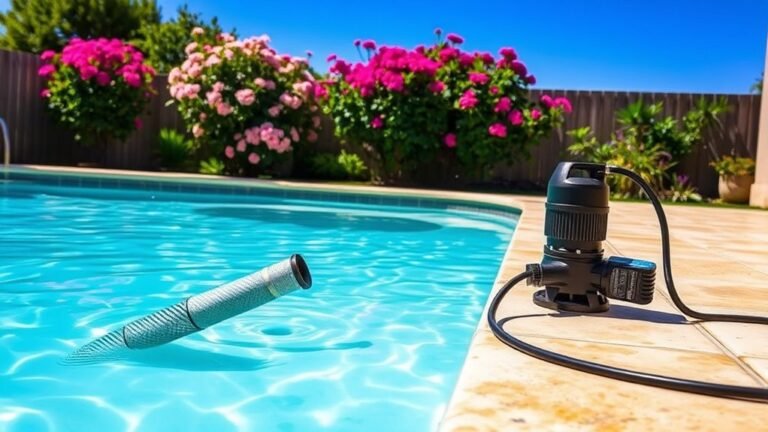
How do you prepare your pool for winter? Start by draining the water to a safe level, usually below the skimmer and return lines, to prevent freezing damage. Use a submersible pump or your pool’s drain valve for efficient water removal.
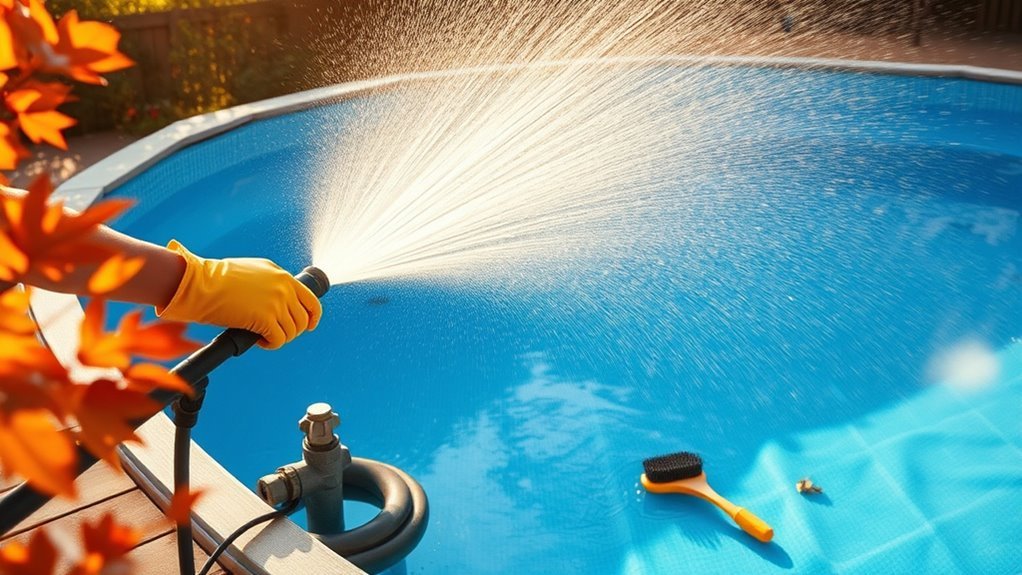
Once drained, scrub the pool walls and floor to remove dirt, algae, and debris. Use a pool brush and a mild cleaning solution designed for pools to avoid damaging the surface. Rinse thoroughly to wash away any residue.
Don’t forget to clean out the skimmer and pump baskets, ensuring no leaves or debris remain. This step prevents clogs and damage during the off-season.
Balance the Water Chemistry
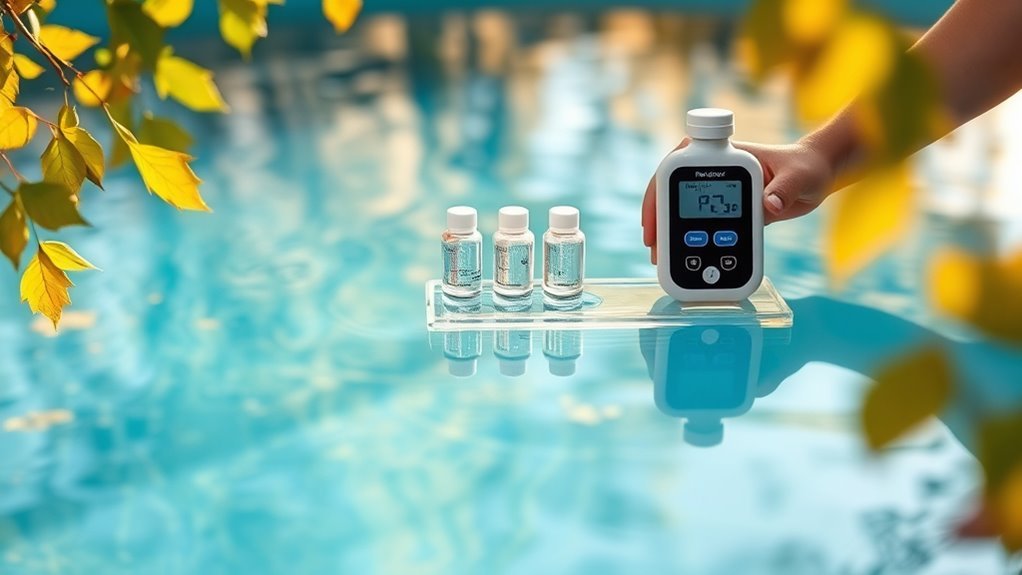
Before closing your pool for winter, you’ll want to balance the water chemistry to prevent corrosion, scaling, and algae growth during the cold months. Start by testing the water’s pH, alkalinity, and calcium hardness with a reliable test kit.
Balance your pool water chemistry before winter to prevent corrosion, scaling, and algae growth.
Aim for a pH between 7.2 and 7.6, alkalinity around 80-120 ppm, and calcium hardness between 180-220 ppm.
Adjust these levels using appropriate chemicals: add pH increaser or decreaser as needed, alkalinity increaser to raise total alkalinity, and calcium chloride to boost hardness.
Also, shock the pool with a chlorine shock treatment to kill any remaining bacteria or algae.
Properly balanced water ensures your pool equipment stays protected and makes reopening in spring much easier.
Lower the Water Level
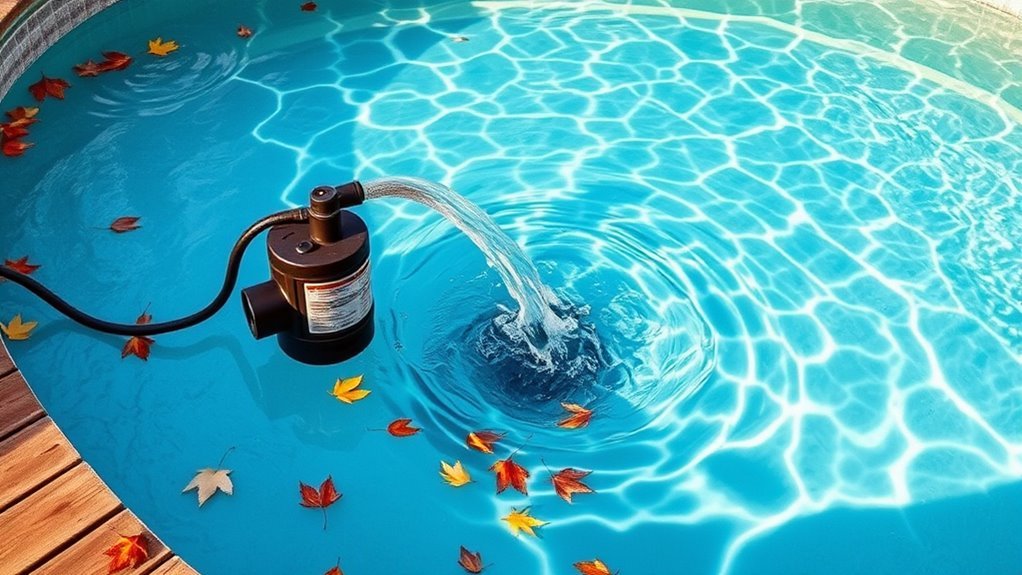
Lowering the water level is a crucial step to protect your above ground pool from winter damage. It prevents water from freezing and expanding, which can harm the pool walls and liner.
Here’s how to do it effectively:
- Check the Manufacturer’s Guidelines: Lower the water to the recommended level, usually 4-6 inches below the skimmer or return jets, to avoid damage.
- Use a Submersible Pump or Drain Valve: Efficiently remove water without causing disruption to the pool structure.
- Monitor Weather Conditions: Don’t lower the water too early if freezing temperatures aren’t expected yet; timing matters to avoid unnecessary exposure.
Add Winterizing Chemicals
Once you’ve adjusted the water level, you’ll want to add winterizing chemicals to keep your pool water clean and balanced throughout the cold months. Start by shocking the pool with a chlorine shock treatment to eliminate bacteria and algae.
Begin winterizing by adjusting water levels and shocking your pool to remove bacteria and algae.
Next, add a winter algaecide to prevent algae growth while the pool is dormant. Don’t forget to include a metal sequestrant if your water has metals that could stain or discolor surfaces.
Finally, add a pool enzyme treatment to break down organic contaminants and reduce scum lines. Make sure to follow the product instructions carefully and distribute the chemicals evenly around the pool.
Properly treated water helps protect your pool’s surfaces and makes reopening in spring much easier.
Remove and Store Pool Accessories
How should you handle your pool accessories as winter approaches? Removing and storing them properly is vital to keep everything in good shape for next season. First, verify you clean each item thoroughly to prevent mold and mildew.
Next, dry everything completely to avoid any damage caused by moisture during storage. Finally, store the accessories in a cool, dry place where they won’t be exposed to extreme temperatures or pests.
- Clean all items: Remove dirt, leaves, and algae from floats, toys, and covers.
- Dry thoroughly: Use towels or air dry to eliminate moisture.
- Store appropriately: Use bins or shelves in a garage or shed to keep accessories safe and organized.
Following these steps will extend the life of your pool gear.
Protect the Pool Equipment
After you’ve safely stored your pool accessories, it’s time to turn your attention to protecting the pool equipment.
First, drain all the water from the pump, filter, heater, and any other equipment to prevent freezing damage.
Use a shop vacuum or blow out the lines with compressed air to clear water from the plumbing.
Clear water from plumbing lines using a shop vacuum or compressed air to prevent freeze damage.
Remove and store the pool’s filter cartridges or clean and dry sand filters according to the manufacturer’s instructions.
Disconnect electrical connections and cover the equipment with a waterproof, breathable cover to shield it from snow and ice.
Elevate equipment off the ground if possible to avoid moisture buildup.
Taking these steps guarantees your pool system stays in good shape, saving you costly repairs and hassle when you reopen your pool next season.
Cover the Pool Securely
Even if you’ve prepped your pool thoroughly, it won’t stay protected without a secure cover. A properly secured cover keeps debris out, prevents water accumulation, and protects the pool from harsh winter weather.
Here’s how to cover your pool correctly:
- Choose the Right Cover: Use a heavy-duty winter cover designed for above ground pools to ensure durability and a tight fit.
- Position the Cover Evenly: Stretch the cover over the pool, making sure it’s centered and fully covers the entire surface, including the edges.
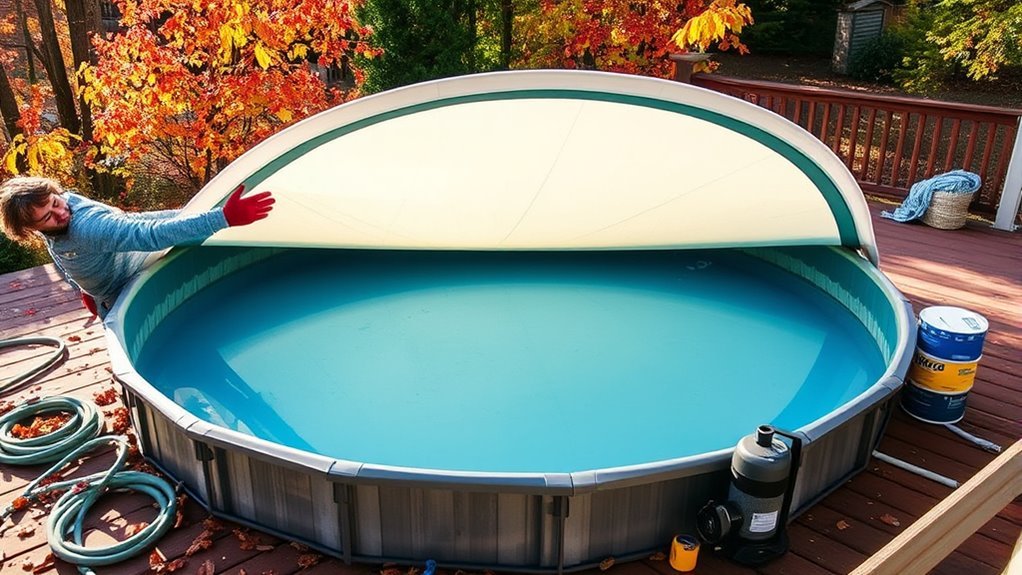
- Secure the Cover Firmly: Use a cover cable or winch, water bags, or tie-down straps to keep the cover tight and prevent it from blowing off during storms.
Following these steps helps maintain your pool’s condition throughout winter.
Frequently Asked Questions
When Is the Best Time to Start Closing an Above Ground Pool?
You should start closing your above ground pool when temperatures consistently drop below 65°F, usually late September to early October. This helps prevent damage and keeps the water clean throughout winter.
Don’t wait too long!
Can I Use a Pool Cover Pump During Winter?
Yes, you can use a pool cover pump during winter. It removes excess water, prevents damage, and keeps your cover secure.
Just make sure you monitor it regularly to avoid freezing or overflows.
How Do I Prevent Algae Growth Under the Cover?
You can prevent algae growth under the cover by balancing your pool’s chemicals, especially chlorine and pH levels, then shocking the pool before closing.
Also, use an algaecide and make sure the water stays clean and clear.
Should I Disconnect the Pool Filter During Winter?
Think of your pool filter as a guardian. Yes, you should disconnect it to let it rest through winter’s sleep.
This prevents damage and saves energy while your pool quietly rejuvenates beneath its icy blanket.
How Do I Safely Store Pool Chemicals Over Winter?
You should store pool chemicals in a cool, dry, and well-ventilated area away from direct sunlight. Keep them in their original containers, tightly sealed, and out of reach of children or pets to guarantee safety over winter.
Conclusion
Closing your above ground pool for winter doesn’t have to be a headache. By following these seven easy steps, you’re wrapping your pool in a cozy blanket, protecting it from the cold months ahead.
Taking these simple actions now means you’ll dive back into crystal-clear water come spring. So, don’t let winter catch you off guard—give your pool the care it deserves.
Enjoy hassle-free swimming season after season by properly closing your above ground pool for winter. With the right preparation, your pool will be ready and waiting for you when warm weather returns.