How to Find a Swimming Pool Leak in 7 Easy Steps
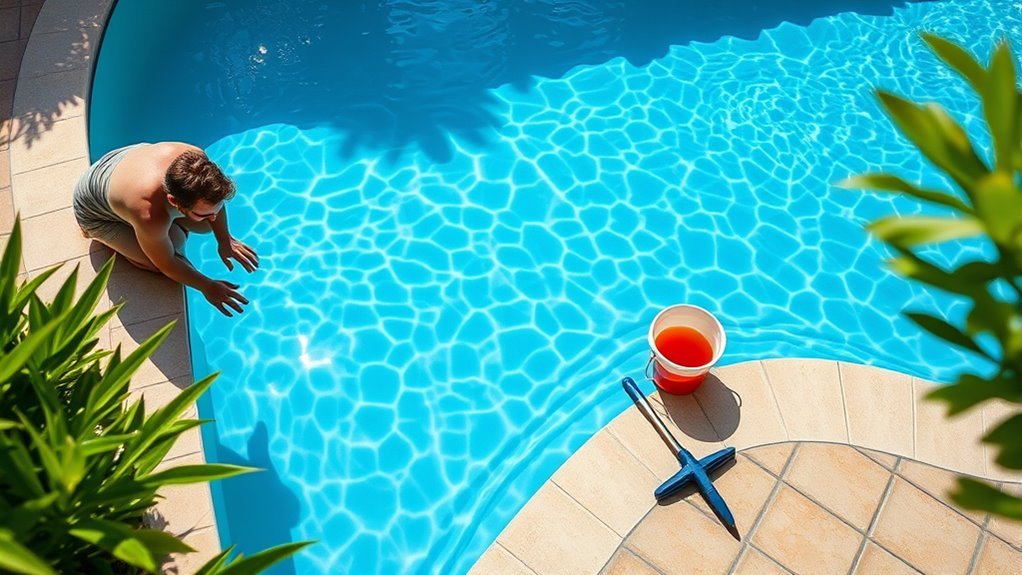
Start by checking your pool’s water level daily, comparing it to a bucket filled with water to rule out evaporation. This simple step is crucial in identifying a swimming pool leak early.
Next, inspect your pump, filter, and pipes carefully for any drips or cracks. These components are common sources of leaks and should be examined thoroughly.
Perform the bucket test by matching water levels inside and outside a bucket placed in the pool. This helps confirm whether water loss is due to evaporation or an actual leak.
Walk the pool shell to spot cracks and look around for wet, damp areas outside the pool. These signs often indicate hidden leaks that need attention.
Test pool tiles and use dye to pinpoint leaks more accurately. Dye testing is an effective method to reveal small or hard-to-see leaks.
Keep exploring these steps to uncover more easy tips for finding leaks and maintaining your pool’s integrity. By following this guide, you can quickly identify and address swimming pool leaks before they cause major issues.
Check the Water Level Consistently
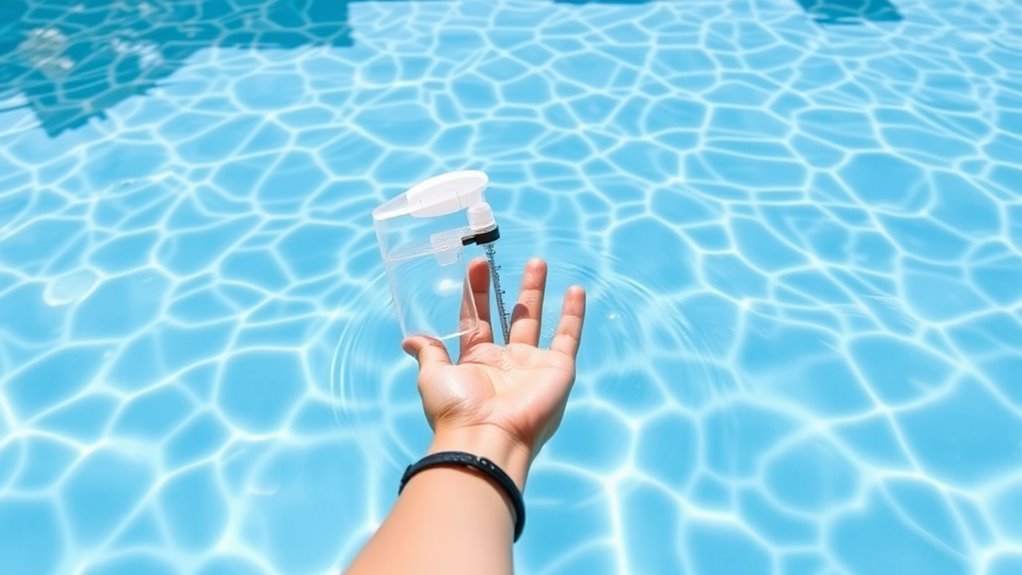
Before you plunge into more complex methods, start by checking your pool’s water level consistently. You want to measure it daily, preferably at the same time, to spot any unusual drops.
Use a marked stick or a water level indicator to keep track accurately. Remember, evaporation can cause minor water loss, so compare your pool’s water drop to a nearby bucket filled with water.
If the pool’s water level falls faster than the bucket’s, you likely have a leak. Keep in mind weather changes, like heavy wind or heat, can affect evaporation rates.
Inspect the Pool Equipment and Plumbing
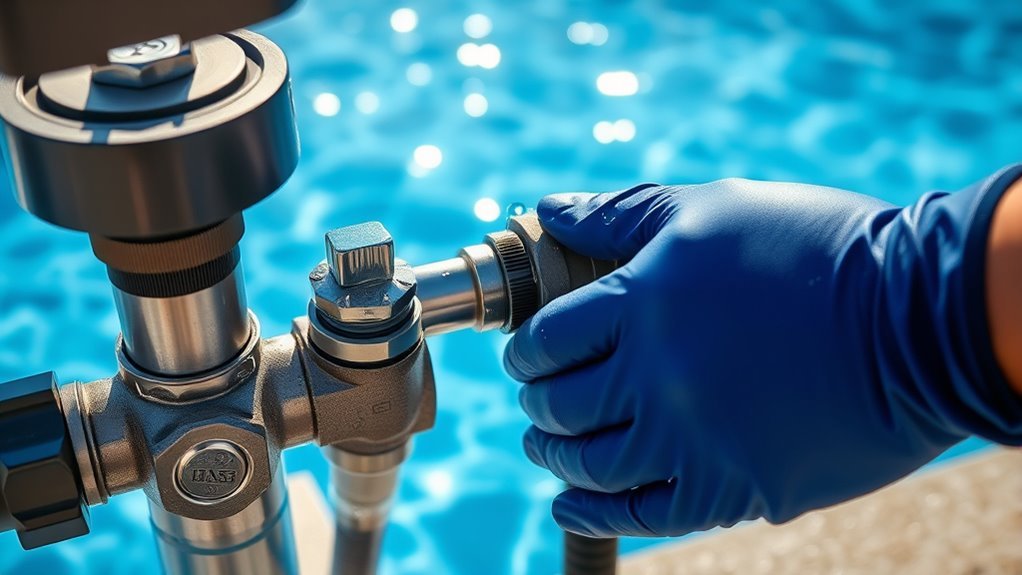
While leaks can sometimes be hidden beneath the water’s surface, your pool equipment and plumbing are common sources you shouldn’t overlook. Start by closely inspecting the pump, filter, heater, and chlorinator for any visible cracks or moisture.
Check all connections and fittings for drips or corrosion, which often signal leaks. Don’t forget to examine the valves and pipes leading to and from the equipment. Small pinhole leaks can cause significant water loss.
If you have a pressure gauge, monitor it for unusual drops that might indicate a leak. Running the equipment while observing these components can help you pinpoint where water escapes.
Catching leaks early in your pool’s plumbing system prevents costly repairs and preserves water efficiency.
Perform the Bucket Test
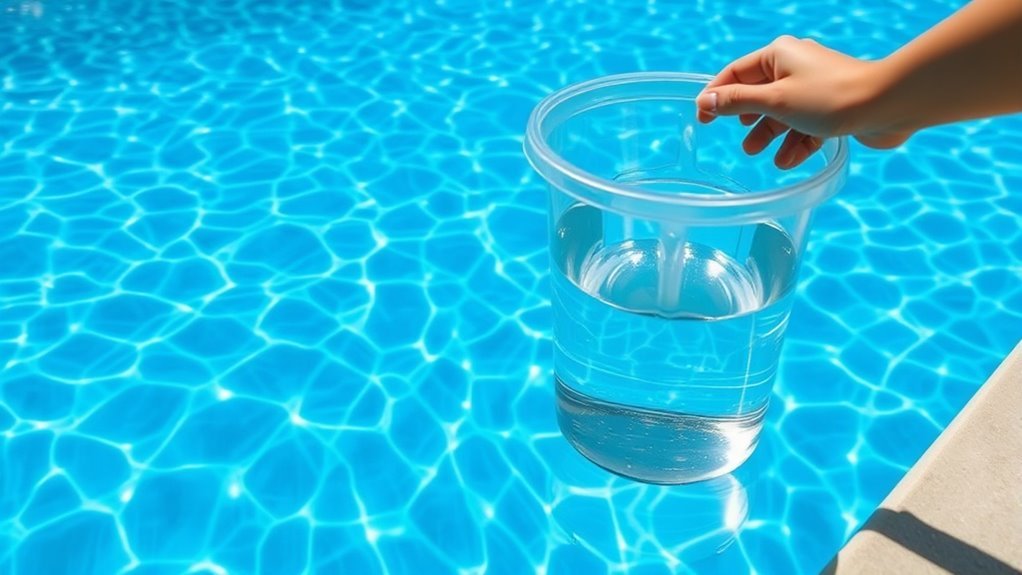
Since pool water can naturally evaporate, you’ll want to perform the bucket test to determine if your pool is actually leaking. Start by filling a bucket with pool water to about an inch from the top.
Place the bucket on the first or second step of your pool, making sure the water inside the bucket matches the pool water level outside. Mark both water levels with a waterproof marker.
After 24 hours, compare the water levels inside the bucket and the pool. If the pool water level has dropped more than the bucket’s, you likely have a leak.
If both levels have dropped equally, the water loss is probably due to evaporation. This simple test helps you avoid unnecessary repairs and confirms whether you need to keep searching for a leak.
Examine the Pool Shell for Cracks and Damage
Even if your bucket test shows a leak, you’ll need to closely inspect the pool shell for cracks and damage to pinpoint the problem. Walk around the pool’s edge and carefully examine the surface, especially in high-stress areas like steps, corners, and near fittings.
Use a flashlight to spot hairline cracks or chips that may be hidden by dirt or algae.
Here’s a quick checklist to guide your inspection:
| Area to Inspect | What to Look For |
|---|---|
| Pool Walls | Cracks, chips, surface peeling |
| Steps & Corners | Structural cracks, loose tiles |
| Near Fittings | Gaps, cracks around seals |
| Pool Floor | Uneven spots, cracks |
Finding damage early helps you decide if repairs or professional help are necessary.
Look for Wet Spots and Areas of Excessive Moisture
When you suspect a leak, closely check the ground around your pool for wet spots or areas with excessive moisture. These signs often indicate water escaping from the pool and saturating the soil nearby.
Walk the perimeter slowly, paying attention to unusually damp patches, soggy soil, or even lush vegetation thriving where it shouldn’t. Don’t forget to inspect areas near pool equipment, as leaks can cause puddles or dampness there too.
Use your hands to feel the ground if needed. Sometimes moisture isn’t visible but can be detected by touch. Identifying these wet spots helps narrow down the potential leak location, making your repair efforts more efficient.
Test the Pool Tiles and Gaps for Leaks
To pinpoint leaks around your pool, you’ll want to carefully examine the tiles and the gaps between them. Check for any loose, cracked, or missing tiles, as these can be entry points for water to escape.
Run your hand along the grout lines and feel for any crumbling or gaps. Small cracks often go unnoticed but can cause significant leaks over time.
Shine a flashlight at an angle to spot any wet areas or discoloration behind tiles. If you notice any soft spots or tiles that move under pressure, these are likely weak points.
Addressing these spots early can prevent water loss and costly repairs. Testing these areas methodically helps you narrow down where the leak might be hiding before moving on to more advanced detection methods.
Use Dye Testing to Identify Leak Locations
Although visual inspections can reveal obvious leaks, dye testing helps you detect hidden ones by showing exactly where water is escaping. To do this, you’ll need a dye test kit or food coloring. Close the pool’s circulation system and slowly release the dye near suspected leak areas.
The dye will flow toward the leak, making it easier to spot.
Focus on these common spots during dye testing:
- Cracks around pool lights or skimmers
- Gaps between tiles and pool shell
- Plumbing fittings and returns
- Areas where water seeps into cracks or seams
Frequently Asked Questions
How Often Should I Check for Leaks in My Swimming Pool?
You should check for leaks at least once a month, especially during heavy use or after storms. Regular inspections help you catch issues early, saving you money and preventing bigger damage down the line.
Can Pool Leaks Affect Water Chemistry and Maintenance Costs?
Leaks are like tiny thieves stealing water and balance. Yes, they mess with your pool’s chemistry, forcing you to add more chemicals and water.
This ramps up maintenance costs and turns upkeep into a costly, ongoing battle.
What Tools Do Professionals Use to Detect Pool Leaks?
Professionals use tools like electronic leak detectors, pressure testing kits, dye testers, and ultrasonic listening devices. You’ll want these to accurately pinpoint leaks without guesswork, saving time and preventing costly water loss or damage.
Are There Any Health Risks Associated With Pool Leaks?
You might not realize it, but yes, pool leaks can cause health risks. They can lead to mold growth and water contamination, which invite bacteria and illnesses.
How Much Does It Typically Cost to Repair a Pool Leak?
You’ll typically spend between $200 and $1,500 to repair a pool leak, depending on the leak’s location and severity. Small leaks cost less, but extensive repairs or underground leaks can get pricey quickly.
Conclusion
Finding a swimming pool leak can feel like chasing a slippery shadow, but with these seven easy steps, you’ll shine a light on the hidden drip. Keep a keen eye on your water’s dance, follow the clues from your equipment to the tiniest crack, and use dye like a detective’s magnifying glass.
Soon, you’ll plug that leak and restore your pool’s peaceful ripple. This will keep your oasis crystal clear and ready for endless enjoyment. By following these simple steps, you can quickly and effectively find a swimming pool leak and maintain the perfect swimming environment.