How to Drain a Swimming Pool in 3 Easy Steps
To drain your swimming pool in three easy steps, first gather your essential equipment such as a submersible pump, garden hose, and gloves. Removing any covers or accessories beforehand will make the process smoother. Proper preparation is key to safe and efficient pool draining.
Next, choose the best draining method based on your pool size and local regulations. Using a pump is the fastest way to drain your pool, but gravity drainage can be effective as well. Make sure to follow local guidelines to avoid any issues.
Finally, monitor the draining process closely to prevent damage to your pool structure. Clear any debris that accumulates during draining, and turn off all equipment once the pool is empty. Keep reading for helpful tips on safe draining and post-drain care.
Prepare Your Pool and Equipment

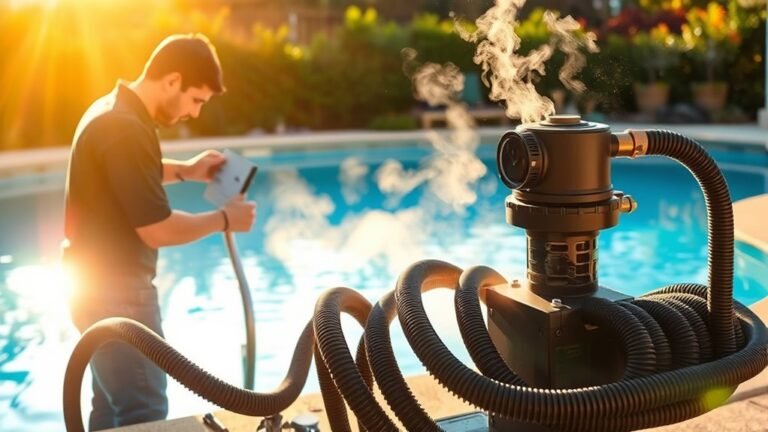
Before you begin draining your pool, make certain you gather all the necessary equipment and clear the area around the pool. You’ll need a submersible pump or a pool vacuum with a drainage hose, a garden hose for directing water away, and protective gloves.
Remove any pool covers, skimmers, and ladders to prevent damage or obstruction. Check your pump and hoses for leaks or cracks to avoid interruptions. Also, test your power source to confirm everything runs smoothly.
Remove covers, skimmers, and ladders, then inspect pump and hoses for leaks before draining your pool.
Clear debris from the pool’s bottom to prevent clogging your pump. Finally, notify neighbors if water discharge impacts shared spaces.
Taking these steps helps you drain your pool efficiently and safely, avoiding common pitfalls that could slow down the process or cause damage.
Choose the Best Draining Method

With your pool and equipment ready, it’s time to decide how you’ll drain the water. You can choose between using a submersible pump, a manual pump, or letting gravity do the work with your pool’s main drain.
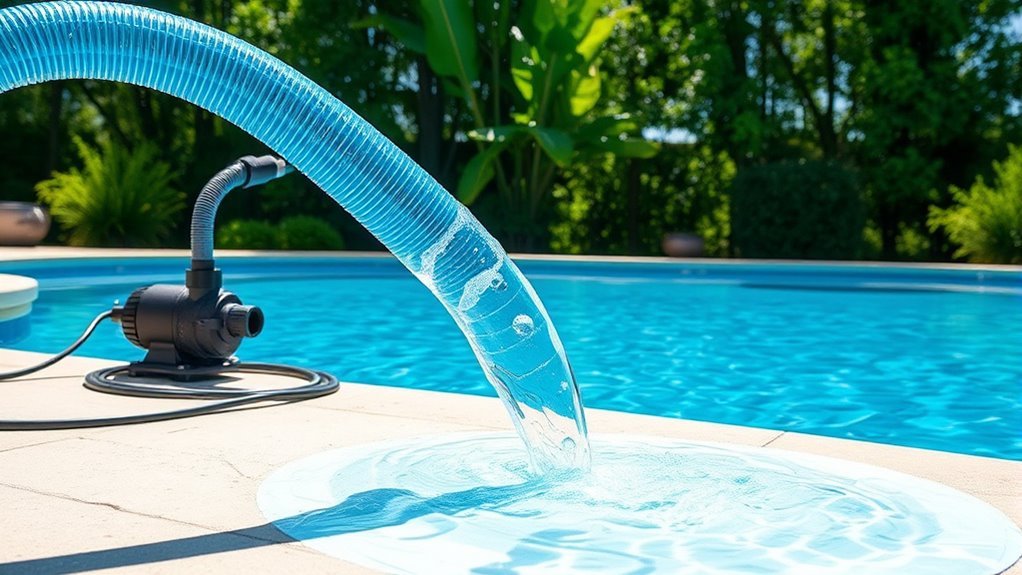
A submersible pump is fast and efficient, ideal if you want to empty the pool quickly.
Manual pumps are slower but useful if you don’t have electricity nearby.
Gravity draining is the simplest but can be slow and requires proper drainage access outside your yard.
Consider local regulations, as some areas restrict draining pool water into storm drains. Also, think about your pool’s size and the surrounding landscape to avoid flooding or water damage.
Pick the method that balances speed, convenience, and environmental safety for your situation.
Monitor and Complete the Draining Process
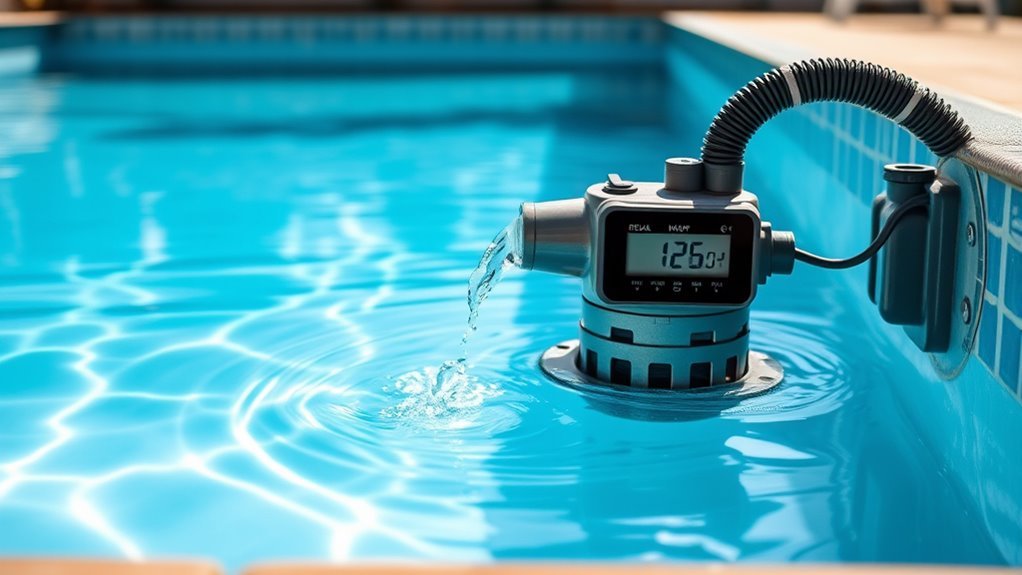
As you start draining your pool, keep a close eye on the water level and your equipment to catch any issues early. Check the pump and hoses regularly to verify they’re working correctly and not clogged or leaking.
If you notice any problems, pause the process and fix them before continuing. Monitor the water flow to avoid draining too quickly, which can damage your pool’s structure or overwhelm your drainage system.
As the water level drops, be cautious near the pool’s bottom to prevent debris buildup. Once the pool is fully drained, remove the pump promptly to avoid damage.
Finally, clean the pool thoroughly before refilling or performing maintenance, ensuring everything is ready for the next use.
Frequently Asked Questions
Can I Reuse Drained Pool Water for Irrigation?
Yes, you can reuse drained pool water for irrigation, but make sure to test and balance chemicals first. Avoid using water with high chlorine or salt levels to protect your plants and soil from damage.
Testing the water helps ensure it is safe for your garden. Balancing the chemicals prevents potential harm to your plants. Always take precautions to maintain healthy soil conditions.
Is It Safe to Drain Pool Water Into the Street?
You shouldn’t drain pool water into the street because it can clog storm drains and harm the environment. Instead, follow local regulations and discharge it onto your lawn or a designated area to prevent damage and pollution.
How Often Should I Drain My Swimming Pool?
You shouldn’t drain your pool often—imagine empty water shimmering under the sun, then refilling.
Typically, draining every 3-5 years works unless chemical imbalances or damage force earlier action.
Regular maintenance keeps water crystal clear.
What Chemicals Should I Add After Refilling the Pool?
You should add chlorine to sanitize, a pH balancer to keep water neutral, alkalinity increaser if needed, and stabilizer to protect chlorine from sunlight.
Test water regularly and adjust chemicals to maintain a safe, clear pool.
Can Draining a Pool Damage Its Structure?
Yes, draining your pool can damage its structure if done improperly. You should avoid fully emptying it, especially a concrete pool, because water pressure outside the shell can cause cracking or shifting.
Always consult a professional first.
Conclusion
Draining your pool doesn’t have to be a hassle if you follow these simple steps. Did you know that properly draining and maintaining your pool can extend its lifespan by up to 10 years?
By preparing your equipment, choosing the right method, and monitoring the process carefully, you’ll keep your pool in great shape for seasons to come. Just stay attentive, and you’ll have a smooth, efficient draining experience every time.
Remember, proper pool maintenance and correct draining techniques are key to ensuring your swimming pool remains clean, safe, and durable. Following these steps will help you enjoy your pool longer and make the draining process hassle-free.