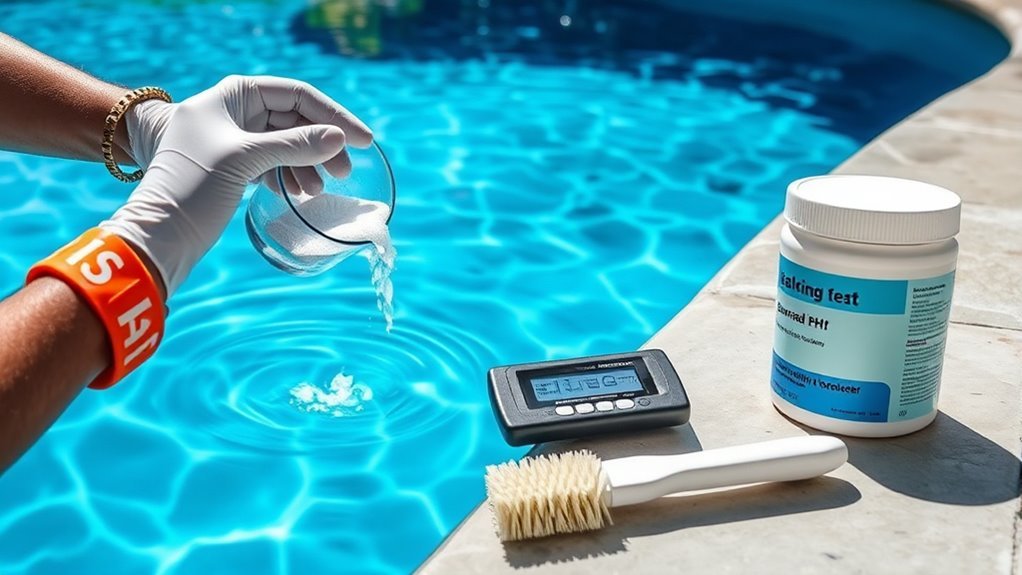
How to Increase Alkalinity in a Swimming Pool Step by Step
To increase your pool’s alkalinity, start by testing your water with a reliable kit to find current levels. Calculating the amount of sodium bicarbonate needed based on your pool size and the alkalinity difference is essential. This step ensures you add the correct amount to adjust the alkalinity effectively.
With the pump running, slowly add the calculated amount near the return jets to avoid cloudiness. Keeping the pump on helps circulate the water and evenly distribute the sodium bicarbonate. Retest after several hours to check the new alkalinity level and adjust if needed.
Following these basics will help maintain balanced, comfortable water. Proper alkalinity balance is crucial for lasting pool health and preventing corrosion or scaling. There’s more to guarantee lasting pool health, but managing alkalinity is a great place to start.
Understanding Pool Alkalinity and Its Importance
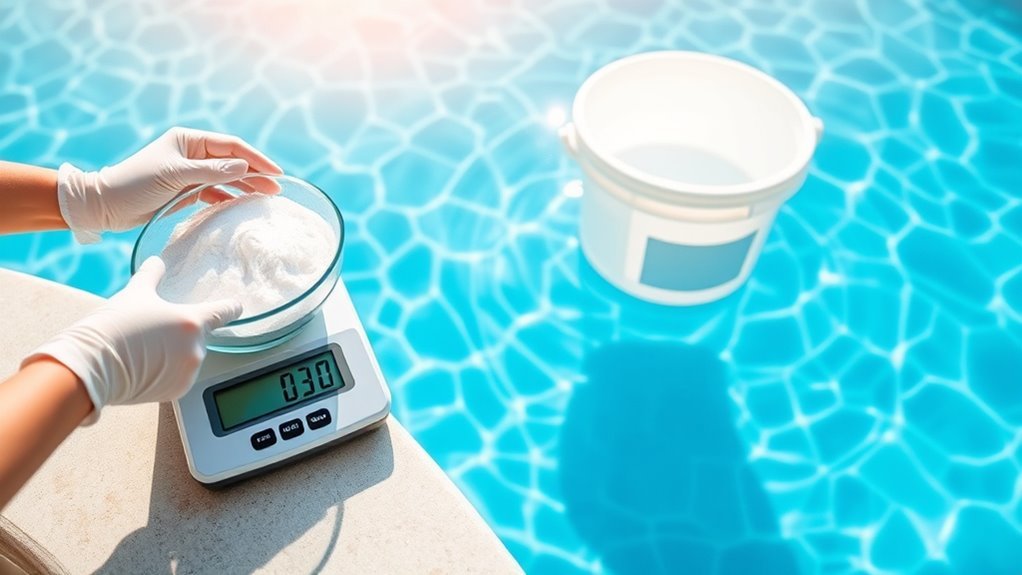
Although you mightn’t think about it often, maintaining proper alkalinity in your pool is essential for water balance. Alkalinity acts like a buffer, preventing sudden changes in pH that could make your water too acidic or too basic.
When alkalinity is off, you risk damaging your pool’s surfaces and equipment. Plus, it can make the water uncomfortable for swimmers.
By keeping alkalinity within the ideal range, typically 80-120 ppm, you ensure your sanitizer works effectively and your pool stays crystal clear.
Low alkalinity can cause corrosion, while high levels might lead to scaling and cloudy water. Understanding this balance helps you protect your investment and enjoy a safer, more pleasant swimming experience all season long.
Testing Your Pool’s Alkalinity Levels
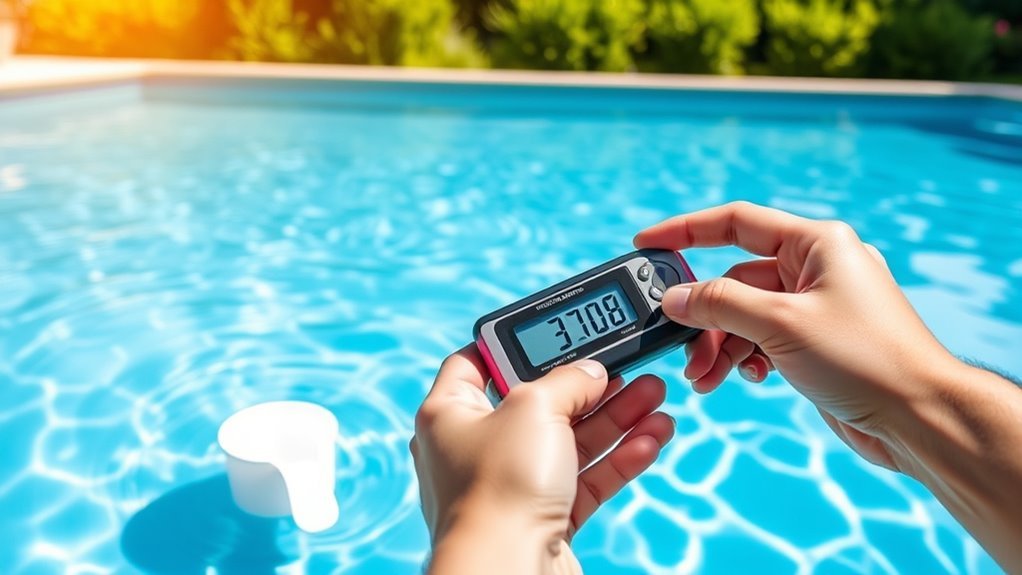
Before you start adjusting your pool’s alkalinity, you need to test its current levels accurately. First, gather a reliable pool water test kit or test strips designed for alkalinity measurement.
Collect a water sample from about 18 inches below the surface, avoiding skimmer areas to get a representative reading. Follow the instructions on your test kit carefully. Usually, you’ll add a reagent to the sample and compare the color change to a chart.
Test strips simplify this by dipping them into the water and reading the color. Make sure to test your pool at least once a week or before making any chemical adjustments. Recording your results helps track changes over time and guarantees you maintain balanced alkalinity for a healthy pool environment.
Identifying the Ideal Alkalinity Range for Your Pool

Once you’ve tested your pool’s alkalinity, knowing the ideal range helps you decide how much adjustment is needed. The perfect alkalinity for most pools falls between 80 and 120 parts per million (ppm). Staying within this range ensures your water remains balanced and protects your pool equipment from corrosion or scale buildup.
Here’s what to keep in mind:
- Below 80 ppm means your pool water is too acidic, risking damage to surfaces and equipment.
- Above 120 ppm, the water becomes too alkaline, leading to cloudy water and scaling.
- Maintaining this range stabilizes pH levels, reducing the need for frequent adjustments.
- Regular testing is essential to keep alkalinity within these limits and ensure water quality.
Knowing this range sets the stage for effective alkalinity adjustments.
Gathering the Necessary Supplies and Chemicals
To effectively raise your pool’s alkalinity, you’ll need to gather specific supplies and chemicals that guarantee safe and accurate adjustments. Start with a reliable pool water test kit to measure your current alkalinity level precisely.
Next, purchase an alkalinity increaser, usually sodium bicarbonate (baking soda), which safely raises alkalinity without drastically affecting pH. Have a clean bucket and a garden hose ready for mixing and distributing the chemical evenly.
Additionally, keep protective gear like gloves and goggles on hand to ensure your safety when handling chemicals. Finally, confirm your pool pump is operational so you can circulate the water after adding chemicals.
Having these supplies ready streamlines the process and helps you maintain balanced, healthy pool water.
Calculating the Amount of Alkalinity Increaser Needed
With your supplies ready and current alkalinity levels measured, you can calculate how much alkalinity increaser your pool needs. First, determine your pool’s volume in gallons, as this is essential for accurate dosing.
Next, decide your target alkalinity level, usually between 80-120 ppm. Then, check the product label for the amount of alkalinity increaser required to raise alkalinity by 10 ppm per 10,000 gallons.
Determine your target alkalinity, typically 80-120 ppm, then consult the label for dosing instructions per 10,000 gallons.
Finally, use this formula to calculate the total amount needed:
- Measure current alkalinity (ppm).
- Set target alkalinity (ppm).
- Calculate difference (target – current).
- Multiply difference by the dose per 10,000 gallons and pool volume scale.
This approach guarantees you add just the right amount without overshooting.
Adding Alkalinity Increaser to Your Pool Water
Although calculating the correct amount is essential, you’ll need to add the alkalinity increaser carefully to your pool water to avoid uneven distribution. Begin by wearing protective gloves and goggles for safety.
Slowly pour the measured alkalinity increaser directly into the pool’s deep end, ideally near a return jet if possible. This helps the chemical enter the circulation system quickly. Avoid dumping it all in one spot; instead, pour steadily to prevent cloudiness.
Remember, adding the chemical when the pump is running allows for better initial mixing, but don’t rely solely on this for full distribution. After adding, keep the pump running for several hours.
This step ensures the alkalinity increaser starts working effectively without creating localized high-concentration areas in your pool water.
Distributing the Chemical Evenly Around the Pool
Once you’ve added the alkalinity increaser, you’ll need to guarantee it spreads evenly throughout the pool. This ensures consistent water balance and avoids concentrated spots that could harm your pool’s surfaces or equipment.
To distribute the chemical evenly, follow these steps:
- Turn on the pool pump and filter system to start circulating the water.
- Use a pool brush to gently stir the water around the edges where you added the chemical.
- Walk around the pool, pouring water from a bucket to help mix the chemical if needed.
- Keep the pump running for at least 2-4 hours to allow thorough mixing throughout the entire pool.
These actions help maintain balanced alkalinity levels, protecting your pool and enhancing swimmer comfort.
Retesting Alkalinity Levels After Treatment
After confirming the alkalinity increaser is evenly distributed and the pump has run for several hours, you’ll want to check the water’s alkalinity again. Use a reliable test kit to measure the total alkalinity and compare it to your target range (usually 80-120 ppm).
If levels are still low, you might need to add more alkalinity increaser and retest later.
| Test Time | Alkalinity Level (ppm) | Action Needed |
|---|---|---|
| Before Treatment | Below 80 | Add alkalinity increaser |
| After 4 Hours | 85 | No action needed |
| After 8 Hours | 95 | Monitor |
| After 24 Hours | 110 | Maintain |
| After 48 Hours | 120 | Balanced |
Regular retesting ensures your pool stays balanced.
Maintaining Proper Alkalinity Over Time
Keeping your pool’s alkalinity within the ideal range requires regular monitoring and timely adjustments. To maintain proper alkalinity over time, you need a consistent routine and awareness of factors that affect it. Here’s what you should do:
Regular monitoring and timely adjustments are key to keeping your pool’s alkalinity in the ideal range.
- Test alkalinity weekly using reliable test kits.
- Adjust alkalinity promptly using baking soda or sodium bicarbonate if levels drop below 80 ppm.
- Monitor pH levels alongside alkalinity, as they influence each other.
- Keep an eye on water chemistry changes caused by rain, heavy pool use, or chemical additions.
Frequently Asked Questions
Can High Alkalinity Affect Pool Equipment Longevity?
Yes, high alkalinity can harm your pool equipment by causing scaling and buildup, which reduces efficiency and lifespan.
You’ll want to keep alkalinity balanced to protect your investment and avoid costly repairs down the line.
What Are Natural Ways to Increase Pool Alkalinity?
You can naturally raise your pool’s alkalinity by adding baking soda, which gently buffers pH. Also, using alkaline minerals or crushed limestone helps.
Regularly testing water guarantees you keep alkalinity balanced without harsh chemicals.
How Does Alkalinity Interact With Pool Ph Levels?
Think of alkalinity as your pool’s buffer, like a shock absorber in a car. It stabilizes pH, preventing wild swings.
Without enough alkalinity, your pool’s pH can bounce erratically, making it hard to maintain balance.
Is It Safe to Swim Immediately After Adding Chemicals?
You shouldn’t swim right after adding chemicals. Wait at least 4 to 6 hours, or until the chemical levels return to safe ranges.
This makes certain your safety and keeps your pool balanced and comfortable.
Can Weather Changes Impact Pool Alkalinity Levels?
Yes, weather changes can impact your pool’s alkalinity. Rain can dilute chemicals, and temperature shifts can alter chemical balance.
You should test and adjust alkalinity regularly, especially after storms or temperature fluctuations.
Conclusion
Keeping your pool’s alkalinity in check is like tuning a musical instrument—it ensures everything stays balanced and harmonious.
By regularly testing, adjusting, and maintaining the right alkalinity levels, you’ll protect your pool from corrosion and scaling while keeping the water crystal clear.
Follow these steps consistently, and your pool will remain a revitalizing oasis all season long.
Remember, a little care goes a long way in turning your pool into the perfect backyard retreat. Increasing alkalinity in a swimming pool is essential for maintaining water quality and extending the life of your pool equipment.