
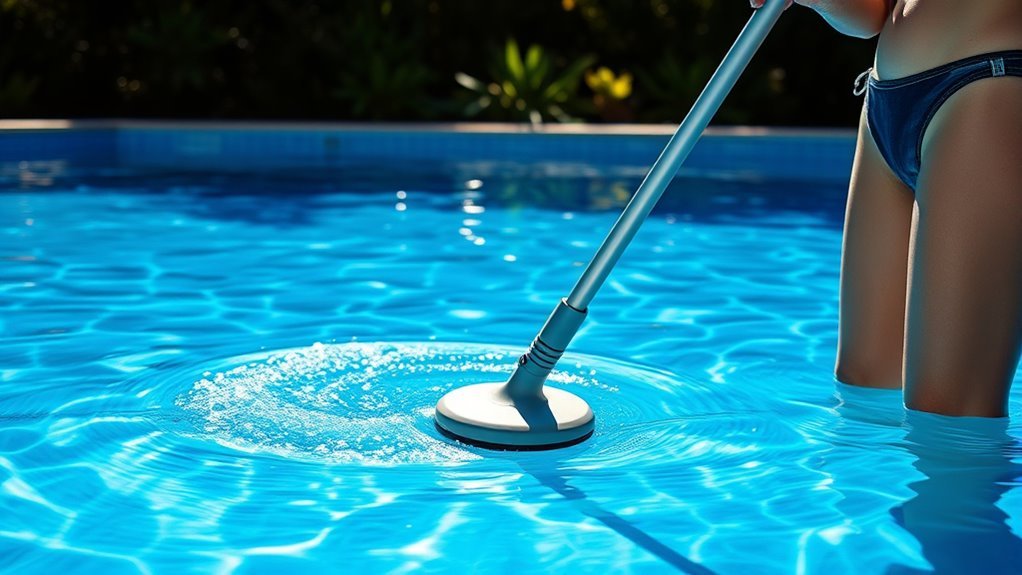
How to Vacuum a Swimming Pool in 7 Easy Steps
To vacuum your swimming pool in 7 easy steps, start by gathering your vacuum head, telescoping pole, hose, and skimmer plate. These essential tools will help you maintain a clean and inviting pool. Attach the vacuum head to the pole, then connect the hose to the head and skimmer.
Submerge the hose fully to purge air, ensuring the vacuum works efficiently. Next, turn on your pool pump to begin the cleaning process. Slowly vacuum the pool floor in overlapping strokes for thorough cleaning.
Once done, clean and store your equipment properly to keep it in good condition. Follow these tips, and you’ll have a pristine pool in no time. Regular vacuuming is key to a sparkling swimming pool that’s ready for enjoyment.
Gather Your Pool Vacuum Equipment
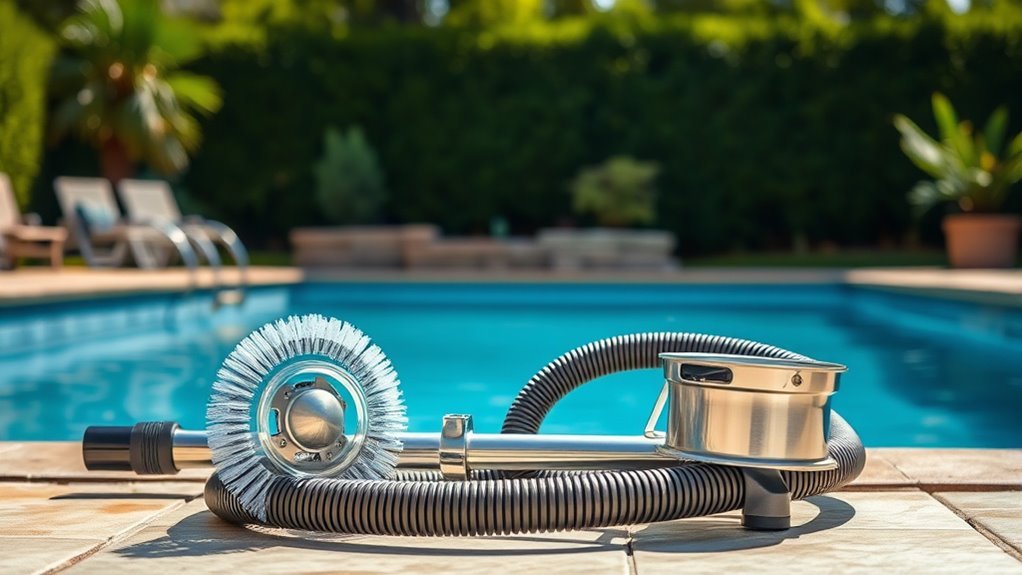
Before you begin vacuuming your pool, you’ll need to gather all the necessary equipment. First, grab a pool vacuum head designed to fit your pool type, whether it’s a flat vacuum for smooth surfaces or one with brushes for rougher textures.
Start by selecting a pool vacuum head suited to your pool’s surface for effective cleaning.
Next, find a telescoping pole to attach the vacuum head, allowing you to reach the entire pool floor comfortably. You’ll also need a vacuum hose long enough to connect from the vacuum head to the pool’s skimmer or suction port.
Don’t forget a skimmer vacuum plate to cover the skimmer basket and create suction. Finally, confirm your pool pump and filter are ready to operate, as they’ll power the vacuum system.
Having these essentials ready streamlines the vacuuming process and ensures effective cleaning.
Prepare the Pool Vacuum Head and Hose
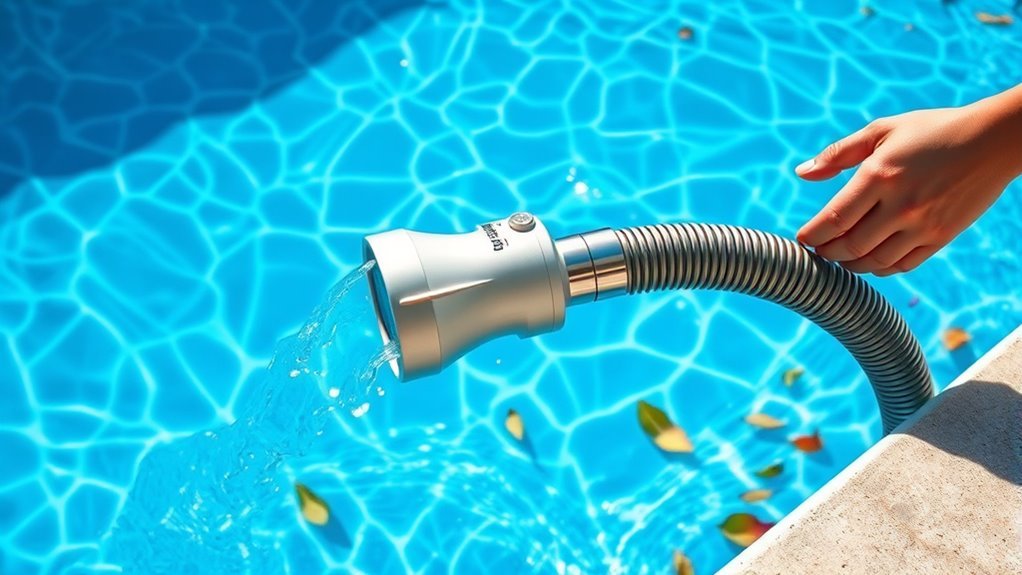
Once you have your equipment ready, connect the vacuum head securely to the telescoping pole and attach one end of the vacuum hose to the vacuum head’s inlet.
Before submerging the hose, fill it with water to eliminate any air pockets that can disrupt suction. You can do this by submerging the hose completely in the pool, allowing water to push the air out from the other end.
Make sure the hose is free of kinks or twists, as these can restrict water flow and reduce vacuum efficiency.
Once filled, connect the free end of the hose to the pool’s suction port or skimmer. Ensuring these connections are tight will maintain strong suction during vacuuming and make the process smoother.
Attach the Vacuum Head to the Pole
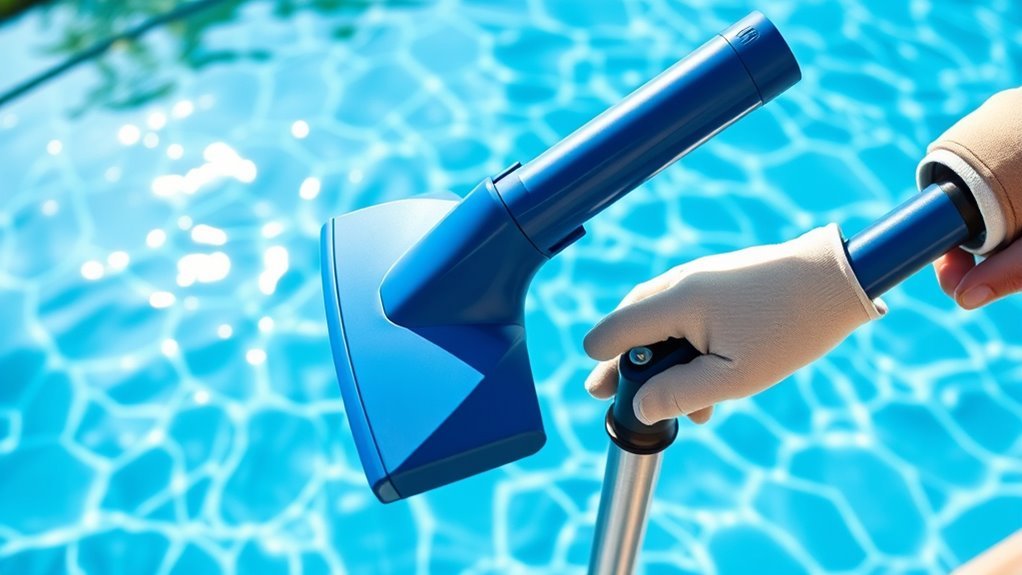
After filling the hose and securing it to the skimmer, you’re ready to attach the vacuum head to the telescoping pole. First, locate the swivel connector on the vacuum head. Align it with the end of the pole, then firmly push and twist until it locks in place.
Make sure the connection is secure to prevent the head from detaching while cleaning. Adjust the pole length for easy maneuvering around the pool.
| Step | Action | Tip |
|---|---|---|
| 1 | Find swivel connector | Check for wear or damage |
| 2 | Align with pole end | Line up grooves if present |
| 3 | Push and twist to lock | You’ll hear a click |
| 4 | Adjust pole length | Extend for better reach |
Connect the Hose to the Vacuum Head and Skimmer
While holding the vacuum head steady, connect one end of the hose to the swivel connector on the vacuum head. Make certain it fits snugly to prevent leaks or loss of suction.
Attach the hose firmly to the vacuum head’s swivel connector to ensure a tight, leak-free fit.
Next, locate your pool’s skimmer basket and remove the lid. Detach the skimmer basket if needed to access the suction port.
Insert the other end of the hose into the skimmer’s suction port.
You might need to remove the skimmer basket or adjust it slightly to fit the hose properly. Confirm the hose is securely connected so it won’t come loose during vacuuming.
Double-check all connections before you start, as a tight, leak-free seal is essential for effective vacuuming and maintaining consistent suction throughout the process.
Submerge the Vacuum Hose to Remove Air
Before turning on the pump, you’ll want to fully submerge the vacuum hose in the pool to purge any trapped air. Start by holding the hose’s free end underwater, letting it fill completely. You can walk it slowly across the pool floor, guaranteeing no air pockets remain inside.
Once the hose is filled, attach it to the skimmer’s suction port quickly to avoid air re-entering. Removing air from the hose is essential because trapped air can cause the pump to lose suction or even damage it.
If you notice bubbles or sputtering once you start vacuuming, it means air is still present.
Taking the time to purge air beforehand ensures your vacuum operates efficiently and prevents unnecessary strain on your pool’s filtration system.
Turn on the Pool Pump and Begin Vacuuming
Once you turn on the pool pump, you’ll notice suction building through the vacuum hose, allowing you to start cleaning efficiently.
Begin by slowly moving the vacuum head along the pool floor, overlapping each stroke to ensure no debris is missed.
Keep the hose as straight as possible to maintain strong suction and prevent air pockets.
Work methodically, starting from the shallow end and progressing toward the deep end, so debris flows toward the skimmer or main drain.
Watch the vacuum head closely and adjust your speed if suction weakens or the hose tugs unexpectedly.
Stay consistent, and avoid rushing; thorough vacuuming takes time but yields a cleaner pool.
When you’ve covered the entire floor, you’re ready for the next step in pool maintenance.
Clean and Store Your Pool Vacuum Equipment
After you finish vacuuming, it’s important to clean and store your pool vacuum equipment properly to keep it in good condition. First, rinse all parts with clean water to remove chlorine, dirt, and debris that can cause wear or corrosion.
Next, inspect hoses, brushes, and the vacuum head for damage or blockages, fixing any issues before storing.
Finally, store your equipment in a cool, dry place away from direct sunlight to prevent material degradation.
Rinse thoroughly to remove chemicals and dirt
Check for wear or damage to avoid future breakdowns
Store in a shaded, dry area to prolong lifespan
Frequently Asked Questions
How Often Should I Vacuum My Swimming Pool?
You should vacuum your pool at least once a week to keep it clean and clear. If it’s heavily used or surrounded by trees, vacuuming twice weekly helps prevent debris buildup and keeps the water sparkling.
Can I Use a Regular Household Vacuum for Pool Cleaning?
Sure, you can try using your regular vacuum underwater, just don’t expect it to survive or clean well. Pool vacuums are designed for water; your household one isn’t.
What Type of Pool Vacuum Is Best for Leaves and Debris?
You’ll want a leaf vacuum or a pool vacuum with a strong suction and wide intake. These are designed to handle leaves and larger debris quickly, making your pool cleaning much more efficient and hassle-free.
Is It Safe to Vacuum the Pool During Hot Weather?
Yes, it’s safe to vacuum your pool during hot weather, but avoid peak sun hours to prevent chemical imbalance and algae growth.
Vacuum early morning or late evening when temperatures are cooler for best results and equipment protection.
How Do I Prevent Algae Buildup While Vacuuming?
Picture a crystal-clear pool shimmering under the sun. To prevent algae, you’ll shock the water, brush surfaces before vacuuming, and maintain proper chlorine levels. This keeps your pool sparkling and algae-free as you clean.
Conclusion
Just like a gardener tends to their flowers, vacuuming your pool nurtures its beauty and health. By following these simple steps, you’re not just cleaning—you’re renewing your oasis, making it sparkle with life.
Every sweep of the vacuum is a brushstroke on a watery canvas, ensuring your pool stays inviting and clear. So plunge in, take pride in your care, and watch your pool transform into a shimmering retreat you’ll love all season long.
Regular pool maintenance, including vacuuming your swimming pool, is key to keeping the water crystal clear and free from debris. With these easy steps, vacuuming your swimming pool becomes a simple task that enhances both the look and health of your pool.