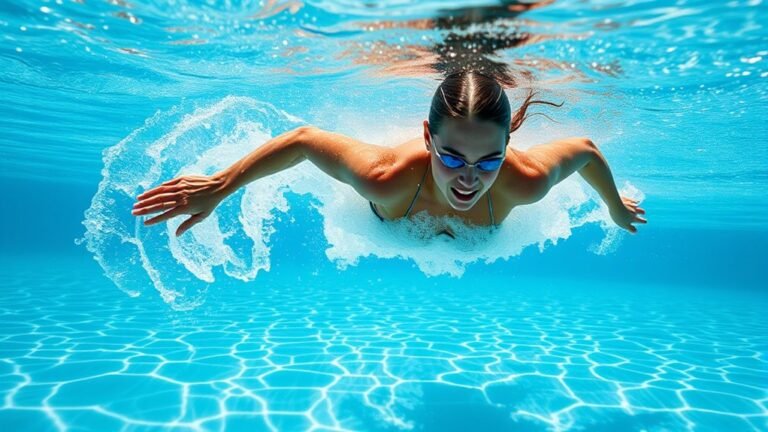
Why Is Swimming Good for Building Muscle?
Swimming is great for building muscle because water resistance makes every movement harder, so you engage more muscles without stressing your joints. This resistance provides a full-body workout that helps increase strength and endurance. Different strokes target various muscle groups, like shoulders, legs, and core, helping you develop balanced strength.
Plus, the low-impact nature means you can train consistently without injury. Your core stays engaged for stability, boosting overall muscle tone. Swimming also improves cardiovascular health, which supports muscle recovery and growth.
Keep exploring, and you’ll discover how to optimize your swimming for even better muscle growth and recovery. Whether you focus on technique or intensity, swimming offers a versatile way to build muscle effectively.
How Water Resistance Enhances Muscle Strength

Because water resists every movement you make while swimming, your muscles have to work harder to push through it. This resistance acts like a natural weight, forcing your muscles to contract with more effort than they’d on land.
Water resistance makes your muscles work harder, enhancing strength more than land exercises.
As you swim, every stroke and kick challenges your muscles, promoting strength and endurance. Unlike lifting weights, water provides consistent pressure from all directions, engaging multiple muscle groups simultaneously.
This continuous resistance helps improve muscle tone and build functional strength without straining your joints.
By regularly swimming, you increase muscle activation and promote balanced muscle development, reducing the risk of injury.
The Role of Different Swimming Strokes in Muscle Development

While swimming engages your entire body, each stroke targets muscles differently, making your workout more balanced and effective. You can choose strokes based on your muscle development goals.
For example, the freestyle stroke emphasizes endurance and shoulder strength, while the breaststroke focuses more on your leg muscles and coordination. The butterfly stroke demands powerful upper body muscles and core stability.
| Swimming Stroke | Key Muscle Focus |
|---|---|
| Freestyle | Shoulders, arms, core |
| Breaststroke | Legs, hips, chest |
| Butterfly | Upper back, shoulders, core |
Muscle Groups Targeted by Swimming

When you swim, you engage multiple muscle groups throughout your body, making it an efficient full-body workout. Your shoulders and upper back get a serious workout, especially from strokes like freestyle and butterfly, which rely heavily on your deltoids, trapezius, and latissimus dorsi.
Your chest muscles also activate as you push water during each stroke. Don’t forget your core—your abs and lower back stabilize your body and maintain balance in the water.
Your legs work hard too; kicks activate your quadriceps, hamstrings, calves, and glutes, powering you forward.
Even smaller muscles, like those in your forearms and hands, get involved, helping you grip and propel through the water. Swimming targets nearly every major muscle group, making it a superb way to build balanced muscle strength.
Benefits of Low-Impact Muscle Building
A low-impact approach to muscle building lets you strengthen your body without putting excessive strain on your joints. When you swim, the water supports your weight, reducing stress on your hips, knees, and ankles.
This makes swimming ideal if you’re recovering from injury or have joint issues. You can work multiple muscle groups simultaneously with smooth, controlled movements that minimize the risk of injury.
Plus, the resistance of water provides a natural way to build strength and muscle tone without heavy weights. Because you’re less likely to experience joint pain, you can train more consistently, which leads to better muscle development over time.
Swimming’s low-impact nature helps you build muscle safely and sustainably, keeping you active and strong for the long haul.
Cardiovascular and Muscular Endurance Combined
Because swimming engages both your cardiovascular system and muscles continuously, it enhances endurance in a unique way. When you swim, your heart works harder to pump oxygenated blood, improving your cardiovascular fitness.
At the same time, your muscles contract repeatedly to propel you through the water, building muscular endurance. This dual demand means you improve stamina in both areas simultaneously, unlike many exercises that focus on one system at a time.
As you swim longer and maintain steady strokes, your body adapts by increasing efficiency in oxygen use and muscle fatigue resistance. This combined endurance boost helps you perform better in various physical activities and supports muscle growth by enabling longer, more intense workouts without early fatigue.
Comparing Swimming to Traditional Weight Training
Improving endurance through swimming sets a strong foundation, but you might wonder how it stacks up against traditional weight training for building muscle. Swimming offers full-body resistance, engaging multiple muscle groups simultaneously, which promotes balanced muscle development.
However, it primarily relies on your body weight and water resistance, so the muscle gains tend to be more toned and lean rather than bulky.
Traditional weight training lets you target specific muscles with adjustable loads, making it easier to build size and strength systematically.
While swimming enhances endurance, flexibility, and muscle tone, weight training is more effective for hypertrophy and maximal strength gains.
Combining both can give you the best of endurance, muscle tone, and strength, depending on your fitness goals.
How Swimming Improves Core Stability
How does swimming help you develop a stronger core? When you swim, your core muscles engage continuously to keep your body aligned and balanced in the water. Every stroke forces you to stabilize your torso, preventing your hips and shoulders from twisting unnaturally.
Swimming constantly engages your core to maintain alignment and balance, stabilizing your torso with every stroke.
This constant engagement strengthens your abdominal and lower back muscles without you even realizing it. Additionally, the resistance of water makes your core work harder to maintain control and streamline your body.
You also activate deep core muscles during breathing and turns, enhancing overall stability.
Over time, this builds a solid foundation that supports other movements, improves posture, and reduces injury risk. So, swimming isn’t just about moving forward—it’s a full-body workout that hones your core strength naturally and effectively.
The Effect of Swimming on Muscle Tone and Definition
Although swimming primarily builds endurance, it also sculpts your muscles and enhances definition. When you swim, your body resists water’s constant pressure, activating multiple muscle groups simultaneously.
This resistance tones muscles evenly, giving you a balanced, lean look. You’ll notice improved muscle definition in your shoulders, arms, back, and legs as swimming emphasizes both strength and flexibility.
Unlike isolated weightlifting, swimming engages your muscles in fluid, full-range movements, which helps reduce bulk while highlighting muscle contours.
Plus, the continuous motion increases blood flow, aiding muscle recovery and enhancing overall tone.
Designing a Swimming Workout for Muscle Growth
When you design a swimming workout focused on muscle growth, you need to target specific strokes and intensities that challenge your muscles effectively. Incorporate powerful strokes like butterfly and breaststroke, which engage multiple muscle groups simultaneously.
Use interval training by alternating between high-intensity sprints and moderate recovery laps to maximize muscle fatigue and stimulate growth. Add resistance tools such as paddles or fins to increase water resistance, forcing your muscles to work harder.
Focus on sets that last 20 to 30 minutes with short rest periods to maintain intensity. Don’t forget to include drills that improve your form and target weaker muscle areas.
Recovery and Muscle Repair After Swimming Sessions
Since swimming workouts put significant stress on your muscles, proper recovery and repair are essential to maximize growth and prevent injury. After a session, focus on replenishing your body with protein and carbohydrates to support muscle repair and restore energy.
Hydrate well to replace fluids lost through sweat and aid in nutrient transport. Incorporate active recovery, like light swimming or stretching, to increase blood flow and reduce muscle stiffness.
Stay hydrated and use active recovery like light swimming or stretching to boost circulation and ease muscle stiffness.
Prioritize sleep, as it’s when your body produces growth hormones that repair muscle tissue. Consider techniques such as foam rolling or gentle massage to relieve tightness and improve circulation.
Listening to your body is key. If you feel persistent soreness or fatigue, allow extra rest to avoid overtraining and ensure your muscles rebuild stronger for the next swim.
Frequently Asked Questions
How Often Should Beginners Swim to See Muscle Growth?
You should swim about three times a week, allowing rest days in between.
Consistency and gradually increasing intensity help you build muscle effectively without overtraining or risking injury as a beginner swimmer.
Can Swimming Help With Muscle Imbalances?
Yes, swimming can help with muscle imbalances because it engages your entire body evenly. You’ll strengthen weaker muscles while improving coordination, promoting balanced muscle development and reducing the risk of injury over time.
Is Swimming Effective for Weight Loss Alongside Muscle Building?
Swimming burns calories while sculpting muscles, making it a double-edged sword in fitness. You’ll shed fat and build strength simultaneously, turning your workouts into a powerful tool for weight loss and muscle gain.
This combination makes swimming an efficient full-body exercise that enhances endurance and muscle tone. Plus, the low-impact nature of swimming reduces stress on joints, making it accessible for many fitness levels.
What Nutrition Supports Muscle Growth From Swimming?
You’ll want to eat plenty of protein to repair muscles, along with carbs for energy. Don’t forget healthy fats, vitamins, and minerals.
Staying hydrated and timing meals around your swim sessions will boost muscle growth effectively.
Are There Risks of Overtraining Muscles Through Swimming?
Yes, you can overtrain muscles through swimming if you don’t allow enough rest. Overtraining causes fatigue, soreness, and injury risk.
Listen to your body, vary intensity, and schedule recovery days to avoid burnout and stay strong.
Conclusion
Swimming builds muscle effectively because water resistance forces your muscles to work harder with every stroke, enhancing strength and tone. Different strokes target various muscle groups, while the low-impact nature protects your joints.
You’ll also boost endurance and core stability, making your workouts well-rounded. Remember, “slow and steady wins the race”—consistent swimming will lead to impressive muscle growth and recovery.
So immerse yourself and let the water help you sculpt your body! Swimming is an excellent exercise for building muscle, improving strength, and promoting overall fitness.