Why Is Swimming Good for Core Strength?
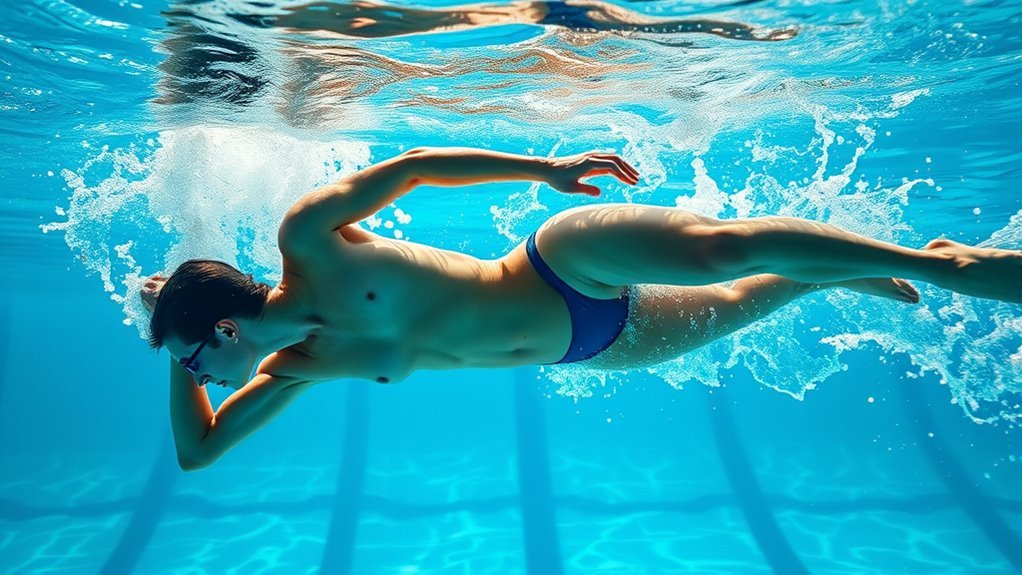
Swimming is great for your core because it forces you to stabilize your entire body against water resistance, activating muscles in your abdomen, back, and pelvis. This resistance makes your core work harder to keep your torso steady and balanced, improving your posture and reducing strain on other muscles.
Different strokes engage your core in unique ways, enhancing strength and control in the water. Keep exploring, and you’ll discover how swimming boosts both your performance and long-term core health.
The Role of Core Muscles in Swimming
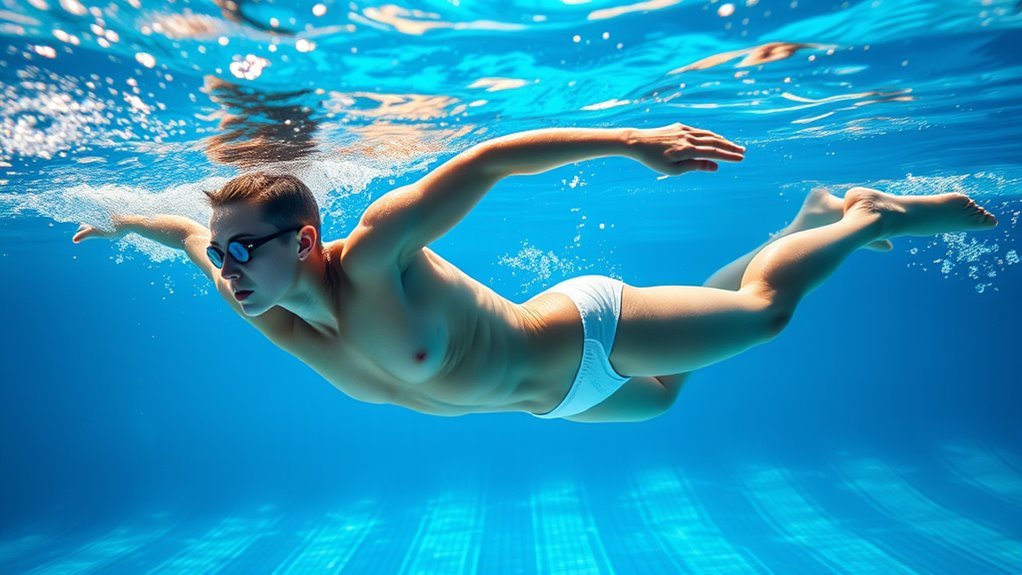
Because your core muscles stabilize your body, they play a crucial role in swimming. When you swim, your core acts as the central link between your upper and lower body, helping you maintain balance and control.
Your core stabilizes your body, linking upper and lower parts to maintain balance and control in swimming.
You rely on these muscles to keep your torso steady, allowing your arms and legs to move efficiently through the water. Without a strong core, your movements can become uncoordinated and less powerful, making swimming more difficult.
Engaging your abdominal, back, and pelvic muscles also helps reduce strain on your shoulders and lower back.
By strengthening your core, you improve your posture and streamline your body position, which boosts your overall swimming technique and endurance.
Your core truly is the powerhouse behind every stroke and kick you make in the pool.
How Water Resistance Enhances Core Activation
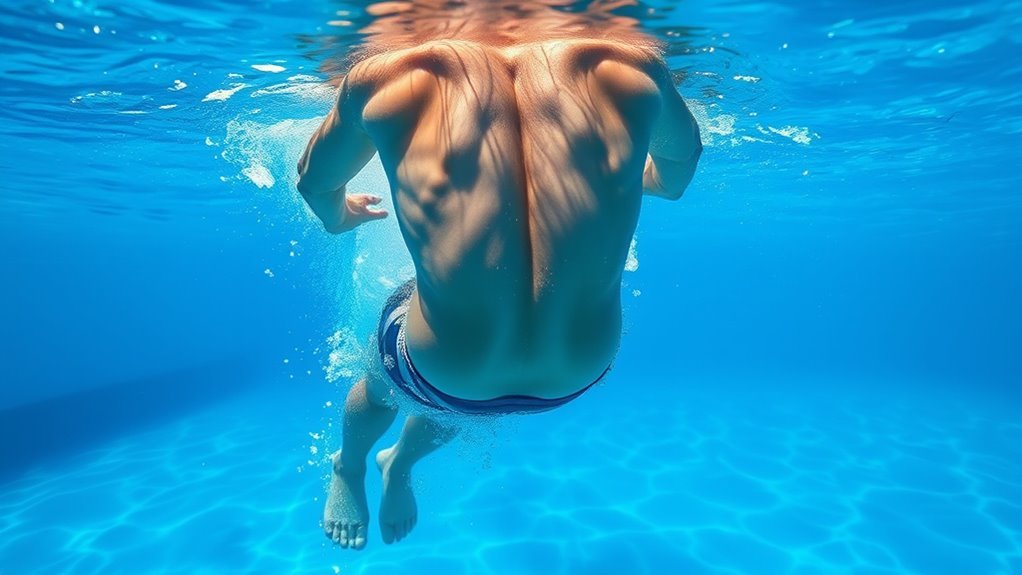
When you swim, water resistance forces your core muscles to engage more deeply to maintain stability and control. This resistance pushes against your body from every angle, requiring your core to work harder than it would on land.
As you move through the water, your core stabilizes your spine and pelvis, preventing unwanted rotation and helping you maintain a streamlined position. This constant engagement strengthens your abdominal and lower back muscles effectively.
| Water Resistance Effect | Core Muscle Response |
|---|---|
| Pushes against your body | Activates transverse abdominis |
| Slows limb movements | Engages obliques |
| Requires balance | Stabilizes lower back |
| Creates drag | Strengthens rectus abdominis |
| Demands control | Coordinates core muscle groups |
Key Swimming Strokes That Target Core Strength
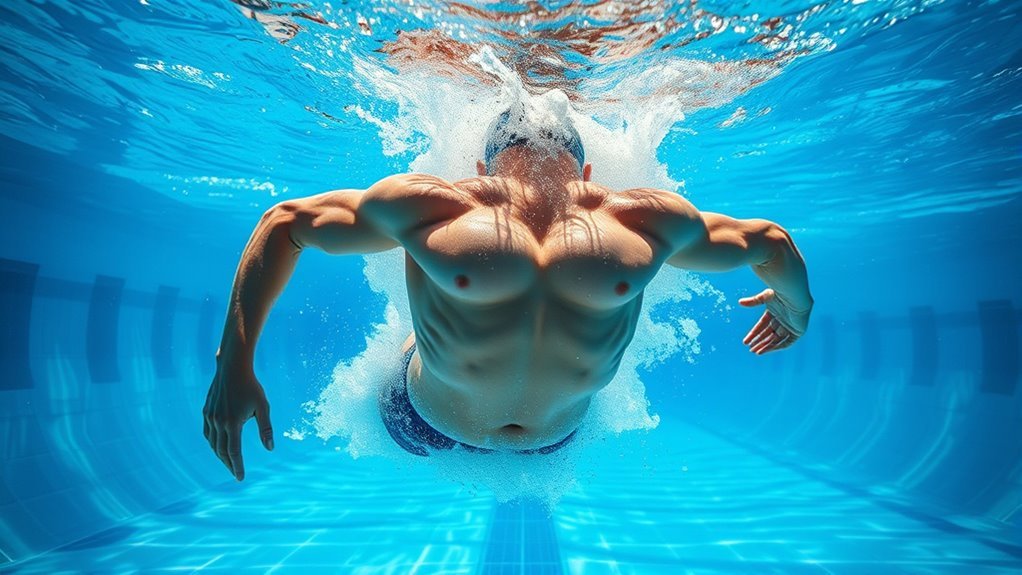
Although each swimming stroke engages your entire body, some strokes specifically challenge your core muscles more than others. The butterfly stroke demands powerful core engagement to maintain rhythm and stability during the simultaneous arm movement and dolphin kick.
When you swim freestyle, your core stabilizes your torso, helping reduce rotation and improve efficiency.
Backstroke also activates your core as you keep your body aligned and steady while kicking and pulling.
Breaststroke requires you to control your body’s undulating motion, which heavily involves your abdominal and lower back muscles.
By focusing on these strokes, you’ll work your core from multiple angles, enhancing strength and endurance.
Incorporating a variety of strokes into your routine ensures balanced core development and keeps your workouts dynamic.
Benefits of Core Strength for Swimming Performance
Building strong core muscles boosts your swimming performance by enhancing stability and control in the water. With a solid core, you maintain better body alignment, reducing drag and allowing you to glide more efficiently.
Your powerful core helps transfer energy from your upper to lower body, improving stroke strength and kicking power. It also supports your posture, making it easier to breathe rhythmically without losing balance.
When your core is engaged, you can execute turns and starts with greater explosiveness and precision. Plus, a strong core minimizes the risk of injury by stabilizing your spine and pelvis during repetitive movements.
Comparing Swimming to Other Core Workouts
While swimming engages your core dynamically through full-body movement, it differs considerably from traditional core workouts that isolate specific muscle groups. When you swim, your core stabilizes your body against water resistance, requiring continuous adjustment and coordination.
Traditional workouts like planks or sit-ups focus on static or repetitive motions targeting defined muscles. Here’s a quick comparison:
| Aspect | Swimming |
|---|---|
| Muscle Engagement | Full-body, dynamic |
| Movement Type | Continuous, fluid |
| Resistance | Water, multi-directional |
Compared to isolated exercises, swimming challenges your core in a functional way, improving balance and endurance. However, if you want to build size or target weak points, combining swimming with specific core workouts can be more effective for overall strength development.
Tips for Maximizing Core Engagement While Swimming
To maximize core engagement during your swim, you need to focus on maintaining proper body alignment and controlled movements. Keep your hips high and in line with your shoulders to engage your core effectively. Use your abdominal muscles to stabilize your torso as you kick and pull.
Incorporate drills like the dolphin kick or vertical kicking to challenge your core further. Avoid excessive arching or sagging in your back, as this reduces core activation. Engage your core consciously by drawing your belly button toward your spine.
Breathe rhythmically without twisting your torso excessively, which helps maintain core stability. Finally, vary your strokes and include short bursts of intense swimming to stimulate different core muscles and boost overall strength.
Long-Term Core Health Benefits From Regular Swimming
Engaging your core consistently during swimming sets the stage for lasting benefits that go beyond the pool. When you swim regularly, you strengthen the muscles that support your spine, improving posture and reducing the risk of back pain.
Over time, this increased core stability helps you perform daily activities with greater ease and less fatigue. Swimming also enhances your balance and coordination, which can help prevent falls as you age.
By maintaining a strong core, you protect yourself from common injuries related to weak or imbalanced muscles. Plus, the low-impact nature of swimming means you can keep building core strength without stressing your joints.
Sticking to a regular swimming routine ensures these benefits accumulate, promoting long-term core health and overall physical resilience.
Frequently Asked Questions
Can Swimming Help With Lower Back Pain Relief?
Yes, swimming can help relieve your lower back pain by gently strengthening muscles without heavy impact. It improves flexibility and supports spinal alignment, reducing strain.
Just make sure you use proper technique to avoid injury.
How Often Should Beginners Swim to Build Core Strength?
You should swim three times a week—unless you prefer a flabby core and a lifetime of couch potato glory.
Consistent sessions build strength, so plunge in regularly and watch your core muscles thank you for the effort.
Does Swimming Improve Posture Outside the Pool?
Yes, swimming improves your posture outside the pool by strengthening your core and back muscles. This support helps you stand and sit straighter, reducing slouching and promoting better alignment throughout your day.
Stronger muscles from swimming also aid in maintaining balance and stability, which contributes to a more upright posture. Regular swimming helps counteract the effects of prolonged sitting and poor posture habits.
Are There Specific Diets to Support Core Strength for Swimmers?
Think of your body as a finely tuned engine; you’ll want a diet rich in lean proteins, healthy fats, and complex carbs to fuel your core. Don’t forget antioxidants from fruits and veggies—they’re the spark plugs for recovery.
Can Swimming Aid in Rehabilitation After a Core Injury?
Yes, swimming can aid your rehabilitation after a core injury by providing low-impact resistance that strengthens muscles without strain. It improves flexibility and promotes blood circulation, helping you recover safely while maintaining overall fitness.
Swimming also reduces the risk of further injury by supporting your body weight in water, which minimizes stress on your core. This makes it an ideal exercise during the early stages of recovery.
Additionally, swimming can enhance endurance and muscle tone, contributing to a faster and more effective rehabilitation process. Always consult with a healthcare professional before starting any new exercise regimen.
Conclusion
Swimming is an excellent way to build your core strength because the water’s resistance constantly challenges your muscles. Imagine Sarah, who struggled with lower back pain but started swimming regularly. Within weeks, her improved core stability eased her discomfort and boosted her overall fitness.
By focusing on proper strokes and engaging your core, you’ll not only swim better but also enjoy long-term benefits like enhanced posture and injury prevention. Plunge in, and feel your core grow stronger with every lap! Swimming for core strength is a fun, effective way to improve your health and well-being.