
What Age Should You Start Swimming Lessons How To Guide
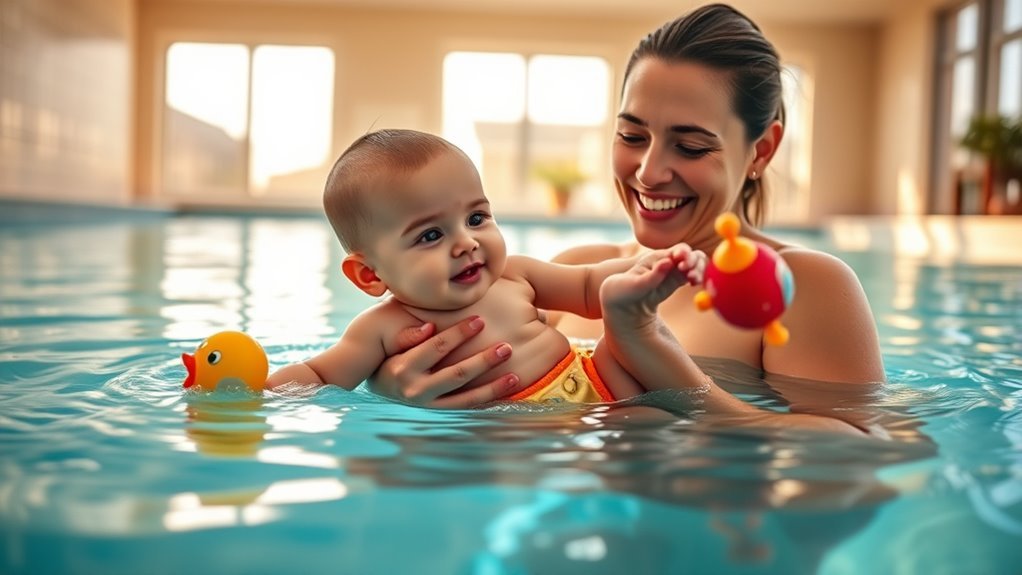
You should start swimming lessons around six months old when your baby has better head control and a stronger immune system. Beginning swimming lessons early helps build motor skills, water confidence, and promotes bonding between parent and child. Introducing swimming at this age lays a solid foundation for water safety and enjoyment.
For toddlers, wait until they show comfort in water and can follow simple instructions. Choose classes based on your child’s developmental stage and always prioritize safety. Tailoring lessons to your child’s needs ensures they gain the most from the experience.
If you want to guarantee your child enjoys and benefits from swimming, there’s more useful advice ahead. Following these guidelines will help your child develop essential swimming skills while having fun in the water.
Benefits of Early Swimming Lessons for Babies

Although you might think babies are too young for structured activities, early swimming lessons offer numerous benefits that can boost their development. You’ll notice improved motor skills as your baby learns to kick and move in the water, strengthening muscles and coordination.
These lessons also support cognitive growth by stimulating senses through water’s unique environment. You’ll help your baby gain confidence and comfort in water, which is essential for safety as they grow.
Plus, swimming sessions provide quality bonding time, enhancing emotional connection between you and your little one.
Early exposure to water encourages better sleep patterns and can even boost your baby’s immune system.
Recommended Starting Age for Infant Swimming

When you decide to introduce your baby to swimming, it’s important to take into account the recommended starting age to guarantee safety and readiness. Experts generally suggest beginning infant swimming lessons around 6 months old.
Introducing your baby to swimming at around 6 months ensures safety and readiness for a positive experience.
At this stage, your baby has better head control and can adapt more comfortably to water environments.
Here are three key reasons to start at 6 months:
- Physical Development – Babies develop motor skills that help them respond to water safely.
- Immune System – By 6 months, your baby’s immune system is stronger, reducing illness risk.
- Learning Capacity – Infants at this age can begin to grasp basic water comfort and safety skills.
Starting too early can be risky, so wait until your baby is ready to enjoy swimming safely.
Signs Your Toddler Is Ready for Swimming Lessons
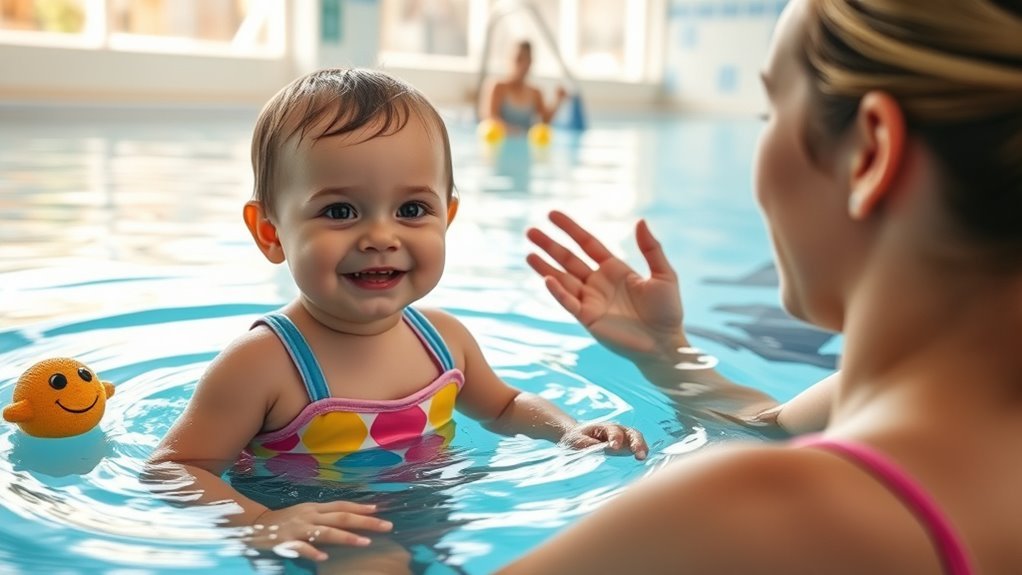
Once your child passes the infant stage, you’ll want to look for clear signs that they’re ready to start swimming lessons as a toddler. Notice if your toddler shows comfort around water, like enjoying bath time or splashing in shallow pools.
If they can follow simple instructions and stay attentive for short periods, they’re likely ready to learn basic water skills. Check their motor skills too. Being able to sit, stand, and move independently helps them participate safely.
Also, if your toddler expresses curiosity about water or imitates swimming motions, it’s a good indicator.
Lastly, verify they’re physically healthy and don’t have any ear infections or respiratory issues that could be aggravated by swimming.
These signs mean your toddler is ready to plunge into lessons confidently.
Choosing the Right Swimming Program for Different Ages
Since children develop at different rates, choosing the right swimming program means matching lessons to your child’s age and skill level. You want a program that builds confidence and skills progressively, ensuring your child stays motivated and safe.
Here’s how to pick the right program:
- Infants (6 months to 3 years): Look for parent-and-child classes that focus on water comfort and basic safety skills.
- Preschoolers (3 to 5 years): Choose lessons emphasizing water adjustment, basic strokes, and independence in the water.
- School-age children (6 years and up): Opt for structured classes that teach stroke technique, endurance, and swimming proficiency.
Tailoring the program to your child’s stage accelerates learning and keeps swimming fun.
Safety Considerations Before Starting Swimming Lessons
Although swimming lessons offer many benefits, you should prioritize safety before your child steps into the pool. First, verify your child is healthy and ready for physical activity. Consult your pediatrician if you have concerns about medical conditions or allergies.
Always choose a certified instructor who follows strict safety protocols and maintains a clean, well-supervised facility. Confirm that the pool area has proper fencing, non-slip surfaces, and accessible emergency equipment.
Before lessons begin, teach your child basic water rules, like never swimming alone. Also, stay close during lessons, especially for younger kids, to respond quickly if needed.
Prioritizing these precautions helps create a secure environment, making swimming lessons both safe and enjoyable for your child.
How Swimming Lessons Develop Water Confidence
Ensuring safety sets the foundation for your child to feel comfortable in the water. When your child feels secure, they’re more likely to explore and enjoy swimming.
Swimming lessons build this confidence by:
- Teaching basic skills gradually, so your child masters one step before moving to the next.
- Encouraging positive reinforcement from instructors, boosting your child’s self-esteem.
- Creating a supportive environment where your child can overcome fears and learn at their own pace.
As your child gains competence, they become more relaxed and enthusiastic to participate.
This growing confidence not only makes swimming enjoyable but also instills lifelong water safety habits.
What to Expect in Swimming Classes for Young Children
When your child starts swimming classes, you can expect a focus on fun and safety that keeps them engaged and secure. Classes often begin with simple water familiarization activities to help your child feel comfortable.
Instructors use playful games and songs to teach basic skills like blowing bubbles, kicking, and floating.
You’ll notice short, structured sessions tailored to young attention spans, ensuring your child stays interested without feeling overwhelmed.
Safety is a priority, so instructors emphasize proper breathing and introduce water entry and exit techniques gradually.
You’ll also see plenty of positive reinforcement, boosting your child’s confidence in the water.
Tips for Preparing Your Child for Their First Swimming Lesson
Before your child’s first swimming lesson, you can help ease their nerves by talking about what to expect and highlighting the fun aspects. Preparing them properly sets the stage for a positive experience. Here are three helpful tips:
Ease your child’s nerves by discussing what to expect and emphasizing the fun before their first swimming lesson.
- Familiarize with the pool environment: Visit the pool beforehand so your child gets comfortable with the sights and sounds.
- Practice basic water play: Encourage splashing and blowing bubbles at home or in a shallow tub to build confidence.
- Pack essentials: Bring a well-fitting swimsuit, towel, goggles, and a favorite comfort item to make your child feel secure.
Encouraging Lifelong Swimming Skills and Water Safety Habits
Although learning to swim is a crucial skill, building lifelong swimming habits and water safety awareness requires consistent encouragement and practice. You can foster a love for swimming by making it fun and regular, while emphasizing safety rules every time you’re near water.
Reinforce skills learned in lessons by practicing them together and discussing water hazards openly.
| Habit | Action | Benefit |
|---|---|---|
| Regular Practice | Schedule weekly swim sessions | Builds confidence and endurance |
| Safety Reminders | Discuss pool rules before swim | Keeps safety top-of-mind |
| Skill Refreshers | Review strokes and breathing | Maintains and improves technique |
| Positive Reinforcement | Praise effort and progress | Encourages continued learning |
Frequently Asked Questions
What Equipment Do I Need for My Child’s Swimming Lessons?
You’ll need a well-fitting swimsuit, swim cap, goggles, and a towel. Consider waterproof swim diapers if your child isn’t potty-trained yet.
A swim bag helps keep everything organized, and flip-flops protect their feet around the pool.
How Often Should My Child Attend Swimming Lessons Weekly?
You should aim for your child to attend swimming lessons two to three times a week. This frequency helps build skills consistently without overwhelming them, keeping lessons fun and effective as they develop confidence in the water.
Can Swimming Lessons Help With My Child’s Physical Development?
Yes, swimming lessons can boost your child’s physical development by improving strength, coordination, and cardiovascular health.
You’ll notice better muscle tone and endurance as they learn, making swimming a fun, effective full-body workout for them.
Are There Any Health Risks Associated With Early Swimming Lessons?
You might worry about health risks, but early swimming lessons are generally safe. Just watch for ear infections or sensitive skin, and make certain clean water and proper supervision to keep your child healthy and happy.
How Do I Handle My Child’s Fear of Water During Lessons?
You should stay patient, offer lots of praise, and let your child explore water at their own pace. Use fun games and gentle encouragement to build confidence, making lessons feel safe and enjoyable.
Conclusion
Starting swimming lessons early can make a huge difference—did you know that babies as young as six months can begin water familiarization? By getting your little one comfortable in the water early on, you’re setting them up for lifelong safety and confidence.
Remember, choosing the right program and preparing your child properly helps make lessons fun and effective. Swimming lessons provide essential skills that contribute to water safety and overall development.
So, don’t wait—start building those essential swimming skills today! Beginning swimming lessons at the right age ensures your child gains confidence and safety in the water, making every swim an enjoyable experience.