Top 5 Best Countries in Swimming
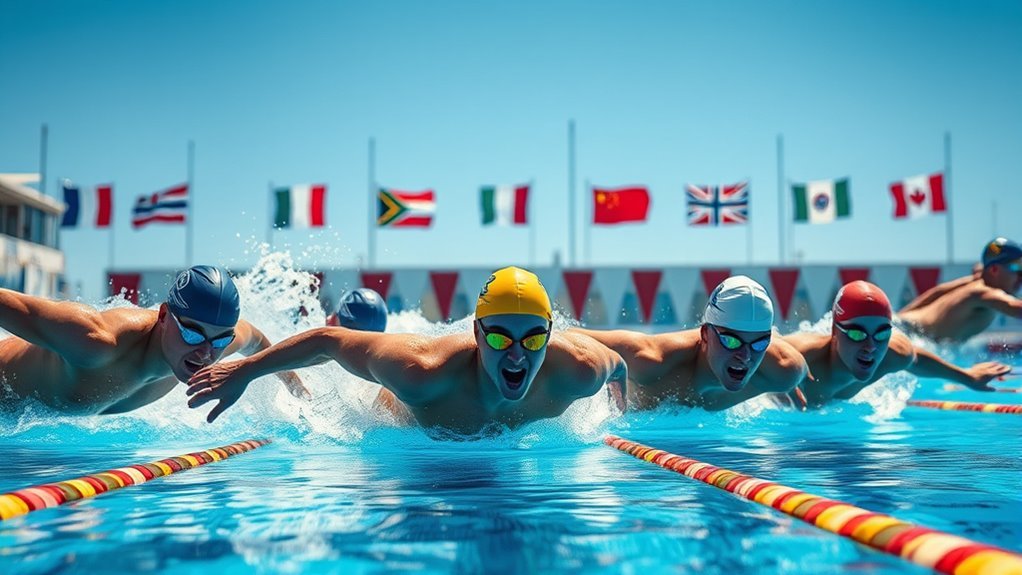
If you want to know which countries dominate swimming, look to the United States, Australia, China, Russia, and Japan. These top swimming nations consistently showcase exceptional talent and achievement in the pool.
You’ll see the U.S. pushing boundaries with legendary swimmers like Michael Phelps, while Australia fuels its success with passionate training and a strong swimming culture.
China and Russia showcase power and precision in their performances, and Japan impresses with technique and innovation. Keep exploring, and you’ll uncover what makes each of these swimming powerhouses truly stand out in the pool.
United States
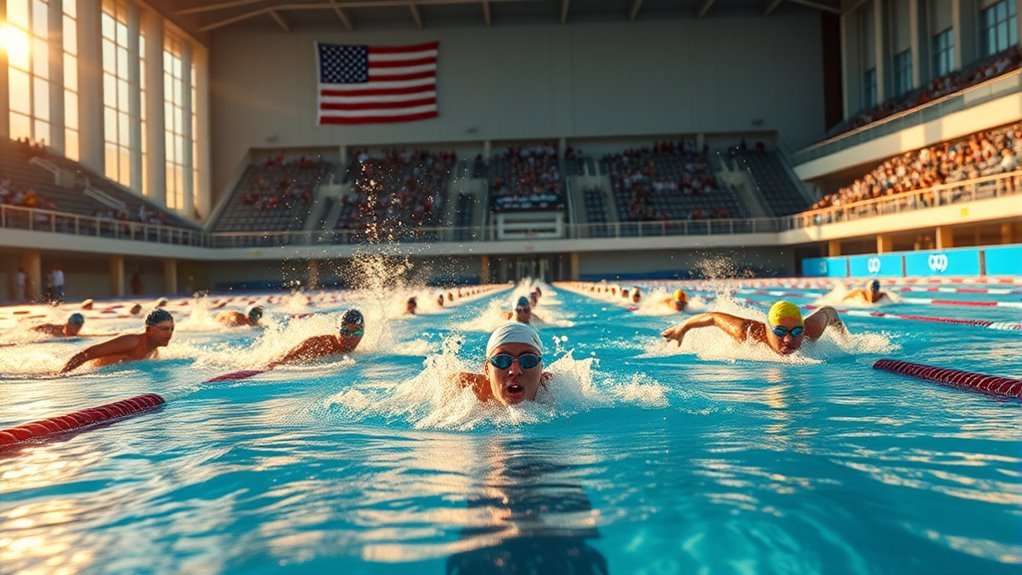
The United States dominates the swimming world with its impressive record and rich talent pool. When you watch international competitions, you’ll notice how American swimmers consistently break records and secure medals.
You can attribute this success to their rigorous training programs, top-notch facilities, and a competitive collegiate system that nurtures talent from a young age. If you want to understand excellence in swimming, don’t look any further than the U.S. team’s strategic approach to sprint and distance events alike.
Their success stems from rigorous training, superior facilities, and a competitive collegiate system nurturing young talent.
You’ll find that their athletes excel across various strokes, from freestyle to butterfly. When you think of swimming legends like Michael Phelps or Katie Ledecky, you realize the U.S. sets the standard other countries aim to meet.
Their commitment to innovation keeps them ahead in the pool.
Australia
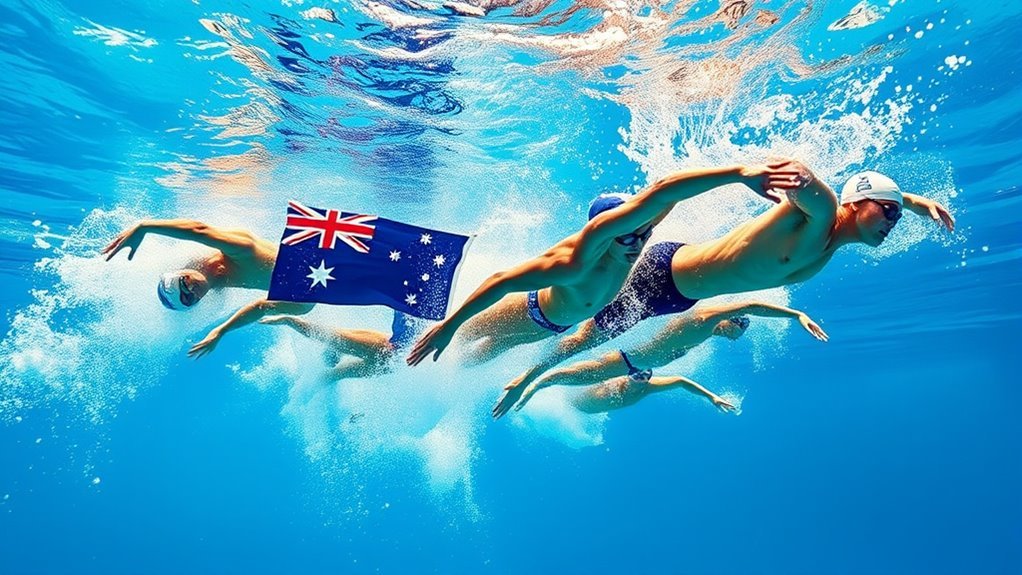
While the United States has set a high bar in swimming, Australia has carved its own impressive legacy in the sport. You’ll find that Australia’s passion for swimming runs deep, fueled by its sunny beaches and strong competitive spirit.
When you think of Australian swimmers, legends like Ian Thorpe and Dawn Fraser come to mind, inspiring generations worldwide.
Here’s why Australia stands out:
- They consistently produce world-class swimmers who dominate international competitions.
- Their rigorous training programs blend innovation with tradition, pushing athletes to excel.
- The nation’s swimming culture encourages participation from a young age, creating a vast talent pool.
If you want to understand swimming greatness, Australia’s dedication and achievements are a must-know.
China
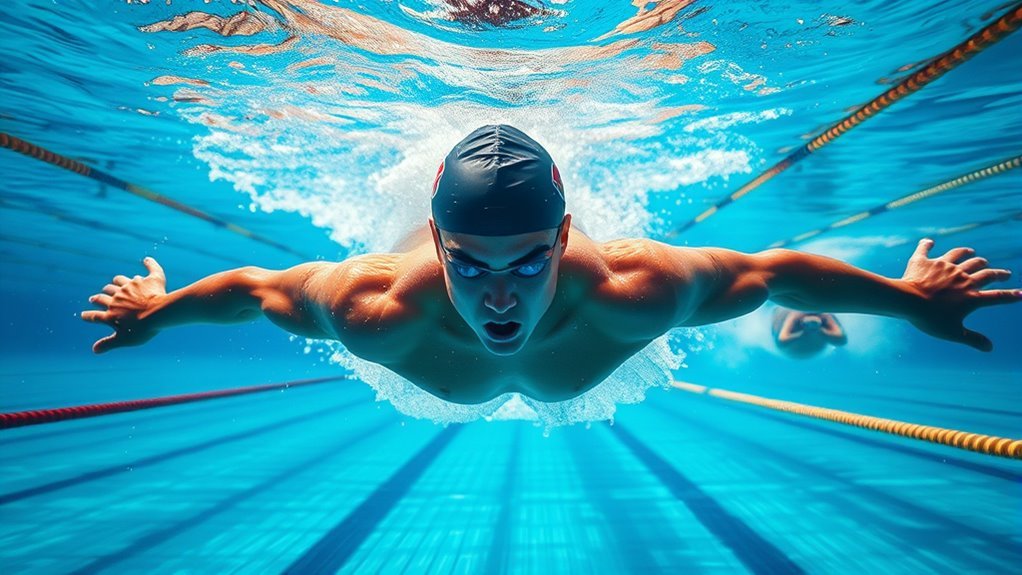
China has rapidly risen as a swimming powerhouse, producing swimmers who consistently break records and win medals on the world stage. You’ll see their strength in both sprint and distance events, with athletes excelling in freestyle, backstroke, and butterfly.
Their investment in training and technology pays off, making them a fierce competitor in every championship.
| Event | Top Swimmer | Record Year |
|---|---|---|
| 100m Freestyle | Ning Zetao | 2015 |
| 200m Butterfly | Liu Zige | 2009 |
| 400m Individual Medley | Ye Shiwen | 2012 |
When you watch China swim, you witness precision, power, and a commitment to excellence that sets them apart.
Russia
Although facing challenges, Russia consistently produces swimmers who dominate both in the pool and on the international stage. When you watch their athletes compete, you see relentless determination and skill that few can match. You’ll be amazed by how Russia cultivates talent through rigorous training and a strong competitive spirit.
Russia’s swimmers showcase unmatched skill and relentless determination, honed through rigorous training and fierce competitive spirit.
Here’s why Russia stands out:
- Their swimmers consistently break records, showing extraordinary speed and endurance.
- They excel in multiple disciplines, from freestyle sprints to grueling distance races.
- Russia’s team spirit drives each athlete to push beyond limits, inspiring you as a fan of the sport.
If you want to witness swimming at its fiercest level, Russia never disappoints.
Japan
Just as Russian swimmers push the limits with their fierce competitiveness, Japan has carved its own path in the swimming world through exceptional technique and innovation.
When you watch Japanese swimmers, you’ll notice their emphasis on flawless form and efficient strokes, especially in butterfly and medley events.
They’ve produced legends like Kosuke Kitajima, whose breaststroke mastery inspired many.
You’ll also see Japan’s commitment to blending traditional training with cutting-edge technology, constantly refining methods to boost performance.
If you’re following international competitions, you can’t miss their strong presence on relays and distance freestyle races.
Japan’s swimmers show how discipline and creativity combine to create champions, proving that swimming success isn’t just about power but also precision and smart strategy.
Frequently Asked Questions
What Is the History of Swimming as a Competitive Sport?
You’ll find competitive swimming began in the early 19th century, with organized races in England. It grew rapidly, leading to standardized rules and inclusion in the first modern Olympics in 1896, shaping the sport today.
How Do Open Water Swimming Competitions Differ From Pool Events?
You might think open water swimming is just pool swimming outdoors, but it’s more challenging—you’ll face currents, varying temperatures, and navigation without lane lines, making it unpredictable and testing your endurance and adaptability differently than pool races.
Unlike pool events where conditions are controlled, open water swimmers must adapt to natural elements. The absence of walls for turns means continuous swimming, demanding different pacing strategies.
Additionally, swimmers often deal with waves, wildlife, and changing weather, which adds to the complexity. These factors make open water swimming a unique and demanding sport compared to pool competitions.
What Are the Health Benefits of Swimming Regularly?
You’ll boost your cardiovascular health, strengthen muscles, improve flexibility, and reduce stress by swimming regularly.
It’s low-impact, so you won’t strain joints, and it helps with weight management while enhancing overall mental well-being.
How Do Swimming Techniques Vary Across Different Strokes?
You’ll feel the rhythmic flutter of freestyle’s flutter kick, the powerful breaststroke’s whip kick, the smooth backstroke’s steady glide, and the explosive butterfly’s dolphin kick—all blending movement and breath in unique, flowing dance across the water.
What Are Common Injuries in Competitive Swimming and Prevention Tips?
You’ll often face shoulder pain, swimmer’s ear, and knee injuries. To prevent these, warm up properly, maintain good technique, use earplugs, and strengthen supporting muscles.
Rest and cross-train to avoid overuse injuries.
Conclusion
If you want to swim with the best, you’ll look to the United States for power, to Australia for speed, to China for precision, to Russia for resilience, and to Japan for technique. Each country brings its unique strengths, each athlete brings unmatched dedication, and each competition brings thrilling moments.
So, if you’re chasing excellence, embracing diversity, and pushing limits, these top five countries will inspire you to dive deeper and swim faster. The best countries in swimming showcase talent, determination, and a passion for the sport that drives global success.