What Is a Good Swimming Pace for Beginners?
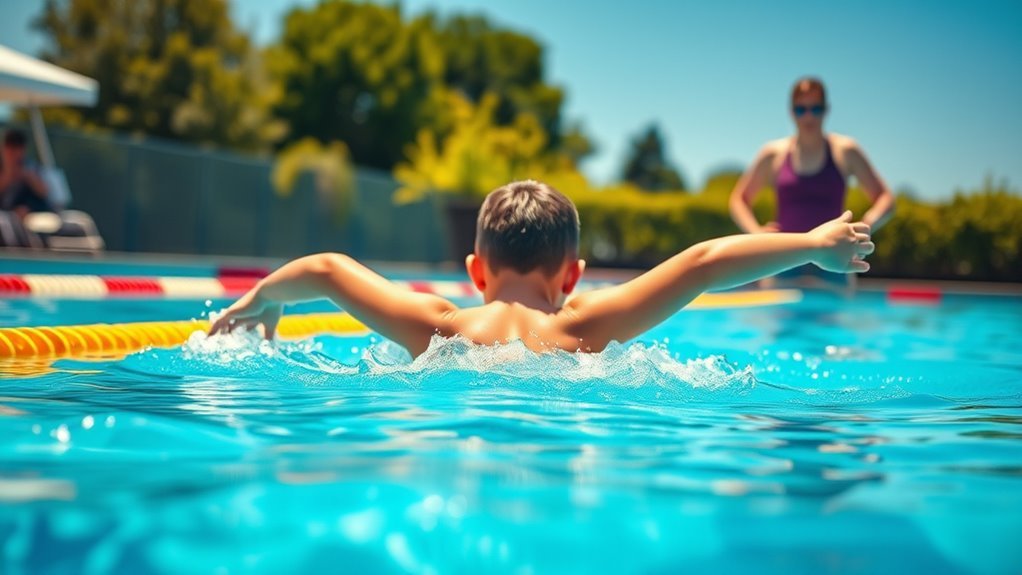
A good swimming pace for beginners is about 2 to 3 minutes per 100 meters. This pace helps you build endurance without getting too tired quickly. When starting out, focus on steady, smooth strokes and controlled breathing rather than speed.
Measuring your pace regularly can motivate you and show progress. By keeping a consistent rhythm and refining your technique, you’ll swim more efficiently and comfortably. Keep going, and you’ll find tips for maintaining your pace and improving your swim.
Understanding Swimming Pace Basics
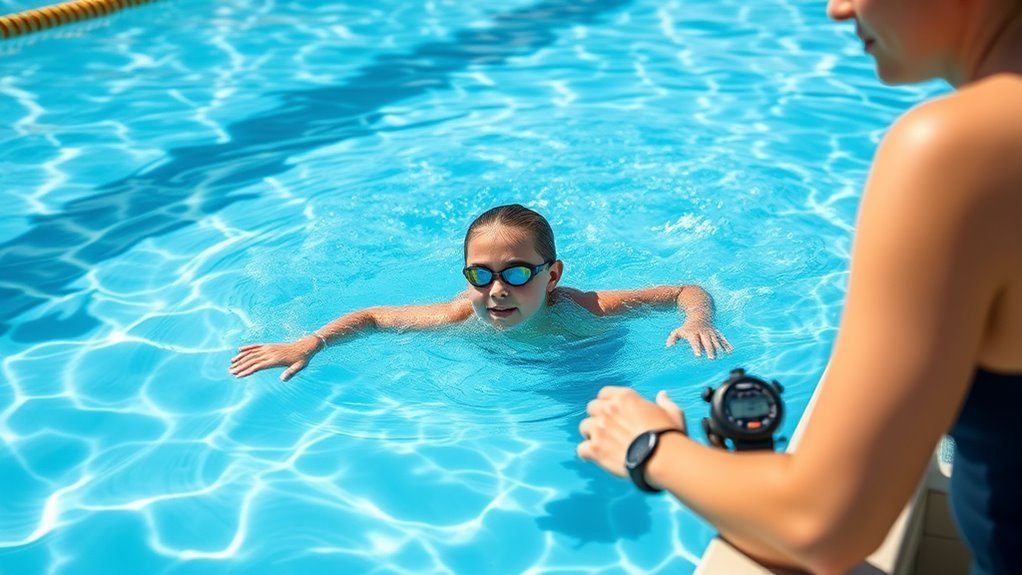
Although swimming pace might seem tricky at first, understanding its basics will help you swim more efficiently and enjoy your workouts. Your swimming pace is simply the speed at which you cover a set distance, usually measured in minutes per 100 meters or yards.
Understanding swimming pace basics helps you swim efficiently and enjoy your workouts more.
It’s important to recognize that pace isn’t about racing; it’s about maintaining a steady, comfortable rhythm that suits your current fitness and skill level.
You’ll find that a consistent pace lets you conserve energy, reduce fatigue, and improve technique over time.
By focusing on smooth, controlled strokes and steady breathing, you’ll naturally develop a pace that feels manageable.
How to Measure Your Swimming Pace
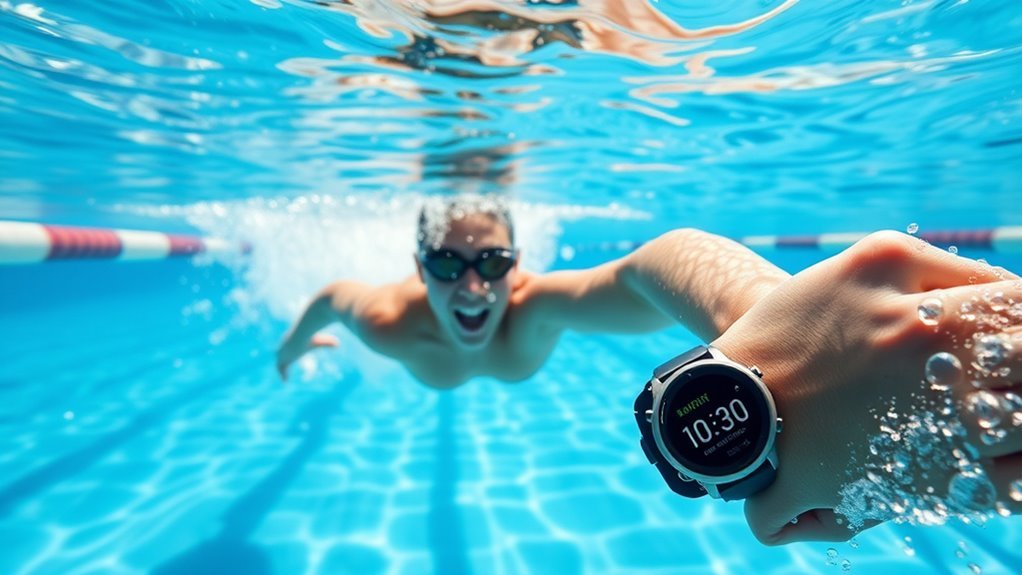
Measuring your swimming pace is easier than you might think and gives you valuable insight into your progress. To get started, time yourself swimming a set distance, like one lap or 100 meters.
Use a stopwatch or your phone’s timer to record how long it takes. Then, calculate your pace by dividing the total time by the number of laps or distance swum.
Tracking your pace helps you stay motivated and see improvements clearly.
- Feel the thrill as your times get faster with each swim.
- Celebrate small victories when your pace improves.
- Stay motivated by watching your progress over weeks.
Ideal Pace Range for Beginner Swimmers
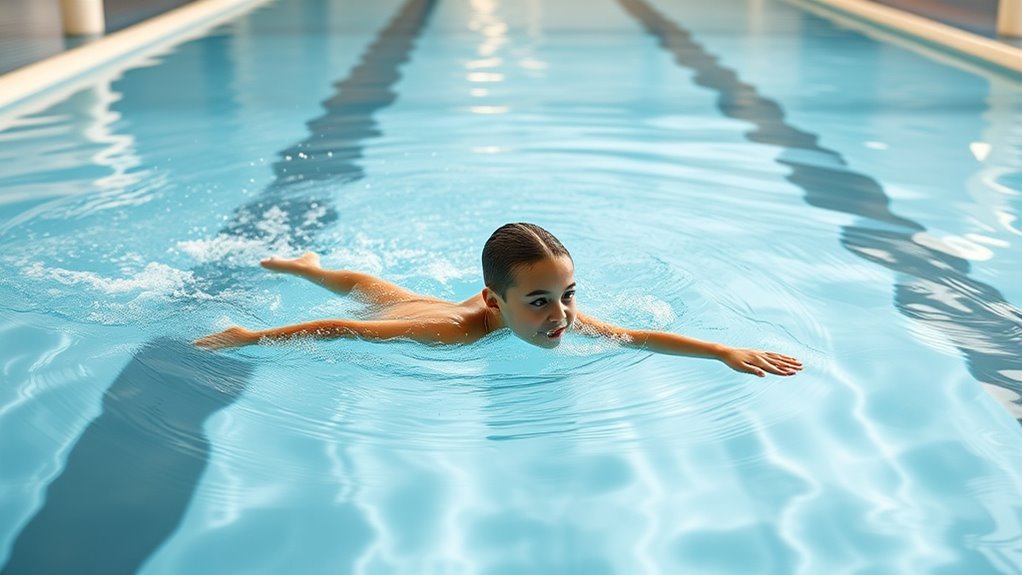
When you’re just starting out, finding an ideal swimming pace helps you build endurance without burning out. For beginners, aiming for a pace between 2 to 3 minutes per 100 meters is a solid target.
This range allows you to swim steadily while focusing on form and breathing.
If you swim faster than this, you risk tiring quickly, which can make your workouts less effective. Slower than this mightn’t challenge you enough to improve.
Remember, your pace should feel sustainable over multiple laps.
Pay attention to how your body responds, adjusting your speed to stay comfortable yet engaged.
Sticking within this pace range sets a strong foundation for developing stamina and confidence in the water.
Tips for Finding and Maintaining Your Rhythm
Finding the right pace is just the start; keeping a consistent rhythm helps you swim efficiently and comfortably. To find your rhythm, focus on smooth, even strokes rather than speed. Let your body move naturally through the water, avoiding sudden bursts or pauses.
Maintaining this flow keeps you relaxed and reduces fatigue.
Here are tips to help you maintain your rhythm:
Feel the water: Tune into the sensation of each stroke to stay connected and steady.
Count your strokes: Use a simple count to keep your pace uniform and predictable.
Use music or a metronome: A steady beat can help you keep a consistent tempo and enjoy your swim more.
Sticking to these tips will make your swimming sessions more enjoyable and sustainable.
Importance of Technique and Breathing
Although keeping a steady pace is important, mastering your technique and breathing will dramatically improve your swimming efficiency and comfort. Focus on smooth arm strokes and a streamlined body position.
Coordinated breathing helps you avoid fatigue and keeps your rhythm steady.
| Technique Aspect | Breathing Tip |
|---|---|
| Keep elbows high | Exhale underwater slowly |
| Extend your arm fully | Inhale quickly through mouth |
| Rotate your body | Turn head gently to breathe |
| Maintain steady kick | Time breaths with strokes |
Tracking Progress and Setting Realistic Goals
Tracking your progress helps you stay motivated and adjust your training to meet achievable milestones. By consistently noting your swim times, distances, and how you feel during sessions, you’ll see tangible improvements that encourage you to keep going.
Setting realistic goals means breaking down big ambitions into smaller, manageable targets, like improving your pace by a few seconds each week or swimming an extra lap without stopping.
Remember, progress isn’t always linear, and celebrating small victories keeps your spirits high. Here’s why tracking and goal-setting matter:
- You gain confidence as you witness your growth.
- You stay focused and avoid burnout by pacing yourself.
- You turn swimming into a rewarding journey, not just a workout.
Keep your goals clear and your progress steady for lasting success.
Frequently Asked Questions
What Swimwear Is Best for Beginners to Improve Pace?
You should pick streamlined, snug swimwear like a one-piece or jammers that reduce drag. They’ll help you move faster and feel comfortable, letting you focus on improving your pace without distractions or resistance in the water.
How Does Water Temperature Affect Swimming Pace?
Water temperature directly affects your swimming pace; colder water can slow you down by tightening muscles, while warmer water helps you stay relaxed and swim faster.
Always adjust your effort based on water temperature for best results.
Can Diet Influence My Swimming Speed?
You know what they say, “You are what you eat.” Yes, your diet can influence your swimming speed.
Eating balanced meals fuels your muscles, boosts energy, and helps you swim faster and recover quicker.
What Are Common Injuries for Beginner Swimmers?
You’re likely to face shoulder strains, swimmer’s shoulder, or knee pain as common injuries. Overuse and poor technique cause them, so focus on proper form, warm up well, and gradually increase your swimming intensity to avoid issues.
Should Beginners Use Swim Fins or Paddles?
Swim fins speed up stroke skills and strengthen your legs, while paddles promote powerful pulls and proper positioning.
Start simply with fins, then slowly switch to paddles to prevent pain and promote progress.
Conclusion
Finding a good swimming pace as a beginner is like tuning a delicate instrument—it takes patience and practice. By understanding your basics, measuring your speed, and focusing on technique and breathing, you’ll create a rhythm that feels natural.
Keep tracking your progress and setting achievable goals, and soon you’ll glide through the water with confidence. Remember, every stroke brings you closer to becoming the swimmer you want to be.
Keep pushing forward! A good swimming pace for beginners helps build endurance and improves overall technique, making your swim sessions more enjoyable and effective.