How to Understand the S12 Classification in Para Swimming
To understand the S12 classification in para swimming, it’s important to know it specifically groups athletes with moderate visual impairment. This means their vision is better than those in the S11 category but more limited than athletes classified as S13.
Swimmers in the S12 class typically see shapes or movement but face significant acuity and field restrictions. These impairments are confirmed through standardized eye tests.
This classification system ensures fair competition by matching swimmers with similar levels of visual ability. If you want to explore how classifications impact training, competition rules, and eligibility, there is much more to discover.
What Is the S12 Classification in Para Swimming?
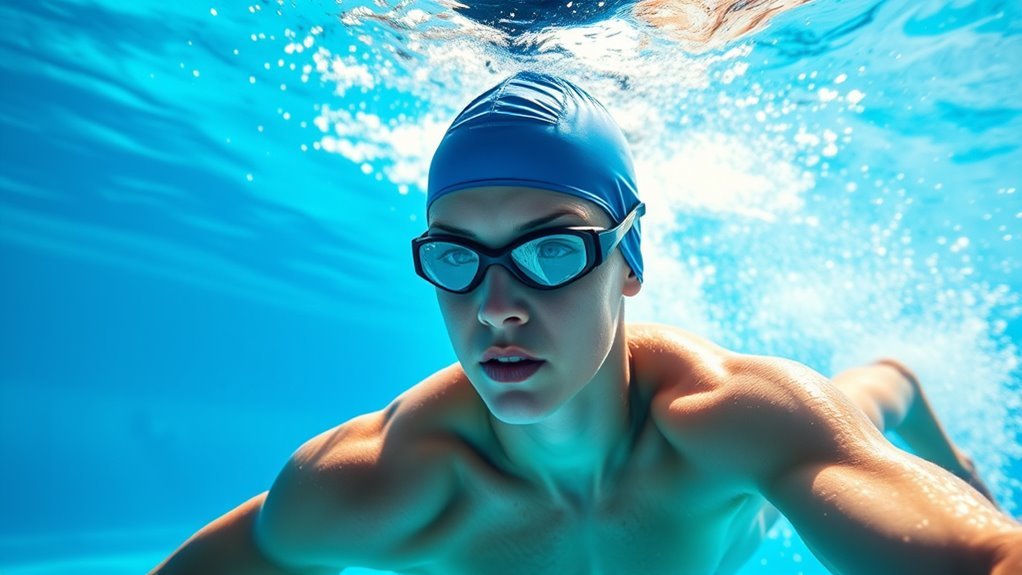
What exactly does the S12 classification mean in para swimming? It’s a category designed to group swimmers who’ve a specific level of visual impairment.
When you compete in S12, you’re racing against athletes with similar visual abilities, ensuring a fair and balanced competition.
The classification helps officials and coaches understand your capabilities and tailor support accordingly. It’s important to note that S12 is one of several visual impairment classes, each defined by distinct criteria.
By being classified as S12, you demonstrate a particular range of vision loss that affects how you perceive the pool environment.
This system makes sure you get a fair chance to compete, with rules and equipment adapted to your needs without giving you an unfair advantage.
Visual Impairment Criteria for S12 Swimmers
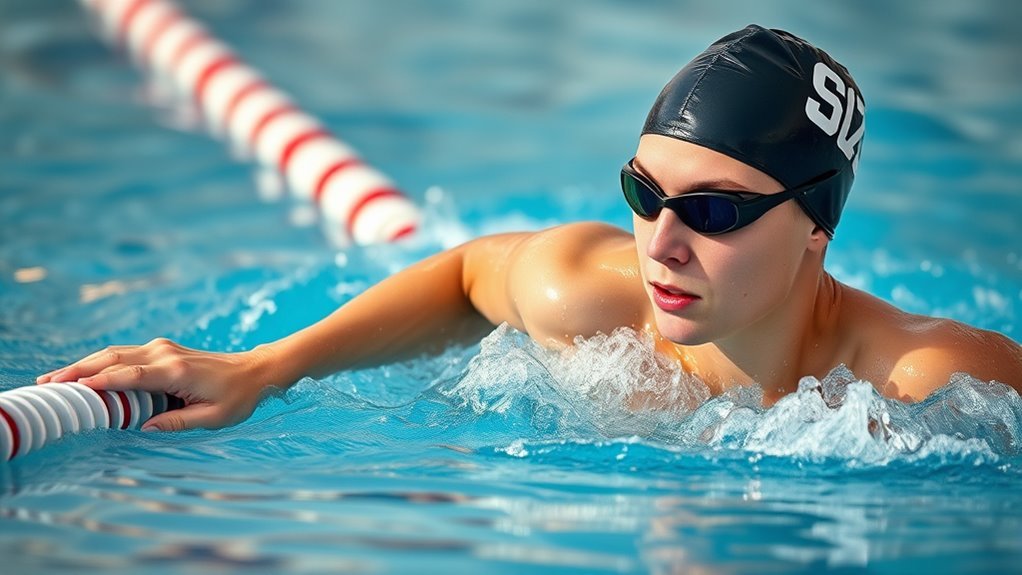
Although visual impairment varies widely, S12 swimmers have a specific range of vision loss that falls between moderate and severe levels.
You’ll find that S12 athletes typically have a visual acuity of up to 2/60 and/or a visual field of less than 5 degrees radius.
This means you might see shapes or movement but struggle with details or sharpness.
To qualify, your vision must be impaired enough to meet these criteria but not so limited as to be classified as S11.
The classification guarantees you compete fairly, matching your functional vision abilities with others who face similar challenges.
When you’re assessed, professionals measure both your clarity of sight and your field of vision to place you accurately in this category.
Differences Between S11, S12, and S13 Classifications
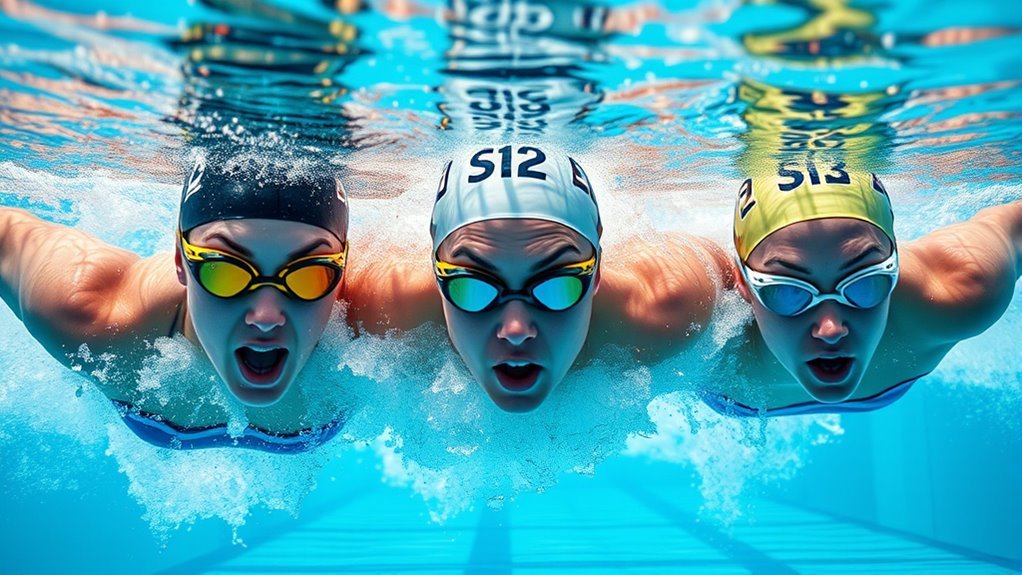
Understanding the specific vision criteria for S12 swimmers helps clarify how this classification fits between S11 and S13. If you’re classified as S11, you have very limited or no light perception, meaning you rely on tappers and must wear blackened goggles during races.
S12 swimmers like you have better vision than S11s but still face significant visual field or acuity restrictions. Unlike S11, you mightn’t need tappers or blackened goggles, but your vision limitations still impact your swimming.
S13 athletes have the least severe vision impairment among the three, with a broader visual field and better acuity than S11 and S12 swimmers.
Knowing these distinctions helps you understand your classification’s purpose and how it ensures fair competition based on your visual abilities.
The Classification Process for S12 Athletes
Since your classification affects the events you can compete in, the process for S12 athletes involves thorough vision assessments and functional evaluations.
You’ll first undergo an initial screening to determine if your visual impairment meets the criteria for S12. Then, classifiers will perform detailed tests to evaluate your remaining vision and how it impacts swimming ability.
Finally, your classification will be assigned and reviewed periodically to reflect any changes.
Here’s what the process looks like:
- Submit medical documentation of your visual impairment.
- Complete vision and functional swimming evaluations with certified classifiers.
- Receive a provisional or confirmed S12 classification based on results.
- Participate in regular reviews to maintain accurate classification status.
This guarantees fair competition and proper event placement.
How Vision Tests Determine S12 Eligibility
After completing your initial screening and functional evaluations, vision tests play a key role in confirming your eligibility for the S12 classification. These tests assess your visual acuity and field of vision using standardized methods.
You’ll undergo assessments like the Snellen chart to measure clarity and perimetry tests to evaluate your peripheral vision.
To qualify as S12, your visual acuity generally falls between 2/60 and 6/60, or you have a visual field of less than 10 degrees radius but more than 5 degrees.
The results must be verified by a certified ophthalmologist or optometrist experienced in para sport classifications.
This precise testing guarantees that your classification accurately reflects your level of vision impairment, allowing fair competition with others in the S12 category.
Common Challenges Faced by S12 Swimmers
Although your S12 classification reflects your visual capabilities, you’ll still face unique challenges in the pool. Guiding the water with partial vision requires sharp focus and adaptability.
Here are common challenges you might encounter:
- Spatial Awareness: Judging distances to walls or other swimmers can be tricky, affecting turns and finishes.
- Lighting Conditions: Changes in pool lighting or glare can impact your ability to see clearly.
- Lane Navigation: Staying within your lane without full visual cues demands heightened concentration.
- Start and Turn Timing: Relying on limited visual input makes timing your starts and turns more difficult.
Understanding these challenges helps you develop strategies to improve your performance and stay competitive despite visual limitations.
Equipment and Support Allowed in the S12 Category
When you compete in the S12 category, specific equipment and support options are available to accommodate your visual needs without compromising fairness. For instance, you’re allowed to use blackened goggles during races to ensure a level playing field, as all swimmers in this classification have varying degrees of visual impairment.
You won’t need tappers, unlike some swimmers in more severe categories, but you can still receive verbal cues from your coach or guide if necessary during training.
Pools are designed with high-contrast markings on walls and lane lines to help you orient yourself.
These adaptations help you focus on your performance without distractions or disadvantages, guaranteeing the competition stays fair while supporting your unique needs as an S12 swimmer.
Notable Para Swimmers in the S12 Classification
Understanding the equipment and support available in the S12 category gives you a clearer picture of the challenges and adaptations these athletes manage. Now, let’s look at some notable para swimmers in this classification who’ve made a mark.
Exploring S12 equipment reveals the unique adaptations and challenges faced by these remarkable athletes.
1. Dmytro Aleksyeyev
A Ukrainian swimmer known for powerful freestyle and butterfly performances.
2. Enrique Floriano
Spain’s versatile athlete excelling in multiple strokes and distances.
3. Hannah Russell
A British swimmer who’s earned multiple medals in backstroke events.
4. Maksym Veraksa
Another Ukrainian standout with numerous Paralympic medals in freestyle.
These athletes showcase how skill and determination shine through despite visual impairments. Watching their races helps you appreciate the unique demands and competitive spirit within the S12 classification.
Impact of Classification on Competition and Training
Since the S12 classification defines the level of visual impairment, it directly shapes how athletes train and compete. You’ll find that training focuses on enhancing spatial awareness and relying on tactile or auditory cues rather than visual input.
Competition rules also adapt, allowing for guides or tapers to signal turns and finishes.
Here’s how classification impacts your training and competition:
| Aspect | Impact on S12 Athletes |
|---|---|
| Training Methods | Emphasize non-visual cues and techniques |
| Competition Rules | Allow use of tappers for wall signaling |
| Equipment | May include specialized goggles |
| Performance Focus | Balance between speed and spatial control |
Understanding these effects helps you optimize your approach in the pool.
How to Get Classified as an S12 Swimmer
Knowing how classification shapes your training and competition sets the stage for getting officially recognized as an S12 swimmer.
To get classified, you’ll need to follow a clear process:
- Request Classification: Contact your national para swimming organization or event organizer to start.
- Medical Documentation: Provide detailed medical records showing your visual impairment.
- Undergo Evaluation: Attend a classification session where trained classifiers assess your vision through tests measuring visual acuity and field.
- Receive Class Status: After evaluation, classifiers assign your class, with S12 indicating moderate visual impairment.
Keep in mind, classifications can be reviewed over time or if your condition changes.
Getting classified accurately guarantees fair competition and helps you tailor your training effectively.
Frequently Asked Questions
How Do S12 Classification Rules Differ Internationally?
You’ll find that S12 classification rules are mostly standardized internationally, but slight variations in assessment procedures and eligibility criteria can occur depending on the sport federation.
Always check the specific event’s guidelines to stay updated.
Can S12 Swimmers Compete in Other Sports Classifications?
Yes, you can compete in other sports classifications, but it depends on each sport’s criteria. Your visual impairment level might place you differently, so you’ll need classification assessments specific to each sport’s rules and standards.
What Role Do Coaches Play in Maintaining S12 Classification?
Coaches act as guardians of fairness, ensuring you stay within S12 rules by monitoring your training and updates. They guide you through classification processes, so you don’t just swim—you compete with integrity and confidence.
Are There Age Restrictions for S12 Classification Eligibility?
No, you don’t face age restrictions for S12 classification eligibility. As long as you meet the visual impairment criteria, you can compete regardless of your age.
Just guarantee you undergo the required classification assessments regularly.
How Often Must S12 Swimmers Undergo Reclassification?
You typically need to undergo reclassification every two to four years, but it can vary based on your condition or competition level.
Always check with your sport’s governing body to stay updated on specific requirements.
Conclusion
Understanding the S12 classification isn’t just about labels—it’s about ensuring fair competition for swimmers with visual impairments. You might wonder if these categories truly level the playing field. While no system is perfect, the classification process uses precise vision tests and expert assessments to make sure you compete with athletes who have similar abilities.
So, if you’re aiming to get classified as S12, know it’s designed to support your potential and keep the sport fair and exciting. The S12 classification in para swimming helps maintain fairness and promotes competitive balance. Embracing this system allows athletes to showcase their talents in an equitable environment.