Does a Swimming Cap Keep Hair Dry?
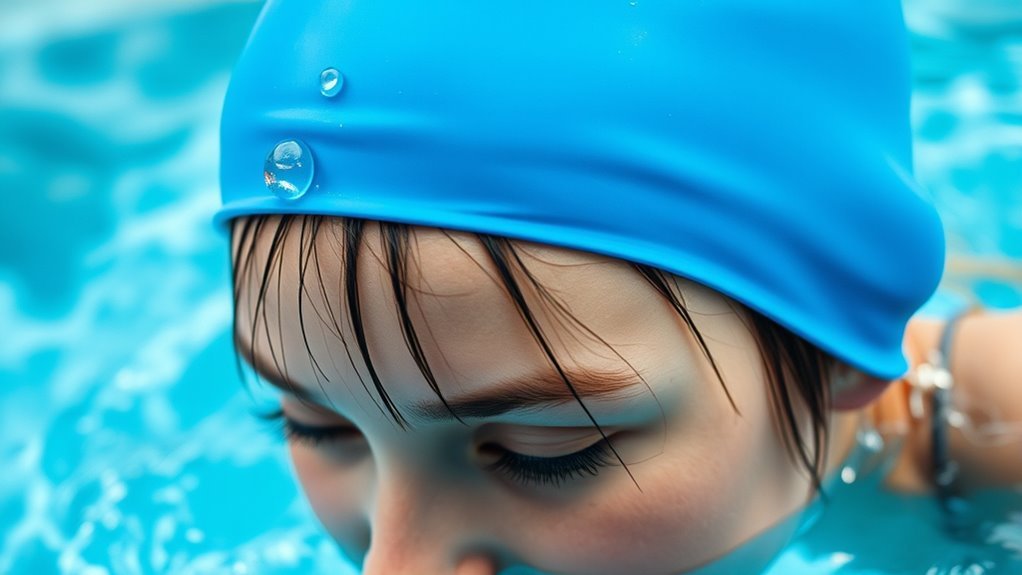
A swimming cap helps reduce water exposure to your hair but won’t keep it completely dry. It fits snugly around your head and ears, cutting down on water getting in, but water can still seep through small gaps or edges.
Materials like silicone and latex offer better seals than fabric, yet none are fully waterproof. If you want to understand how different caps work and what else you can do to protect your hair, keep exploring these details.
How Swimming Caps Are Designed
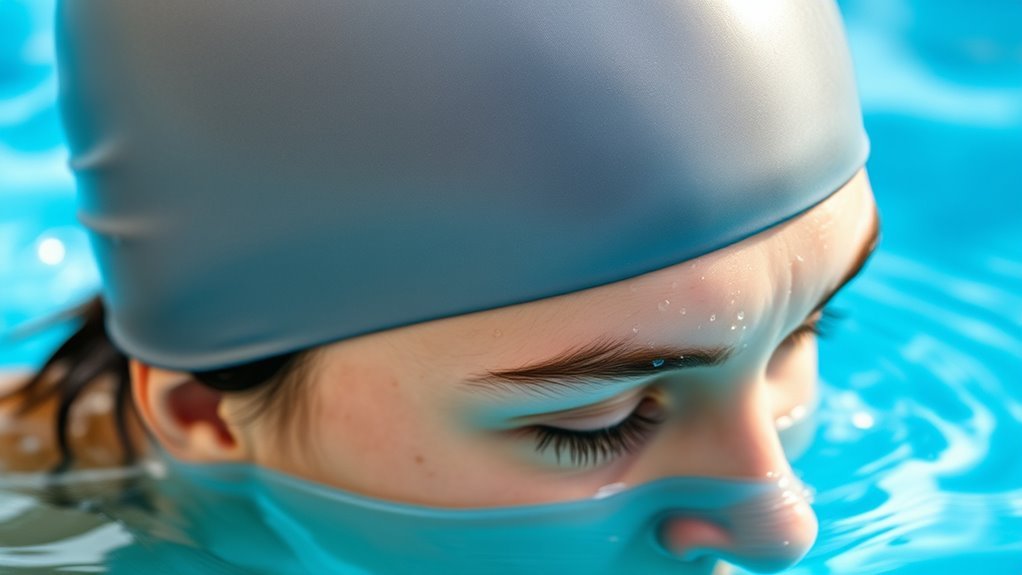
Although swimming caps come in various styles and materials, they’re all designed to create a snug barrier around your head. When you put one on, it should fit tightly enough to minimize water entry but still feel comfortable without pinching.
The shape usually contours to your head, covering your hairline and ears to reduce drag and help keep hair in place. You’ll notice some caps have smooth surfaces to help water glide off easily, while others have textured finishes for better grip.
Seams are often placed strategically to avoid irritation and maintain the cap’s integrity. Overall, the design focuses on fit and coverage, aiming to protect your hair and improve your swimming experience, though it can’t guarantee complete dryness.
Common Materials Used in Swimming Caps
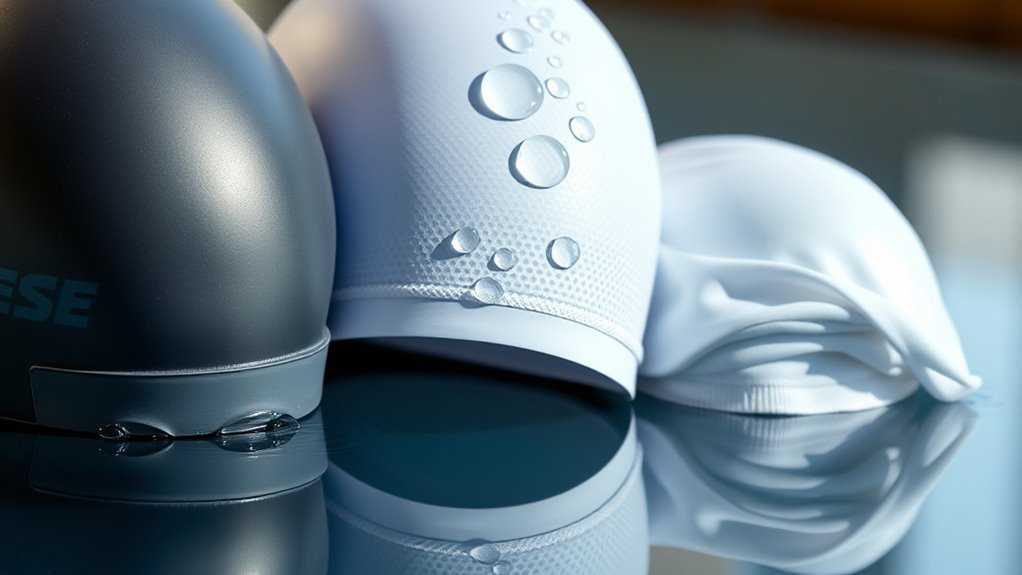
Since you want a cap that fits well and lasts, choosing the right material matters. Different materials affect comfort, durability, and how well your hair stays dry.
Choosing the right swimming cap material ensures a comfortable fit, durability, and effective hair protection in the water.
Here’s a quick look at common swimming cap materials you might consider:
Silicone: Flexible, durable, and provides a snug fit, making it popular for keeping hair dry.
Latex: Lightweight and stretchy but can cause allergies and tears easily.
Lycra (Spandex): Comfortable and breathable but doesn’t keep hair dry well.
Neoprene: Thick and warm, great for cold water but bulky.
Rubber: Affordable and water-resistant but less stretchy and can feel tight.
Understanding these materials helps you pick a cap that matches your swimming needs and comfort preferences.
The Role of Swimming Caps in Reducing Drag
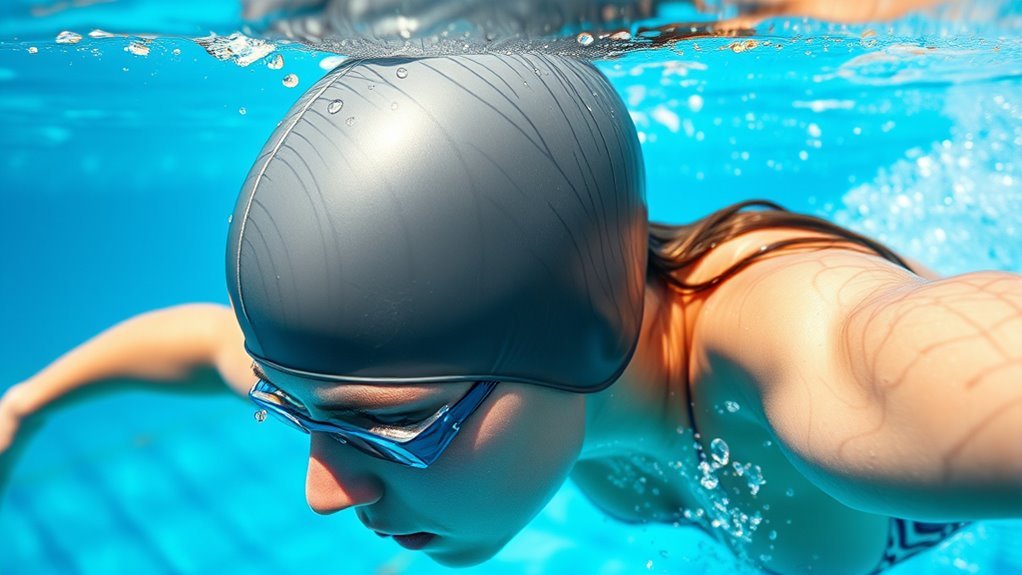
Choosing the right swimming cap material not only affects comfort and hair protection but also impacts your speed in the water. A well-fitted cap reduces drag by streamlining your head, helping you cut through water more efficiently.
Materials like silicone and latex provide a smooth surface, minimizing resistance. Fabric caps, while comfortable, tend to create more drag due to their texture.
| Cap Material | Drag Reduction Level |
|---|---|
| Silicone | High |
| Latex | Moderate-High |
| Fabric | Low |
| Polyurethane | High |
Can Swimming Caps Prevent Water From Reaching Hair?
Even if a swimming cap covers your head snugly, it won’t keep your hair completely dry. Caps create a barrier that limits water exposure but aren’t fully waterproof. Water can still seep in through gaps around your ears, hairline, or neck.
Here’s why water reaches your hair despite wearing a cap:
Caps fit tightly but don’t seal perfectly. Movement during swimming causes water to enter. Water can pool at the edges and trickle inside. Hair strands near the edges are exposed.
Caps are designed more for drag reduction than waterproofing.
Differences Between Silicone, Latex, and Lycra Caps
When you pick a swimming cap, the material makes a big difference in comfort, fit, and water resistance. Silicone caps offer a snug fit and excellent water resistance, which helps keep your hair drier. They’re durable and gentle on hair, making them a popular choice.
Latex caps are thinner and stretch easily, but they tend to let more water in and can cause allergic reactions for some people.
Lycra caps feel soft and comfortable, and they’re easy to put on, but they don’t seal tightly, so they provide minimal protection against water.
If keeping your hair dry matters most, silicone is your best bet. But if you want comfort and breathability, lycra or latex might suit you better.
Factors That Affect Water Leakage in Swimming Caps
Although swimming caps aim to keep water out, several factors influence how well they prevent leakage. You might notice that even with a cap, some water sneaks in, and understanding why helps you manage expectations.
Fit plays a big role; a loose cap lets water slip through gaps.
The material matters too. Some materials are stretchier, creating tighter seals.
Hair volume and how you tuck it can create small openings for water.
Finally, the cap’s edge design affects sealing quality.
- Fit tightness around your head
- Material elasticity and thickness
- Hair volume and arrangement under the cap
- Edge design and sealing mechanism
- Cap condition, including wear and tear
These elements combined decide how much water gets through your swimming cap.
Best Practices for Wearing Swimming Caps to Minimize Wet Hair
To minimize wet hair while wearing a swimming cap, you need to focus on how you put it on and guarantee a snug fit. Start by drying your hair slightly to reduce slipping. Stretch the cap evenly over your head, ensuring it covers your hairline and ears fully. Avoid wrinkles or gaps that let water in. Adjust the cap gently without pulling too hard, which can cause tears or loosen the seal.
| Step | Tip | Reason |
|---|---|---|
| 1. Prep hair | Slightly damp or dry | Helps grip cap better |
| 2. Stretch cap | Evenly over head | Prevents gaps and leaks |
| 3. Cover ears | Fully covered | Minimizes water entry |
| 4. Adjust fit | Smooth out wrinkles | Enhances seal and comfort |
Alternative Methods to Protect Hair While Swimming
If you want to protect your hair beyond just wearing a swimming cap, several alternative methods can help reduce damage and dryness. These techniques focus on minimizing water exposure and preserving your hair’s natural moisture.
- Wet your hair with fresh water before swimming to reduce chlorine absorption.
- Apply a leave-in conditioner or hair oil to create a protective barrier.
- Use a silicone-based swim cap designed for better water resistance.
- Rinse hair immediately after swimming to remove chemicals and salt.
- Avoid heat styling right after swimming to prevent further dryness.
Myths and Facts About Swimming Caps and Hair Dryness
How much can a swimming cap really protect your hair from dryness? Many people believe caps keep hair completely dry, but that’s a myth. Swimming caps aren’t waterproof; they reduce water exposure but don’t seal your hair off entirely.
You’ll still get some water in, especially around the edges. However, the fact is, caps do minimize contact with chlorinated or salty water, which helps reduce hair damage and dryness.
Using a tight-fitting silicone or latex cap offers better protection than a loose, cloth one. So, while a cap won’t keep your hair bone dry, it does help shield it from harsh pool chemicals and salt, preserving moisture and preventing excessive dryness.
Don’t expect complete dryness, but do expect less damage.
Frequently Asked Questions
Can Swimming Caps Help Protect Hair From Chlorine Damage?
Yes, swimming caps help protect your hair from chlorine damage by reducing direct exposure. They create a barrier, but they won’t keep your hair completely dry.
Pair them with conditioner or a swim-specific product for better protection.
Do Swimming Caps Affect Hair Growth or Scalp Health?
Oh sure, your swimming cap’s a secret growth elixir—just kidding! It doesn’t affect hair growth or scalp health much; it mainly keeps your hair snug and reduces chlorine exposure, so your scalp stays happier, no magic involved.
How Often Should You Replace a Swimming Cap?
You should replace your swimming cap every 3 to 6 months, depending on how often you swim and the cap’s material.
If it tears, loses elasticity, or feels rough, it’s definitely time for a new one.
Are There Swimming Caps Designed Specifically for Long Hair?
You might picture sleek swimmers with short hair, but yes, there are swimming caps designed specifically for long hair.
They offer extra space and stretch, so your locks stay comfortable and tangle-free while you swim confidently.
Can Swimming Caps Cause Headaches or Discomfort?
Yes, swimming caps can cause headaches or discomfort if they’re too tight or worn too long.
Make sure you choose a well-fitting cap and take breaks to avoid pressure and irritation on your scalp.
Conclusion
You might think a swimming cap is your hair’s ultimate bodyguard, keeping every strand bone dry—but that’s just wishful thinking! While caps do help reduce drag and keep some water out, they’re no magical force field.
Water still sneaks in around the edges and through the material. So, don’t expect your hair to stay completely dry—unless you want to swim with a helmet!
Embrace the splash; your hair will survive just fine. In conclusion, a swimming cap can help protect your hair but does not keep it entirely dry.