When Can I Swim After a Tattoo?
You should wait at least two to four weeks before swimming after getting a tattoo to avoid infection and skin damage. Fresh tattoos have delicate skin that’s prone to irritation from chlorine, saltwater, and bacteria in pools, oceans, or hot tubs. Swimming too soon can cause redness, swelling, or even ink fading.
Once your tattoo feels fully healed and normal, it’s safer to swim. Keep going to discover how to protect your tattoo and recognize potential issues.
Understanding the Tattoo Healing Process
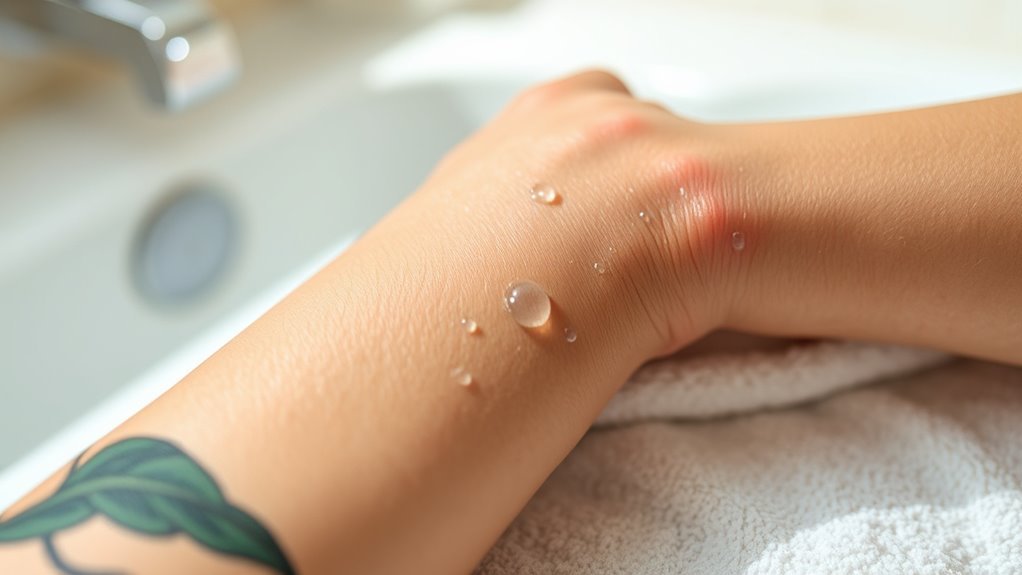
Before you plunge into swimming, it’s important to understand how your tattoo heals. Your skin goes through several stages after getting inked.
Initially, it forms a thin scab to protect the area from bacteria and dirt. This stage usually lasts about a week.
A thin scab forms initially, shielding your tattoo from bacteria and dirt for about a week.
During this time, your tattoo is very sensitive, and the skin is regenerating underneath. Next, the scab flakes off naturally, revealing fresh skin.
This peeling phase can make your tattoo look dull or patchy, but that’s normal.
Full healing can take up to four weeks, depending on your skin type and care routine.
Knowing these phases helps you decide when it’s safe to swim without risking damage or infection to your new tattoo.
Risks of Swimming With a Fresh Tattoo
Although swimming might seem harmless, exposing a fresh tattoo to water can lead to serious complications. When your tattoo is new, the skin acts like an open wound, making it vulnerable to bacteria and irritants found in pools, lakes, or oceans.
This exposure can cause infections, redness, swelling, and even pus, which may damage the tattoo’s appearance and delay healing. Additionally, chlorine and saltwater can dry out your skin, leading to increased itching and scabbing.
If you swim too soon, you risk fading or blotching the ink, ruining the design you just got. To protect your tattoo and guarantee proper healing, it’s imperative to avoid swimming until your skin has fully sealed and the tattoo is no longer vulnerable to external contaminants.
Recommended Waiting Period Before Swimming
Since your tattoo is fundamentally an open wound, you should wait at least two to four weeks before swimming. This waiting period allows your skin to heal properly and reduces the risk of infection.
During this time, your tattoo will go through vital stages of healing, such as scabbing and peeling. Exposing it to water can disrupt this process. If you swim too soon, you risk fading, irritation, or even serious infections.
Even if the tattoo looks healed on the surface, the deeper layers might still be vulnerable. To guarantee the best results and protect your new ink, hold off on swimming until your tattoo artist confirms it’s safe or you notice that the skin has fully healed, feels normal, and shows no signs of scabbing or redness.
Differences Between Pool, Ocean, and Hot Tub Water
Knowing when to swim again is important, but understanding the type of water you’ll be in matters just as much. Each water type affects your healing tattoo differently.
Pools contain chlorine, which can irritate and dry out your skin. Ocean water has salt and bacteria, increasing infection risk. Hot tubs expose your tattoo to warm water that softens skin and opens pores, making it vulnerable.
| Water Type | Impact on Healing Tattoo |
|---|---|
| Pool | Chlorine can cause irritation, dryness |
| Ocean | Salt and bacteria raise infection risk |
| Hot Tub | Warm water softens skin, increases vulnerability |
Knowing these differences helps you decide when and where to swim safely after getting inked.
How to Protect Your Tattoo When Swimming
Before you jump into the water, take steps to shield your tattoo from harm. Protecting your new ink helps prevent fading, infection, and irritation. Follow these tips to keep your tattoo safe while swimming:
Wait at least 2-4 weeks before swimming to allow initial healing.
Allow your tattoo 2-4 weeks to heal before taking a dip to ensure proper recovery.
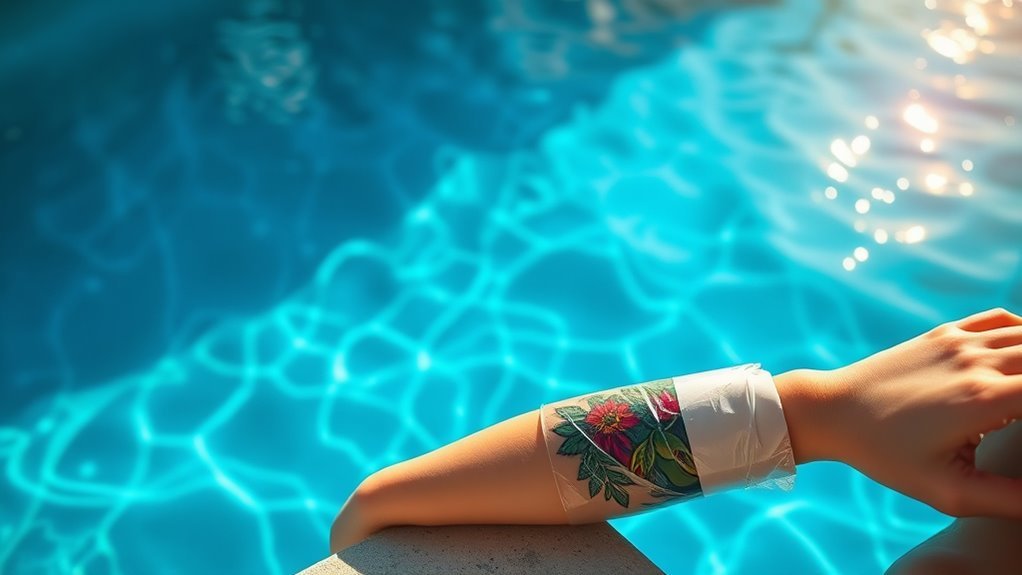
Apply a waterproof bandage or tattoo-specific cover to block water exposure.
Use gentle, fragrance-free moisturizer after swimming to soothe skin.
Avoid prolonged soaking; limit your swim time to reduce skin stress.
Rinse off immediately with clean, fresh water after swimming to remove chlorine, salt, or bacteria.
Signs of Infection or Complications After Swimming
If you swim too soon after getting a tattoo, you might notice signs of infection or complications that need immediate attention. Watch for symptoms like increased redness, swelling, or pus, which could indicate an infection.
Pain that worsens instead of improves, fever, or red streaks spreading from the tattoo are also warning signs.
| Symptom | Description | Action to Take |
|---|---|---|
| Redness & Swelling | Persistent, spreading redness | Consult a healthcare professional |
| Pus or Discharge | Yellow/green fluid oozing | Seek immediate medical advice |
| Fever & Pain | Elevated temperature, intense pain | Contact a doctor promptly |
If you notice any of these, avoid swimming and get medical help to prevent serious issues.
Tips for Maintaining Tattoo Vibrancy During Healing
Although healing a tattoo requires patience, you can take specific steps to keep its colors bright and sharp. Proper care during the healing phase not only protects your skin but also preserves the ink’s vibrancy. Avoid anything that could irritate or fade your tattoo.
Here’s what you should do:
- Keep the tattoo clean and moisturized with a fragrance-free lotion.
- Avoid direct sunlight and tanning beds to prevent fading.
- Refrain from scratching or picking at scabs to avoid ink loss.
- Wear loose clothing to reduce friction on the tattooed area.
- Wait to swim until the tattoo is fully healed, usually 2-4 weeks, to prevent infection and color fading.
Following these tips ensures your tattoo stays vivid for years.
Frequently Asked Questions
Can Swimming Speed up the Tattoo Fading Process?
Swimming can speed up tattoo fading because chlorine and saltwater can irritate your skin and break down ink.
You should avoid swimming until your tattoo is fully healed to keep the colors vibrant and sharp.
Are Waterproof Tattoo Covers Effective for Swimming?
Waterproof tattoo covers can help protect your tattoo while swimming, but they’re not foolproof. Water might still seep in, risking infection or fading.
It’s best to avoid swimming until your tattoo is fully healed.
Does Tattoo Size Affect Swimming Wait Time?
Think of your tattoo like a delicate flower; bigger tattoos take longer to heal. So, yes, the size affects your swim wait time.
You’ll want to wait longer before jumping in to avoid infection or fading.
Can Tattoos Cause Allergic Reactions When Exposed to Pool Chemicals?
Yes, tattoos can cause allergic reactions when exposed to pool chemicals, especially if your skin is still healing. You might experience itching, redness, or swelling, so it’s best to avoid swimming until fully healed.
Is It Safe to Swim With a Tattooed Cover-Up?
Around 60% of tattooed people experience irritation when exposing fresh ink to water. You shouldn’t swim with a tattooed cover-up until it’s fully healed to avoid infection, fading, or damage to your new artwork.
Conclusion
Waiting to swim after getting a tattoo is like giving a delicate flower time to bloom—you’ve got to be patient for the best results. Jumping into pools, oceans, or hot tubs too soon can invite infections and dull your ink’s vibrancy.
Protect your new tattoo by waiting at least two to four weeks, keeping it clean, and watching for any signs of trouble. With proper care and patience, your tattoo will heal beautifully.
Remember, waiting to swim after a tattoo is essential to prevent infections, maintain the ink’s vibrancy, and ensure your tattoo shines like a masterpiece.