
When Should Kids Start Swimming Lessons?
You should start your child’s swimming lessons between ages 1 and 4 to build water confidence and safety skills early on. Introducing swimming lessons at a young age helps children become comfortable in the water and learn essential safety techniques.
At around 1 year, parent-child classes introduce water comfort, while structured lessons from ages 2 to 4 enhance coordination and basic techniques. Look for signs like your child’s comfort with water and ability to follow instructions before enrolling.
Choosing the right age helps your child develop lasting skills safely. Keep exploring to find out how swimming benefits their growth even more.
Benefits of Early Swimming Lessons

Although you might think swimming lessons are only for older kids, starting early brings significant benefits. When you introduce your child to water at a young age, you help them develop comfort and confidence around water, which can reduce fear later on.
Early lessons also promote better motor skills, coordination, and balance as your child grows. You’ll find they adapt faster to swimming techniques since their muscles and brain are highly receptive during infancy and toddler years.
Plus, early exposure encourages a lifelong love of swimming, turning it into a fun, healthy habit rather than a chore. By starting early, you’re not only prioritizing safety but also setting your child up for physical and emotional growth that benefits them well beyond the pool.
Recommended Age Ranges for Starting Swimming

While every child develops at their own pace, experts generally recommend starting swimming lessons between 1 and 4 years old to build water familiarity and basic skills.
Experts suggest beginning swimming lessons between ages 1 and 4 to foster water comfort and basic skills.
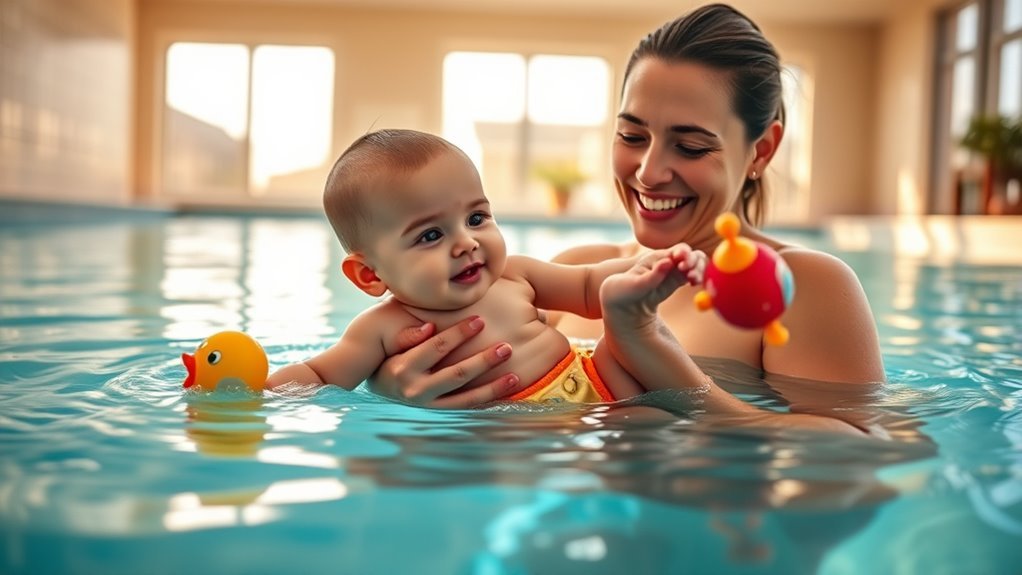
At around 1 year, you can introduce your little one to water through parent-child classes, focusing on comfort and safety.
Between ages 2 and 4, kids benefit from more structured lessons that improve coordination and basic swimming techniques.
Once they reach 4, many children are ready for group lessons that emphasize water safety, floating, and basic strokes.
Keep in mind that readiness varies, so tailor lessons to your child’s confidence and abilities.
Starting within this age range helps set a strong foundation for water safety and swimming skills as they grow.
Signs Your Child Is Ready for Swimming Lessons

Before you enroll your child in swimming lessons, watch for signs that show they’re ready to learn in the water. Notice if they follow simple instructions and stay calm when near water.
If your child shows curiosity about swimming and enjoys splashing or playing in shallow water, it’s a good indicator they’ll engage well in lessons.
Also, check if they can sit still for short periods and have basic motor skills like kicking or blowing bubbles.
Emotional readiness matters too. Your child should feel comfortable and not fearful around water.
When these signs align, your child is more likely to benefit from swimming lessons, making the experience safe, fun, and effective for building essential water skills.
Different Types of Swimming Classes for Various Ages
Because children develop at different rates, swimming classes are tailored to suit various age groups and skill levels. For infants and toddlers, parent-and-child classes focus on water familiarization and basic comfort.
When your child reaches preschool age, group lessons introduce fundamental skills like floating, kicking, and basic strokes. As kids grow older and more confident, lessons shift toward stroke refinement, endurance, and water safety techniques.
You’ll find specialized classes for beginners, intermediate swimmers, and advanced learners, ensuring your child gets instruction appropriate to their ability. Some programs even offer competitive swim training for older children interested in racing.
Choosing the right class means matching your child’s age and skill level, so they stay motivated and build confidence in the water effectively.
Safety Considerations Before Enrolling Your Child
Although swimming lessons offer many benefits, you should prioritize safety when choosing the right program for your child. First, verify that the instructors are certified in CPR and water safety.
Check the class size to ensure your child will get enough attention. Smaller groups mean better supervision.
Inspect the facility’s cleanliness and safety measures, like secure pool fencing and non-slip surfaces. Confirm the pool water is regularly tested and treated.
Ask about emergency procedures and whether lifeguards are present during lessons.
Also, consider your child’s comfort level; never force them into a situation that causes fear.
How Swimming Supports Physical and Cognitive Development
When your child learns to swim, they not only build physical strength but also boost their brain development. Swimming engages multiple muscle groups, enhancing coordination, balance, and endurance.
As your child practices different strokes and movements, their motor skills sharpen, supporting overall physical growth.
Beyond the body, swimming stimulates cognitive functions. The need to remember techniques and follow safety rules improves memory and attention span.
Plus, swimming often involves social interaction, which fosters communication skills and emotional intelligence.
By mastering new challenges in the water, your child gains confidence and problem-solving abilities.
This combination of physical exercise and mental engagement makes swimming a powerful activity for holistic development, setting a strong foundation for healthy growth and learning throughout childhood.
Tips for Choosing the Right Swim School or Instructor
Finding the right swim school or instructor can make all the difference in your child’s progress and enjoyment in the water. Start by checking credentials. Ensure instructors are certified in swim teaching and CPR.
Visit the facility to assess cleanliness, safety features, and class sizes. Smaller groups often mean more personalized attention. Ask about their teaching approach to see if it matches your child’s temperament and learning style.
Look for positive reviews or ask other parents for recommendations. Don’t hesitate to observe a lesson to gauge the instructor’s interaction with kids.
Finally, confirm scheduling flexibility and pricing to fit your family’s needs. Choosing wisely sets your child up for a confident, fun swimming experience that builds skills safely and effectively.
Preparing Your Child for Their First Swimming Lesson
Before your child’s first swimming lesson, you’ll want to prepare them both physically and emotionally to guarantee a positive experience. Talk openly about what to expect, emphasizing fun and safety to ease any fears.
Pack their swim bag with essentials like a swimsuit, towel, goggles, and a swim cap if needed. Encourage them to use the bathroom beforehand to avoid interruptions.
Arrive early so your child can get comfortable with the environment and meet the instructor. Keep your attitude calm and supportive to boost their confidence.
Avoid pressuring them to perform perfectly; instead, celebrate small achievements.
Frequently Asked Questions
What Swim Gear Is Essential for Beginners?
You’ll need a well-fitting swimsuit, swim goggles to protect your eyes, a swim cap to keep hair out of your face, and a towel.
For beginners, a flotation device can also boost confidence and safety in the water.
How Often Should Kids Practice Swimming Weekly?
You should have your kids practice swimming about 2-3 times a week to build skills and confidence.
Consistent practice helps them improve steadily without overwhelming them, making lessons enjoyable and effective.
Can Swimming Help With Water Allergies or Sensitivities?
Swimming can help you build tolerance to water allergens and reduce sensitivities by gradually exposing your skin.
Just be sure to shower afterward and use hypoallergenic products to minimize irritation and keep your skin healthy.
What Are Common Challenges Kids Face in Lessons?
You’ll face waves of fear, shaky confidence, and breath control battles. Kids often struggle with water anxiety, coordination, and listening to instructions amid splashes.
With patience, you’ll turn those ripples into smooth, confident strokes.
How Do Swimming Lessons Affect Kids With Special Needs?
You’ll find swimming lessons boost confidence, coordination, and safety for kids with special needs. They offer tailored support, sensory benefits, and fun, helping your child develop skills while improving physical and emotional well-being.
Conclusion
Starting swimming lessons early is like giving your child wings to explore the water confidently and safely. By recognizing the right age and readiness signs, you’ll set them up for a lifetime of fun and fitness.
Remember to choose a skilled instructor and prepare your little one with care. With swimming, you’re not just teaching a skill—you’re opening doors to growth, safety, and joy that ripple through their whole life.
Plunge in when the time feels right to start swimming lessons and watch your child develop water confidence and essential safety skills. Early swimming lessons provide a foundation for health, fun, and lifelong water safety.